If you’re evaluating B2B eCommerce platforms right now, chances are you’re not just “going digital” anymore; you’re trying to fix something that’s already under pressure.
Maybe your sales team is drowning in manual quotes. Maybe distributors want self-service ordering, but your current system was never built for contract pricing or bulk workflows. Or maybe leadership keeps asking why your B2C-grade store can’t handle the realities of B2B buying.
Welcome to B2B eCommerce in 2026.
Today’s B2B buyers expect the same convenience they get from consumer platforms: instant access, personalized pricing, and real-time inventory without losing the complexity that makes B2B, well… B2B.
We’re talking negotiated pricing, multi-user accounts, approval workflows, ERP integrations, repeat orders, and long-term customer relationships. And the platform you choose now will directly impact how efficiently you sell, scale, and compete over the next few years.
The problem? The landscape has become crowded and confusing. Some tools are powerful but rigid. Others are flexible but require heavy customization. A few are built specifically for manufacturers and wholesalers, while others started in B2C and “added” B2B features later. On the surface, many look similar, but under the hood, the differences can be massive.
That’s why this guide exists.
In this blog, we’ll break down what a modern B2B eCommerce platform actually means in 2026, what features truly matter (and which ones are just noise), and how to choose a platform that aligns with your sales model, operations, and growth plans. We’ll also compare the top B2B eCommerce platforms to help you understand where each one shines and where it may fall short.
Whether you’re a manufacturer, distributor, or enterprise seller planning your next move, this guide is designed to help you make a confident, future-ready decision, without getting lost in vendor jargon or marketing hype.
What Are B2B eCommerce Platforms and Why Do They Matter?
At its simplest, a B2B eCommerce platform is a digital architecture designed specifically for businesses to sell products or services to other businesses.
While a B2C site focuses on a quick, emotional “add to cart” experience for one person, a B2B platform is built to handle the “messy” reality of professional trade. We’re talking about transactions that involve multi-step approvals, negotiated contracts, and bulk logistics that would make a standard retail site crash.
At a basic level, these platforms provide an online storefront where business buyers can browse catalogs, place orders, and manage their accounts. But in reality, modern B2B eCommerce platforms do far more than that. They handle negotiated pricing, customer-specific catalogs, bulk ordering, repeat purchases, credit terms, and multi-user accounts with role-based permissions.
In other words, they mirror how B2B sales actually work in the real world, just without the endless back-and-forth emails and spreadsheets.
This distinction matters because B2B buying behavior is fundamentally different. Business buyers are not impulse shopping. They are comparing suppliers, validating pricing agreements, checking inventory availability, and coordinating with internal teams before making a purchase.
A proper B2B eCommerce platform supports this process with features like approval workflows, quote-to-order flows, and real-time integrations with ERP, CRM, and inventory systems.
By 2026, these platforms will have evolved from simple “online order forms” into the central nervous system of a company’s sales operation.
Why They Are “Mission Critical” in 2026
If you’re still relying on PDF catalogs and manual phone orders, you aren’t just behind the curve; you’re losing margin.
Here is why the platform you choose matters more than ever:
- The “Millennial/Gen Z” Shift: A majority of B2B buyers are now millennials or Gen Z. These buyers grew up with Amazon and Uber; they expect to find, price, and track their orders digitally without having to “jump on a quick call” with a sales rep.
- Operational Efficiency: A modern platform automates the boring stuff. When your ERP is synced with your storefront, inventory updates across all channels instantly. This reduces “order friction” and eliminates the human error of manual data entry.
- Account-Specific Personalization: In B2B, no two customers are the same. A true B2B platform enables dynamic pricing and allows you to show Customer A their negotiated $10/unit price while Customer B sees a $12/unit price based on their lower volume.
- 24/7 Self-Service: Your sales team sleeps, but your platform doesn’t. Giving buyers a portal to reorder from past invoices, download tax documents, and check real-time stock at 11 PM creates a level of stickiness that traditional sales can’t match.
B2B vs. B2C: The Key Differences
To understand why you need a dedicated B2B tool rather than a standard online store, look at the technical requirements:
| Feature | B2C (Retail) | B2B (Wholesale/Mfg) |
|---|---|---|
| Pricing | Fixed for everyone | Tiered, negotiated, or contract-based |
| Decision Maker | One person (impulse) | Multi-user approval chains (logic) |
| Order Volume | Small (1–5 items) | Large (Bulk, pallets, thousands of SKUs) |
| Payment | Credit card/Digital wallet | Net terms (30/60/90), POs, or Credit lines |
| Checkout | Lightning fast | Complex (Freight shipping, tax exemptions) |
In 2026, your eCommerce platform isn’t just a website; it’s a productivity tool. It’s the difference between your sales reps acting as “order takers” or “strategic consultants.”
Key Features of a Modern B2B eCommerce Platform
By 2026, a “good” platform isn’t just one that displays products; it’s one with modern B2B functionalities that handles the complex logic of your business without breaking a sweat.
If you’re evaluating a new stack, these are the non-negotiable features that define a modern B2B experience.
Customer-Specific Pricing and Catalogs
B2B pricing is rarely one-size-fits-all. A modern platform must support contract pricing, tiered pricing, volume discounts, and customer-specific price lists. Different buyers should see different prices and even different product catalogs based on their agreements, location, or account type. Without this capability, businesses are forced back into manual quoting and offline negotiations.
Multi-User Accounts and Role-Based Permissions
Most B2B purchases involve multiple stakeholders. A strong platform allows multiple users under a single company account, each with defined roles and permissions. Buyers, approvers, finance teams, and administrators should all have access levels that reflect how purchasing decisions are made internally. Approval workflows for large or sensitive orders are especially important.
Quote Management and Negotiation Workflows
Many B2B purchases start with a quote rather than a direct checkout. Modern platforms support request-for-quote flows, negotiated pricing, and the ability to convert approved quotes into confirmed orders without friction. This approach preserves the flexibility of traditional sales-led processes while seamlessly enabling faster, more efficient digital self-service for buyers.
Bulk Ordering and Reorder Capabilities
B2B buyers value speed, accuracy, and efficiency. Features like bulk order uploads, quick order forms, SKU-based ordering, and one-click reorders for frequently purchased items significantly streamline the buying process. These capabilities reduce manual entry errors, shorten purchasing cycles, and make repeat buying effortless for customers while easing the operational load on sales and support teams.
ERP, CRM, and Inventory Integrations
A B2B eCommerce platform cannot operate in isolation. Real-time or near-real-time integrations with ERP, CRM, inventory, accounting, and fulfillment systems are essential. These integrations ensure accurate pricing, stock availability, order status updates, and customer data synchronization across systems.
Flexible Payment Terms and Checkout Options
Unlike B2C, B2B transactions often involve negotiated payment terms, credit limits, purchase orders, and invoicing. A modern platform supports flexible checkout options such as net payment terms, partial payments, ACH, wire transfers, and card payments, along with automated tax handling and compliance.
Advanced Search and Product Discovery
B2B product catalogs are often large, technical, and highly specialized. Advanced search capabilities such as SKU-level search, intelligent filtering, faceted navigation, and attribute-based discovery help buyers quickly find exactly what they need. When combined with personalized results and smart recommendations, these tools reduce friction, shorten decision time, and improve efficiency.
Analytics, Reporting, and Buyer Insights
Visibility into buyer behavior is a major advantage of digital commerce. Modern platforms provide analytics on purchasing patterns, account activity, product performance, and conversion trends. These insights help sales, marketing, and operations teams make better decisions and identify opportunities for growth.
Scalability, Performance, and Security
As order volumes increase and catalogs grow in size and complexity, the platform must scale reliably without performance slowdowns. High availability, fast page loads, and support for global traffic are essential for uninterrupted operations. At the same time, enterprise-grade security, role-based access controls, data encryption, and compliance with industry standards protect sensitive business data.
AI-Driven Personalization and Predictive Capabilities
Modern B2B platforms increasingly use AI to personalize the buying experience and anticipate customer needs. This includes personalized product recommendations based on past orders, account behavior, and industry patterns. Predictive capabilities can surface likely reorders, suggest optimal order quantities, forecast demand, and flag churn or upsell opportunities.
How We Selected the Best B2B eCommerce Platforms in 2026
Choosing a platform in 2026 is no longer about checking off basic features like “shopping cart” or “search bar.”
To bring you this list, we evaluated dozens of solutions against a rigorous “2026 Success Framework.” We didn’t just look at the software; we looked at how that software survives in a real-world, multi-billion-dollar supply chain.
Here are the five pillars we used to separate the leaders from the laggards:
Integration Depth (The “No-Silo” Rule)
In 2026, a platform is only as good as its handshake. We prioritized platforms that offer native, deep-sync integrations with major ERPs (like SAP, Oracle, and Microsoft Dynamics) and CRMs (like Salesforce).
- Why it matters: If your inventory doesn’t update in real-time across your warehouse and your website, you’re going to sell products you don’t have, a cardinal sin in B2B.
Total Cost of Ownership (TCO)
We looked beyond the monthly subscription fee. Our analysis includes:
- Implementation speed: How many months (or years) does it take to go live?
- Maintenance overhead: Does it require a dedicated team of five developers just to keep the lights on?
- Transaction fees: How much of your margin is being eaten by hidden platform “taxes”?
Native B2B Logic vs. “Bolted-On” Features
Many platforms are B2C tools with a “B2B plugin” slapped on top. We favored platforms where B2B is in the DNA.
- The Test: Can it handle account hierarchies, net-payment terms, and customer-specific catalogs out of the box? If it requires twenty third-party apps to function, it didn’t make our top list.
AI & Automation Maturity
By 2026, AI will be the difference between a static website and a proactive sales partner. We looked for:
- Predictive Restocking: AI that alerts customers before they run out of stock.
- Smart Search: Natural language processing that understands “industrial-grade” technical specs.
- Automated RFQs: Systems that can handle a Request for Quote without a human needing to touch a keyboard for the first draft.
The “Millennial” UX Score
A clunky, 1990s-style interface is a dealbreaker. We rated platforms based on:
- Mobile-First Design: Can a contractor order 500 units from a job site on their phone?
- Self-Service Power: Can the customer download their own tax-exempt certificates and past invoices without emailing support?
Evaluation Tip: When you’re doing your own vetting, ask vendors for a “Headless” demo. Even if you don’t use it now, a platform’s ability to separate its “brains” (backend) from its “face” (frontend) is the best indicator of how future-proof it really is.
Top 6 B2B eCommerce Platforms in 2026
The “perfect” platform doesn’t exist, but the perfect platform for your specific business model does.
In 2026, the market will be split into three distinct categories: SaaS Leaders (speed and ease), Enterprise Powerhouses (complexity and scale), and Composable Solutions (total flexibility).
Here are the top 6 platforms currently leading the B2B space:
1. Shopify Plus
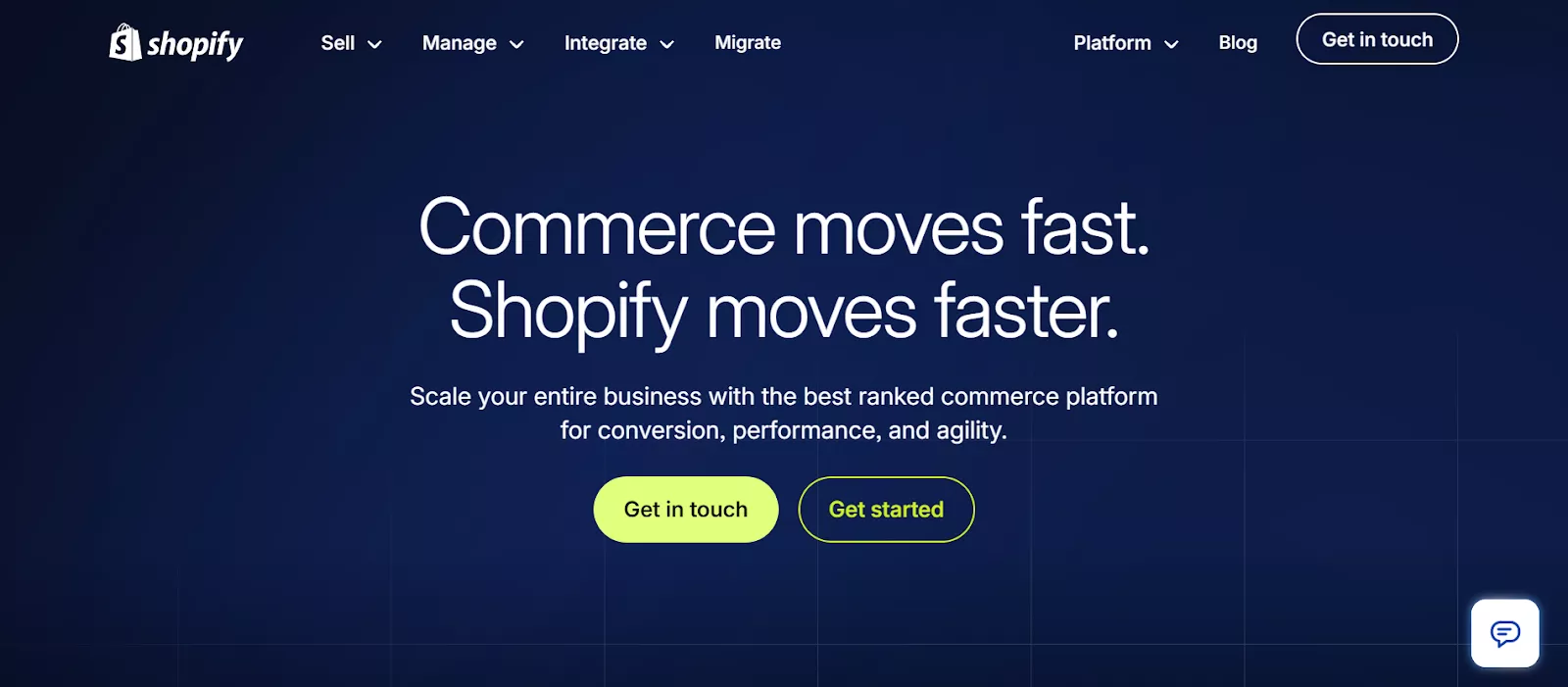
Shopify Plus is a cloud-based platform perfect for B2B businesses that need a scalable online store with fast deployment. It supports wholesale pricing, multi-currency transactions, and integrations with ERP and CRM systems, making it ideal for companies in the United States looking to expand internationally.
Best For: Growing B2B brands that also sell B2C or want a unified commerce platform globally.
Key Features:
- Wholesale pricing and multi-currency support
- ERP and CRM integrations
- Fast deployment and scalable architecture
- Automation with Shopify Flow
- Custom catalogs and storefronts
Pros: Easy to set up and manage, global reach, extensive app ecosystem
Cons: Limited native B2B workflows without third-party apps, higher enterprise costs
2. BigCommerce B2B Edition
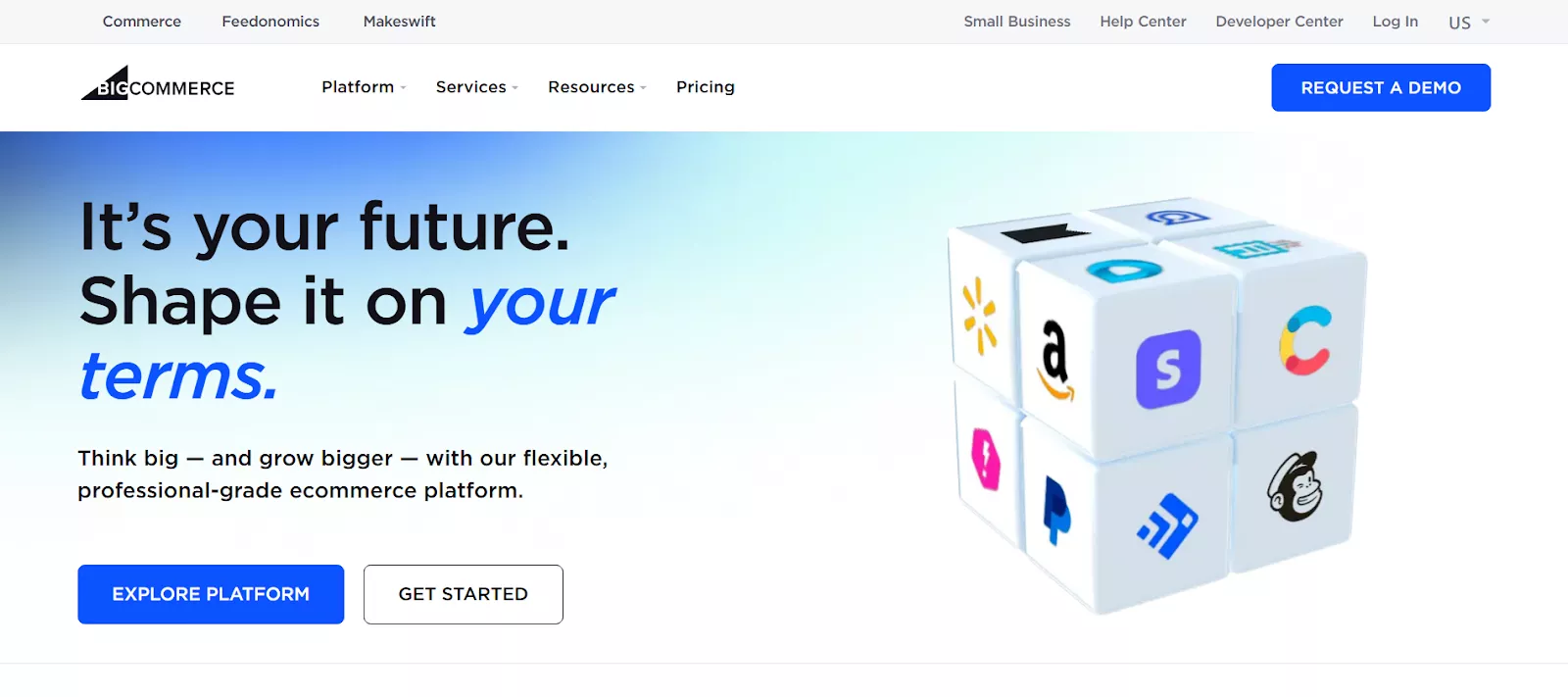
BigCommerce B2B Edition is tailored for mid-to-large B2B businesses, offering features like custom pricing, multi-storefront management, and flexible API integrations. Its cloud infrastructure ensures high performance across North America, Europe, and Asia.
Best For: Mid-market B2B sellers needing built-in B2B tools and strong cloud performance.
Key Features:
- Custom pricing and multi-storefront management
- Flexible API integrations
- Built-in B2B tools like quotes and invoicing
- Internationalization support
Pros: Strong B2B functionality, flexible APIs, high performance
Cons: UI can be less intuitive, and advanced features may require customization
3. VTEX Commerce Platform
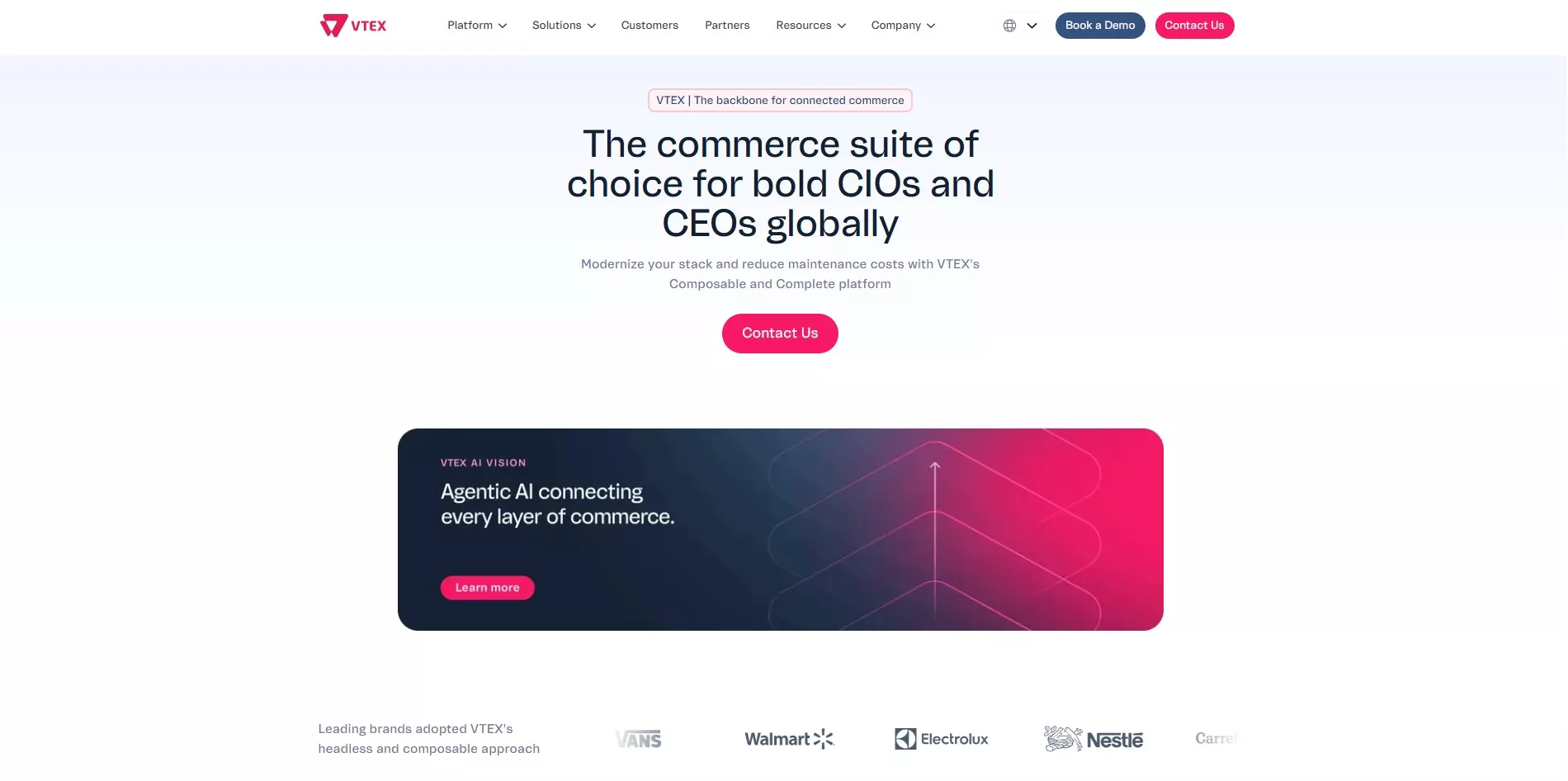
VTEX is a modular and scalable platform supporting B2B and omnichannel selling. With multi-language and multi-region support, it is popular among businesses in Latin America, Europe, and North America seeking international growth.
Best For: Businesses needing B2B + omnichannel commerce with marketplace capabilities.
Key Features:
- Modular architecture with marketplace support
- Multi-language and multi-region support
- Order management and seller tools
- Omnichannel selling capabilities
Pros: B2B + multiparty commerce, scalable globally
Cons: Pricing can be complex, customization planning required
4. Adobe Commerce (Magento)
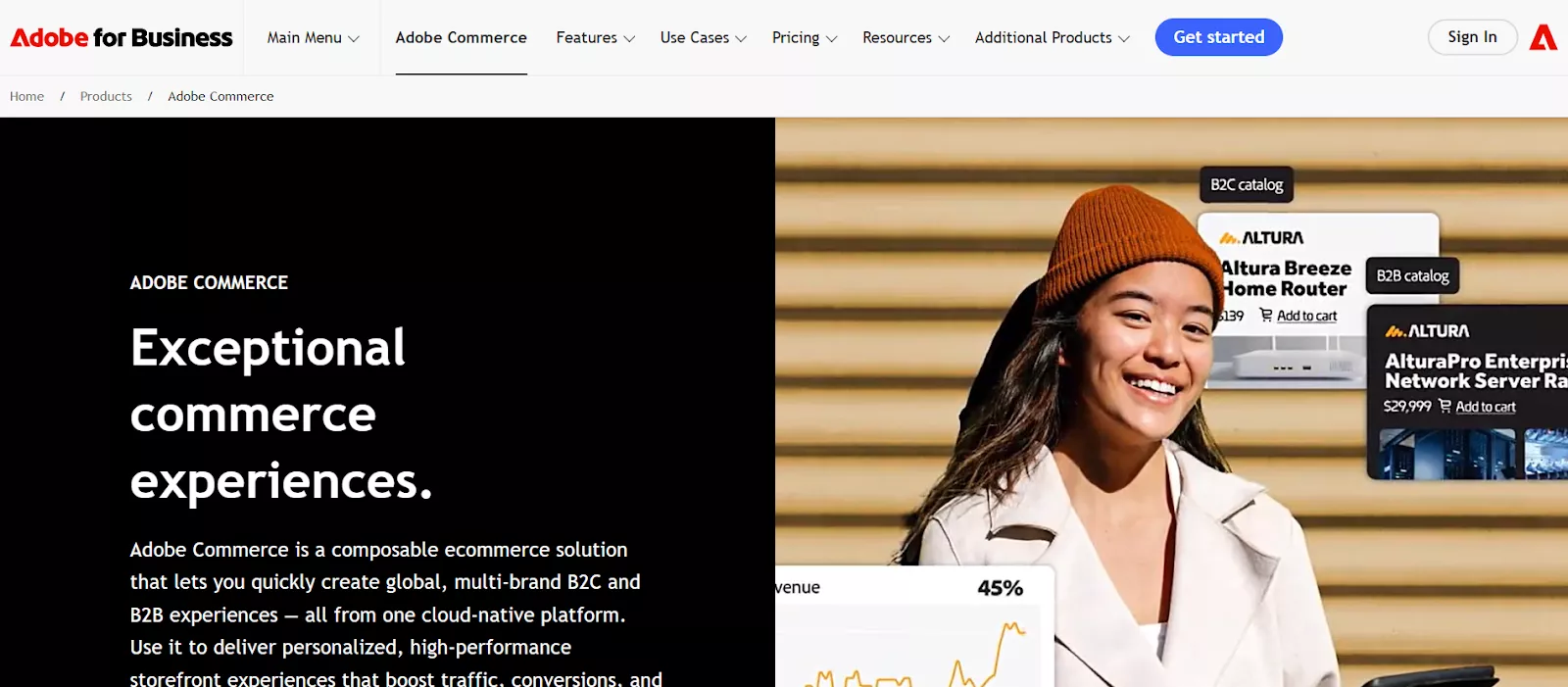
Adobe Commerce, formerly Magento, is a robust enterprise solution with deep B2B functionality. It supports complex catalogs, contract pricing, and multi-language, multi-currency setups. This makes it ideal for European distributors or Indian wholesalers targeting international clients.
Best For: Large enterprises with complex catalogs, multi-market operations, and advanced pricing needs.
Key Features:
- Complex catalogs and product management
- Contract pricing and tiered discounts
- Multi-language and multi-currency support
- PWA and headless capabilities
Pros: Highly customizable, enterprise-ready, large community support
Cons: High total cost, requires technical resources, longer implementation
5. Salesforce B2B Commerce Cloud
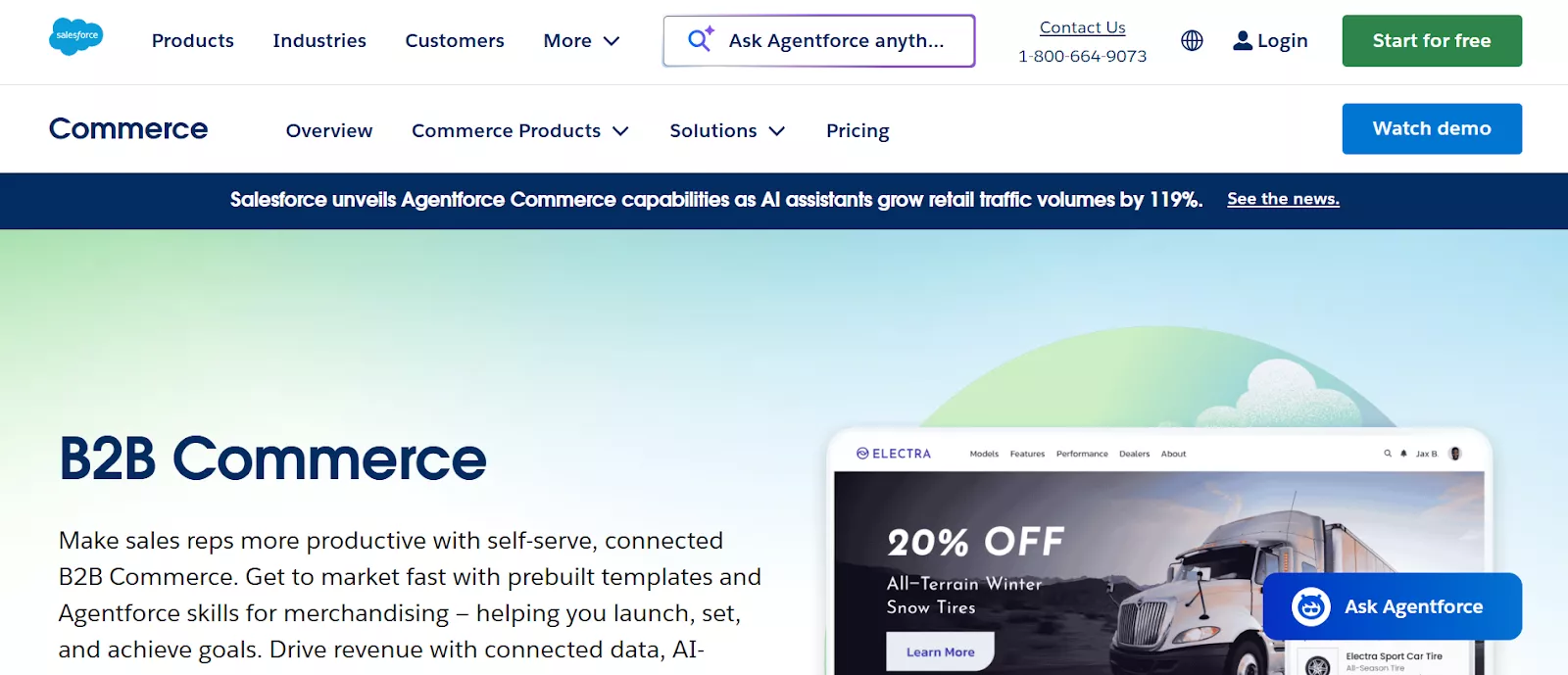
Salesforce B2B Commerce Cloud is best for companies focused on relationship-driven sales. With tight CRM integration, it helps businesses in the United States and Europe maintain consistent pricing, streamline quotes, and enhance customer experiences.
Best For: Companies heavily invested in Salesforce CRM and relationship-driven B2B sales.
Key Features:
- Deep CRM integration
- Account hierarchies and role-based permissions
- Streamlined quote and order management
- Scalable cloud architecture
Pros: Real-time CRM data, excellent for sales-led processes, strong support
Cons: High licensing costs, complex implementation
6. SAP Commerce Cloud
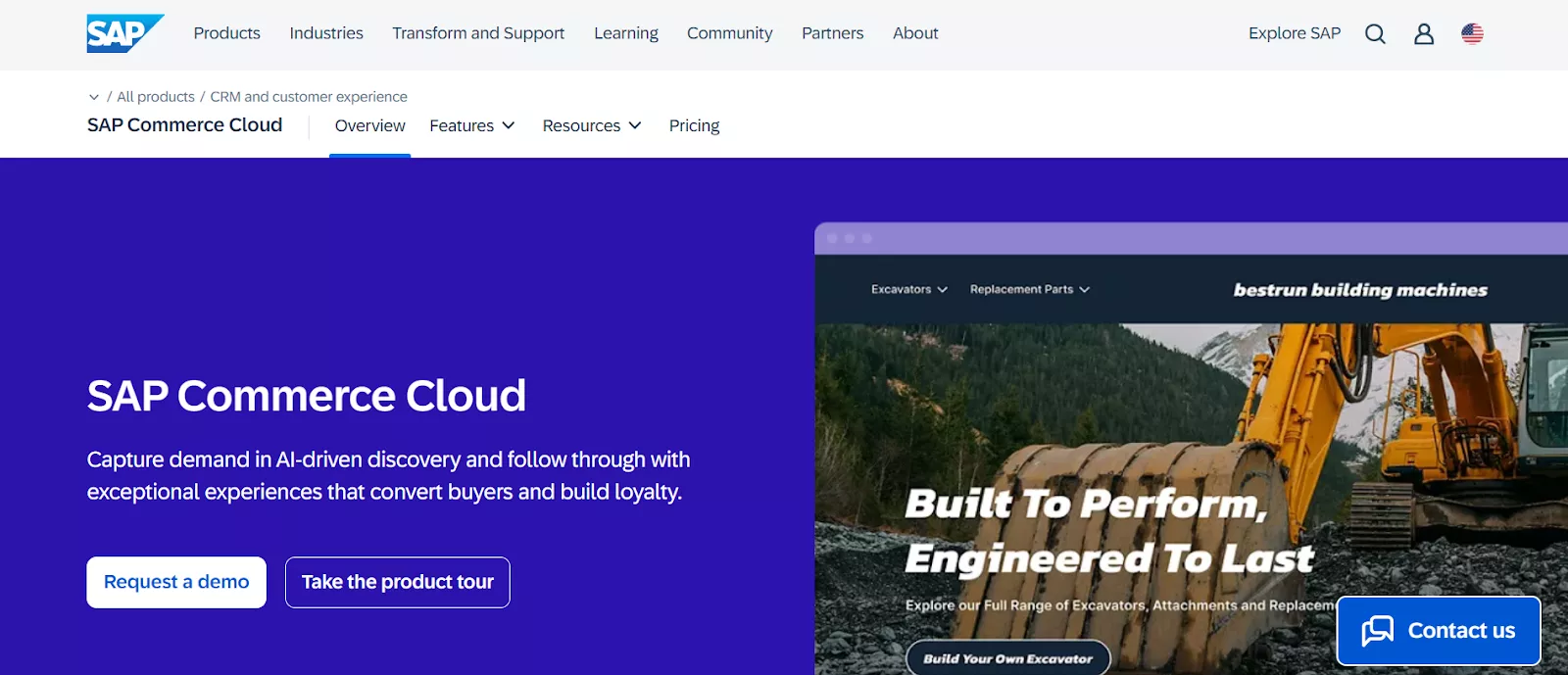
SAP Commerce Cloud is an enterprise-grade solution with strong global capabilities. It supports multi-country operations, advanced personalization, and compliance with international regulations, making it a top choice for manufacturers and wholesalers in Europe, North America, and Asia-Pacific.
Best For: Global enterprises with complex B2B requirements, multi-region operations, and compliance needs.
Key Features:
- Multi-country operations and compliance
- Advanced personalization
- Enterprise-level scalability
- ERP and CX suite integration
Pros: Enterprise-grade, scalable, omnichannel-ready
Cons: High cost, long implementation cycles
How to Choose the Right B2B eCommerce Platform
Choosing the right B2B eCommerce platform can feel overwhelming. There isn’t a one-size-fits-all solution, but the right platform for your business depends on your specific goals, customer needs, and operational complexity.
Here’s a practical guide to help you decide:
1. Identify Your Business Model and Sales Process
Start by understanding how your business sells. Are you primarily wholesale, direct-to-business, or a hybrid? Consider whether sales rely on quotes, negotiated pricing, or subscription models.
Matching your platform to your sales workflow ensures smoother operations, faster adoption, and improved customer satisfaction. SaaS platforms like Shopify Plus and BigCommerce suit self-service models, while Salesforce B2B Commerce Cloud or SAP Commerce Cloud excel for relationship-driven or enterprise-scale B2B operations.
2. Consider Your Catalog and Product Complexity
The complexity of your product catalog plays a major role. If you manage large, multi-variant catalogs, tiered pricing, or contract-based offerings, you need a platform that can handle custom catalogs, advanced product hierarchies, and pricing rules.
Adobe Commerce (Magento) and SAP Commerce Cloud are designed for highly complex B2B operations. For moderate complexity, Shopify Plus or BigCommerce can provide efficient management with less technical overhead, making them suitable for fast-growing B2B businesses.
3. Evaluate Integration Needs
Seamless integration with ERP, CRM, accounting, and inventory systems is essential for modern B2B operations. Platforms must either provide native integrations or robust APIs. Shopify Plus, VTEX, and BigCommerce offer flexible integration options, allowing smooth data flow across systems.
ERP-heavy businesses may benefit from platforms like SAP Commerce Cloud, which provide deep enterprise-level integration and allow centralized control over operations, pricing, and customer management.
4. Think About Global Reach
If your business sells internationally, multi-currency, multi-language, and multi-region capabilities are vital. The platform should support global expansion without operational bottlenecks. Shopify Plus, VTEX, and SAP Commerce Cloud are strong options for scaling globally.
Mid-market solutions like BigCommerce also provide internationalization support, allowing B2B sellers to serve multiple regions efficiently. Evaluating shipping, tax compliance, and localization features is critical to ensure smooth international operations.
5. Prioritize User Experience
A positive experience for both buyers and internal teams is crucial. Features like self-service portals, bulk ordering, AI-driven personalization, and intuitive dashboards enhance usability. Platforms emphasizing UX, such as Shopify Plus or VTEX, reduce friction in purchasing, improve adoption, and increase repeat orders.
Ensuring the platform allows easy navigation, streamlined checkout, and clear product information is essential to maintain high customer satisfaction and reduce support overhead.
6. Assess Scalability and Flexibility
Your platform should grow alongside your business. Consider whether it can handle larger catalogs, increased traffic, and multiple sales channels as your company expands. Headless platforms or composable platforms like VTEX or commercetools offer maximum flexibility for tailored B2B experiences.
SaaS platforms like Shopify Plus or BigCommerce provide scalable growth with minimal technical resources, ensuring businesses can quickly adapt to evolving customer needs and market demands without major system overhauls.
7. Factor in Total Cost and Resources
The total cost of ownership includes licensing, implementation, development, and ongoing maintenance. SaaS platforms like Shopify Plus or BigCommerce allow faster deployment at lower upfront costs, making them suitable for small-to-mid businesses.
Enterprise solutions such as SAP Commerce Cloud or Adobe Commerce require higher investment but deliver advanced customization, complex workflows, and enterprise-grade functionality. Carefully evaluating both financial and technical resources is essential to ensure ROI and long-term platform sustainability.
| What to Check | Why It Matters | Platform Examples |
|---|---|---|
| Business Model | Your platform should match how you sell, whether self-service, quote-based, or sales-led. | Shopify Plus, BigCommerce; Salesforce B2B, SAP Commerce |
| Catalog Complexity | Complex pricing and large catalogs need stronger product and pricing controls. | Adobe Commerce, SAP Commerce; Shopify Plus |
| Integrations | Seamless ERP and CRM integration keeps data accurate and operations efficient. | BigCommerce, VTEX, Shopify Plus |
| Global Selling | Multi-currency and localization support enable smooth international expansion. | Shopify Plus, VTEX, SAP Commerce |
| User Experience | Easy ordering, bulk purchases, and personalization increase repeat buyers. | Shopify Plus, VTEX |
| Scalability | The platform should grow with traffic, catalogs, and sales channels. | VTEX, BigCommerce, Shopify Plus |
| Total Cost | Balance upfront costs with long-term flexibility and maintenance. | Shopify Plus; Adobe Commerce, SAP Commerce |
Partner with Bitcot to Build Your Custom B2B eCommerce Store
At Bitcot, we help B2B businesses turn their digital storefront ideas into fully functional, scalable online platforms. Whether you’re looking to launch on Shopify Plus, BigCommerce, WooCommerce, or VTEX, our team ensures your store is tailored to your unique business model, customer needs, and operational workflows.
We focus on seamless integration with your ERP, CRM, and other core systems, providing a unified experience for both your internal teams and your buyers. From custom catalog setups and automated pricing rules to AI-driven personalization and bulk ordering workflows, we deliver solutions that make buying easy, fast, and intuitive.
With Bitcot, you get more than a store; you get a strategic partner who understands B2B complexities. Our team works closely with you to design a platform that drives efficiency, supports international growth, and scales as your business expands.
Why Choose Bitcot for Your B2B Store
- Expertise in Shopify Plus, BigCommerce, WooCommerce, and VTEX
- Custom workflows for quotes, bulk orders, and reorders
- Integration with ERP, CRM, and accounting systems
- AI-driven personalization and product recommendations
- Scalable solutions designed for global growth
From creating automated quoting and bulk ordering systems to integrating tools seamlessly, we ensure your eCommerce platform is not just functional but a driver of growth and efficiency.
Partner with Bitcot to future-proof your B2B eCommerce strategy. Our goal is to create a platform that not only meets your immediate needs but also supports growth, flexibility, and customer satisfaction for years to come.
Final Thoughts
Navigating the world of B2B eCommerce in 2026 can feel overwhelming.
With so many platforms, features, and workflows to consider, it’s easy to get caught up in the hype of the “perfect” solution. The truth is, the perfect platform doesn’t exist, but the perfect platform for your specific business model does. The key is understanding your business processes, customer expectations, and growth ambitions before making a decision.
Your B2B platform isn’t just a digital storefront; it’s a strategic tool that impacts sales, efficiency, and customer satisfaction.
Features like AI-driven personalization, automated workflows, bulk ordering, and seamless integrations with ERP and CRM systems can make a huge difference in how your customers experience your brand. The right platform also scales with you, whether you’re expanding internationally, adding new product lines, or adopting new sales channels.
Choosing wisely means evaluating platforms across several dimensions. Every business will prioritize these factors differently, which is why a tailored approach is crucial.
This is where Bitcot comes in.
We specialize in custom eCommerce development services for B2B businesses, focusing on Shopify Plus, BigCommerce, WooCommerce, and VTEX. Our team builds platforms that are fully customized to your workflows, customer needs, and operational goals.
Get in touch and build a platform designed to scale, delight your customers, and accelerate your business growth.
Let’s build a store that works as hard as you do.
Frequently Asked Questions (FAQs)
1. What makes a B2B eCommerce platform essential for businesses in 2026?
In 2026, B2B eCommerce platforms will help companies in New York, Los Angeles, Chicago, Houston, and Phoenix digitize complex buying journeys, enable self-service ordering, and scale operations without adding sales overhead.
2. How do I choose the right B2B eCommerce platform for my business?
The right choice depends on your industry, order complexity, and integration needs. Businesses in Philadelphia, San Antonio, San Diego, Dallas, Jacksonville, and Fort Worth often prioritize ERP compatibility, flexible pricing rules, and long-term scalability.
3. Are B2B eCommerce platforms suitable for both growing and enterprise companies?
Yes. Companies in San Jose, Austin, Charlotte, Columbus, Indianapolis, and San Francisco use modern platforms to support everything from fast-growing mid-market teams to large enterprise buyers with custom workflows.
4. Can B2B eCommerce platforms support nationwide and distributed operations?
Modern platforms are built for scale, supporting multi-location operations for businesses in Denver, Boston, Seattle, Washington, D.C., Nashville, and Portland, while managing regional taxes, shipping logic, and buyer-specific catalogs.
5. What trends will shape B2B eCommerce platforms in 2026?
AI-driven personalization, automation, and cloud-native performance are key trends. Companies in Las Vegas, Miami, Anchorage (Alaska), Kansas City, and Ashburn are adopting these capabilities to improve buyer experience and system reliability.