

Self-Service Portal
Empower customers and partners to access information, submit requests, and track progress 24/7 without contacting your support team.
Bitcot transforms complex business data into secure web experiences, powering everything from customer portals to internal partner hubs.

Let’s discuss how AI chatbots can transform your business






With a track record of 10+ successful legacy migrations, we provide architectural guidance to move your portals to modern Power Pages.
We build responsive websites with the Power Pages Design Studio to create seamless experiences for your customers and partners.
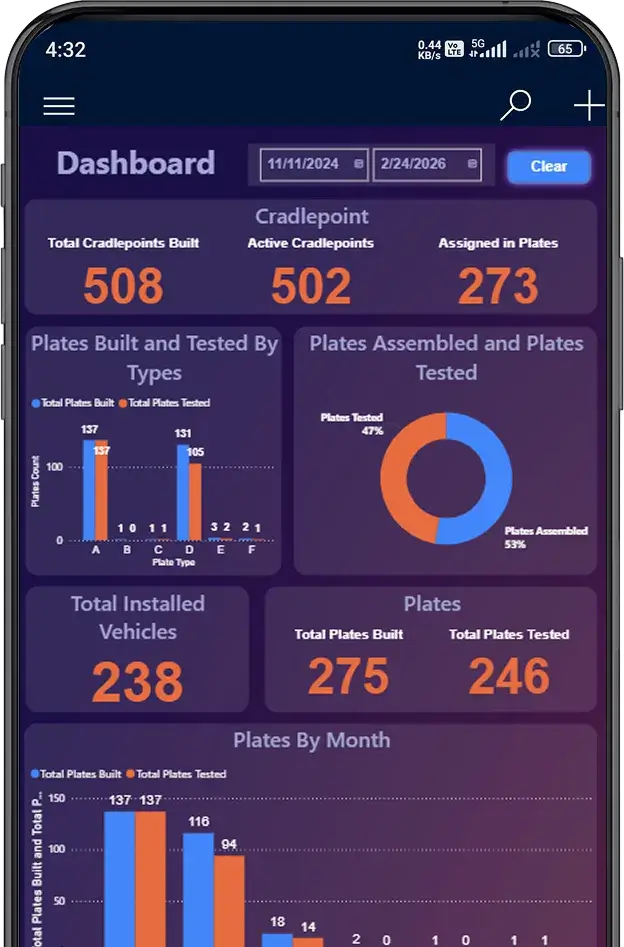
We connect your portal to Dataverse, Power Automate, and Power BI to automate backend workflows and surface real-time data insights.
We implement advanced role-based access controls, authentication providers, and WAF settings to protect your sensitive business data.
We extend standard low-code features by developing custom Liquid templates, JavaScript, and Web API integrations for complex business logic.
We offer performance monitoring, platform updates, and troubleshooting to keep your portal running efficiently as your business scales.
Power Platform Specialists
Our team brings deep expertise across Power Pages, Power Automate, Dataverse, and the broader Microsoft ecosystem.
Portal Security Expertise
We implement multi-layered security, table permissions, web page access controls, and data loss prevention policies.
Pre-Built Portal Accelerators
We leverage proprietary templates for common portal types (customer service, partner management, employee self-service).
Seamless Integration
We connect Power Pages to payment gateways, CRM systems, ERP platforms, and custom APIs for complete workflow automation.
We deliver functional prototypes within days using pre-built templates and accelerators, with full production portals typically launching in weeks, depending on customization and integration requirements.
Unlike traditional website builders, Power Pages is built on Microsoft Dataverse. This means it natively understands your business data (CRM, ERP, Project Tracking) and can trigger complex workflows via Power Automate. It’s a business application platform first, and a website second.
Using low-code development, reusable accelerators, and prebuilt templates, we can deliver MVPs and functional prototypes within days, with production-ready portals typically launching within weeks depending on complexity.
Absolutely. Power Pages enables secure external access to Dataverse, Dynamics 365, SharePoint, and other enterprise systems with granular permissions and identity management controls.
Unlike traditional CMS platforms focused primarily on content management, Power Pages is designed for secure business process automation, enterprise data integration, and workflow-driven web experiences powered by Microsoft Dataverse.
Yes. While the Design Studio is great for quick layouts, we use Pro-Code extensibility to build truly custom experiences. We use Liquid, custom CSS, and JavaScript to create unique layouts and complex client-side logic that matches your brand’s pixel-perfect requirements.
Power Pages websites are fully responsive by default, meaning they work beautifully on any mobile browser. If you need a more “app-like” experience, we can configure your portal as a Progressive Web App (PWA), allowing users to pin the portal to their home screen and even access features offline.
The investment for a Power Pages solution typically depends on the complexity of your business logic and integration needs. After a brief discovery call, we provide a fixed-fee proposal, so you have complete budget certainty from day one.
Microsoft Power Pages helps reduce operational costs by automating repetitive workflows, minimizing manual data entry, lowering custom development expenses through Microsoft’s low-code platform, and reducing support tickets with self-service portals.
By centralizing workflows, approvals, forms, and business data within a secure portal, employees can spend less time on manual coordination and focus more on high-value tasks, improving overall productivity.
Self-service portals also enable customers, partners, and vendors to independently access information, submit requests, track cases, and manage documents, reducing the need for direct support intervention.

Partner with Bitcot to ship better digital products faster and maximize value creation.