Key Takeaways:
- The chatbot market crossed $10 billion in 2026 and is growing at 23-26% annually.
- Botpress, Dialogflow, and Voiceflow lead for speed and low-code accessibility.
- Rasa and Microsoft Bot Framework dominate when enterprises need full control and compliance.
- Vertex AI and AWS Bedrock serve AI-native teams building beyond traditional chatbots.
- There is no single “best” platform. The right choice depends on business stage, tech maturity, and use case.
- Gartner projects conversational AI will save $80 billion in contact center labor costs in 2026.
Every business leader has had this moment.
A customer reaches out at 2 AM. The support team is offline. The inquiry goes cold. The sale disappears. And somewhere, a competitor’s chatbot just handled the exact same question in four seconds.
That gap between the businesses using conversational AI well and those still figuring it out is widening fast.
The global chatbot market now sits at roughly $10-11 billion in 2026, on pace to surpass $32 billion by 2031. Millions of developers are actively building AI experiences across every industry. And yet, “Which chatbot platform is actually worth the investment?” remains the single most common question business leaders ask.
The answer keeps changing. New players enter. Existing platforms evolve. Pricing shifts. Capabilities expand.
Our team at Bitcot recently studied several of the leading players in chatbot development: Botpress, Dialogflow, Voiceflow, Rasa, Microsoft Bot Framework, Vertex AI, and AWS Bedrock. What came out of that research is both exciting and clarifying.
This article breaks down the landscape. Who is building what. What really matters. And where the smartest bets are being placed right now.
How Has Chatbot Development Changed in 2026?
Not long ago, building a chatbot was an experiment.
It meant stitching together rigid decision trees and pre-programmed responses. The tools were clunky. The integrations were brittle. The experience often felt more like navigating a phone menu than having a real conversation.
That era is over.
Today, chatbot development is a business strategy. Sometimes it is the business strategy. Whether the goal is customer support automation or full-scale AI virtual assistant deployment, the platforms available now make both possible.
There is an explosion of platforms right now, each reimagining what conversational interfaces can be and who gets to build them.
At one end of the spectrum sit low-code builders like Voiceflow and Botpress. These platforms prioritize speed, collaboration, and usability. They enable startups and product teams to ship conversational experiences without writing a line of code.
On the other end, platforms like Rasa and Microsoft Bot Framework cater to teams that need full control. Custom deployment. Advanced NLU. Flexible integration layers. These are built for enterprises with strict requirements around data, performance, and extensibility.
Then there are the hyperscaler platforms: Dialogflow, Vertex AI, and AWS Bedrock. These embed conversational AI into broader cloud ecosystems. They are strategic distribution channels for cloud-native AI infrastructure.
Think of building a chatbot today like assembling a vehicle. The chassis, engine, interior, and software all come from different places. The question is not which part matters most. It is how well everything fits together.
So which platform fits which business? That starts with understanding what each one actually does best.
What Are the Best Chatbot Development Platforms in 2026
Chatbots are no longer optional for modern businesses. The real challenge is choosing the right platform in a market full of “most powerful” claims.
Most teams compare features like pricing, channels, or code vs no-code. But the smarter question is: what is this platform actually built to do best?
The best chatbot platforms don’t try to do everything. They focus on one core problem – and solve it better than anyone else.
That’s why we cut through the noise and focused on what truly differentiates each platform. If you’re building for the long term, this is what matters.
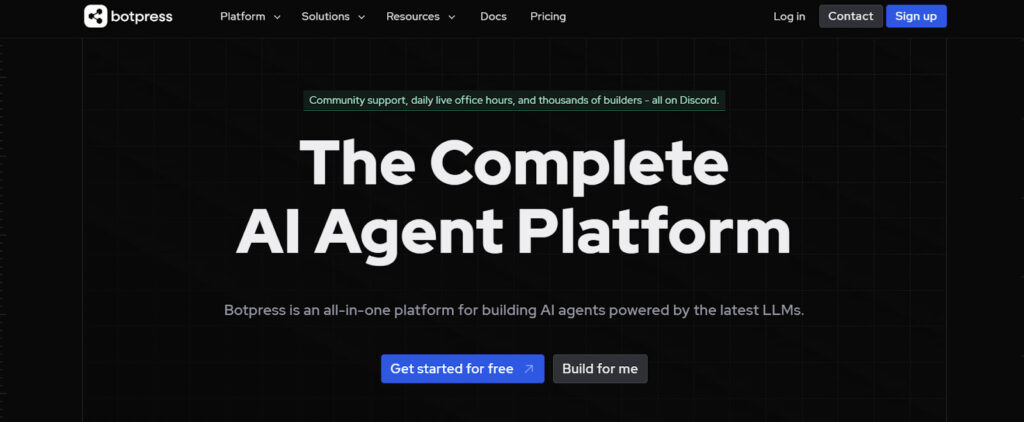
1. Botpress – The Open-Source Powerhouse
Most low-code platforms force a choice between speed and flexibility.
Botpress flips that script.
Built on an open-source core, Botpress combines the ease of visual workflows with the power of custom coding. Developers can move fast and stay in control.
Whether building a quick MVP or a highly customized chatbot experience, Botpress meets teams where they are. The CEO has described the platform’s ambition as becoming the “Photoshop of conversation design,” the go-to editor for builders who want precision.
Key Features:
- Modular Low-Code Editor – Build workflows visually, but drop in code whenever full control is needed.
- Open Source Foundation – Complete transparency, flexibility, and freedom to modify.
- Cloud or Self-Hosted – Choose the deployment path that works for the infrastructure. No vendor lock-in.
- Multi-Channel Integrations – Natively supports over 10 channels including Webchat, WhatsApp, and Instagram for true omnichannel chatbot deployment.
- LLM-Native Architecture – Harnesses current language models to direct conversations and complete tasks, with support for multiple LLM providers and hybrid model strategies.
Pricing:
Botpress offers a free Pay-as-You-Go tier that includes 1 bot, 500 incoming messages per month, 100MB of vector database storage, and $5 in monthly AI credit. The Plus plan starts at $89/month with live agent handoff and custom analytics. The Team plan at $495/month adds real-time collaboration, role-based access control, and enhanced support. Enterprise solutions are custom-priced.
Traction:
As of 2026, Botpress reports hundreds of thousands of active bots in production, processing well over a billion messages. Its Discord community has grown past 25,000 bot builders, backed by an extensive partner network and educational resources through Botpress Academy.
Best For: Developer-forward teams that want open-source flexibility without sacrificing speed. Ideal when the roadmap demands customization that most drag-and-drop builders cannot deliver.
best chatbot platform
But what if the priority is not flexibility, but language intelligence at scale?
2. Dialogflow – Google’s Language Intelligence Engine
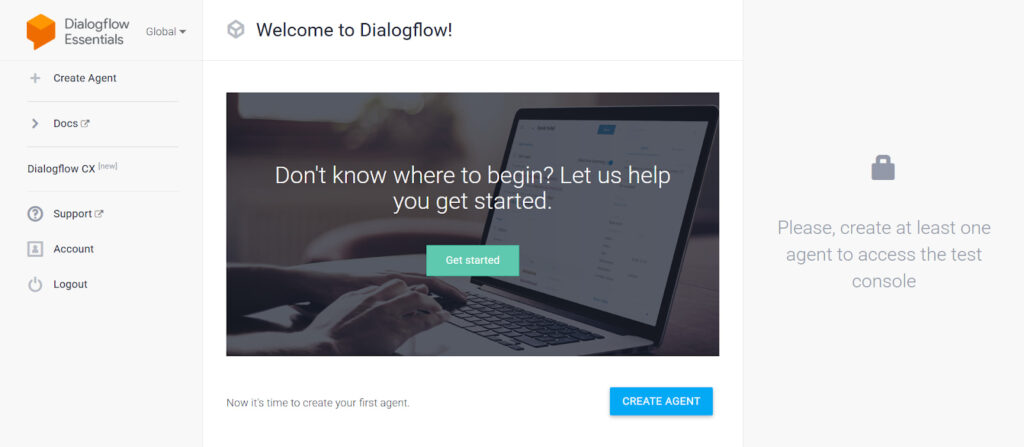
“How do I build a chatbot that actually understands what customers are saying?”
That is the question Dialogflow answers better than almost anyone.
As part of the Google Cloud ecosystem, Dialogflow leverages Google’s industry-leading Natural Language Understanding to create conversational AI that handles complex interactions effortlessly.
For businesses already using Google Cloud, the deep integration alone is a game-changer. Whether building chatbots for voice assistants, customer service, or IVR systems, Dialogflow offers unmatched precision, reliability, and scalability.
Key Features:
- Powerful NLU – Google’s machine learning models handle diverse and multilingual inputs with high accuracy. Its natural language processing capabilities remain among the most sophisticated in the industry.
- Two Editions – Dialogflow CX (advanced) supports up to 20 independent conversation flows and cuts development time by roughly 30% with its visual builder. Dialogflow ES remains available as a lighter option.
- Omnichannel Deployment – Deploy across web, mobile, messaging apps, and voice channels.
- Seamless GCP Integration – Connect with BigQuery, Cloud Storage, and other Google services for analytics and compute.
Pricing:
Dialogflow follows a pay-per-usage model within Google Cloud. Text requests without generative AI cost approximately $0.007 per request. Responses powered by generative AI run about $0.012 per request. Certain features like sentiment analysis are gated to higher-priced tiers.
Best For: Businesses deep inside Google Cloud that need multilingual NLU precision. Strongest when the use case is understanding language at scale, not designing conversation flows from scratch.
best ai chatbot for businesses
Dialogflow excels at understanding language. But what about teams that need to design the entire voice and chat experience visually?
3. Voiceflow – The Voice-First Design Powerhouse
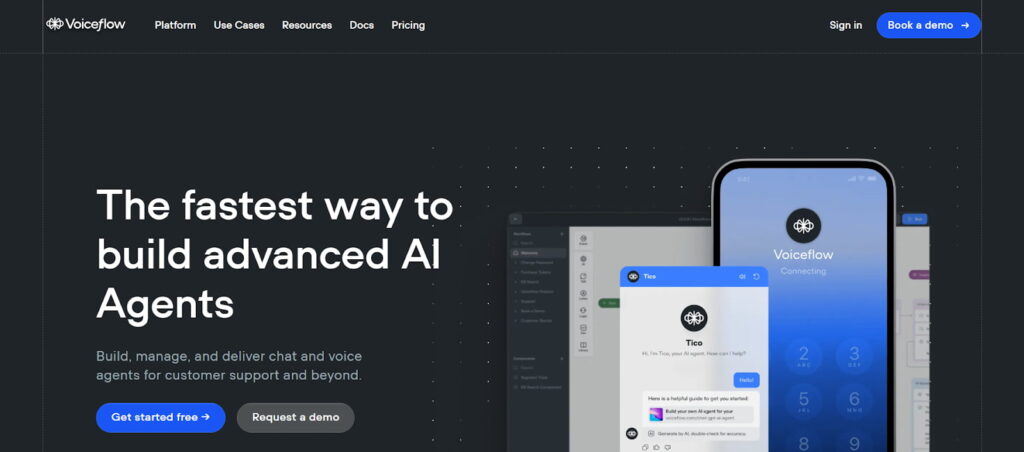
Voiceflow was built for designing voice-first experiences. Think Alexa, Google Assistant, and IVR systems.
But in 2026, it has also gained serious popularity for multi-modal bots across voice and chat. Its collaborative design and prototyping tools make it a standout for cross-functional teams.
What sets Voiceflow apart is its ability to connect chatbots to phone systems via Twilio. That means businesses can handle both digital and telephony-based conversations from a single platform. It also supports multiple AI models including GPT-4, Claude, LLaMA, and Gemini with built-in fallback systems for reliability.
“The best chatbot is the one your customer never realizes is a bot. That only happens when design, context, and intelligence work together from the start.”
Key Features:
- Collaborative Visual Canvas – Designers, PMs, and developers work together in one workspace to build and iterate on conversation flows.
- Multi-Modal Support – Build for voice, chat, and hybrid experiences from a single project.
- LLM Flexibility – Connect to GPT-4, Claude, and other models with automatic fallback.
- Rapid Prototyping – Go from concept to testable prototype in hours, not weeks.
Pricing:
Voiceflow offers a free Sandbox tier with 100 credits per month, up to 2 agents, and 1 editor seat. The Pro plan runs $60/month per editor (or $54/month billed annually) with 10,000 credits, 20 agents, and access to GPT-4 and Claude. The Team plan starts at $150/month with 30,000 credits and unlimited agents. Enterprise pricing is custom, typically ranging from $1,000-$3,000/month depending on volume.
Best For: Cross-functional product teams where designers and non-technical stakeholders need to be hands-on in building and testing conversational experiences, not just reviewing them.
best chatbot for website
Speed and design are covered. But what about teams in regulated industries where total control over the AI stack is non-negotiable?
4. Rasa – The Developer’s Enterprise Framework
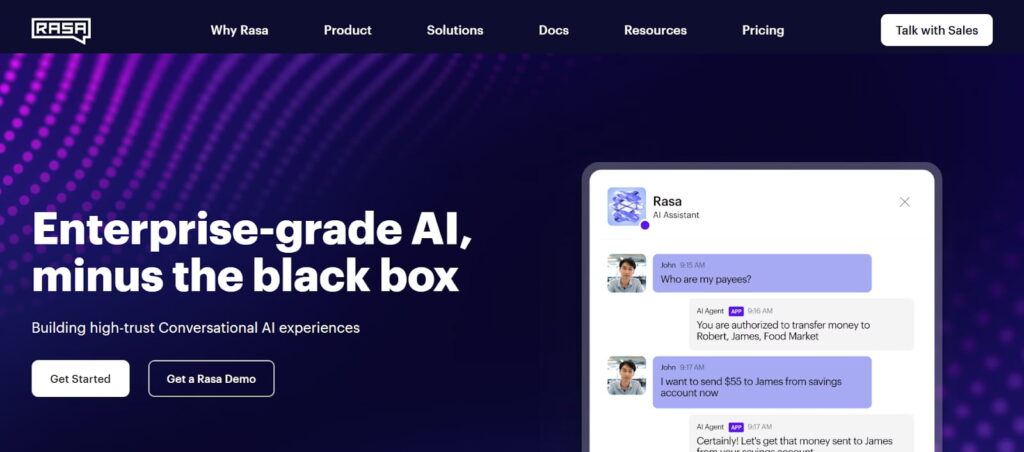
For engineering teams that demand complete control over every layer of the conversational AI stack, Rasa remains the gold standard.
As an open-source framework, Rasa gives developers full access to NLU pipelines, dialogue management, and custom integrations. Zero vendor lock-in.
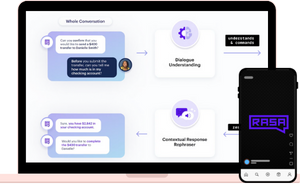
A major 2026 development is Rasa’s CALM (Conversational AI with Language Models) framework. CALM blends LLM-powered dialogue understanding with structured conversation management. That hybrid approach delivers the best of generative AI flexibility with the reliability of deterministic flows. It is a significant evolution from traditional intent-based systems.
Rasa also now offers Rasa Studio, a no-code interface for business users. This makes it possible for cross-functional teams to build, analyze, and optimize AI assistants alongside the pro-code infrastructure.
Key Features:
- Full NLU Control – Train custom models for intent classification, entity extraction, and contextual understanding.
- CALM Framework – Blend LLMs with structured dialogue for reliable, production-grade assistants.
- Rasa Studio – No-code UI for business users to contribute to conversation design without touching code.
- On-Prem and Hybrid Deployment – Deploy on private infrastructure for maximum data control and regulatory compliance.
- Native TensorFlow and PyTorch Integration – Implement advanced AI functionality beyond basic chatbot interactions.
Pricing:
Rasa offers a free Developer Edition supporting one bot per organization with up to 1,000 external conversations monthly. The Growth plan starts at $35,000 annually for teams managing under 500,000 conversations per year. Enterprise pricing is custom. All subscription levels include Rasa Pro access, with advanced tiers adding capabilities like Rasa Studio and premium support.
Best For: Enterprise engineering teams in regulated industries like healthcare, finance, and insurance where data sovereignty, deployment control, and NLU customization are requirements, not nice-to-haves. For a deeper look at how enterprise AI chatbot development works in practice, including cost breakdowns and integration planning, that guide covers the full picture.
best chatbot development platform
Rasa gives maximum control. But what about organizations that need bots living inside the tools their teams already use daily?
5. Microsoft Bot Framework – The Enterprise Ecosystem Play
“Can a chatbot live inside the tools my team already uses every day?”
For organizations deeply embedded in the Microsoft ecosystem, Bot Framework answers that question with a resounding yes.
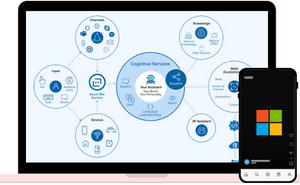
Integrated with Azure, Microsoft 365, and Teams, it enables businesses to build intelligent bots that work seamlessly across existing infrastructure. The framework supports sophisticated dialogue management, multi-turn conversations, and complex workflow integration.
With Azure Cognitive Services powering the AI capabilities, it delivers enterprise-grade performance, security, and compliance out of the box. The chatbot integration layer connects deeply with CRMs, ERPs, and internal tools, making it one of the strongest options for internal workflow automation.
Key Features:
- Deep Microsoft Integration – Build bots that live inside Teams, Outlook, and other Microsoft 365 apps.
- Azure-Powered AI – Leverage Azure Cognitive Services for NLU, speech recognition, and language generation.
- Enterprise Security – Built-in compliance with SOC 2, HIPAA, and GDPR standards.
- Omnichannel Deployment – Deploy across web, mobile, voice, and enterprise applications.
- Premium Channels – Options like DirectLine and Web Chat with customization at approximately $0.50 per 1,000 messages.
Pricing:
Microsoft Bot Framework follows Azure’s consumption-based pricing model. Basic bot services are free for standard channels like Teams and web chat. Premium features and channels are billed per message. Enterprise agreements are available for large-scale deployments.
Best For: Large organizations running on Microsoft 365 and Azure that want bots embedded directly into the daily workflow including Teams, Outlook, and SharePoint without building separate infrastructure.
best chatbot builder
That covers the enterprise ecosystem play. But what about teams that need conversational AI as just one piece of a larger, AI-native application?
6. Google Vertex AI – The Cloud-Native AI Platform
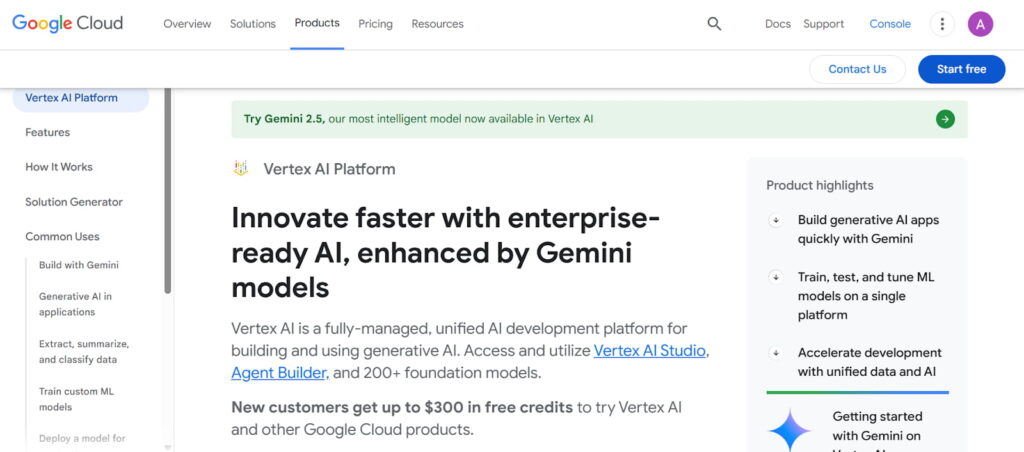
Vertex AI represents Google’s broader vision for AI-native application development.
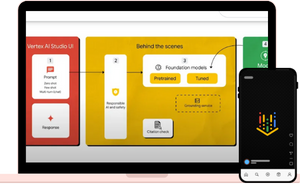
It is not just a chatbot builder. It is a full machine learning platform that lets teams build, train, and deploy conversational agents alongside other AI models within the Google Cloud ecosystem.
For teams building AI-native applications that go beyond traditional chatbots, Vertex AI provides the infrastructure to combine conversational AI with search, recommendation systems, and custom ML models. Teams exploring AI agent development will find Vertex AI particularly compelling as a foundation for autonomous, multi-step workflows.
Key Features:
- Unified AI Platform – Build conversational agents alongside other ML models in a single environment.
- Agent Builder – Low-code environment for creating conversational agents on Google Cloud Platform.
- Advanced AI Capabilities – Access Google’s latest foundation models for sophisticated language understanding.
- Seamless GCP Integration – Connect with BigQuery, Cloud Storage, and other Google services.
- Context-Aware Virtual Assistants – Deploy intelligent agents that maintain conversational context across channels.
Pricing:
Vertex AI follows Google Cloud’s pay-per-use pricing model. Costs vary based on specific services, model usage, and compute resources consumed. Custom pricing is available for enterprise deployments.
Best For: Teams that see conversational AI not as a standalone product but as one capability inside a broader AI-native application stack, and are already committed to Google Cloud.
best ai chatbot platform
Vertex AI is Google’s play for full-stack AI. AWS has its own answer, and it takes a fundamentally different approach.
7. AWS Bedrock – The Hyperscaler’s AI Playground
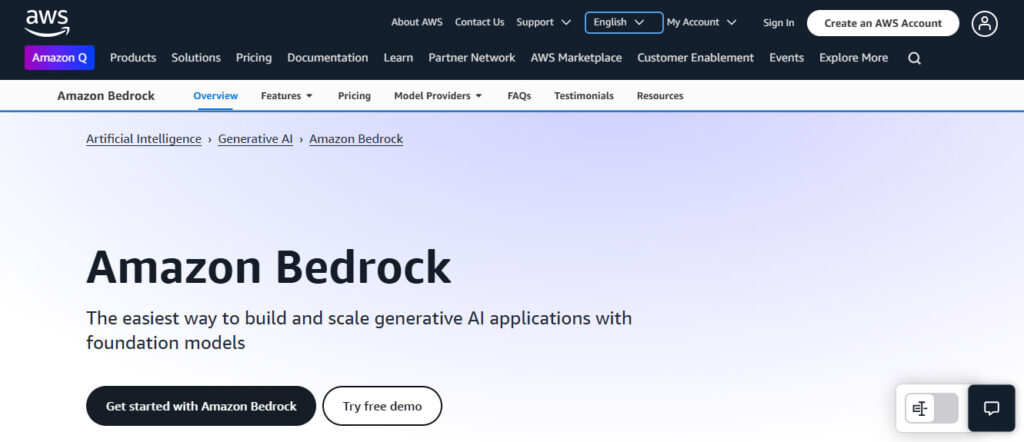
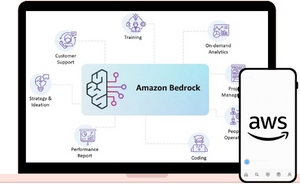
AWS Bedrock brings Amazon’s massive cloud infrastructure to conversational AI.
It provides access to multiple foundation models including Amazon’s Titan, Anthropic’s Claude, Meta’s LLaMA, and others through a unified API. That gives teams the flexibility to experiment, compare, and deploy different AI approaches without switching platforms.
For organizations already running on AWS, Bedrock offers a natural extension for building conversational applications that leverage existing infrastructure, security policies, and data pipelines. It also supports retrieval-augmented generation (RAG) patterns, allowing teams to ground chatbot responses in proprietary knowledge bases for more accurate, context-aware outputs.
Key Features:
- Multi-Model Access – Choose from Amazon Titan, Claude, LLaMA, and other foundation models through a single API.
- Deep AWS Integration – Connect with Lambda, S3, DynamoDB, and other services for serverless architectures.
- Enterprise Security – AWS compliance standards (SOC, HIPAA, FedRAMP) apply to all Bedrock workloads.
- Fine-Tuning Capabilities – Customize foundation models with proprietary data for domain-specific applications.
- Pay-Per-Use Pricing – No upfront costs. Pay based on actual model usage.
Pricing:
AWS Bedrock follows pay-per-use pricing based on the foundation model selected, input/output token volume, and any fine-tuning or provisioned throughput. No upfront commitments required. For reference, Amazon Lex (AWS’s dedicated chatbot service) charges approximately $0.00075 per text request and $0.004 per speech request.
Best For: Engineering teams on AWS that want to test multiple foundation models side by side and build conversational AI deeply woven into serverless, event-driven cloud architecture.
best ai chatbot development tools
Now, with all seven platforms covered, the real question shifts. How do you actually decide which one is right for your business?
How to Choose the Right Chatbot Builder
Choosing a platform is not about picking the “best” tool. It is about picking the right tool for the stage, scale, and technical maturity of the business.
“The biggest mistake we see is teams choosing a chatbot platform based on features alone. The real question is whether the platform fits how the business operates today and where it needs to be in 18 months.”
– Raj Sanghvi, Founder & CEO, Bitcot
Here is a practical breakdown:
Startups and Small Teams: Go with platforms like Voiceflow or Botpress. These tools help teams move fast, learn from users, and iterate without heavy engineering overhead.
Mid-Market Teams: For customer support automation, internal workflows, or lead generation flows, look for balance. Dialogflow CX or Botpress Cloud offer richer capabilities without requiring a full dev team.
Enterprises: For complex workflows, multilingual support, data control, and deep system integration, platforms like Rasa or Microsoft Bot Framework provide the tools and governance to go big. But the team needs to match the platform’s complexity.
AI-Native Teams: For teams already working with LLMs and building AI-native applications, tools that plug into Vertex AI, AWS Bedrock, or use open-source orchestration layers offer far more flexibility and far more risk. For a broader view of the best AI agent frameworks by category, that breakdown covers everything from LLM orchestration to low-code automation.
| Business Stage | Recommended Platforms | Key Consideration |
| Startup / MVP | Voiceflow, Botpress | Speed and affordability |
| Mid-Market | Dialogflow CX, Botpress Cloud | Balance of power and ease |
| Enterprise | Rasa, Microsoft Bot Framework | Control, compliance, scale |
| AI-Native | Vertex AI, AWS Bedrock | Model flexibility, cloud depth |
Knowing the right platform is a strong start. But there is a deeper tradeoff that shapes every buying decision.
Should You Prioritize Customization or Speed in a Chatbot Platform?
This is where most buying decisions get stuck.
Rasa and Microsoft Bot Framework are built for developers and enterprises that need deep control. They are open or flexible enough to self-host, integrate into complex environments, and layer in proprietary logic. For highly regulated or bespoke assistants, these are the right tools. But customization comes at a cost: time, expertise, and complexity.
Low-code platforms like Dialogflow and Voiceflow streamline the process by reducing the need for deep coding. Teams can focus on high-level logic and user experience. Less control, but faster delivery. That is often the right tradeoff for teams that need quick solutions.
For regulated industries, deployment matters even more. Tools like Rasa and Botpress offer on-prem and hybrid options. These allow deployment on private infrastructure, giving more control over security, data, and compliance.
“AI is the defining technology of our time. Every organization will need to become an AI-first organization, and conversational interfaces will be how people interact with that intelligence.”
The bottom line: There is no single “best” conversational AI platform. There is only the best platform for a specific team, budget, and use case.
Theory is useful. But what does this actually look like when real money, real timelines, and real customers are involved?
What Real Chatbot Projects Reveal About Choosing the Right Platform
This plays out in real projects every week.
One fast-scaling healthcare startup came to us needing a voice-enabled assistant that respected HIPAA compliance. Off-the-shelf tools were not flexible enough. The internal team did not have the bandwidth to build from scratch.
The solution started with a Voiceflow prototype to validate the concept quickly. Then we migrated the project to Rasa for full control and compliance.
That journey, from fast experimentation to full-scale deployment, perfectly highlights what matters most.
It is not about waiting for the “perfect” platform. It is about starting to build, testing, iterating, and finding the right tools as the business scales.
Beyond selecting the right platform, it pays to learn from real-world deployments and network with peers. Conferences like the Conversational AI Summit and Enterprise Connect continue to bring together startups, enterprise practitioners, and researchers each year. The 2026 events reflect a sharper focus on agentic AI, multimodal assistants, and LLM orchestration.
Also Read: Best AI, Low-Code, and No-Code Business Tools in 2026
Real projects reveal patterns. But those patterns only matter when backed by a team that knows how to execute.
How Bitcot Helps You Build Secure and Scalable Chatbot Solutions
Choosing the right chatbot platform is only half the equation. The other half is building, integrating, and scaling it properly.
We work with startups, mid-market companies, and enterprises across industries including healthcare, fintech, eCommerce, real estate, logistics, and more to design and deploy custom chatbot solutions that actually deliver measurable results. Whether the project involves a simple FAQ bot or a full enterprise AI chatbot with CRM and ERP integration, the approach stays the same: strategy first, then build.
Here is what makes our approach different:
Strategy-First Discovery. Before a single line of code is written, the team conducts comprehensive business analysis. That means mapping customer journeys, identifying pain points, and defining success metrics upfront.
Platform-Agnostic Expertise. We do not push a single platform. Whether the right fit is Botpress, Rasa, Dialogflow, Voiceflow, or a custom-built solution, the recommendation is always based on the client’s actual needs, not a partnership deal. For teams evaluating options, this comparison of top AI chatbot development platforms covers the broader ecosystem beyond the seven covered here.
Full-Stack Delivery. From NLP model training and conversation design to API integration, deployment, and ongoing optimization, we handle the entire lifecycle. That includes chatbot personality design to make sure the bot actually sounds like the brand it represents.
Compliance and Security. For regulated industries like healthcare and finance, we build with HIPAA, SOC 2, and GDPR compliance baked in from day one.
The result is not just a chatbot. It is a conversational experience that drives revenue, reduces support costs, and scales with the business.
Schedule a Free Consultation with Our Chatbot Team
What Does the Future of Conversational AI Look Like?
Most chatbots today are good enough.
But what is coming is different.
The next generation of conversational systems will not just react. They will reason. They will remember past interactions, understand goals, and take meaningful action across tools, platforms, and real-world workflows. The line between a chatbot and an AI agent is already blurring.
What search did for information and mobile did for access, conversation will do for interaction. Think less “virtual assistant.” Think more “AI teammate.”
The industry is standing on the edge of a new platform shift. This shift will demand new platforms, ones that combine LLMs, structured memory, real-time context, and autonomous action.
It also means the interface will disappear. Instead of visiting a site, users will ask a question. Instead of clicking through menus, they will describe an outcome.
The businesses that build for that future now will have a significant head start.
Ready to build a chatbot that actually moves the needle? Talk to our chatbot engineers and get a free consultation on the right platform, architecture, and roadmap for your business.
Frequently Asked Questions (FAQs)
Which chatbot builder is best for small businesses in 2026?
Botpress (cloud version) and Voiceflow are great options for small businesses. Both offer free tiers, visual builders, and fast deployment without needing a dedicated dev team. Startups can launch an MVP in hours, not weeks.
Do I need coding skills to build a chatbot?
It depends on the platform. Tools like Botpress and Voiceflow cater to non-technical users with no-code interfaces. However, Rasa, Microsoft Bot Framework, and Vertex AI often require programming knowledge for custom functionality and deeper integrations.
What is the difference between Botpress and Rasa?
Both are open-source, but they serve different audiences. Botpress is more user-friendly with a visual flow builder and LLM-native architecture. Rasa is developer-centric with full control over NLU pipelines, custom workflows, and its newer CALM framework for blending LLMs with structured dialogue.
How long does it take to deploy a chatbot?
A basic FAQ chatbot can go live in a few hours using templates on platforms like Botpress or Voiceflow. More sophisticated implementations integrated with CRMs, ERPs, or backend systems typically take 2-4 weeks for full deployment.
How much does it cost to build a chatbot in 2026?
Costs range widely. Self-service platforms start free or under $100/month. Mid-tier deployments using Dialogflow or Botpress Cloud run a few hundred dollars monthly. Enterprise-grade solutions with Rasa or custom builds can start at $35,000/year and scale up depending on complexity, compliance, and integration needs.
What is the current state of the chatbot market?
The global chatbot market is valued at approximately $10-11 billion in 2026, growing at 23-26% annually. Gartner projects conversational AI will save $80 billion in contact center labor costs in 2026. Around 80% of companies are now using or planning to use AI-powered chatbots, and an estimated 95% of customer interactions involve some form of AI.
Can chatbot platforms handle multiple languages?
Yes. Most modern platforms support multilingual capabilities. Dialogflow and Botpress offer automatic translation for 100+ languages. Rasa supports custom multilingual NLU models. The level of accuracy and ease of setup varies by platform, so it is worth testing with actual user inputs in the target languages before committing.