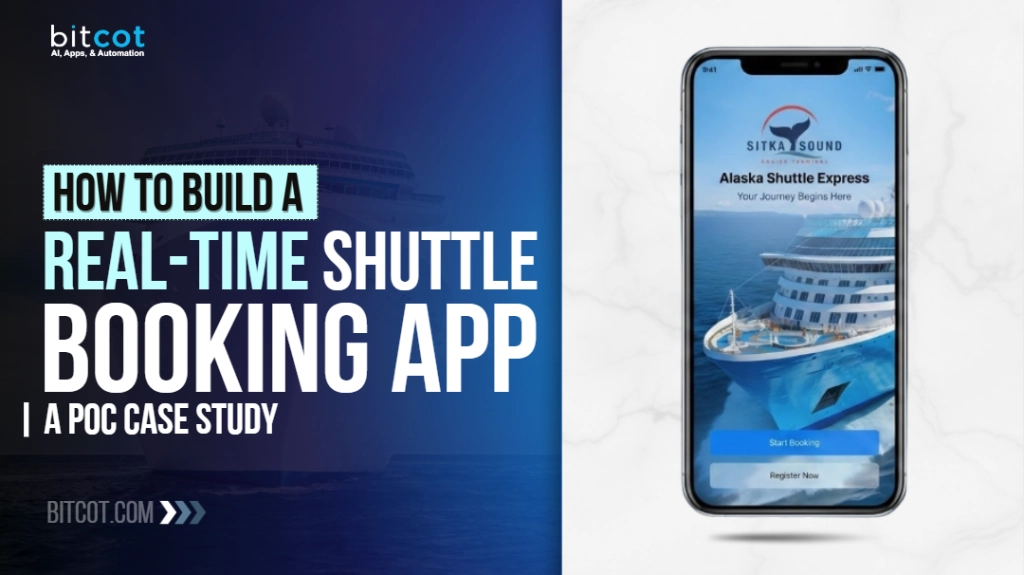
A cruise passenger steps off the ship in Sitka, Alaska. They have 90 minutes before they need to be back onboard.
They open the shuttle booking app on their phone, tap “Book Now”, and hit an error screen.
No explanation. No retry option. Just a blank wall between them and their shore excursion.
They close the app and walk up to the first person they see wearing a lanyard.
That is the moment a failed booking system stops being a technical problem and becomes a brand problem. In travel, it happens more often than most operators realize.
Most shuttle service booking app development is optimized for ideal conditions, not for patchy Alaskan port connectivity, complex multi-cruise-line APIs, and hundreds of passengers booking simultaneously the moment the gangway drops.
Sitka Doc is our Proof of Concept for production-grade shuttle booking app development built specifically for this environment. Built with React Native and Expo, it handles the entire reservation lifecycle for cruise passengers in Sitka, Alaska, covering real-time availability across multiple cruise lines through to ticket management, all without requiring passengers to create an account.
This case study breaks down exactly how we built it, the architectural decisions that shaped it, and what logistics operators, travel tech companies, and any team building a real-time mobile booking system can take from it.
Why Real-Time Booking Apps Fail Under Pressure
Most mobile booking apps are built to work in a demo. They pass QA on a fast Wi-Fi connection, with one tester, making one booking at a time.
Then they hit production.
The moment real users arrive, with concurrent sessions, slow connectivity, and two people tapping “Book Now” on the same slot, the cracks appear fast.
A generic error message replaces the confirmation screen. A duplicate booking creates a conflict the support team resolves manually. A passenger stands at the dock with no ticket.
According to McKinsey & Company’s research on digital product failure, 17% of large IT projects go so badly they threaten the existence of the company.
Poor architecture planning is consistently cited as the leading cause.
The three assumptions that kill most booking apps:
- The network will always be available
- Two users will never want the same slot at the same time
- One API is enough
For Sitka Doc, all three of those assumptions were wrong from day one. So we designed the PoC to prove each one could be solved before any production build began.
What Makes Shuttle Booking for Cruise Passengers Uniquely Complex
Shuttle booking for a single shore excursion operator sounds simple. In practice, it involves overlapping constraints that most consumer booking apps are never designed to handle.
| Challenge | Standard Booking App | Sitka Doc Requirement |
| API Sources | Single inventory endpoint | Two separate GraphQL APIs with different auth |
| Concurrent Users | Low, predictable volume | Hundreds of passengers booking the moment a ship docks |
| Network Environment | Assumed reliable connectivity | Patchy port coverage, frequent dropouts |
| User Accounts | Registration required | Guest mode as the primary path |
| Booking Conflicts | Handled post-facto | Prevented in real time via reservation lock |
| Platforms | Single platform | Cross-platform: Android and iOS |
The complexity is not in any one of these factors. It’s in managing all of them at once in a single production-grade mobile application that a cruise passenger needs to use successfully in under three minutes.
That’s the problem Sitka Doc was built to solve.
Why a PoC-First Approach to Shuttle Booking App Development Pays Off
Here’s the question most teams skip before a build: “What are the three things most likely to break this in production?”
If you can’t answer that question, you’re not ready to build.
A Proof of Concept is not a throwaway prototype. Done correctly, it’s a working validation of your riskiest architectural assumptions before you commit to a full production build.
You test the things most likely to fail first. You surface integration complexity early. You walk into the full build with confidence, not with fingers crossed.
For Sitka Doc, we identified three high-risk assumptions that needed to be validated in the PoC:
- Can two separate GraphQL APIs with different authentication models be integrated cleanly?
- Can reservation conflicts be prevented at the session level without direct database access?
- Can the app behave predictably during network failures in a remote environment?
Everything else, including user profiles, ticket downloads, and rescheduling, could be built with confidence once those three questions had working answers.
This is what architecture-first shuttle booking app development looks like. Not a planning document. A working mobile app development proof.
An Overview of Bitcot’s PoC Solution for Sitka Doc
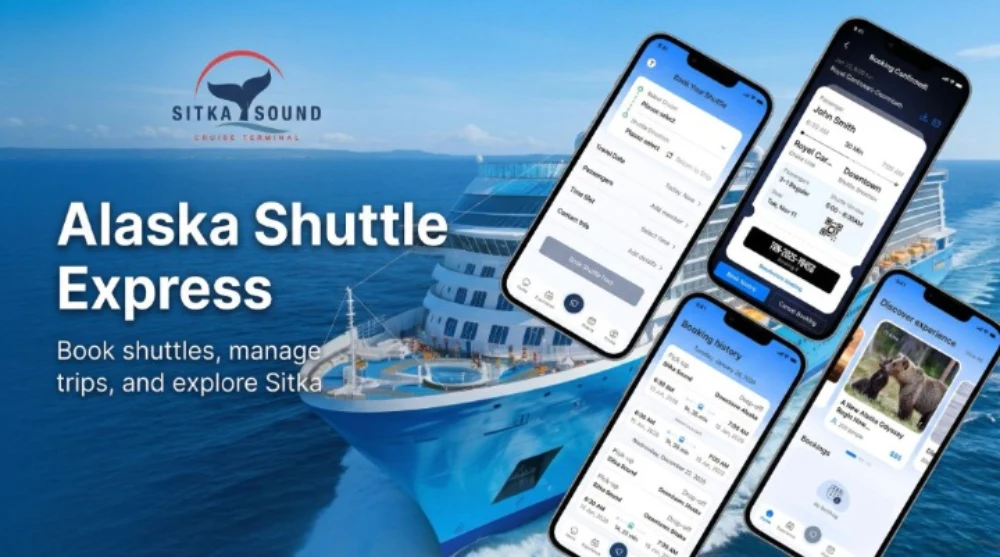
Sitka Doc is a cross-platform React Native application built with Expo, designed to handle the complete shuttle reservation lifecycle for cruise passengers arriving in Sitka, Alaska.
The app integrates with two separate GraphQL inventory systems and supports both guest and registered booking flows. It prevents concurrent double-bookings through a session-level reservation lock and handles network failures gracefully with clear user feedback and one-tap retry.
Tech Stack Overview:
| Layer | Technology | Purpose |
| Mobile Framework | React Native + Expo | Cross-platform iOS and Android from a single codebase |
| API Integration | Dual Apollo Client | Independent management of two GraphQL endpoints |
| State Management | Zustand + React Context | Scalable global state with minimal boilerplate |
| Offline Storage | AsyncStorage | Session persistence, preference caching, offline state |
| Navigation | React Navigation | Screen management with container/view/styles separation |
| Type Safety | TypeScript (strict mode) | 100% coverage, runtime error prevention |
| Network Handling | Apollo Link middleware | Pre-request connectivity checks, graceful error surfaces |
Key Features at a Glance:
- Multi-API orchestration across two GraphQL endpoints with independent authentication
- Reservation lock mechanism preventing double-booking under concurrent load
- Network-aware request handling with graceful degradation during connectivity loss
- Guest mode as a primary booking path, with no registration required
- Full ticket lifecycle: booking, rescheduling, return, cancellation, and download
How This PoC Solution Solves the Three Core Technical Challenges
The previous section maps what we built. This section explains the engineering decisions behind why it works, and where equivalent solutions typically fall apart.
Multi-API Orchestration: Dual Apollo Client for GraphQL Integration
The first challenge was integrating two separate GraphQL APIs, each with its own authentication mechanism, response schema, and latency profile.
The common approach is to build a single abstraction layer, with one API client translating requests for both endpoints. It looks cleaner on a whiteboard.
In practice, it creates a fragile translation layer that breaks the moment either endpoint updates its schema or auth behavior. Changes to one API cascade into the other. Debugging becomes guesswork.
We built a dual Apollo Client architecture instead. Each GraphQL endpoint gets its own dedicated Apollo Client instance with independently configured authentication via context-based header injection. Per-request customization is handled at the client level, not through a shared translation layer.
Why this matters for your build:
| Approach | Single Abstraction Layer | Dual Apollo Client |
| API Independence | Low – changes to one affect the other | High – each client is fully isolated |
| Auth Flexibility | Shared auth logic, high conflict risk | Independent auth per client, zero interference |
| Error Isolation | Mixed error surfaces | Clean, independent error handling per API |
| Maintainability | Brittle at scale | Modular and independently testable |
| Schema Changes | Requires re-testing both APIs | Only the affected client needs updating |
The practical result: the two APIs run independently. A schema change, auth rotation, or endpoint failure on one side has zero impact on the other.
Race Condition Prevention: The Reservation Lock Mechanism
Imagine two passengers opening the app at the same moment. Both see the same shuttle slot as available. Both tap “Book Now” within milliseconds of each other.
Without the right architecture, both receive a confirmation. One slot. Two passengers. Two problems.
This is a race condition, and in travel booking systems operating at surge volume, it’s a near-certainty, not an edge case.
Standard concurrency handling relies on database-level locking. For a mobile app integrating two external GraphQL APIs with no direct database access, that option doesn’t exist. We needed session-level control.
We built a reservation lock mechanism that activates the moment a user initiates a booking flow. The slot is locked for the duration of that session. Concurrent requests for the same slot are held or rejected during the lock window. The lock releases only when the booking is confirmed or the session times out.
This creates session isolation: one booking attempt, one protected window, one outcome.
According to Salesforce’s State of the Connected Customer report, 76% of customers say consistent experiences across digital channels are critical to earning their business.
A double-booking breaks that trust in a single interaction and is extremely hard to recover from.
Offline Resilience: Building a Travel App That Works Without Wi-Fi
Most app demos run on fast Wi-Fi. Most cruise port environments don’t.
A passenger stepping off a ship in a remote Alaskan port is not on a reliable 5G connection. Coverage is patchy. Requests time out. The question isn’t whether network failures will happen. It’s what the app does when they do.
We used Apollo Link, a middleware layer for Apollo Client, to intercept outbound requests and check network availability before any API call is initiated.
If the network is available, the request proceeds. If it’s not, the app surfaces a clear, actionable message rather than a generic error or silent failure. When connectivity is restored, the user retries with a single tap.
Implementing this correctly requires deliberate state management design from the start. We used React Context and Zustand together, Context for lightweight scoped state and Zustand for global session state.
This combination gave us the flexibility to handle pending request queues, user feedback loops, and recovery flows without making the core application logic fragile.
Offline resilience decision matrix:
| Scenario | Standard App Behavior | Sitka Doc Behavior |
| No network at app open | Blank loading screen or crash | Cached state displayed, user informed |
| Network drops mid-booking | Request fails silently | Error surfaced with clear message and retry option |
| Network restored | Requires manual restart | One-tap retry from exactly where the user left off |
| Partial connectivity | Inconsistent API responses | Pre-check prevents requests that will fail |
The Sitka Doc User Experience: A Screen-by-Screen Walkthrough
Architecture is only as valuable as the experience it produces for the person using it. Here is how Sitka Doc works from the passenger’s perspective, screen by screen.
1. Guest or Registered Booking Entry
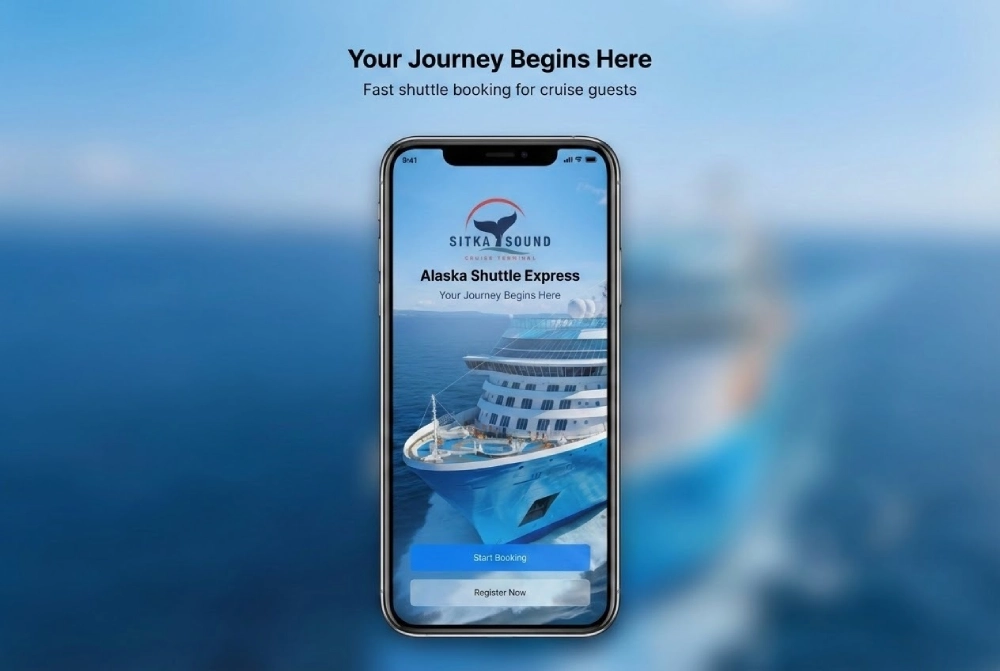
The first screen presents two paths: continue as a guest or sign in to a registered account.
Guest mode is the primary path. Most cruise passengers won’t create an account for a single shore excursion. Requiring registration here creates instant drop-off.
Both paths lead to the same booking flow. The session management layer handles the difference in authentication transparently.
2. Experience Selection and Popular Destinations
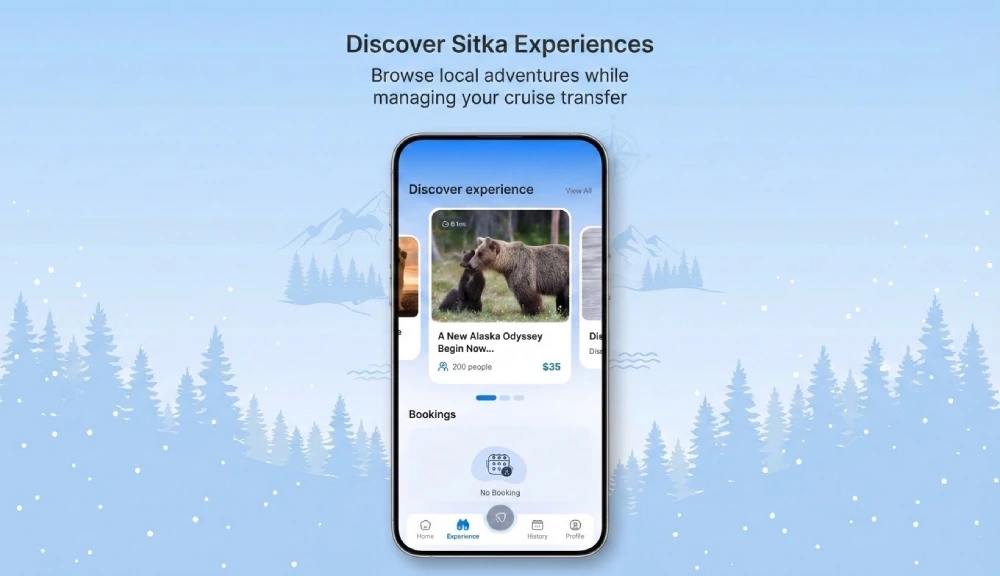
After entry, passengers see the most popular shuttle destinations surfaced as a visual grid.
Destinations are pulled in real time from both GraphQL APIs and merged into a single unified view. The passenger never sees the complexity behind it.
3. Booking Details – Cruise Line, Direction, and Passengers
The booking detail screen captures the three variables the inventory system requires: which cruise line the passenger arrived on, the direction of travel, and the number of passengers in the group.
This is where the reservation lock engages for the first time. Before any slot selection, the session is identified and protected.
4. Real-Time Slot Availability and Selection
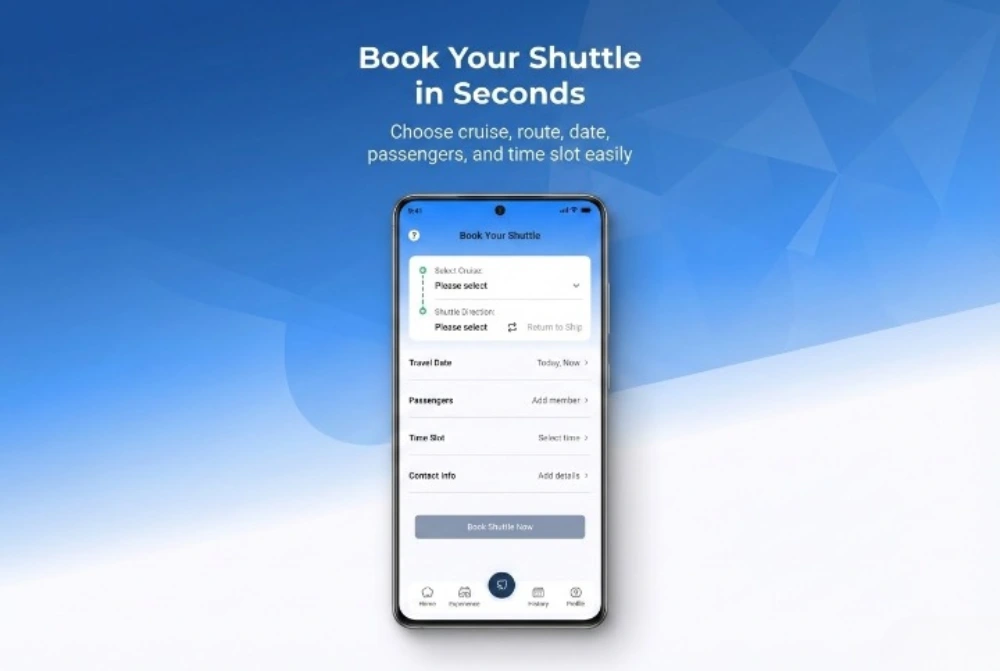
Available time slots are displayed in real time, updated from both API sources.
Slots locked by another active session are automatically removed from the available set. The passenger selects their preferred time and proceeds. The reservation lock tightens to the selected slot the moment the passenger taps.
5. Ticket Confirmation and Full Lifecycle Management
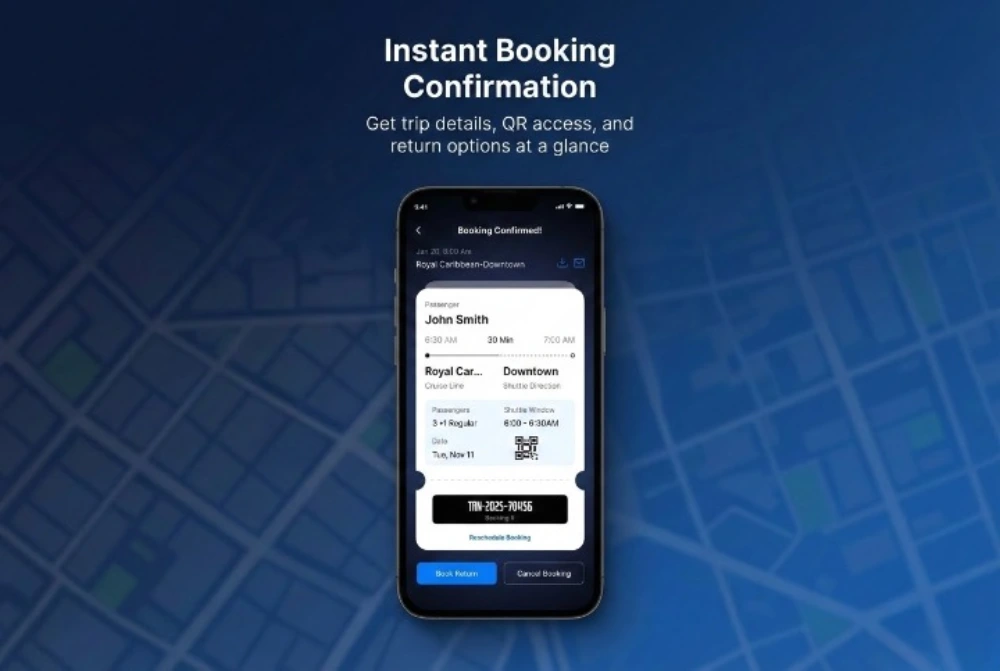
The final screen delivers the confirmed ticket with full booking details.
From here, passengers can reschedule, request a return booking, cancel, or download the ticket to their device. All actions are handled within the same flow, with no screen switching and no portal redirects.
Bitcot’s Process Behind Building the Sitka Doc App
Strong architecture requires more than the right technology choices. It requires a development process that enforces clean separation between concerns so that each layer of the application can be built, tested, and modified independently.
Architecture-First: Validating Risk Before Writing Production Code
Before any component was built, we mapped the three highest-risk assumptions of the project: dual API integration, concurrent booking, and offline behavior.
The PoC was structured to validate those three specific risks first. Only once those were proven did we move into the full booking flow, ticket management, and user profile layers.
This sequencing is the reason the PoC has real production value. It’s not a demo that works under ideal conditions. It’s a validated architectural foundation.
Container/View/Styles Pattern for Scalable Parallel Development
We used a strict container/view/styles separation throughout the codebase. Container components own the business logic and API interaction. View components handle rendering only. Styles are isolated in dedicated files.
This pattern allows two engineers to work on the same feature at the same time, one on the container logic and one on the view, without merge conflicts or logic bleeding into the UI layer.
It also makes the codebase significantly easier to test: container logic is tested independently from rendering behavior.
Custom Hook Layer for Clean API Abstraction
A dedicated custom hook layer sits between the Apollo Client instances and the UI components. All complex API requests, data fetching sequences, and error handling logic live in this layer.
No UI component interacts with the data layer directly.
This means the booking flow UI can be redesigned without touching a single API call. And the API integration can be updated without risking regressions in the UI. Clean separation pays dividends at every stage of the product lifecycle.
Key Outcomes Delivered by Sitka Doc PoC
The PoC delivered validated results across three dimensions: code quality, performance reliability, and user experience.
1. Code Quality: 100% TypeScript Coverage in Strict Mode
Full TypeScript coverage with strict mode enabled means the codebase enters any production build with zero type-level ambiguity.
An entire category of runtime errors, including null reference exceptions, type mismatches, and incorrect API response handling, is caught at compile time before a single user encounters them.
2. Performance: Fewer API Failures Through Pre-Request Network Checks
Network pre-checks using Apollo Link eliminate a significant portion of failed API calls before they happen.
Instead of sending requests that will time out, the middleware checks connectivity first. Only viable requests go out. This directly reduces the error rate passengers see during poor connectivity windows at port.
Before vs. After – Key Metrics:
| Metric | Without PoC Architecture | With Sitka Doc Architecture |
| Double-booking risk | High under concurrent load | Eliminated via reservation lock |
| Failed API calls during poor connectivity | Frequent, silent failures | Reduced by pre-request network checks |
| User experience during network loss | Blank screen or crash | Informative message + one-tap retry |
| TypeScript error coverage | Partial | 100% strict mode |
| Cross-platform deployment | Separate codebases required | Single React Native + Expo codebase |
| Guest booking support | Registration wall | Full guest flow as primary path |
3. User Experience: Predictable Behavior Under Unpredictable Conditions
The most important outcome of this PoC is not a feature. It’s a behavior: the app performs the same way whether connectivity is perfect or terrible.
Passengers get clear information, not confusion. Bookings are confirmed or held, never silently lost. The reservation system protects both the passenger and the operator from double-booking conflicts.
That predictability is what earns trust. And in travel, trust is the product.
Shuttle Booking App Development Cost and ROI: What to Expect
Building a production-grade shuttle booking app is an investment. Understanding what drives cost and where the return comes from is essential for any operator or travel tech company making this decision. The Sitka Doc PoC model is specifically designed to reduce financial risk while maximizing the value of every development dollar spent.
What Drives the Cost of Shuttle Booking App Development?
Shuttle booking app development cost is shaped by four primary variables: the number of API integrations required, the complexity of concurrency and offline handling, the platforms targeted (iOS, Android, or both), and whether the team begins with a validated PoC or skips directly to a full production build.
Teams that skip the PoC phase consistently spend more in total. Architectural problems discovered mid-production build are 5–10x more expensive to fix than the same problems caught during a structured validation phase. The PoC is not an additional cost. It is insurance against the larger cost.
Where the ROI Comes From: The Real Return on a Well-Built Booking App
The ROI of a production-grade shuttle booking app is measured across three categories: operational savings, revenue capture, and brand protection.
Operational savings. Every double-booking that triggers a manual support resolution costs time, staff effort, and often a passenger refund. Every failed booking that sends a passenger to the dock with no ticket costs a sale and creates a dispute. A reservation lock mechanism and real-time availability sync eliminate these costs at the source.
Revenue capture. A guest booking path removes the single largest drop-off point in the reservation funnel. Passengers who will never create an account can complete a booking in under three minutes. Every friction point removed in the booking flow translates directly to completed transactions that would otherwise be abandoned.
Brand protection. In travel, a single public booking failure at peak load can trigger negative reviews that take months to recover from. The offline resilience architecture and network-aware request handling in Sitka Doc prevent the passenger-facing failures that create those moments. Protecting the brand during surge booking windows is a measurable financial outcome, not just a design preference.
Partner with Bitcot to Build Your Custom Booking App
Building a production-grade shuttle booking system that handles real-world complexity requires more than choosing the right framework. It requires working with a shuttle booking app development company that validates the toughest architectural challenges before development begins, backed by engineers who understand exactly where systems fail in production.”
Why Choose Bitcot as Your Architectural Partner?
- Proven multi-API integration expertise. We’ve solved the dual Apollo Client challenge, independent auth per endpoint, and context-based header injection at the PoC level. The hard architecture work is already validated.
- Concurrency control from the ground up. Reservation lock mechanisms, session isolation, and race condition prevention are built into our process, not patched in after the first production incident.
- Offline-first by default. Every mobile product we build is designed for real-world connectivity conditions, not demo conditions.
- Senior-only teams. Every engineer, architect, and product manager on your project has built production systems before. Architecture decisions are made by people who’ve seen what breaks in the field.
- End-to-end ownership. From PoC through production build to post-launch support, we stay with the product, not just the project.
The Bitcot Blueprint Advantage
One of the most valuable aspects of the Sitka Doc PoC is that it is a reusable architectural blueprint, not a one-off build.
The dual Apollo Client pattern, reservation lock mechanism, and offline-resilience layer we engineered are fully portable. For any client building a real-time booking system in travel, hospitality, events, or logistics, we don’t start from scratch.
We start from a validated foundation.
That means:
- Faster time to production. Core architecture is already proven. We configure, not rebuild.
- Lower architectural risk. The failure modes have been identified and solved. Your build inherits the solutions.
- Fully custom experience. The engine is pre-validated. The product, including the UI, brand, booking flows, and integrations, is built entirely for your business.
Across the United States, travel operators, shuttle companies, and hospitality platforms are discovering the same truth: the apps passengers trust are the ones built on architecture that was validated before launch, not after.
Whether you’re a US-based travel startup launching your first reservation platform or an established operator upgrading legacy booking systems, share your vision with us. Our team will design a scalable, future-ready architecture tailored to your business needs.
Final Thoughts
Sitka Doc demonstrates what shuttle booking app development looks like when the hardest engineering questions are answered first.
Dual API integration without shared state pollution. Race condition prevention without direct database access. Offline resilience without a degraded user experience. These were the problems we set out to prove were solvable, and the PoC confirms they are.
The technology stack, including React Native, Expo, dual Apollo Client, Zustand, and TypeScript in strict mode, was chosen because it solves the specific problems this use case demands. Not because it’s familiar.
The architecture pattern, including container/view/styles, the custom hook layer, and independent client instances, was designed to support a production build that can grow without being rebuilt.
A well-built PoC is not the beginning of a project. It’s the foundation of a product.
If your team is building in travel, logistics, hospitality, or any domain where real-time availability and concurrent users create complexity, the Sitka Doc blueprint is a strong starting point.
Our React Native App development services are built around architecture validation first, production delivery second.
Start a discovery call and we’ll map your specific constraints, identify your highest-risk architectural assumptions, and show you what a production-ready approach looks like for your use case.
Frequently Asked Questions (FAQs)
How much does shuttle booking app development cost?
The cost of shuttle booking app development depends on factors such as the number of API integrations, real-time functionality, concurrency handling, and platform coverage (iOS and Android). Apps with advanced features like real-time availability, offline support, and double-booking prevention require higher investment due to increased architectural complexity.
How do you prevent double-bookings in a real-time mobile booking app?
The most reliable approach is a session-level reservation lock mechanism. When a user initiates a booking, the system locks that slot for the duration of the session. Concurrent requests are held or rejected until the lock releases on confirmation or timeout. This creates session isolation without requiring direct database access.
What is the best tech stack for building a cross-platform shuttle booking app?
React Native with Expo provides a strong cross-platform foundation for both iOS and Android. For multi-API GraphQL environments, a dual Apollo Client architecture with context-based header injection is the cleanest approach. Pair it with Zustand for state management, AsyncStorage for local persistence, and 100% TypeScript in strict mode. Stack decisions should always follow the specific integration and concurrency requirements of your use case.
How do you build offline resilience into a mobile app for travel environments?
Start with network-aware request handling at the middleware layer, not as a retrofit. Apollo Link lets you intercept outbound requests and check connectivity before any API call is made. Design your state management to handle pending request queues, user feedback during downtime, and single-tap recovery when connectivity is restored. Offline resilience is an architecture decision, not a feature.