Here’s something most executives won’t tell you: enterprise information technology transformations fail more often than they succeed.
Not because of bad technology. Not because of budget constraints.
They fail because organizations pick the wrong consulting partner or try to do everything alone.
The stakes have never been higher. Enterprise IT stands at a critical juncture in 2026. Organizations are managing increasingly complex digital ecosystems that include cloud infrastructure, data analytics platforms, cybersecurity frameworks, artificial intelligence systems, and legacy system modernization. Each technology decision now directly impacts revenue growth, operational resilience, regulatory compliance, and customer experience.
In this comprehensive guide, you’ll discover:
- The top 10 technology consulting firms leading enterprise transformation
- Key evaluation criteria for selecting the right information technology consulting partner
- Emerging trends shaping enterprise information technology in 2026
- Common mistakes to avoid when hiring technology consultants
- Industry-specific considerations for your sector
This guide breaks down the top technology consulting firms for enterprise IT transformation, digital strategy, and technology implementation. Written for CIOs, CTOs, founders, and enterprise decision-makers who need trusted partners to guide large-scale information technology modernization initiatives.
But first, let’s understand why this decision matters so much.
Technology consulting companies play a critical role in modern enterprises. They bridge the gap between business strategy and technical execution. Beyond advising on tools or platforms, these information technology consulting partners help organizations redesign processes, modernize legacy systems, reduce operational risk, and prepare for future technology shifts through strategic IT planning and digital transformation roadmaps.
As digital complexity grows, the value of experienced consulting partners continues to increase.
But here’s the catch: not all consulting firms are created equal.
The numbers tell a sobering story.
Quick Stats:
- 72% of digital transformations fail to meet objectives due to poor partner selection or execution challenges
- Average enterprise uses 3.2 cloud platforms simultaneously
- 2.5-4x ROI typical for well-executed consulting engagements over 3-5 years
- 97% of enterprises will adopt AI-powered operations by end of 2026
- Average project cost: $500K-$5M+ depending on scope and complexity
How We Evaluated Technology Consulting Firms
To ensure relevance for enterprise leaders, this evaluation focuses on practical capabilities rather than brand visibility alone. Many executives struggle to compare consulting firms for enterprise technology strategy, which is why this framework emphasizes execution strength over marketing claims.
Here are the key evaluation criteria used:
Enterprise experience: Proven ability to deliver information technology transformation initiatives for mid-sized and large enterprises.
Technology breadth: Expertise across cloud computing, artificial intelligence, data platforms, cybersecurity, and digital operations.
Legacy modernization: Demonstrated success in upgrading or replacing legacy systems without disrupting core business functions.
Delivery maturity: Strong governance models, risk management practices, and predictable delivery frameworks.
Partnership approach: Willingness to engage as long-term information technology advisors rather than short-term vendors.
This methodology prioritizes consulting firms that deliver sustainable outcomes, operational stability, and measurable business value over time.
With that foundation in place, let’s examine who’s leading the field.
Top 10 Technology Consulting Firms for Enterprise IT and Digital Transformation
Now let’s look at the firms leading enterprise information technology consulting this year. Each brings distinct strengths to the table.
1. Bitcot
Bitcot specializes in building scalable, enterprise-ready digital platforms that support long-term growth. The firm collaborates closely with enterprise leadership to ensure technology initiatives align with broader business objectives.
Services include enterprise IT strategy, cloud architecture design, application modernization, AI integration, custom digital platform development, and DevOps implementation. The firm works across industries where flexibility, performance, and security are critical requirements.
Unlike firms that rely heavily on standardized frameworks, this approach emphasizes tailored solutions designed around each organization’s operational needs. This helps enterprises reduce technical debt, improve system performance, and maintain control over future enhancements.
Proven Enterprise Success: Bitcot delivered a centralized patient management platform for mdNect Healthcare that automated physician assignments and billing workflows across multiple facilities while maintaining strict compliance. For Kord Fire Protection, Bitcot built an AI-powered chatbot with CRM integration that automated lead capture and quote generation, turning their website into an active revenue channel.
Often engaged for projects involving complex system integrations, modernization of legacy systems, and development of custom enterprise platforms that must scale over time. Bitcot’s approach to AI automation and intelligent process optimization helps enterprises achieve measurable efficiency gains.
Technology Stack Expertise: React, Node.js, Ruby on Rails, Python, AWS, Azure, MySQL, PostgreSQL, MongoDB, Botpress, GPT-4 integration
Core Strengths: Custom enterprise solutions, execution-focused IT consulting, scalable digital platforms, enterprise software development
Best For: Enterprises seeking a hands-on technology partner for long-term digital transformation and information technology modernization
Learn More: Schedule a free consultation to discuss your enterprise information technology strategy and digital transformation roadmap.
2. Accenture
Accenture is one of the largest global technology consulting firms, serving enterprises across nearly every industry. Its services span cloud migration, AI adoption, data analytics, cybersecurity, and digital operations.
Accenture is well suited for organizations managing large-scale, multi-region transformation programs. Its ability to combine strategic consulting with operational execution makes it a strong choice for complex enterprise initiatives, particularly for organizations seeking best it consulting firms technology roadmap development at global scale.
Technology Stack: Comprehensive coverage including Salesforce, SAP, Oracle, Microsoft Azure, AWS, ServiceNow, custom development
Core Strengths: Global delivery scale, industry specialization, structured governance
Best For: Enterprises requiring broad, multi-industry transformation support
3. Deloitte
Deloitte Consulting integrates technology consulting with strong risk management and compliance expertise. It serves enterprises in regulated industries such as finance, healthcare, energy, and government.
The firm’s services include IT modernization, digital operations, enterprise architecture, and compliance-driven transformation initiatives. Deloitte’s balanced approach helps organizations innovate while maintaining governance and regulatory alignment.
Technology Stack: SAP, Oracle, Microsoft suite, AWS, Azure, custom compliance frameworks
Core Strengths: Risk management, compliance expertise, enterprise-scale delivery
Best For: Regulated enterprises requiring secure, governed transformation
4. IBM
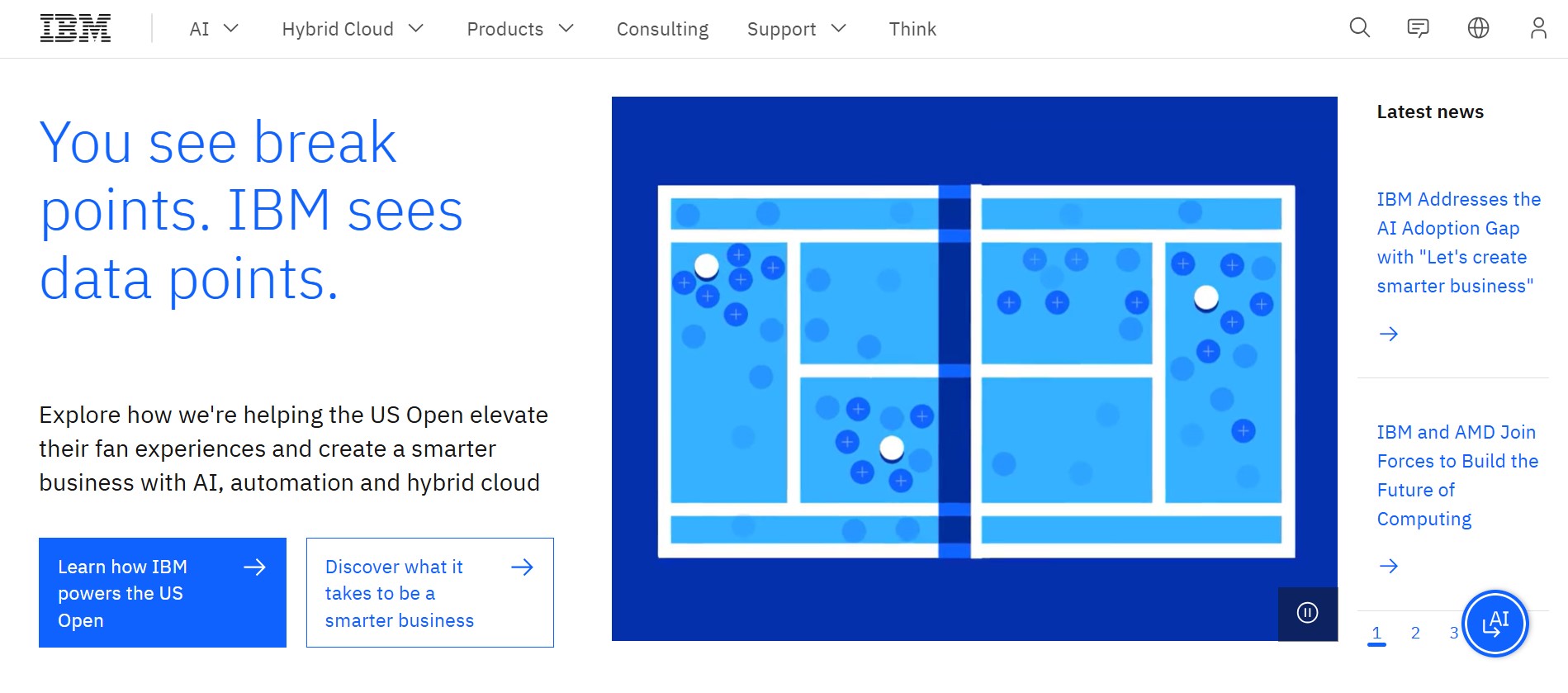
IBM Consulting focuses on hybrid cloud, AI, and enterprise information technology modernization. It is known for addressing highly complex environments with long-standing legacy systems.
The firm supports enterprises through cloud migration, data platform modernization, automation, and security integration. IBM Consulting emphasizes architectural stability, scalability, and enterprise-grade reliability.
Core Strengths: Hybrid cloud expertise, AI integration, legacy modernization
Best For: Enterprises with complex infrastructure and modernization needs
5. McKinsey Digital
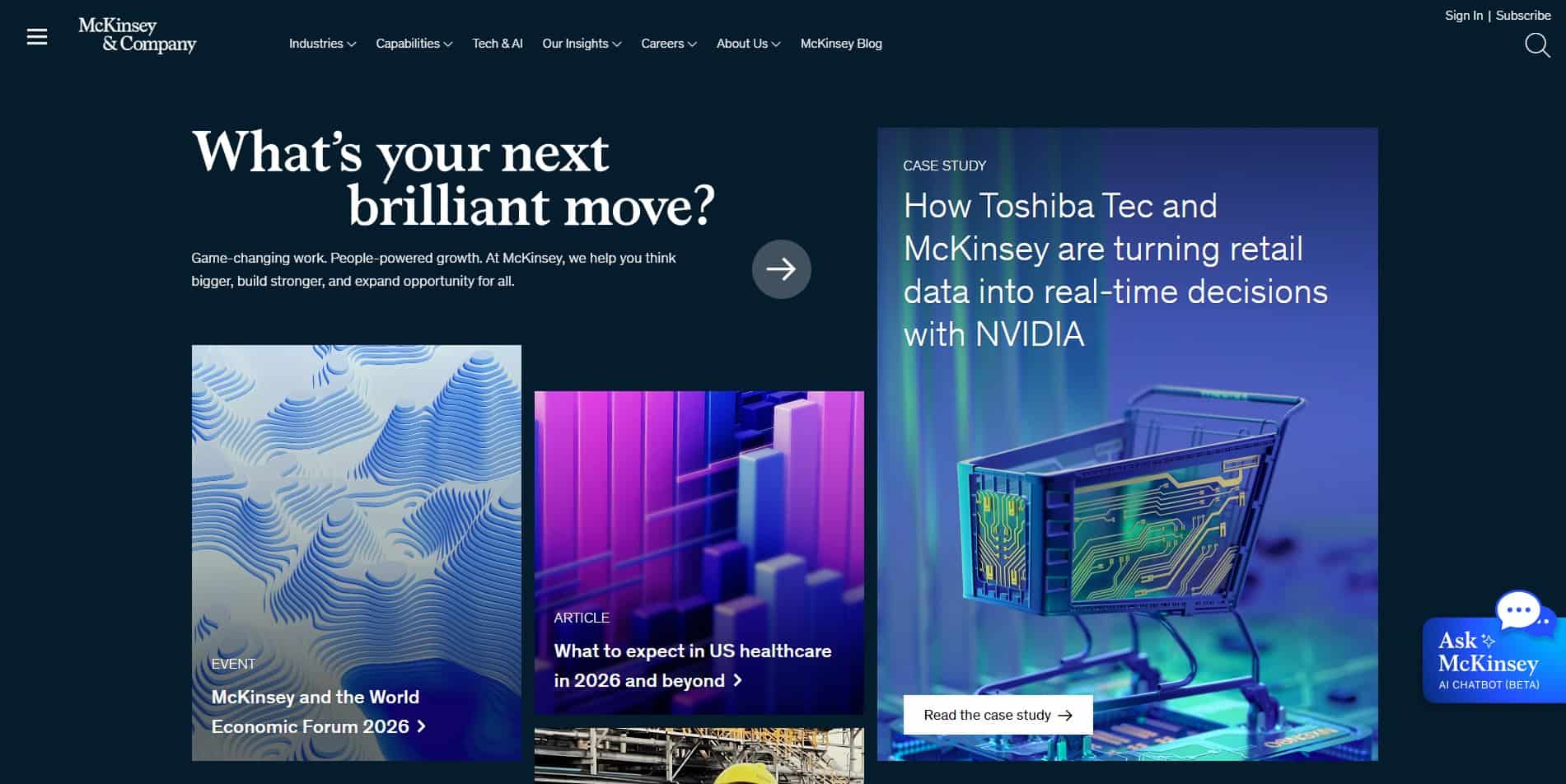
McKinsey Digital operates at the intersection of business strategy and technology execution. It works closely with executive leadership to redesign operating models and implement digital capabilities.
The firm’s approach is highly analytical and data-driven, focusing on measurable outcomes and long-term value creation.
Core Strengths: Executive-level strategy, analytics-driven transformation
Best For: Enterprises seeking business-led digital change
6. Tata Consultancy Services (TCS)
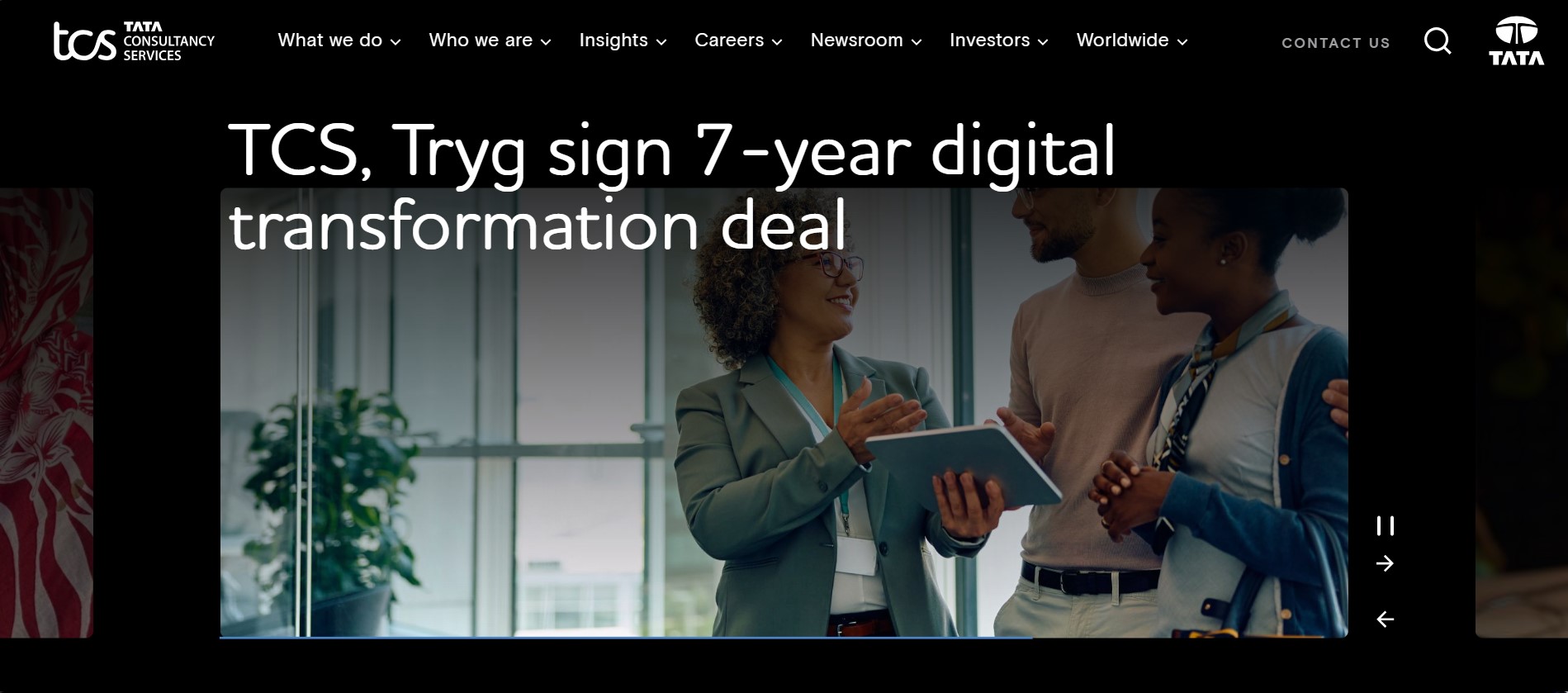
TCS is a global IT services provider with strong delivery capabilities across regions. Its offerings include cloud adoption, AI services, application modernization, and digital transformation consulting.
TCS is recognized for consistent delivery quality and the ability to scale enterprise programs efficiently.
Core Strengths: Global scale, reliable delivery, cloud and AI services
Best For: Large enterprises seeking consistent global execution
7. Cognizant
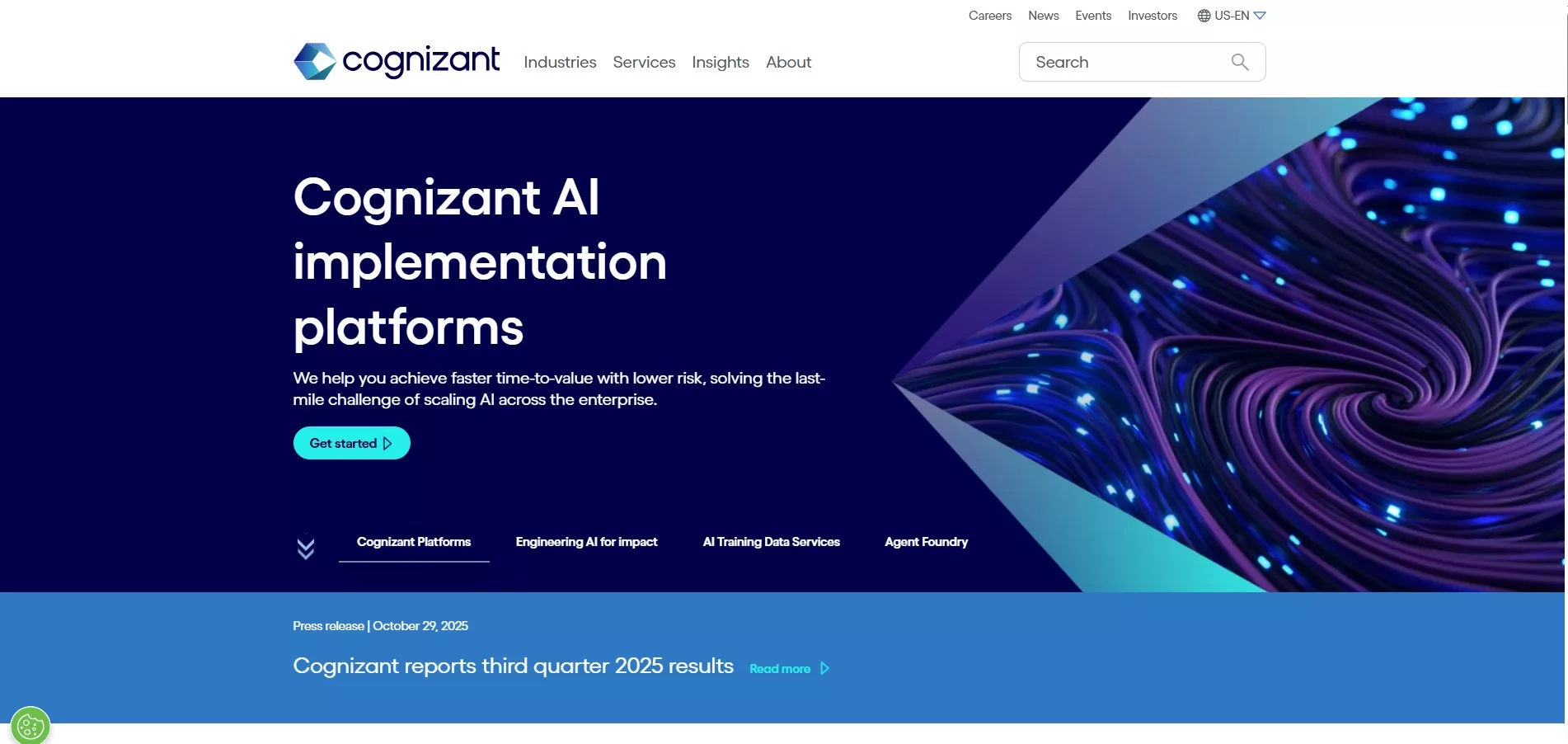
Cognizant focuses on digital engineering, cloud-native development, and enterprise modernization. The firm helps organizations replace legacy systems with modern, adaptable platforms.
Its emphasis on automation and integration supports smoother transitions to modern IT environments.
Core Strengths: Cloud-native engineering, automation, IT modernization
Best For: Enterprises modernizing legacy systems
8. Capgemini
Capgemini provides consulting services centered on innovation, AI adoption, and sustainability. The firm supports enterprises in building long-term digital maturity.
Its services include cloud strategy, intelligent automation, and enterprise transformation planning.
Core Strengths: Innovation consulting, AI integration, sustainable transformation
Best For: Organizations focused on long-term digital evolution
9. Infosys
Infosys Consulting delivers structured, process-driven transformation services. The firm emphasizes automation, cloud modernization, and operational efficiency.
Its predictable delivery models appeal to enterprises seeking controlled, measurable transformation.
Core Strengths: Process optimization, automation, cloud services
Best For: Enterprises prioritizing structured transformation
10. Hexaware Technologies

Hexaware Technologies offers agile consulting services focused on modernization and optimization. The firm balances speed, cost efficiency, and governance.
Hexaware’s approach helps enterprises modernize systems without disrupting ongoing operations.
Core Strengths: Agile delivery, automation-led optimization
Best For: Enterprises balancing cost and transformation speed
Understanding the landscape is one thing. Knowing where it’s headed is another.
Enterprise IT and Digital Transformation Trends in 2026
Enterprise information technology strategies in 2026 are shaped by several interconnected trends that continue to redefine how organizations operate. These digital transformation trends aren’t isolated. They influence decision-making across infrastructure, security, operations, and customer engagement.
Let’s walk through what’s actually driving enterprise IT priorities this year and why these trends matter for your technology roadmap.
Artificial Intelligence as Core Infrastructure
AI has moved beyond experimentation into day-to-day enterprise operations. Organizations are embedding AI into forecasting, customer support, fraud detection, supply chain planning, and internal analytics.
Technology consulting firms increasingly help enterprises prepare data environments, define responsible AI governance frameworks, and integrate AI into existing workflows without creating new operational risk. AI-powered chatbots and intelligent automation tools are becoming standard components of enterprise infrastructure.
What makes this different from past years? AI is no longer a pilot project. It’s becoming part of the infrastructure layer, similar to databases or networking. Companies are now implementing generative AI, machine learning models, and AI-powered automation as standard business tools. Agentic AI systems that can take autonomous actions are emerging as the next frontier. Learn more about effective AI transformation strategies for enterprises.
Key Implementation Considerations: Data quality and preparation, model training and fine-tuning, ethical AI frameworks, integration with existing systems, ROI measurement, change management
Hybrid and Multi-Cloud Strategies
Most enterprises operate across multiple cloud environments alongside on-premise systems. Hybrid cloud and multi-cloud strategies allow better control over costs, performance, data residency, and compliance.
Consulting partners play a key role in designing cloud architectures that balance flexibility with security, while avoiding vendor lock-in and operational complexity.
Here’s the reality: very few enterprises run entirely on one cloud platform. Most are managing workloads across AWS, Azure, Google Cloud, and their own data centers. This creates both opportunities and challenges. The average enterprise now uses 3.2 cloud platforms simultaneously, up from 2.6 just last year. Effective cloud modernization strategies are essential for optimizing performance and controlling costs.
Key Implementation Considerations: Workload placement strategy, cost optimization across providers, unified security and governance, container orchestration (Kubernetes), API management, disaster recovery planning
Cybersecurity and Compliance Integration
Cybersecurity is now a board-level concern. Enterprises must address evolving threats while complying with regional and industry-specific regulations (GDPR, HIPAA, SOC 2, ISO 27001, CCPA).
Technology consulting firms support security-by-design approaches that integrate identity management, data protection, threat detection, and monitoring across all systems.
With ransomware attacks and data breaches regularly making headlines, security can no longer be an afterthought. It needs to be built into every system from the start. Zero-trust architecture and continuous security monitoring have become standard requirements. AI-powered threat detection is now essential for staying ahead of sophisticated attacks.
Key Implementation Considerations: Zero-trust architecture implementation, identity and access management (IAM), security operations center (SOC) setup, incident response planning, compliance automation, penetration testing
Modern Data Platforms
Enterprises are modernizing data platforms to support real-time analytics, business intelligence, and AI-driven insights. Consulting partners help redesign data pipelines, improve data governance, and ensure analytics platforms scale with business growth.
The challenge here isn’t just collecting data. It’s making that data accessible, reliable, and actionable across the organization. Data mesh architectures and real-time data streaming are replacing traditional data warehouses. Data observability and quality management have become critical capabilities.
Key Implementation Considerations: Data lake vs. data warehouse architecture, ETL/ELT pipeline design, data cataloging and lineage, real-time streaming (Kafka, Kinesis), master data management (MDM), data quality frameworks, BI tool selection (Tableau, Power BI, Looker)
Custom Enterprise Platforms
Off-the-shelf software often fails to address complex enterprise workflows. Custom enterprise platforms provide better integration, flexibility, and long-term adaptability.
Technology consulting firms help enterprises design systems that evolve with business models rather than restrict them.
Many organizations reach a point where standard software creates more problems than it solves. That’s when custom platforms become necessary. Custom development allows for better API integration, workflow automation, and business logic that matches specific operations.
Key Implementation Considerations: Build vs. buy analysis, microservices architecture, API-first design, scalability planning, technology stack selection, DevOps and CI/CD pipelines, technical debt management
These enterprise information technology trends highlight why experienced consulting partners are essential for organizations navigating digital transformation in 2026 and beyond.
Now that you understand the landscape and trends, the question becomes: how do you choose the right partner?
Ready to Modernize Your Enterprise IT?
We’ve helped over 300+ enterprises successfully navigate their digital transformation journey. Our team combines deep technical expertise with strategic business insight to deliver measurable results.
What sets us apart:
- 95% client retention rate
- 200+ skilled engineers across multiple technologies
- 10+ years of enterprise consulting experience
- Proven track record across 10+ industries
See how we’ve helped organizations like yours:
- View our enterprise case studies
- Explore our digital transformation services
- Schedule a free consultation
How to Choose the Right Technology Consulting Firm for Your Enterprise
Choosing a technology consulting firm is a strategic decision that affects operational stability, scalability, and long-term digital success. Evaluating potential information technology consulting partners should go beyond brand recognition.
Here’s what actually matters when making this decision:
Relevant experience: Look for demonstrated success in similar industries or enterprise environments. Ask for case studies and client references from your sector. Don’t just accept generic success stories. Dig into the specifics. Request detailed project metrics and outcomes.
Strategic alignment: The firm should understand your business objectives, not just technical requirements. They should ask about your business model, competitive landscape, and growth plans. If they’re only talking about technology, that’s a red flag.
Delivery consistency: Check for proven governance frameworks, risk management, and quality assurance processes. Look at their project completion rates and client satisfaction scores. Ask tough questions about projects that didn’t go as planned and how they recovered.
Technical depth: Ensure they have hands-on expertise with the technologies in your stack or roadmap. Ask about certifications, previous implementations, and their approach to emerging technologies. Can they show you actual code, architectures, or technical documentation from past projects?
Scalability: Make sure they can support your growth, acquisitions, and changing technology needs. Can they scale up or down based on project demands? What happens when your needs change mid-project? Do they have the bench strength?
Communication: Transparent engagement models and clear reporting structures matter. You should know who’s accountable for what, and how progress will be measured. Ambiguity in communication leads to ambiguity in results. Expect weekly status reports and regular stakeholder meetings.
Cultural fit: The consulting team will work closely with your internal staff. Personality and work style compatibility affect project success. Don’t underestimate this factor. Poor cultural fit causes more project failures than technical issues.
Total cost of ownership: Look beyond hourly rates. Consider the long-term value, knowledge transfer, and whether they’re building sustainable solutions. The cheapest option often becomes the most expensive. Factor in maintenance, training, and handoff costs.
A strong consulting partner acts as an extension of your enterprise information technology team, supporting both immediate initiatives and long-term transformation roadmaps.
But knowing what to look for is only half the battle. You also need to know what questions separate exceptional partners from mediocre ones.
Key Questions to Ask Technology Consulting Firms
Before selecting a partner, ask these questions during the evaluation process:
Experience & Track Record:
- Can you share case studies from similar industries and project scopes?
- What is your project success rate and how do you measure it?
- Can you provide references from clients who completed similar projects in the last 12 months?
- Have you worked with our specific tech stack or industry regulations?
Engagement Model & Team:
- Who will be on the core team, and what is their experience level?
- Will we work with your A-team or junior consultants?
- What is your typical engagement model and pricing structure?
- How do you handle scope changes and project risks?
- What governance model do you use for enterprise programs?
Knowledge Transfer & Support:
- What is your approach to knowledge transfer and internal capability building?
- Do you provide documentation, training, and runbooks?
- What ongoing support do you provide after implementation?
- How do you ensure our team can maintain the solution independently?
Security & Compliance:
- How do you handle security, compliance, and data protection?
- What certifications do you hold (SOC 2, ISO 27001, etc.)?
- Do you follow industry-specific guidelines (HIPAA for healthcare, PCI-DSS for payments)?
- How do you manage sensitive data during development and testing?
Metrics & Success:
- How do you measure project success beyond on-time delivery?
- What KPIs do you track throughout the engagement?
- How do you handle projects that aren’t meeting expectations?
These questions help separate firms that talk a good game from those that deliver real results. Pay attention to how they answer, vague responses are warning signs.
Speaking of results, let’s talk about what you can actually expect to gain from the investment.
The ROI of Working with Technology Consulting Firms
Let’s talk numbers. Investing in technology consulting delivers measurable returns when done correctly.
Here’s what enterprises typically gain:
Reduced implementation risk: Experienced consultants have solved similar problems before, reducing trial-and-error costs. This alone can save millions on large-scale projects. They bring proven methodologies and architectural patterns.
Faster time to value: Projects move faster with dedicated expertise and proven methodologies. What might take internal teams 18 months could take an experienced consulting team 9-12 months. Speed to market matters in competitive industries.
Access to specialized skills: Organizations gain access to skills that would be expensive or impossible to hire full-time. Cloud architects, AI specialists, security experts, and DevOps engineers are in high demand and costly to retain.
Objective perspective: External consultants provide unbiased assessments of technology landscapes. Internal politics and legacy thinking don’t cloud their judgment. They challenge assumptions and bring fresh ideas.
Knowledge transfer: Good consulting engagements build internal capabilities, not just deliver projects. Teams learn while working alongside experienced professionals. This multiplies the long-term value.
Scalable resources: Teams can scale up or down based on project phases without HR overhead. No hiring, onboarding, or severance costs. Flexibility matters when project demands fluctuate.
Risk mitigation: Consultants bring insurance and accountability. If something goes wrong, they have skin in the game. Established firms have legal frameworks and project guarantees.
The average enterprise sees 2.5-4x ROI on technology consulting investments when measured over 3-5 years. But here’s the important part: results vary dramatically based on partner selection and internal commitment.
Real ROI Metrics to Track:
- Time to market for new capabilities
- Reduction in operational costs
- Increase in system uptime and reliability
- Improvement in customer satisfaction scores
- Reduction in technical debt
- Team productivity gains
- Revenue impact from new digital capabilities
The difference between success and failure often comes down to partner selection and internal commitment.
But even with the right partner and realistic expectations, organizations still stumble. Here’s where things typically go wrong.
Calculate Your Potential ROI
Wondering what your digital transformation investment could deliver? Our team can help you build a realistic business case with projected timelines, expected returns, and risk analysis.
Our ROI Analysis Includes:
- Current state assessment and baseline metrics
- Technology stack evaluation and recommendations
- Projected cost savings and revenue opportunities
- Implementation timeline with milestones
- Risk assessment and mitigation strategies
Common Mistakes When Hiring Technology Consulting Firms
Enterprises make the same mistakes repeatedly. Here’s what to avoid:
Choosing based on price alone: The cheapest option often becomes the most expensive when projects fail or require rework. Focus on value, not cost. Calculate total cost of ownership including maintenance and support.
Lack of clear objectives: Without defined success criteria, projects drift and deliver ambiguous value. Define what success looks like before starting. Use SMART goals (Specific, Measurable, Achievable, Relevant, Time-bound).
Poor internal engagement: Transformation requires buy-in from internal teams and executive sponsorship. Consultants can’t succeed without organizational support. If teams aren’t committed, save the investment. Appoint a dedicated internal project manager.
Ignoring cultural fit: Technical skills matter, but so does the ability to work well with teams. A brilliant consultant who can’t collaborate is useless. Conduct team interviews before signing contracts.
Unrealistic timelines: Digital transformation takes time. Rushed projects lead to shortcuts and technical debt. Be patient and realistic. Enterprise projects typically take 12-24 months minimum for meaningful results.
Insufficient knowledge transfer: When consultants leave without transferring knowledge, organizations remain dependent on external help. Make knowledge transfer a contractual requirement with documentation deliverables and training sessions.
Scope creep without governance: Projects expand without proper change management, leading to budget overruns. Control scope changes from day one. Implement a formal change request process with impact analysis.
Not planning for post-implementation: Many organizations focus only on launch, ignoring ongoing maintenance, support, and optimization. Plan for the long term from the beginning.
Learn from others’ mistakes. Don’t repeat them.
Your industry adds another layer of complexity to this decision. What works in healthcare won’t necessarily work in manufacturing or fintech.
Industry-Specific Considerations for Technology Consulting
Every industry has distinct technology challenges and regulatory requirements. Understanding these differences is critical when selecting the right technology consulting partner. Below are the key considerations by industry:
Healthcare: requires strict HIPAA compliance, strong data security, and adherence to interoperability standards (HL7, FHIR). Seamless integration with electronic health records (EHRs) and other clinical systems is essential. Healthcare IT is highly regulated, complex, and unforgiving of mistakes. PHI (Protected Health Information) handling requires specialized expertise and adherence to best practices.
Manufacturing: demands expertise in IoT integration, supply chain optimization, and operational technology (OT). Legacy equipment integration is common, requiring consultants who understand both modern IT systems and factory-floor operations. Real-time data processing and industrial protocols (OPC UA, MQTT) are critical.
Fitness: focuses on user experience, mobile platforms, wearable integrations (Apple Watch, Fitbit), and real-time data tracking. Scalability, performance, and data privacy are critical as member engagement and class demand fluctuate rapidly. Integration with payment processors and CRM systems is essential.
FinTech: requires deep regulatory knowledge (PCI-DSS, SOX, KYC, AML), advanced security frameworks, and real-time transaction processing. Fraud detection, compliance automation, and familiarity with financial regulations are non-negotiable. Banking API integrations and payment gateway certifications are often required.
Non-Profit: needs cost-effective, scalable solutions that maximize impact with limited budgets. Transparency, data integrity, donor management systems, and grant tracking are key. Consultants must understand budget constraints and mission-driven priorities. Integration with fundraising platforms and volunteer management tools matters.
eCommerce & Retail: prioritizes customer experience, omnichannel integration (web, mobile, in-store), and high-performance transaction processing. Infrastructure must handle peak traffic reliably, events like Black Friday can define success or failure. Real-time inventory management and personalization engines drive revenue.
Startups: require speed, flexibility, and scalable architecture. Cloud-native solutions, rapid MVP development, and cost efficiency matter most. Consultants should help startups move fast without creating technical debt. Focus on achieving product-market fit before over-engineering.
Government: demands compliance with strict security standards (FedRAMP, FISMA), procurement regulations (FAR, DFARS), and often security clearances. Government IT environments move differently than the private sector and require patience and proven experience. Documentation and audit trails are paramount.
Choose technology consulting firms with demonstrated success in your specific industry. Deep domain expertise accelerates delivery, reduces risk, and ensures solutions align with both regulatory and operational realities.
Beyond industry fit, there’s another dimension to consider: emerging technologies that could reshape your competitive landscape.
Emerging Technologies Shaping Enterprise IT Consulting
Technology consulting firms are increasingly helping enterprises navigate these emerging areas that will define competitive advantage in the coming years:
Generative AI: Large language models (LLMs), AI assistants, and automated content generation are being integrated into business processes. This isn’t hype anymore. It’s real and delivering value across customer service, content creation, code generation, and data analysis. GPT-4, Claude, and domain-specific models are driving productivity gains of 30-50% in knowledge work. Explore how enterprise platforms integrate AI capabilities.
Agentic AI: AI systems that can take autonomous actions and make decisions are emerging as the next evolution. These systems go beyond answering questions to actually executing tasks and workflows. Think AI agents that can schedule meetings, manage projects, or optimize supply chains with minimal human intervention.
Edge computing: Processing data closer to its source reduces latency and bandwidth costs for IoT and real-time applications. Edge is becoming critical for manufacturing, logistics, autonomous systems, and retail. 5G networks are accelerating edge adoption.
Quantum computing: While still early, enterprises are beginning to explore quantum applications for optimization, cryptography, and simulation. Pilot programs are expanding in pharmaceuticals, finance, materials science, and logistics. IBM, Google, and AWS offer quantum computing services.
Blockchain and distributed ledgers: Beyond cryptocurrency, enterprises are using blockchain for supply chain transparency, identity management, digital contracts, and secure data sharing. Practical applications are outpacing the hype. Hyperledger and enterprise blockchain platforms are gaining traction.
Extended reality (XR): AR and VR technologies are being used for training, remote collaboration, product visualization, digital twins, and customer experiences. The technology finally matches the promise, with Apple Vision Pro and other platforms driving adoption in healthcare, manufacturing, and retail.
Sustainable IT: Green computing practices, carbon footprint tracking, energy-efficient architectures, and circular IT models are becoming standard requirements. ESG reporting and climate commitments are driving technology decisions. Cloud providers now offer carbon-neutral options.
Forward-thinking consulting partners help evaluate these technologies pragmatically, separating hype from practical business value. They conduct proof-of-concept projects before full-scale implementation.
So what does all of this look like when executed correctly? Let’s bring it together.
How Bitcot Can Help You Build the Right Enterprise IT Strategy
Many enterprises struggle not because they lack technology, but because their systems have grown over time without a clear plan. This often leads to technical debt, systems that do not work well together, and higher operational costs.
Bitcot helps enterprises step back and clearly understand how their technology supports their business goals. By working closely with leadership teams, Bitcot helps create IT strategies that are practical, scalable, and designed to support long-term growth.
A comprehensive approach includes:
- Assessing current IT environments and identifying technical debt with detailed audits
- Aligning technology capabilities with business priorities through stakeholder workshops
- Designing secure and scalable enterprise architectures using proven frameworks
- Creating phased transformation roadmaps with realistic timelines and budgets
- Supporting execution through custom development, integration, and managed services
- Establishing governance frameworks and change management processes
- Providing ongoing optimization and support post-implementation
By focusing on clarity and alignment, Bitcot helps enterprises avoid short-term fixes and instead build technology systems that support steady and sustainable growth. For more insights, read about technology resolutions enterprises should prioritize.
Work with Bitcot, a partner who understands both technology and your business:
- 10+ years of enterprise consulting experience
- 200+ skilled engineers across multiple technologies and frameworks
- 95% client retention rate (industry average is 70-75%)
- 3000+ successful projects delivered on time and on budget
- Proven track record across 10+ industries including healthcare, fintech, manufacturing, eCommerce & Retail
- Industry certifications: AWS Advanced Consulting Partner, Microsoft Gold Partner, ISO 27001 certified
Conclusion
Technology consulting remains essential for enterprise success in 2026. As digital ecosystems grow more complex, organizations need partners that combine strategic insight with reliable execution.
The firms highlighted in this article demonstrate the experience, scale, and technical depth required to support enterprise IT and digital transformation initiatives. Selecting the right consulting partner enables enterprises to reduce operational risk, modernize systems, and build platforms that support future growth.
Bitcot represents a consulting partner that works closely with enterprises to design and implement tailored digital solutions aligned with long-term objectives, helping organizations move forward with clarity and confidence. Learn more about our digital transformation approach and comprehensive technology consulting services.
The key is finding a partner who understands your business, not just your technology. Someone who asks tough questions, challenges assumptions, and builds solutions that actually work in the real world.
That’s what separates good consulting from great consulting.
Ready to take the next step? Contact us today to discuss your enterprise IT strategy and explore how the right technology consulting approach can help you modernize systems, reduce risk, and drive long-term business growth.
Frequently Asked Questions (FAQs)
How do I choose the right technology consulting firm for my enterprise?
Evaluate firms based on enterprise experience, industry expertise, delivery track record, technical depth, governance models, cultural fit, and ability to support long-term transformation, not just short-term projects.
What does an enterprise technology consulting firm do?
Enterprise technology consulting firms help organizations modernize IT systems, implement digital transformation initiatives, adopt cloud and AI technologies, and align technology strategy with business objectives at scale.
How much does enterprise IT consulting cost?
Enterprise IT consulting typically costs between $175–$550+ per hour, with full-scale transformation programs ranging from $500K to $5M+, depending on complexity, scope, and duration.
How long does enterprise digital transformation take?
Enterprise digital transformation can take anywhere from 6 months to 3+ years, depending on scope. Most organizations succeed with phased roadmaps that deliver incremental value.
Why do enterprise digital transformations fail?
Most failures occur due to poor partner selection, lack of executive alignment, unclear success metrics, weak governance, and resistance to organizational change, not technology limitations.
Is technology consulting worth it for mid-sized enterprises?
Yes. Technology consulting helps mid-sized enterprises scale efficiently, reduce technical debt, access specialized expertise, and implement enterprise-grade systems without excessive internal hiring.
What should CIOs and CTOs prioritize when selecting a partner?
Focus on relevant industry experience, alignment with business goals, delivery reliability, cultural fit, and long-term support capabilities when choosing technology consulting firms. Review case studies, check references, and evaluate their approach to knowledge transfer.
How does Bitcot support enterprise digital initiatives?
Bitcot delivers tailored digital solutions that align technology execution with long-term enterprise objectives through comprehensive technology consulting services. The firm emphasizes custom platforms, hands-on execution, and sustainable architectural approaches. Explore our industry-specific solutions and read more insights on digital transformation.