
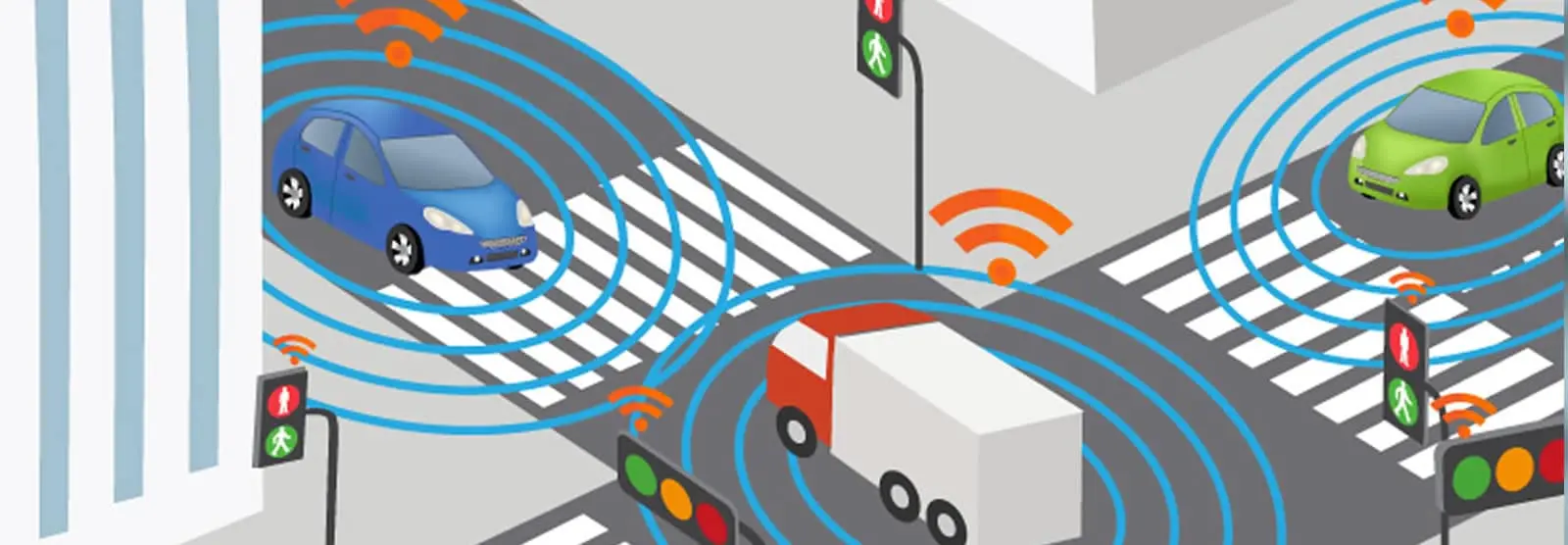
- Real-time sensor pipelines turn raw vehicle data into actionable driver alerts, replacing human reaction with automated responses.
- Engineering decisions around data transmission architecture determine whether a connected car platform scales or stalls under traffic load.
- Vehicle lifecycle management software eliminates manual maintenance tracking by automatically flagging part failures, insurance expiry, and repair needs.
Connected cars crossed from concept to commercial reality once software teams solved the data pipeline problem, not just the hardware one. The two engineering challenges that define whether a connected car platform actually works are: building sensor data systems that respond in real time, and designing vehicle management software that handles the full lifecycle without driver input. This is the software layer most articles skip.
Driver Distraction and Safety Alerts: How Real-Time IoT Data Pipelines Solve It

Real-time IoT sensor pipelines solve the distraction problem by shifting information delivery from driver-initiated to system-initiated. Instead of a driver reaching for a phone to check traffic, the car surfaces only the data that affects the next 30 seconds of driving: lane deviation, closing distance, and road condition changes.
The architecture behind this matters. Sensor data captured by in-car hardware gets transmitted through a connected vehicle platform to cell phone apps interfaced directly with the car’s infotainment system. When that pipeline is built with low-latency event streaming rather than batch processing, lateral collision warnings and pedestrian position alerts arrive before the driver has time to react manually. Companies like BMW and General Motors moved toward dashboard-mounted monitor systems that surface a predefined, controlled set of applications precisely to limit cognitive load.
Traffic condition monitoring adds another layer: the connected car assesses road congestion, optimal routing, and upcoming toll notifications without any driver input. When our team builds AI/ML development pipelines for real-time data applications, the lesson from connected vehicle platforms applies that the sensor-to-alert latency defines whether the system is useful or ignored.
Vehicle Lifecycle Tracking and Remote Management: The Engineering Decision That Fixes It

The engineering decision that makes vehicle lifecycle management functional is separating the data collection layer from the notification layer in the software architecture. When those two layers are tightly coupled, a battery replacement alert and an insurance expiry notification compete for the same output channel, and both lose urgency. Decoupling them lets each event type trigger the right response through the right channel.

A connected car platform built on this architecture handles spare parts management, vehicle breakdown detection, and emergency contact notifications as separate services. If the car breaks down in a remote area, the platform contacts the nearest repair shop automatically and notifies the driver’s emergency contact without requiring any driver action. That outcome is not possible when vehicle management logic is bundled into a single monolithic service that can be blocked by a network timeout or a UI crash.

Environmental assessment features, including lane monitoring, highway position adjustment, and car breakdown alerts, depend on the same separation principle. Teams building secure web app development platforms for IoT-connected systems consistently find that event isolation at the architecture level reduces cascading failures when one sensor feed drops out. Remote theft tracking and congestion re-routing also rely on this model; each function operates independently rather than waiting on a shared processing queue.
What San Diego Engineering Teams Observe When Connected Car Software Skips the Data Layer
Software teams in San Diego and across California have increasingly been asked to integrate IoT sensor data into mobile and web platforms, not just in automotive contexts but across logistics, healthcare, and field services. The pattern we see most often in connected car platform projects is teams that nail the hardware integration but underestimate the event routing logic. The result: alerts arrive late, vehicle management dashboards display stale data, and the safety features that justified the build become unreliable in high-traffic scenarios. Building the custom software development layer correctly from the start, specifically the event streaming and service separation decisions, is what separates platforms that scale from those that require constant patching.

Conclusion
Connected cars work when the software behind them treats sensor data, safety alerts, and vehicle lifecycle management as distinct engineering problems with distinct solutions. The next step for any team building in this space is to audit the latency of their data pipeline before adding more features. A development team with experience in real-time event architecture and IoT platform design will move faster and avoid the rework that comes from coupling these layers too early.
Frequently Asked Questions
What is a connected car?
A connected car is a vehicle equipped with internet connectivity and IoT sensors that transmit real-time data to and from external networks, apps, and services. This enables features like traffic alerts, remote diagnostics, and automated emergency notifications without driver input.
How does in-car internet differ from simply connecting a phone to a car?
In-car internet is embedded directly into the vehicle’s infotainment system and communicates with external platforms continuously, not just when a phone is paired. A phone-car Bluetooth connection depends on the driver’s device and data plan, while in-car internet operates as a standalone platform with its own sensor and connectivity layer.
How do connected cars improve road safety?
Connected cars improve road safety by replacing driver-initiated information checks with system-initiated alerts. Lateral collision warnings, pedestrian position detection, and lane deviation notifications are delivered through real-time sensor pipelines before a driver would typically have time to react manually.
Are connected cars vulnerable to data security threats?
Connected cars do carry data security risks because they transmit vehicle and location data over networks that can be targeted by hackers. Engineering teams address this by isolating communication channels, encrypting sensor data in transit, and building access control into each service layer of the platform architecture.
How does connected car software handle vehicle management in San Diego or remote areas?
Connected car platforms designed with decoupled service layers can trigger repair shop contact and emergency notifications automatically, regardless of the driver’s location. In California, where long highway stretches between urban centers are common, this architecture ensures the platform functions even when the driver is unable to take action.