Most enterprise AI chatbots are expensive liabilities disguised as innovation. Yours does not have to be. The real question is not whether your business needs one – it is which AI chatbot development company in the USA has the expertise to build one that actually delivers ROI.
Enterprises have moved well beyond FAQ bots. Today’s deployments include autonomous AI agents, generative AI chatbots powered by LLMs, and multimodal assistants handling voice, text, and images simultaneously.
More than 92% of Fortune 500 companies now use ChatGPT. The global chatbot market is projected to reach $32.45 billion by 2031, growing at over 23% CAGR. Adoption among mid-market businesses is accelerating at its fastest pace yet.
What those numbers hide is how many deployments are quietly underperforming – built on the wrong platform, by the wrong partner, without the right architecture. That gap between adoption and results is where the real opportunity and risk lives.
Modern AI chatbot development covers generative AI, RAG, LLM integrations like GPT-4o and Claude, and agentic workflows that execute multi-step tasks autonomously. The top companies in 2026 are not just answering questions – they are orchestrating entire business processes.
Building a chatbot that is intelligent, on-brand, and scalable demands more than plugging into an API. It requires strategy, UX thinking, deep AI expertise, and enterprise-grade engineering.
The difference between a leading firm and an average one shows up in LLM architecture quality, integration depth, production reliability, and the ability to scale – the exact criteria this guide evaluates every company against.
That is why selecting the right chatbot development partner is one of the most consequential technology decisions a business can make in 2026. This list covers the top 10 AI chatbot development companies in the USA, evaluated on innovation, generative AI capabilities, enterprise results, and technical depth.
Built for CEOs, CTOs, and enterprise technology leaders who need an unbiased vendor reference. Use the nine evaluation criteria in the next section as your checklist before any vendor conversation.
Whether you are launching your first AI assistant or scaling agentic automation globally, these firms represent the best of American conversational AI. Read on to find the right fit for your needs.

How We Chose the Top Chatbot Development Companies in the USA
With hundreds of agencies claiming AI expertise, selecting the top 10 required a strict evaluation process. Not every chatbot company has the technical depth or enterprise experience to deliver real results in conversational AI development and enterprise chatbot deployment.
We assessed each company across key factors to identify true leaders in conversational AI, generative AI engineering, and enterprise chatbot solutions:
- Proven Track Record: Companies needed real-world deployments, case studies, and measurable business outcomes across industries.
- Generative AI and LLM Expertise: Firms were evaluated on experience with GPT, Claude, Gemini, and Llama, including prompt engineering, fine-tuning, and retrieval-augmented generation (RAG).
- AI Agent Capabilities: Top companies build agentic AI systems with multi-step reasoning, autonomous tool calling, and enterprise workflow automation.
- AI and UX Expertise: Companies had to combine strong AI development with intuitive, user-friendly conversational AI design aligned with brand and user expectations.
- Multi-Channel Deployment: Providers were assessed on their ability to deploy enterprise chatbot solutions across web, mobile, WhatsApp, Slack, Microsoft Teams, and other platforms seamlessly.
- Enterprise Integrations: Expertise in integrating with CRMs, ERPs, and knowledge bases, along with RAG-based enterprise chatbot deployment, was essential.
- Scalability and Performance: Firms needed to handle high-volume conversational AI interactions with low latency, strong infrastructure, and reliable performance.
- Data Privacy and Compliance: Companies were evaluated on AI governance, data security, and compliance with standards like GDPR, HIPAA, and SOC 2.
- Reputation and Reviews: Consistent positive feedback across platforms like Clutch, G2, LinkedIn, and verified client testimonials was considered.
Every company on this list met these criteria, ensuring they stand out in the competitive AI chatbot market.
What Are the Best Chatbot Development Companies in the USA?
Choosing the right partner can mean the difference between a generative AI solution that drives measurable ROI and wasting resources on a rigid, template-based platform that cannot scale. One company on this list stands distinctly apart from the rest, and the reason may surprise you.
The firms listed below are not just chatbot vendors. They are strategic AI development partners who understand how to design, build, and deploy conversational AI solutions that deliver real business outcomes. Here are the top 10 AI chatbot development companies in the USA for 2026.
1. Bitcot
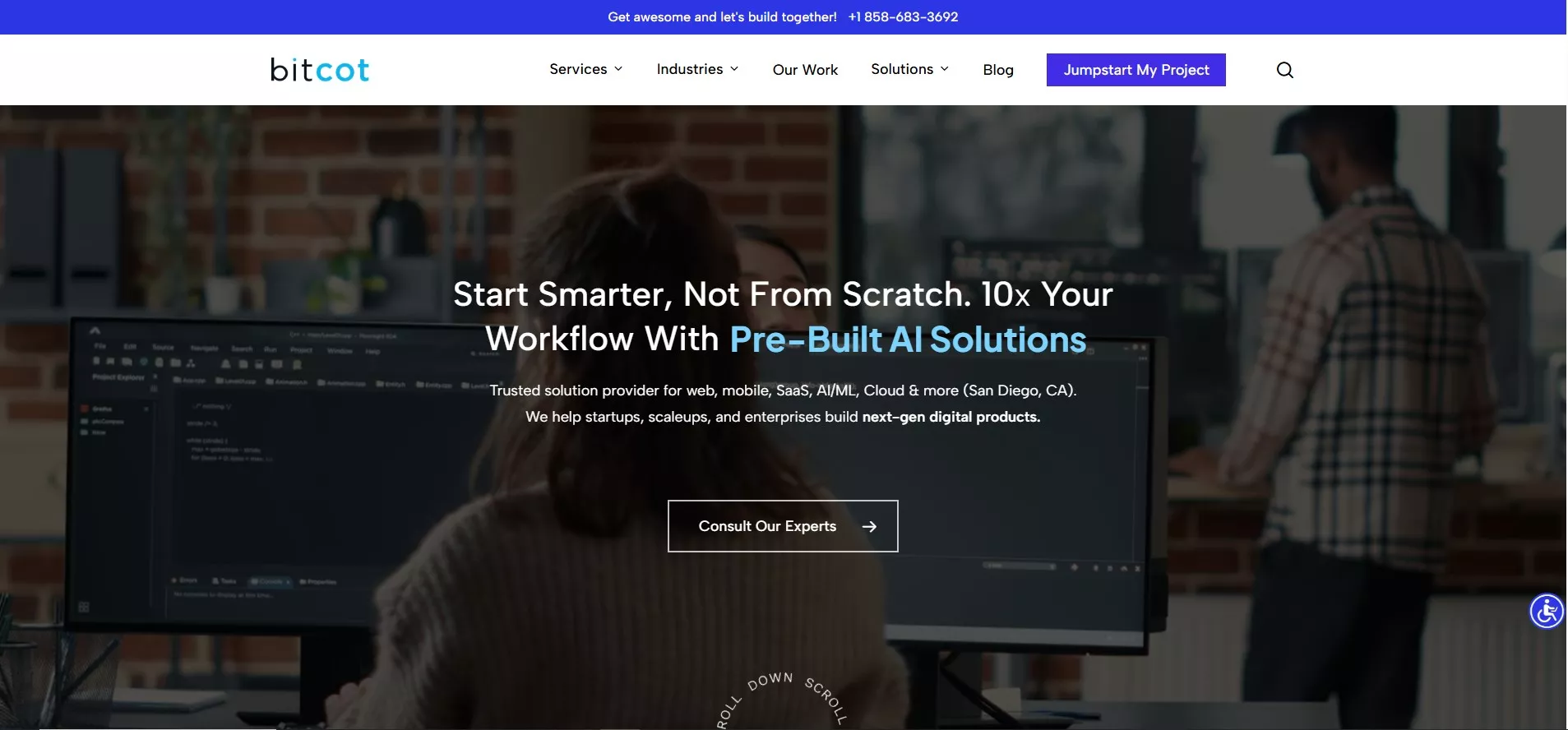
Based in San Diego, Bitcot is the leading custom AI chatbot development company in the USA. We deliver fully bespoke conversational AI solutions with zero reliance on prebuilt templates or platform constraints, building every component from scratch using GPT-4o, Claude, and Gemini with advanced RAG and agentic workflows.
Whether you need a generative AI customer support bot, an AI sales copilot, or a multi-step agentic workflow engine, we engineer every element to fit your exact business logic, data environment, and compliance requirements. Our expertise spans NLP, multi-turn reasoning, tool calling, and multimodal AI.
• Key clients: Stanford University, Evolus, VTEX
• Customization: 100% from-scratch builds, no platform lock-in
• AI Capabilities: GPT-4o, Claude, RAG, agentic workflows, multimodal AI
• Strength: True end-to-end custom AI chatbot development with enterprise integrations
2. Botpress
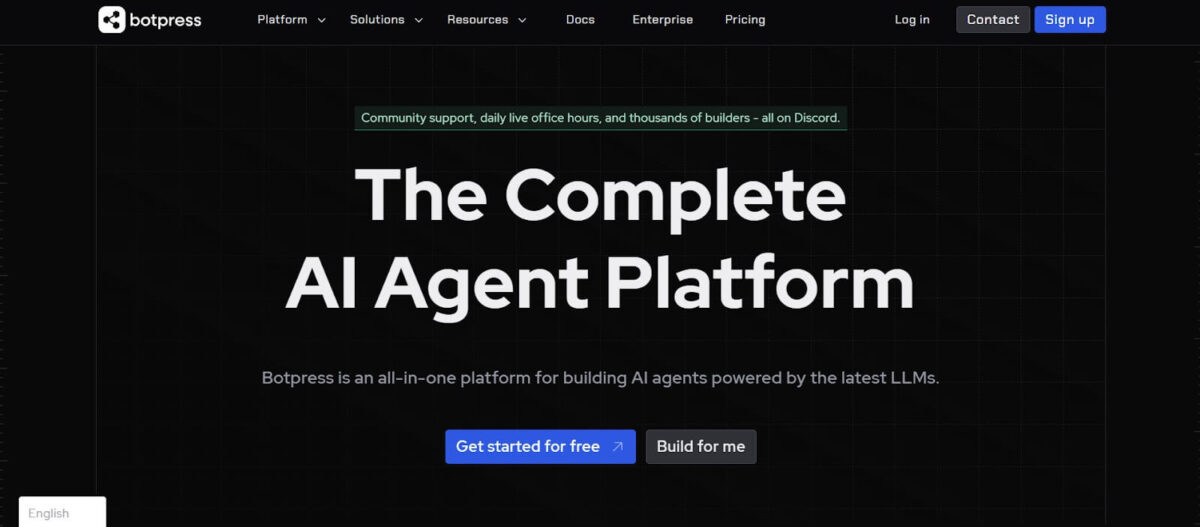
Botpress is a developer-first conversational AI platform and one of the most technically capable vendors for enterprises that want granular control without rebuilding entirely from scratch. Their modular, open-source framework supports native LLM integrations, allowing teams to embed GPT-4o or custom fine-tuned models directly into conversation flows.
In 2026, Botpress has expanded its agentic capabilities, allowing bots to autonomously retrieve information, trigger backend actions, and escalate intelligently. It is a strong choice for in-house technical teams seeking enterprise-grade, LLM-enhanced chatbot development with full code ownership.
- Customization: High (developer-led with LLM integration support)
- Strength: Open-source, enterprise-grade AI chatbot development tools
- Limitation: Requires sustained internal technical resources to maintain and scale
3. Cognigy
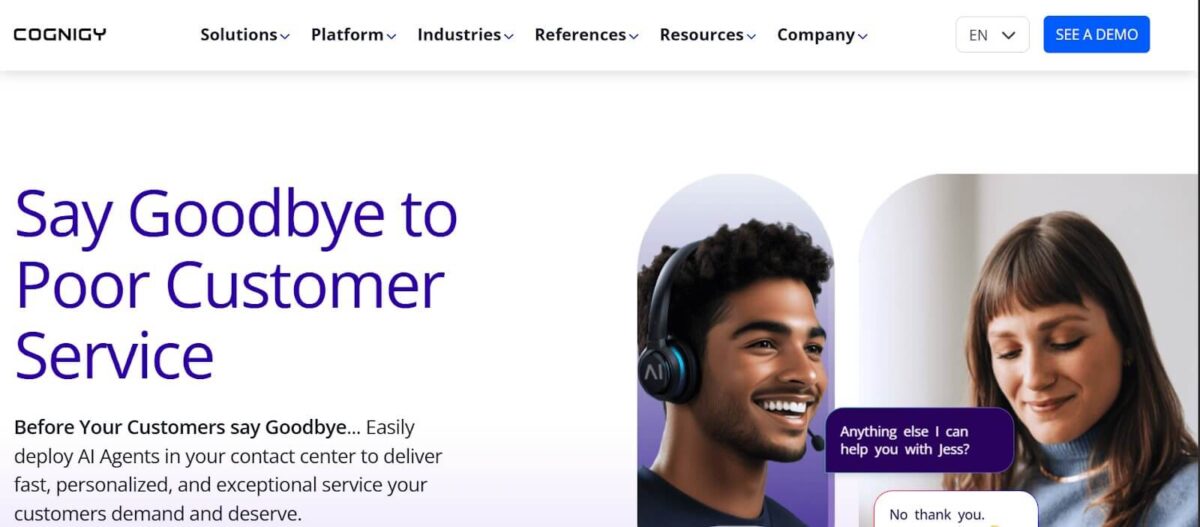
Cognigy is a leading enterprise conversational AI platform specializing in omnichannel voice and chat automation at scale. Their Cognigy AI platform supports complex multi-step workflows, generative AI augmentation via built-in LLM connectors, and deep integration with contact center infrastructure including Genesys, Avaya, and Salesforce.
In 2026, Cognigy has invested heavily in agentic AI capabilities and AI copilot features for live agent assistance. Their multilingual support across 100+ languages and compliance-ready architecture make Cognigy a strong option for global enterprises seeking robust AI chatbot governance.
- Customization: Platform-based with deep configuration and LLM augmentation
- Strength: Contact center automation, voice AI, IVR systems, AI copilots
- Limitation: Deep dependency on the Cognigy ecosystem and licensing model

4. Kore.ai
Kore.ai delivers a mature, enterprise-grade conversational AI platform widely adopted by Fortune 500 companies. As one of the most recognized chatbot providers in the enterprise space, it helps organizations automate service interactions, reduce contact center costs, and accelerate digital transformation at scale.
In 2026, Kore.ai has positioned its XO Platform as a comprehensive AI agent building environment. Their prebuilt industry accelerators for banking, healthcare, retail, and telecom allow faster time to value, while their GALE framework enables teams to build, test, and deploy LLM-powered AI agents at scale.
- Customization: Platform-based with LLM orchestration and industry accelerators
- Strength: Enterprise AI agent architecture, NLP, workflow automation
- Limitation: Enterprise-tier pricing and significant implementation complexity
5. Haptik
Haptik, headquartered in Mumbai and backed by Reliance Jio, is among the most widely used chatbot providers for consumer-facing engagement across WhatsApp Business API, Messenger, web, and mobile. In 2026, Haptik has integrated generative AI capabilities into its Interakt platform, enabling dynamic, context-aware responses for product recommendations and support automation.
Haptik is particularly strong for high-volume consumer engagement where conversational AI must handle thousands of concurrent interactions. Its pretrained NLP models for retail, eCommerce, and banking verticals accelerate deployment timelines significantly for businesses with well-defined use cases.
- Customization: Template-driven with generative AI augmentation
- Strength: WhatsApp automation, high-volume retail and FAQ chatbots
- Limitation: Limited flexibility for deeply custom logic or complex backend integrations
6. Kasisto
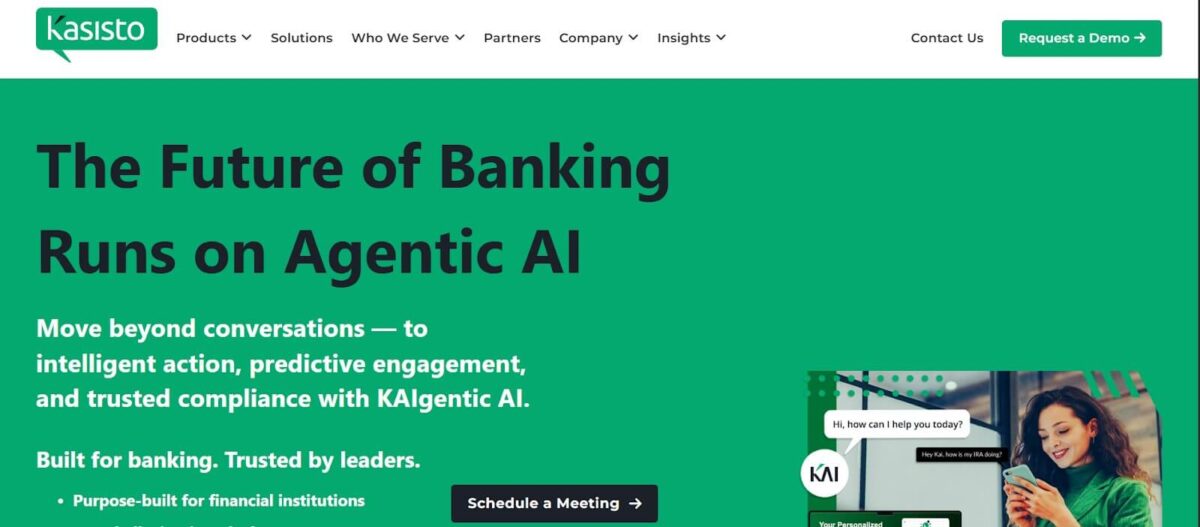
Kasisto is a specialized chatbot company focused exclusively on financial services, delivering conversational AI with a strong emphasis on compliance, domain accuracy, and secure automation. Their KAI platform is deployed by leading banks, credit unions, and fintechs to automate customer service and deliver personalized financial guidance.
In 2026, Kasisto has enhanced KAI with generative AI capabilities tailored for regulated environments, including explainable AI responses, compliance-grade audit trails, and multilingual banking support. For financial institutions requiring deep regulatory expertise, Kasisto remains the most purpose-built option on this list.
- Customization: Financial domain-specialized with generative AI enhancements
- Strength: Compliance-grade security, financial accuracy, multilingual banking bots
- Limitation: Niche vertical focus exclusively within financial services
7. OneReach.ai
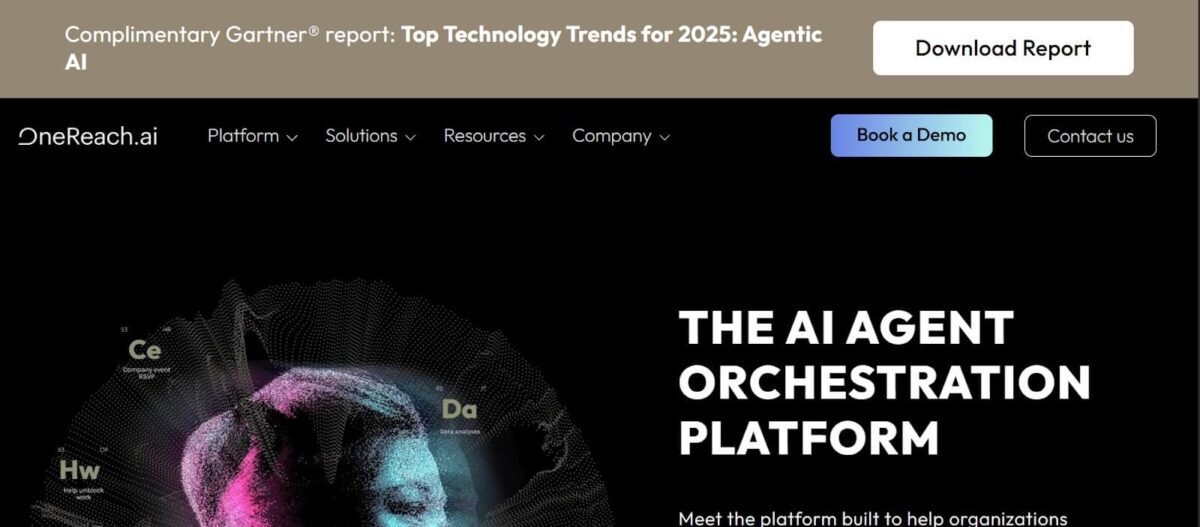
OneReach.ai provides a highly flexible no-code/low-code platform for building sophisticated, AI-orchestrated workflows across voice, chat, SMS, and digital channels. It occupies a valuable middle ground, combining the configurability of a custom approach with the speed of platform-based deployment for enterprise teams.
In 2026, OneReach.ai has expanded with native LLM connectors, agentic workflow design tools, and advanced analytics dashboards. The platform is particularly powerful for organizations coordinating AI agents across Salesforce, ServiceNow, and Microsoft Dynamics without requiring deep custom coding.
- Customization: Deep within platform, with LLM connectors and agentic design
- Strength: Multimodal bots, AI orchestration, enterprise analytics
- Limitation: Steep learning curve for non-technical teams
8. Avaamo
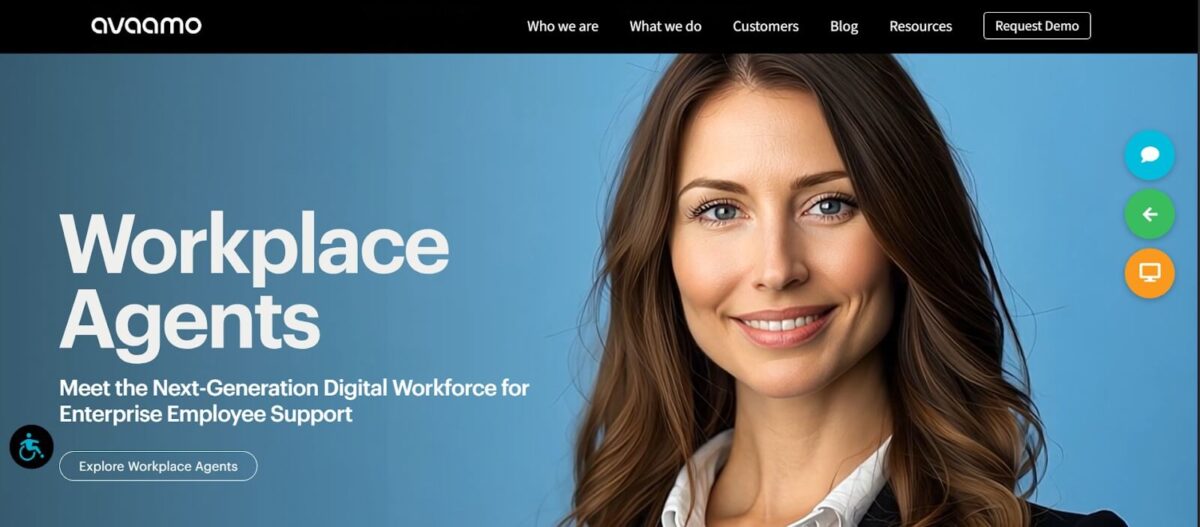
Avaamo specializes in industry-specific AI virtual assistants, serving regulated verticals including healthcare, insurance, telecom, and financial services. Their platform combines pre-trained domain models with deep enterprise integrations to automate appointment scheduling, insurance claims processing, HR onboarding, and patient support.
In 2026, Avaamo has integrated generative AI into its core platform, enabling more natural, context-aware conversations beyond scripted flows. Their built-in compliance frameworks for HIPAA, GDPR, and SOC 2 make Avaamo compelling for organizations requiring both AI intelligence and airtight data governance.
- Customization: Pre-trained domain modules with generative AI augmentation
- Strength: Industry-specific AI assistants, compliance-ready architecture
- Limitation: Optimal fit primarily within regulated industry verticals
9. Yellow.ai
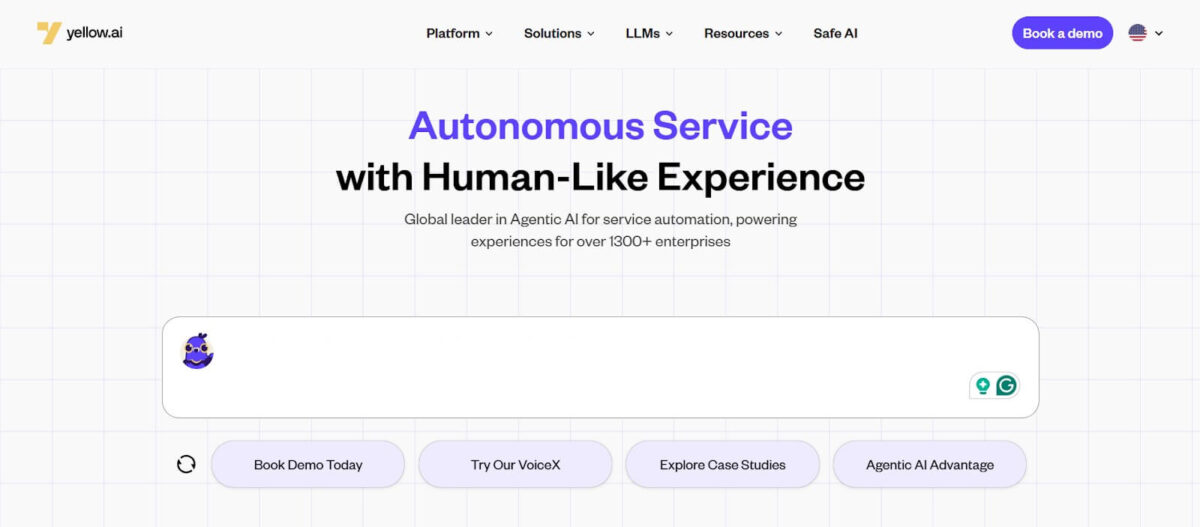
Yellow.ai is a global enterprise conversational AI platform and one of the most scalable chatbot providers for multilingual, omnichannel deployments. Supporting customer interactions in over 135 languages, it blends voice and text automation with advanced NLP to serve global enterprise customers across every major channel.
In 2026, Yellow.ai has positioned its Dynamic AI Agents platform as an end-to-end solution, combining generative AI, intent recognition, sentiment analysis, and multi-channel orchestration. Their analytics suite gives teams real-time visibility into resolution rates and deflection metrics.
- Customization: Workflow-driven with generative AI and 135+ language support
- Strength: Voice AI, multilingual NLP, global enterprise deployments
- Limitation: Platform-bound logic and nuanced pricing complexity at scale

10. boost.ai
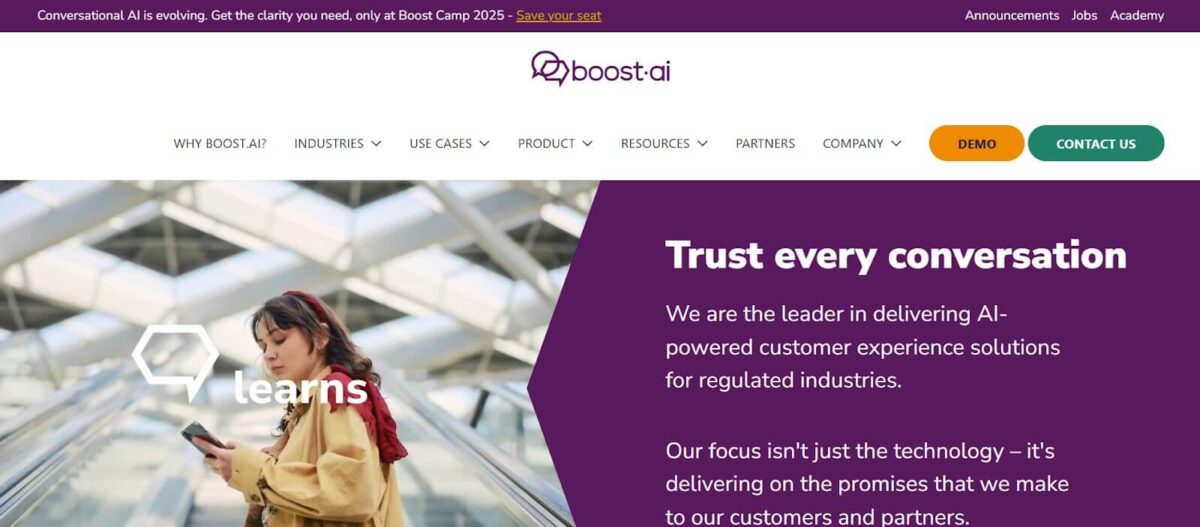
boost.ai, headquartered in Norway with a strong U.S. presence, delivers scalable virtual agents for customer service in banking, insurance, and financial services. Their platform is recognized for high accuracy in intent resolution, fast implementation timelines, and low ongoing training requirements thanks to its proprietary automatic semantic understanding (ASU) engine.
In 2026, boost.ai has added generative AI augmentation capabilities, allowing virtual agents to handle more complex, open-ended queries while maintaining the compliance and accuracy standards demanded by regulated enterprise environments.
- Customization: Knowledge base-driven with generative AI augmentation
- Strength: Fast implementation, high accuracy, banking and insurance focus
- Limitation: Limited applicability outside financial services and insurance verticals
How to Choose the Right AI Chatbot Development Company
Selecting an AI chatbot development company in the USA in 2026 is a strategic decision with long-term implications for your technology architecture, customer experience quality, and competitive positioning. Options range from fully custom development firms to managed platform-based chatbot providers, each with distinct tradeoffs.
The chatbot development vendors you evaluate will vary widely in technical depth, industry expertise, and ability to scale. Here are the critical decision criteria for enterprise buyers:
AI Model Capabilities and LLM Expertise
Ask every prospective vendor about their specific experience with large language model integration. Can they build RAG pipelines grounded in your enterprise data? Can they fine-tune models aligned with your brand? Do they have experience with agentic AI architectures and multi-step tool calling? In 2026, LLM expertise is not optional – it is the foundation of any serious enterprise chatbot solution.
Enterprise Integration Depth
Your AI chatbot needs to connect with your CRM, ERP, HRMS, ticketing systems, and knowledge bases to deliver genuinely intelligent responses. Evaluate each firm on their ability to build deep, bidirectional integrations. Platform-based vendors may be limited to prebuilt connectors that do not support complex data flows or proprietary backend architectures.
Scalability and Infrastructure Architecture
A chatbot that performs well in a pilot with 100 users per day must also perform reliably at 100,000 concurrent interactions. Ask about infrastructure choices, load balancing, API rate management, and vector database architecture for RAG systems. Scalability must be designed into the architecture from day one, not retrofitted after launch.
Industry Expertise and Compliance Readiness
If your business operates in healthcare, finance, insurance, or another regulated industry, your AI chatbot partner must understand your sector’s compliance requirements. HIPAA, GDPR, SOC 2, and PCI-DSS compliance must be embedded from day one. Ask development consultants directly how they handle data residency, audit logging, and model governance.
Data Privacy and AI Governance
Enterprise AI chatbot development in 2026 requires rigorous data governance standards. Understand exactly how your data is stored, processed, and used. Does the company offer on-premise or private cloud deployment? Do they provide model explainability and audit trails? Can they implement role-based access controls and data masking?
ROI Potential and Total Cost of Ownership
Evaluate the full cost of ownership across development fees, platform licensing, ongoing maintenance, and customization at scale. Custom AI chatbot development firms like Bitcot typically deliver stronger long-term ROI by avoiding per-seat platform fees and building proprietary AI assets your organization owns outright.
Pro Tip: Begin with a single high-impact use case such as lead qualification, order tracking, or IT helpdesk automation. Evaluate the vendor on collaboration quality, sprint delivery speed, and measurable results before committing to a broader enterprise AI chatbot development program.
Why Choose Bitcot Over Other AI Chatbot Development Companies?
While many chatbot providers and platform-based vendors offer impressive features, most rely on prebuilt templates, limited configurations, or closed ecosystems that constrain what your AI solution can actually do. Bitcot takes a fundamentally different approach, delivering fully custom AI chatbot solutions built around your business model, data environment, and operational goals.
Among all chatbot development companies in the USA, Bitcot stands apart for five core reasons:
Truly Custom AI Chatbot Development
Most chatbot companies use fixed platforms with limited customization windows. Bitcot builds AI chatbot development services from scratch, engineered to fit your exact conversational logic, brand voice, and system architecture. Every component is purpose-built with no boxed-in workflows, no feature limitations, and no platform lock-in.
Advanced LLM Integration and RAG Architecture
Bitcot integrates leading large language models including GPT-4o, Claude, and Gemini into production-grade chatbot architectures. Their generative AI expertise includes RAG systems that ground AI responses in your proprietary knowledge bases, product catalogs, and CRM data, delivering accurate, hallucination-resistant AI experiences at enterprise scale.
Agentic AI and Autonomous Workflow Engineering
Bitcot designs and builds agentic AI systems capable of executing multi-step tasks autonomously. From researching and summarizing information to triggering backend processes and managing approval workflows, their engineers build AI agents that go well beyond simple question-and-answer, creating true enterprise automation assets.
Seamless Integration with Your Entire Tech Stack
From CRMs and ERPs to eCommerce platforms, APIs, and proprietary backend systems, Bitcot’s machine learning and software development services ensure your AI chatbot integrates deeply with every system in your organization, delivering smarter automation, richer data flows, and measurably higher ROI.
Agile Delivery and Continuous Iteration
Custom does not mean slow. Bitcot uses lean sprints, agile delivery practices, and deep domain expertise to accelerate time-to-launch without sacrificing engineering quality. You receive a living, evolving AI asset that grows more capable with every iteration as your business scales.
Industry-Tailored AI Experiences
Whether you operate in retail, SaaS, finance, healthcare, or logistics, Bitcot builds AI chatbot experiences that speak your customers’ language, align with regulatory requirements, and drive measurable business outcomes. This industry specialization is what separates a leading development firm from a generic platform vendor.
The Future of AI Chatbot Development in 2026
The conversational AI landscape is not just advancing – it is accelerating. For enterprise technology leaders planning AI roadmaps, understanding the key trends reshaping chatbot development in 2026 is a strategic imperative. The companies that lead this decade will be the ones building infrastructure for these capabilities today.
Agentic AI: Chatbots That Act, Not Just Answer
The most significant shift in 2026 is the rise of agentic AI. Agentic chatbots do not merely respond to queries – they execute multi-step tasks autonomously. An agentic AI can research a topic, draft a proposal, submit a form, update a CRM record, and notify a stakeholder, all within a single conversation thread.
Multimodal AI Assistants
Next-generation AI chatbots process and generate text, images, audio, video, and documents within unified conversational interfaces. Multimodal AI assistants are transforming industries where visual context is critical, including retail product identification, healthcare image analysis, manufacturing defect detection, and insurance claims documentation.
Voice and Chat Convergence
The boundary between voice AI and text-based chatbots is dissolving. In 2026, leading enterprises deploy unified conversational AI systems that seamlessly handle voice calls, text chats, and messaging app interactions using the same underlying AI logic, knowledge base, and integration layer.
AI Copilots for Enterprise Productivity
AI copilots are purpose-built conversational assistants embedded directly into enterprise workflows, helping employees in sales, support, finance, HR, and operations work faster and smarter. They provide real-time recommendations, draft communications, surface relevant data, and automate repetitive tasks within the tools employees already use daily.
Autonomous Customer Service Workflows
Generative AI chatbots in 2026 are capable of resolving complex, multi-step customer service interactions without human escalation. From processing refunds to troubleshooting technical issues and managing appointment reschedules, autonomous AI workflows are enabling enterprises to achieve deflection rates exceeding 70%.
LLM Fine-Tuning and Domain-Specific AI Models
Generic LLM capabilities are increasingly being augmented with domain-specific fine-tuning. AI chatbot development companies that can fine-tune foundation models on proprietary enterprise data are delivering significantly more accurate, brand-aligned, and compliance-ready conversational AI experiences – the primary differentiator among top chatbot firms in 2026.
Final Thoughts
In 2026, AI chatbot development is no longer a peripheral technology investment. It is a core component of competitive customer experience strategy, enterprise automation infrastructure, and digital transformation architecture. Generative AI chatbots, agentic AI workflows, and LLM-powered assistants are redefining what is possible across every industry and business function.
The chatbot development landscape in the USA is rich with capable vendors, consultants, platforms, and custom development firms. But the quality of your outcomes depends entirely on the quality of your development partner. Only a select few, with Bitcot leading the way, provide the depth of custom AI chatbot development that gives enterprises complete ownership over how their conversational AI looks, reasons, integrates, and evolves.
Given that the market is on track to reach $32.45 billion by 2031 and enterprise adoption is accelerating past 92%, the cost of choosing the wrong partner compounds every quarter you delay getting it right. Whether you are a startup or a global enterprise, the right partner will help you achieve three foundational outcomes:
- Measurable improvements in customer satisfaction and first-contact resolution rates
- Higher automation ROI through intelligent, deeply integrated workflow automation
- A future-ready AI architecture that scales with your business and adapts as LLM technology continues to advance
The 10 chatbot development companies featured in this list represent the best of what the United States has to offer in AI chatbot innovation, generative AI engineering, and enterprise conversational AI delivery. Evaluate them carefully against your specific requirements, engage the ones that align with your goals, and build for the long term.
Looking for more than a plug-and-play chatbot solution? Whether you operate in eCommerce, SaaS, finance, or healthcare, Bitcot can help you design and launch an intelligent AI chatbot that boosts revenue, streamlines support operations, and scales with your growth strategy.
Let’s talk about your chatbot project.
Frequently Asked Questions (FAQs)
Still have questions? Here are the answers enterprise buyers ask most often when evaluating AI chatbot development companies in the USA.
An AI chatbot development company designs, builds, and deploys intelligent conversational AI systems for businesses. These firms combine expertise in large language models, natural language processing, software engineering, and UX design to create chatbots that automate customer interactions, internal workflows, and enterprise processes.
What’s the difference between a custom chatbot and a platform-based chatbot?
A custom chatbot is built from the ground up based on your unique requirements, like logic, design, integrations, and goals. A platform-based chatbot uses prebuilt components and templates, which are quicker to deploy but may have limitations in customization, scalability, or integration. Bitcot is the only company in this list that builds fully custom chatbots from scratch.
How do I compare chatbot development companies in the USA?
Evaluate them across five core dimensions: LLM and generative AI capabilities, enterprise integration depth, industry experience and compliance track record, scalability architecture, and verifiable client outcomes. Request live demos, ask for case studies from comparable industries, and assess cultural fit before signing any engagement.
How much does AI chatbot development cost in 2026?
Platform-based chatbot solutions typically cost between $200 and $5,000 per month depending on features, conversation volume, and integrations. Enterprise-grade custom solutions with LLM integrations, agentic workflows, and complex backend systems start at approximately $10,000 and can reach $100,000 or more.
What industries benefit most from AI chatbot development?
AI chatbots deliver measurable ROI across virtually every industry. Financial services firms use chatbots for account management and fraud alerts. Healthcare organizations deploy AI assistants for appointment scheduling and patient support. Retail and eCommerce companies use conversational AI for product discovery, order tracking, and returns automation.
What is the best AI chatbot platform for enterprise use?
The best platform depends on your requirements. For fully custom, LLM-powered enterprise chatbots with deep integrations and agentic capabilities, Bitcot is the leading choice. For contact center automation, Cognigy and Kore.ai are strong options. For multilingual global deployments, Yellow.ai excels. For financial services, Kasisto and boost.ai offer domain-specialized solutions.
How long does it take to build an AI chatbot?
A basic FAQ chatbot can go live in hours using templates. More sophisticated implementations integrated with CRMs or backend systems typically take 2 to 4 weeks. Custom AI chatbot development typically requires four to twelve weeks depending on integration count, LLM configuration complexity, and agentic workflow design requirements.
What features should an enterprise AI chatbot have in 2026?
A production-ready enterprise AI chatbot in 2026 should include LLM-powered natural language understanding, RAG for knowledge-grounded responses, multi-channel deployment, deep CRM and ERP integrations, agentic workflow capabilities, multilingual support, GDPR and SOC 2 compliance, real-time analytics, human escalation protocols, and continuous learning mechanisms.