Key Takeaways
- Prebuilt website solutions with AI-powered features can reduce deployment timelines from months to weeks, with organizations reporting 60-80% faster development cycles.
- AI features like real-time personalization, intelligent chatbots, sales automation, and automated QA come pre-integrated, eliminating months of custom engineering.
- A Proof of Concept (PoC) approach lets businesses validate products with real users before committing to full production builds.
- The best results come from a hybrid model: prebuilt foundations handle 80% of infrastructure while custom engineering focuses on the 20% that differentiates your product.
You just spent four months building a website from scratch. Your competitor launched theirs in two weeks, and it already ranks higher, converts better, and adapts to every visitor who lands on it.
That is the gap prebuilt website solutions are closing right now. But speed alone is not the full story.
What is actually changing the game is AI. Not AI as a buzzword, but AI embedded directly into prebuilt platforms, turning static templates into smart, adaptive systems. Intelligent design suggestions, automated content generation, real-time personalization, predictive analytics. These features used to take months of custom engineering. Now they ship ready to go on day one.
That combination of speed and intelligence is why everyone from solo founders to enterprise teams across the United States is rethinking how websites get built. You do not just launch faster. You launch something that learns, optimizes, and performs from the moment it goes live.
This article breaks down exactly how prebuilt website solutions with AI-powered features are compressing deployment timelines and raising the bar on what a website can do. Whether you are validating a product idea, modernizing an outdated digital presence, or scaling across multiple web properties, this is the playbook for getting live faster without cutting corners on quality.

Why Traditional Website Development Slows Down Every Launch
Most website builds follow the same pattern. Requirements gathering takes weeks. Design goes through rounds of revisions. Development stretches across months. QA catches issues that should have been spotted in architecture. And by the time the site goes live, the market has already moved.
Mordor Intelligence estimates the global website builders market at $3.57 billion in 2026, expanding at a 16.58% compound annual growth rate. That growth is not accidental. It reflects a fundamental shift in how businesses think about speed-to-market.
The problem is not that development teams are slow. The problem is that building everything from zero forces teams to solve problems that have already been solved thousands of times before. Navigation patterns, authentication flows, responsive layouts, form handling, CMS integrations – these are not novel engineering challenges. They are infrastructure. And treating them like custom builds burns time, budget, and patience.
What Prebuilt Website Solutions Actually Mean for Deployment Speed
Prebuilt website solutions are not just templates. That is a common misconception that holds a lot of decision-makers back.
Modern prebuilt solutions are modular, production-ready architectures. They include responsive frameworks, pre-configured integrations, SEO foundations, security protocols, and deployment pipelines. The building blocks are already tested, validated, and optimized. Your team’s job shifts from constructing the foundation to customizing the experience.
So what does that mean in practice? It means a project that would typically take three to six months can reach deployment in days or weeks. Research published by TechWebBiz found that companies adopting AI-driven development workflows are completing projects 60-80% faster than traditional timelines, while also cutting costs by 40-70%.
That is not a marginal improvement. That is a fundamentally different project timeline.
How AI-Powered Features Transform Prebuilt Solutions into Intelligent Products
Here is what most teams miss. Prebuilt solutions solve the speed problem. AI solves the intelligence problem. When you combine both, you get something neither can deliver alone: a fast deployment that also adapts, personalizes, and optimizes itself after launch.
AI is no longer a feature you bolt on later. It is embedded into the development lifecycle from the start. A 2025 DesignRush analysis found that over four in five developers see measurable productivity gains from AI-assisted workflows, while close to 40% of web designers have made AI tools part of their daily process.
Here is how AI-powered features are showing up inside prebuilt website solutions today.
AI-Driven Personalization Engines That Adapt in Real Time
Static websites treat every visitor the same. AI-powered prebuilt solutions do not.
Personalization engines built into modern website frameworks analyze visitor behavior, location, device, and browsing patterns to deliver tailored content dynamically. Headlines shift. Product recommendations change. CTAs adjust based on where the visitor is in their journey.
This is not theoretical. Businesses across America implementing AI-driven personalization are seeing measurable lifts in engagement, conversion rates, and customer lifetime value. And when that personalization layer comes prebuilt, you skip months of custom development and start optimizing from day one.
Intelligent Chatbots and Virtual Assistants Built Into the Stack
Every website needs some form of customer interaction. The question is whether you build it from scratch or deploy a prebuilt AI assistant that handles queries, qualifies leads, and routes conversations intelligently.
Modern prebuilt solutions increasingly ship with chatbot frameworks powered by large language models. These are not the rigid, keyword-matching chatbots of five years ago. They understand context, respond naturally, and learn from interactions. For businesses serving customers across the US, that means 24/7 engagement without scaling a support team.
Sales Automation with AI That Converts Visitors into Revenue
Most websites collect leads. Very few actually work those leads intelligently without human intervention.
AI-powered prebuilt solutions now ship with sales automation layers that go far beyond a basic contact form. Think dynamic lead scoring that evaluates visitor behavior in real time, automated follow-up sequences triggered by specific actions, and intelligent routing that sends high-intent prospects directly to the right sales rep.
The real shift is this: your website stops being a brochure and starts functioning as an active member of your sales team. For businesses across America managing complex buyer journeys, that distinction is the difference between a website that costs money and one that generates it.
Smart Testing and Automated Quality Assurance
One of the biggest deployment bottlenecks is QA. Manual testing across devices, browsers, and screen sizes eats weeks. AI changes that equation entirely.
Prebuilt solutions with integrated AI testing can automate cross-browser validation, accessibility audits, performance benchmarking, and regression testing. Issues get flagged before they reach production. That means fewer post-launch fires and more confidence at go-live.
The Business Case for Prebuilt Solutions: Speed Without Sacrificing Quality
Here is the real question most founders and business leaders ask: if we go prebuilt, do we sacrifice the custom experience our brand needs?
The answer used to be yes. It is not anymore.
Modern prebuilt solutions are designed for customization at the presentation layer while maintaining stability at the infrastructure layer. You get the speed of a proven architecture and the flexibility to build a unique experience on top of it.
The businesses seeing the best results are not choosing between fast and good. They are choosing architectures that deliver both.
Prebuilt Website Solution vs. Building from Scratch: Speed, Cost, and Scalability Compared
This is the decision that stalls most projects before they even start. Build custom, or go prebuilt? The answer depends on what you are building, but the tradeoffs are clearer than most teams realize.
Building from scratch gives you total control. Every pixel, every interaction, every data flow is yours to define. But that control comes at a cost: longer timelines, higher budgets, and a larger team required to maintain it all after launch. Most teams do not realize how much of that timeline is spent rebuilding things that already exist.
Prebuilt solutions flip that equation. You trade some architectural control for speed, reliability, and a foundation that has already been stress-tested across thousands of deployments. And with AI features layered in, prebuilt solutions now deliver a level of intelligence that used to require months of custom engineering.
This is exactly why we built our Proof of Concept (PoC) model around prebuilt, AI-ready architectures. Instead of spending months on discovery and development before a client sees anything real, our PoC approach delivers a working prototype in weeks. Clients validate the concept with real users, gather feedback early, and make informed decisions before committing to a full build. It eliminates the biggest risk in software development: building the wrong thing.
Here is how the two approaches compare across the factors that matter most to decision-makers.
| Factor | Building from Scratch | Prebuilt with AI Features |
| Deployment Timeline | 3-6 months typical | 2-6 weeks typical |
| Upfront Development Cost | $50K-$250K+ depending on scope | $10K-$75K depending on customization |
| AI and Personalization | Requires custom integration and training | Pre-integrated, ready at launch |
| Scalability | Fully custom, but requires ongoing engineering | Built-in, tested for high-traffic loads |
| Maintenance Burden | High, team must manage all updates and patches | Lower, platform handles core infrastructure |
| Customization Flexibility | Unlimited, every layer is yours | High at the presentation layer, modular at the core |
| Time to First User Feedback | Months before real users interact | Days to weeks with a PoC-first approach |
| Best Fit | Novel products with unique workflows | MVPs, marketing sites, eCommerce, portals, multi-site deployments |
The pattern we see across projects in the US is consistent. Teams that default to building everything custom end up spending 60-70% of their budget on infrastructure that adds zero competitive advantage. Navigation, authentication, form handling, responsive layouts – these are solved problems. Spending engineering hours rebuilding them is like manufacturing your own screws when you should be building the machine.
That said, there are cases where custom is the right call. If the product’s core value depends on a workflow that no existing framework supports, building from scratch makes sense. The key is being honest about which parts of your product are truly unique and which are infrastructure.
The smartest teams we work with take a PoC-first, hybrid approach. We use prebuilt foundations to handle the 80% that is commodity and direct custom engineering toward the 20% that differentiates. The PoC validates the concept fast. The full build scales it with confidence. That combination gets products to market faster and keeps budgets focused where they create real value.

Where Prebuilt Website Solutions Fit in Your Digital Strategy
Not every project is a fit for a prebuilt approach. But more are than most teams realize.
Prebuilt solutions with AI features work exceptionally well for MVPs and product validation, marketing websites and landing pages, eCommerce storefronts, internal portals and dashboards, multi-site deployments for brands with regional variations, and content-heavy platforms that need to publish and optimize at scale.
Where they do not fit is in highly specialized, deeply custom products where the core experience is the differentiator. Think complex marketplace platforms with novel transaction models, or healthcare applications with unique clinical workflows.
Even in those cases, though, prebuilt components can handle 60-80% of the infrastructure while your team focuses engineering effort on the parts that truly matter.
How We Approach Prebuilt Solutions with AI-Native Delivery
We start every engagement the same way: with discovery. Before recommending a prebuilt framework, a custom build, or a hybrid approach, we map business goals, user needs, and technical constraints.
Our discovery-first methodology ensures that the architecture decision is tied to outcomes, not assumptions. If a prebuilt solution with AI features gets you to market in three weeks instead of three months, that is the recommendation. If your product requires custom engineering, we build it with senior-only teams who understand the tradeoffs.
What makes this approach work is the combination of architecture-first thinking and AI-native delivery. We use tools like LangGraph, CrewAI, and AWS Bedrock to embed intelligence into the products we build, whether the foundation is prebuilt or custom.
Our clients across the United States stay with us because we are transparent about what each approach delivers, what it costs, and what it trades off.
How Our PoC Framework Becomes Your Production-Ready Product
Theory is one thing. Seeing it live is another.
We do not just talk about prebuilt solutions with AI-powered features. We build them, deploy them, and let the results speak for themselves. Our Proof of Concept framework is designed to show you exactly what your product will look like, how it will function, and how users will interact with it, before you commit to a full build.
Here is how this plays out across three very different industries.
Healthcare: A Dental Clinic Booking Platform Built in Weeks
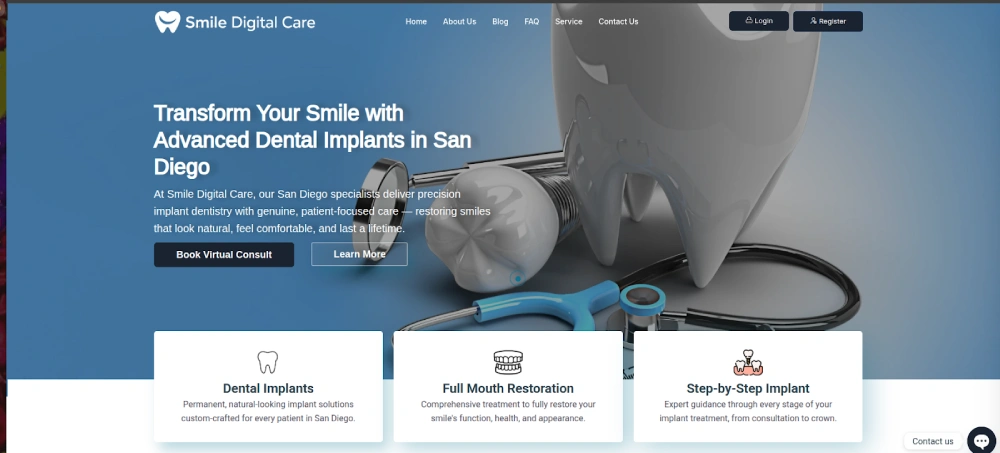
We built Smile Digital Care, a live dental clinic platform that goes far beyond a basic appointment form. This is not a mockup. Every feature runs on the live site today.
Here is what the platform delivers out of the box:
- Searchable provider directories organized by specialty, location, and availability so patients find the right doctor in seconds
- Role-based accounts with separate experiences for clinic staff, individual practitioners, and patients
- Multi-step booking flow with OTP verification and payment confirmation that reduces no-shows and eliminates back-and-forth scheduling
- In-platform messaging that keeps patient-provider communication centralized and persistent between visits
- Full management dashboard giving practice owners real-time visibility into appointments, revenue, and provider performance
Multi-location practices work out of the box. Providers manage their own profiles, fees, and calendars. Adding a new clinic is an admin task. Payments connect through Stripe, PayPal, or any processor via simple configuration.
The architecture scales into dermatology, physiotherapy, mental health, and beyond without a rebuild. PoC to production typically takes 8 to 14 weeks.
eCommerce: A Conversion-Optimized WooCommerce Store Ready to Scale
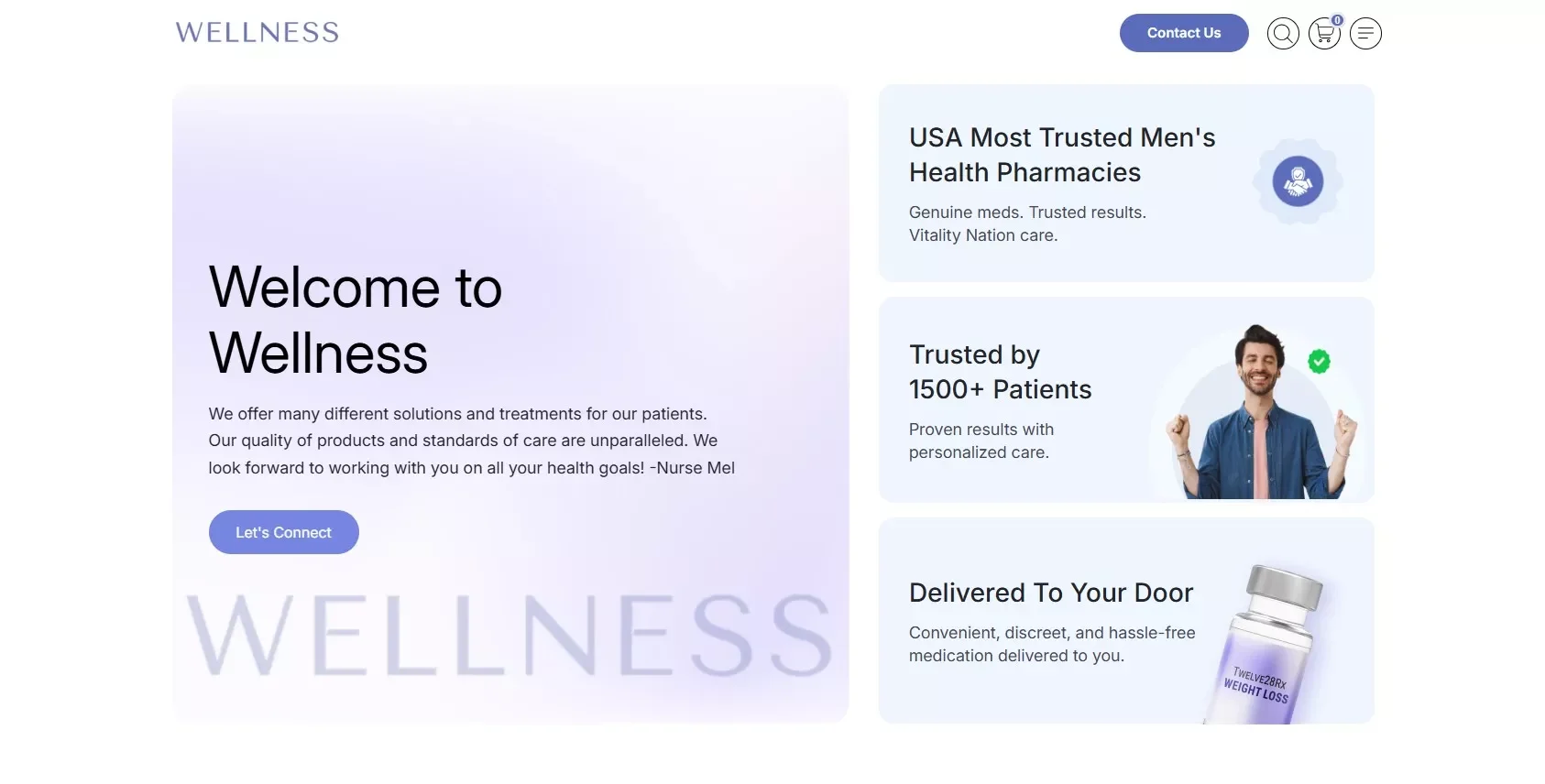
We built a customizable WooCommerce PoC engineered around the three pillars that determine whether an online store generates revenue or loses visitors. Every feature is live and functional.
Here is what the platform includes:
- Image-rich mega menu for instant category browsing so shoppers find products in two clicks or less
- Drag-and-drop homepage that non-technical users update without touching a single line of code
- Conversion-optimized checkout designed to minimize cart abandonment at every step
- Independent store management where owners handle inventory, orders, and promotions without developer dependency
- Flexible payment processing with Stripe, PayPal, and dozens of gateways through simple plugin configuration
The design adapts to every screen size. The infrastructure scales with traffic. Whether you are launching a wellness brand, a custom apparel store, or a niche retail operation, we customize the PoC to your catalog and get you selling in weeks.
Education: A Modern High School Website That Solves Real Problems
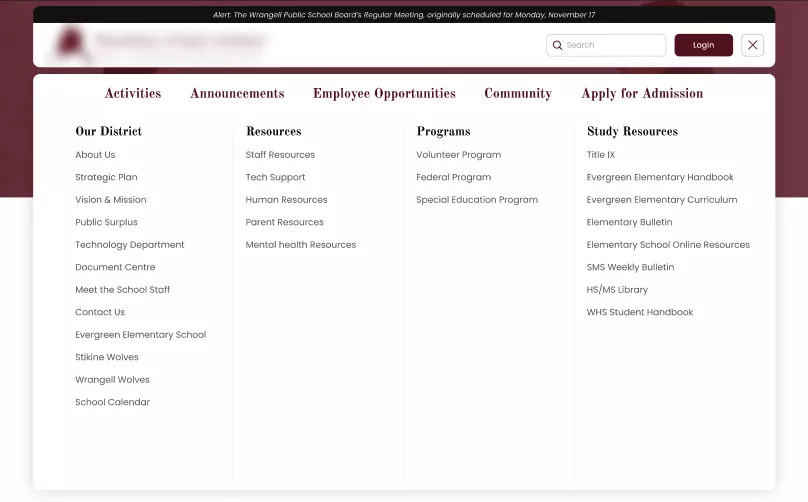
We developed a high school website redesign PoC that tackles the three problems every school district faces online. The platform is live and fully functional.
Here is what we built:
- Structured mega menus and persistent navigation that put permission slips, athletic schedules, and calendars within two clicks
- Purpose-built admissions workflow that converts prospective families into enrolled students
- Integrated careers section with online job applications to streamline staff recruitment
- Content architecture that measurably reduces repetitive phone calls to the front office
- Mobile-responsive design that works seamlessly for parents browsing on any device
The navigation logic, enrollment funnel, and mobile responsiveness are all pre-engineered. We do not rebuild the core for every school. Each district gets a modern, high-performing site tailored to their community and branding, delivered weeks faster than a traditional agency engagement.
The Pattern Across All Three
Every PoC follows the same principle: validate before you invest. We build a working product, not a mockup. You test it with real users, gather feedback, and make informed decisions before committing to a full production build. The core architecture is already stress-tested, so scaling from PoC to production is a matter of customization, not reconstruction.
This is how prebuilt solutions with AI-powered features work in practice. Not as a compromise. As a competitive advantage.

Why Choosing the Right Technology Partner Matters More Than Choosing the Right Platform
Here is something worth understanding before you evaluate any prebuilt solution: the platform is only as good as the team configuring, customizing, and deploying it.
A prebuilt framework in the wrong hands produces a generic website that looks like every other template on the internet. In the right hands, it becomes a launchpad for a product that scales, converts, and evolves.
That is why we pair every prebuilt deployment with senior engineers, architects, and product strategists. The technology handles the infrastructure. Our team handles the strategy, customization, and the AI layer that makes it intelligent.
We have seen this play out the same way across dozens of projects. The teams that invest in the right partner before they invest in the right platform are the ones shipping products that work.
Why Prebuilt AI-Powered Website Solutions Matter Right Now
The market is not waiting. Netguru’s 2026 analysis projects AI spending in web development to expand at 37% per year through the end of the decade. Meanwhile, edge computing deployments are slashing page load latency by up to 90%. The tools available today are not the same tools that existed even two years ago.
American businesses that adopt prebuilt AI-powered solutions now are building a compounding advantage. Faster launches mean faster feedback. Faster feedback means faster iteration. Faster iteration means a product that fits the market better than the competitor still stuck in month four of a custom build.
The window is open. But it will not stay open forever.
What to Look for in a Prebuilt Website Solution with AI Features
Before you commit to a platform or a partner, here is what to evaluate.
First, check the architecture. Is the prebuilt framework modular enough to customize without hacking the core? Can you swap components as your needs evolve?
Second, evaluate the AI layer. Are AI features deeply integrated, or are they surface-level add-ons that require separate tools and maintenance?
Third, look at the deployment pipeline. Does the solution include CI/CD, staging environments, and automated testing, or will your team need to build that infrastructure separately?
Fourth, assess scalability. A prebuilt solution that works for 1,000 visitors a month but breaks at 100,000 is not a solution. It is a liability.
And finally, evaluate the partner. Who will customize, deploy, and maintain this after launch? That answer matters more than the platform you pick.
Ready to Turn a Proven PoC Into Your Next Product?
You have seen how prebuilt solutions with AI-powered features cut deployment timelines from months to weeks. You have seen what our PoC framework delivers across healthcare, eCommerce, education, and dozens of other industries. The question now is simple: what would this look like for your business?
We start every conversation the same way. You tell us what you are building. We listen, ask the right questions, and map out the fastest path from idea to a working product. No generic proposals. No recycled templates. Just a clear, honest picture of what is possible with your budget, your timeline, and your goals.
If the PoC approach fits, we can have a working prototype in your hands within weeks. If a custom build makes more sense, we will tell you that too. Either way, you walk away with clarity.
Let’s talk about what you’re building
Frequently Asked Questions (FAQs)
What are prebuilt website solutions?
Prebuilt website solutions are production-ready frameworks that include responsive design, security protocols, CMS integrations, SEO foundations, and deployment pipelines out of the box. They allow teams to skip repetitive infrastructure work and focus on customization and business logic.
How do AI-powered features improve website deployment?
AI automates tasks that traditionally slow down development, including content generation, testing, personalization, and SEO optimization. When these capabilities come prebuilt, teams can deploy faster without sacrificing quality or performance.
Are prebuilt solutions suitable for enterprise-level websites?
Yes. Modern prebuilt frameworks are modular and scalable. They support multi-site deployments, role-based access, compliance requirements, and high-traffic loads. The key is choosing the right architecture and the right partner to configure it for enterprise needs.
How much faster is deployment with prebuilt AI-powered solutions?
Research shows that organizations using AI-enhanced development approaches report 60-80% reductions in development time. Projects that traditionally take three to six months can often reach deployment in weeks.
When should I choose a custom build over a prebuilt solution?
Custom builds make sense when the core product experience is the differentiator, such as complex marketplace platforms or specialized healthcare applications. Even then, prebuilt components can handle much of the infrastructure while custom engineering focuses on what truly matters.