Starting an eCommerce business is an exciting journey of building a digital brand and reaching global customers. However, choosing the right platform is crucial to your success.
If you’re an eCommerce manager evaluating platforms, a startup founder worried about scalability, or a business owner overwhelmed by technical complexity, you’re not alone.
Many businesses struggle with the fear of choosing the wrong platform and wasting thousands of dollars, the frustration of outgrowing their system within a year, or the anxiety of losing sales due to poor performance.
The wrong choice can mean costly migrations, lost revenue, and months of wasted time. For an in-depth side-by-side comparison of the most popular platforms, see our WooCommerce vs Shopify vs BigCommerce vs Magento guide.
Whether you’re looking for custom eCommerce development tailored to your specific business requirements or a more flexible CMS and eCommerce development solution, it’s important to know which platform can best meet your digital commerce needs.
E-commerce is booming. Statista projects global retail eCommerce sales will reach $8.1 trillion in 2026 and surpass $10.5 trillion by 2028. With over 2.86 billion people shopping online globally in 2026, having a strong digital presence is no longer optional-it’s essential.
The eCommerce platform landscape offers solutions for every business size. From budget-friendly WooCommerce to feature-rich Shopify and BigCommerce, each platform provides unique tools to help you grow. Your choice should balance current needs with future scalability.
Key considerations include:
- Total setup and maintenance costs
- Ease of use and learning curve
- Customization options and flexibility
- Mobile responsiveness and progressive web app (PWA) capabilities
- Payment gateway integration options
- Customer support quality
- AI and automation features
- Conversion rate optimization (CRO) tools
- Omnichannel retail capabilities
Platform prices range from free basic plans to comprehensive solutions costing $29 to $399 monthly. The global e-commerce market is growing at 15.4% annually, representing massive opportunities for innovative entrepreneurs.
Common mistakes businesses make: Choosing a platform based on price alone, ignoring scalability needs, or selecting features they don’t actually need. These errors lead to expensive platform migrations, lost SEO rankings, and disrupted operations. Our goal is to help you avoid these pitfalls and choose a platform that grows with your business.
Power up your online store in 2026 with the perfect eCommerce platform! Get a FREE Platform Assessment to discover which solution fits your business goals, budget, and growth plans. Bitcot’s experts are here to guide you every step of the way.
When selecting your platform, look beyond immediate features. Consider how the tool will support your business’s long-term vision and ability to adapt to a rapidly evolving digital marketplace, especially with emerging technologies like AI, AR/VR shopping experiences, and headless commerce architectures.
Your e-commerce platform is more than a technical choice-it’s a strategic decision that can dramatically shape your business’s future. Take time to research, compare options, and align your choice with your entrepreneurial goals.
What Is an eCommerce Platform?

An eCommerce platform is a software solution that enables businesses to sell products or services online. It provides a comprehensive set of tools for creating and managing an online store, including:
- Website Design & Development: Tools for Creating and Customizing an Online Storefront, Enabling Businesses to Build a Professional Website with Advanced Customization and Development Capabilities.
- Product Management: Features to add, edit, and organize product catalogs, including descriptions, images, pricing, and inventory tracking.
- Shopping Cart and Checkout: A system that allows customers to select products, add them to a cart, and complete purchases securely.
- Payment Processing: Integration with various payment gateways to accept different types of payments, including credit cards, digital wallets (Apple Pay, Google Pay, cryptocurrency), and buy-now-pay-later services.
- Order Management: Tools to track orders, manage shipping, process returns, and handle customer communications.
- Marketing and SEO Tools: Features to help businesses promote their online store, including email marketing integrations, discount code creation, social commerce, and search engine optimization capabilities. Learn more in our comprehensive eCommerce website development guide.
- Analytics and Reporting: AI-powered dashboards and reports that provide insights into sales, customer behavior, predictive analytics, and overall store performance.
- AI Integration: Advanced features including personalized product recommendations, AI-powered chatbots, dynamic pricing, and automated customer service.
The main goal of an eCommerce platform is to simplify the process of selling online, reducing technical barriers and allowing businesses to focus on their products and customer service. For inspiration on what successful digital commerce solutions look like, explore our guide to the best eCommerce websites in the world. Here are the top 11 eCommerce platforms for 2026 to help you choose for your customers.
11 Best Ecommerce Platforms for Your Business
Choosing the right eCommerce platform is crucial for your business’s success. With so many options available, it can be hard to know which one fits your needs. Whether you’re starting a small store or running a large enterprise, here’s a breakdown of the 11 best eCommerce platforms for 2026, complete with pricing and reviews to help you make an informed decision.
Not sure where to start? Bitcot specializes in helping businesses navigate this decision. We don’t just recommend platforms, we implement them, customize them for your specific needs, and ensure they’re optimized for maximum performance and conversions.
1. Shopify

Shopify is one of the most popular eCommerce platforms, powering over 5.2 million active online stores globally as of 2025. Known for its user-friendliness, the platform has facilitated over $650 billion in total global sales, supporting 100+ payment gateways. It’s an all-in-one solution ideal for businesses of all sizes, from startups to large enterprises.
Our Shopify development services help customize, optimize, and enhance your online store to meet your specific business needs. Need custom functionality beyond Shopify’s app store? Our Shopify app development services can create tailored solutions designed specifically for your business requirements.
Why Choose Shopify?
- Ease of Use: Simple and intuitive interface for quick store setup.
- Customizability: Offers hundreds of themes and apps for extensive customization.
- Strong Support: 24/7 customer service and a large support community.
- AI-Powered Features: Shopify Magic AI assistant, automated product descriptions, and intelligent inventory management.
Pricing: Starts at $39/month for the Basic plan. Higher tiers include more advanced features and start at $105/month (Shopify) and $399/month (Advanced Shopify). Enterprise pricing is available on Shopify Plus (starting around $2,000/month).
Reviews:
- G2: 4.4/5 stars (based on ease of use, support, and integration options).
- Trustpilot: 4.0/5 stars, with users praising its user-friendly interface but noting higher fees for transactions.
Pros:
- User-friendly interface
- Extensive app ecosystem (10,000+ apps)
- Reliable customer support
- Strong AI and automation capabilities
- Excellent for dropshipping and POD
Cons:
- Transaction fees unless using Shopify Payments
- Advanced customization may require coding knowledge
- Costs can add up with premium apps
2. WooCommerce
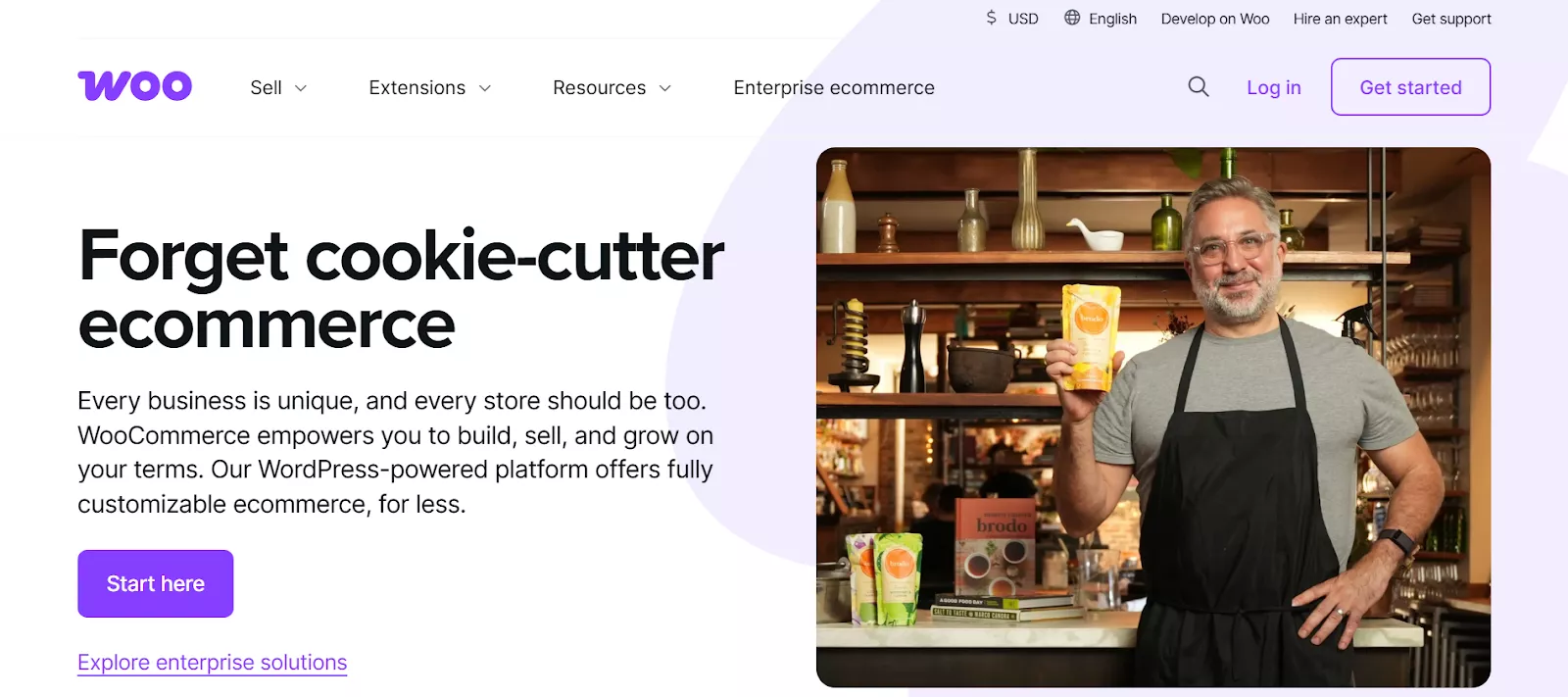
WooCommerce is a popular choice for businesses that are already using WordPress, powering over 6.3 million websites globally as of 2025. This open-source platform offers extensive customization possibilities, with over 65,000 plugins available and supporting more than 140 payment gateways. Ideal for users with technical expertise, WooCommerce powers approximately 29% of all online stores worldwide.
Our expert WooCommerce development services ensure your store is fully customized, efficient, and ready for growth. Looking to extend your WooCommerce store with powerful tools? Explore our guide to the best WordPress eCommerce plugins to find the perfect solutions for your needs.
Why Choose WooCommerce?
- Full Customization: Control over every aspect of your online store’s design and functionality.
- Cost-Effective: Free to use with optional paid extensions.
- Plugin Library: Thousands of plugins for additional features including AI recommendation engines.
- WordPress Integration: Seamlessly integrates with WordPress CMS for content-rich stores.
Pricing: The base plugin is free, but hosting, themes, and additional extensions can add to the cost. Full-featured stores may cost $15–$150+ per month, depending on hosting and add-ons.
Reviews:
- G2: 4.4/5 stars; praised for its flexibility and customization options.
- Trustpilot: 3.9/5 stars; users like the control it provides but note that it can be complex to set up and maintain.
Pros:
- Highly customizable
- Cost-effective for small businesses
- Strong community support
- Full ownership of data
- Excellent SEO capabilities
Cons:
- Requires technical expertise for full customization
- Performance can slow with too many plugins
- Security and updates are your responsibility
3. BigCommerce
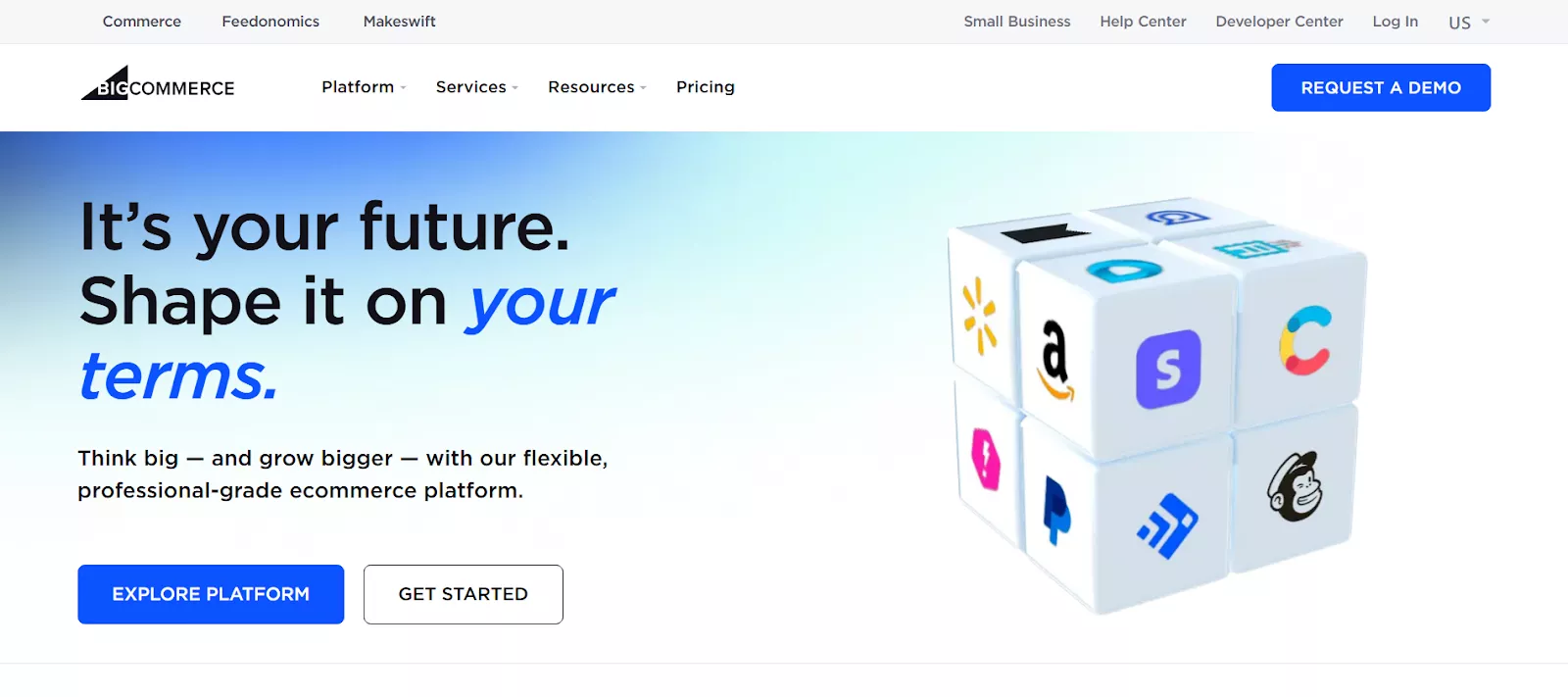
BigCommerce is perfect for businesses looking for a robust, scalable solution, powering over 105,000 online stores globally in 2025. With support for 70+ payment gateways and an average conversion rate of 3.8%, it offers plenty of built-in tools to support growth and mobile commerce. It’s ideal for those who need a powerful platform without extensive custom coding, enabling businesses to manage up to $75 million in annual online sales efficiently.
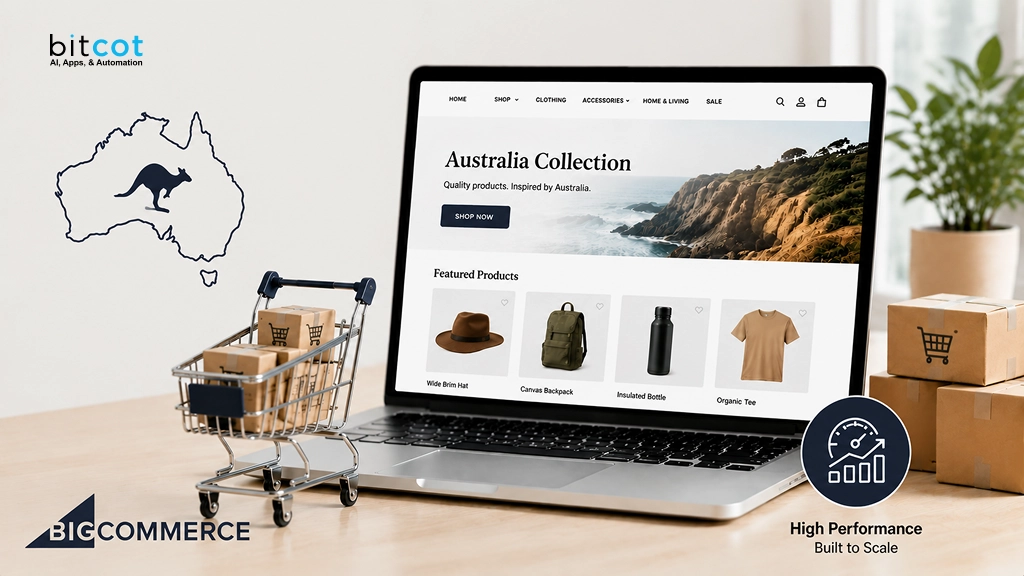
Our BigCommerce development services offer end-to-end support, including custom theme design, app integration, API development, and performance optimization to enhance user experience and increase sales.
Why Choose BigCommerce?
- Built-in Features: Includes tools for SEO, multi-channel selling, and advanced analytics.
- No Transaction Fees: Unlike other platforms, BigCommerce does not charge transaction fees.
- Scalability: Built to support rapid growth and high-volume sales.
- Headless Commerce Ready: Advanced API capabilities for custom front-end experiences.
Pricing: Plans start at $39/month for the Standard plan, with higher tiers at $105/month (Plus) and $399/month (Pro). Enterprise-level pricing is available for customized plans.
Reviews:
- G2: 4.3/5 stars; users value the comprehensive built-in tools but mention the learning curve.
- Trustpilot: 4.1/5 stars, with businesses appreciating its scalability but mentioning that the pricing can be higher than other platforms.
Pros:
- Strong SEO and multi-channel support
- No transaction fees
- Built-in tools for business growth
- Excellent B2B features
- Powerful API for custom development
Cons:
-
- Steeper learning curve for beginners
- Limited free themes
- Sales thresholds can force plan upgrades
4. Squarespace

Squarespace is known for its stunning templates and simplicity, hosting over 2.8 million active websites in 2025. It’s ideal for small to medium-sized businesses that want a beautiful, easy-to-manage store, with more than 150 professional design templates and support for 30+ payment methods.
Why Choose Squarespace?
- Beautiful, Customizable Templates: Perfect for businesses that value aesthetics.
- All-in-One Platform: Hosting, domain, and eCommerce tools included.
- User-Friendly Interface: No coding skills required.
- Built-in Marketing Tools: Email campaigns, SEO features, and social media integration.
Pricing: Plans start at $27/month (Business) and $49/month (Commerce Basic) for eCommerce features. Higher-tier plans range up to $74/month (Commerce Advanced).
Reviews:
- G2: 4.5/5 stars; users appreciate the ease of use and design quality.
- Trustpilot: 4.3/5 stars, with high marks for design but some criticisms about limited eCommerce features.
Pros:
- Beautiful, customizable templates
- Easy drag-and-drop interface
- Integrated marketing tools
- Excellent for creative businesses
- Good customer support
Cons:
- Limited customization compared to other platforms
- Fewer advanced eCommerce features
- Transaction fees on lower-tier plans
5. Experro
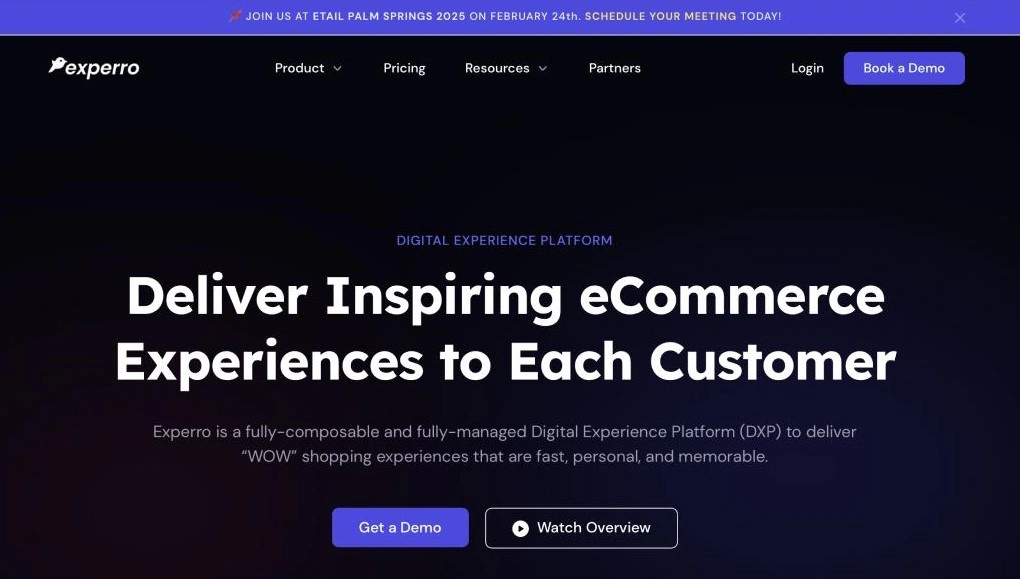
Experro is a next-gen Digital Experience Platform (DXP) designed to help e-commerce brands deliver fast, engaging, and personalized shopping experiences. With AI-powered search, headless architecture, and advanced merchandising, it enables seamless scalability and unmatched flexibility.
Why Choose Experro?
- AI-Powered Personalization – Uses Generative AI to provide tailored recommendations and dynamic content, boosting engagement and conversions.
- Headless & Composable Commerce – Easily integrates with any CMS or e-commerce system, ensuring complete flexibility.
- Blazing-Fast Performance – Optimized for ultra-fast load times and smooth navigation with edge computing.
- Advanced Merchandising & Search Intelligence – Enhances product discovery with AI-driven search and personalized promotions.
- Easy Integration & Scalability – Works with CRMs, PIMs, and marketing tools, growing with your business.
Pricing: Experro offers custom pricing based on business needs. Contact their team for a tailored quote.
Reviews:
- G2: 4.8/5 stars (based on adaptability, ease of use and Experience options)
- TrustRadius: 10/10 stars, with users praising its ease to integrate with multiple platforms, its DXP features, search and personalization suggestions!
Pros
- AI-driven personalization and recommendations
- Ultra-fast performance with edge computing
- Highly flexible and scalable architecture
- Seamless third-party integrations
- Composable commerce approach
Cons
- Requires initial setup and learning
- Best suited for mid-to-large businesses
- Custom pricing may be higher for small businesses
6. Adobe Commerce (Magento)
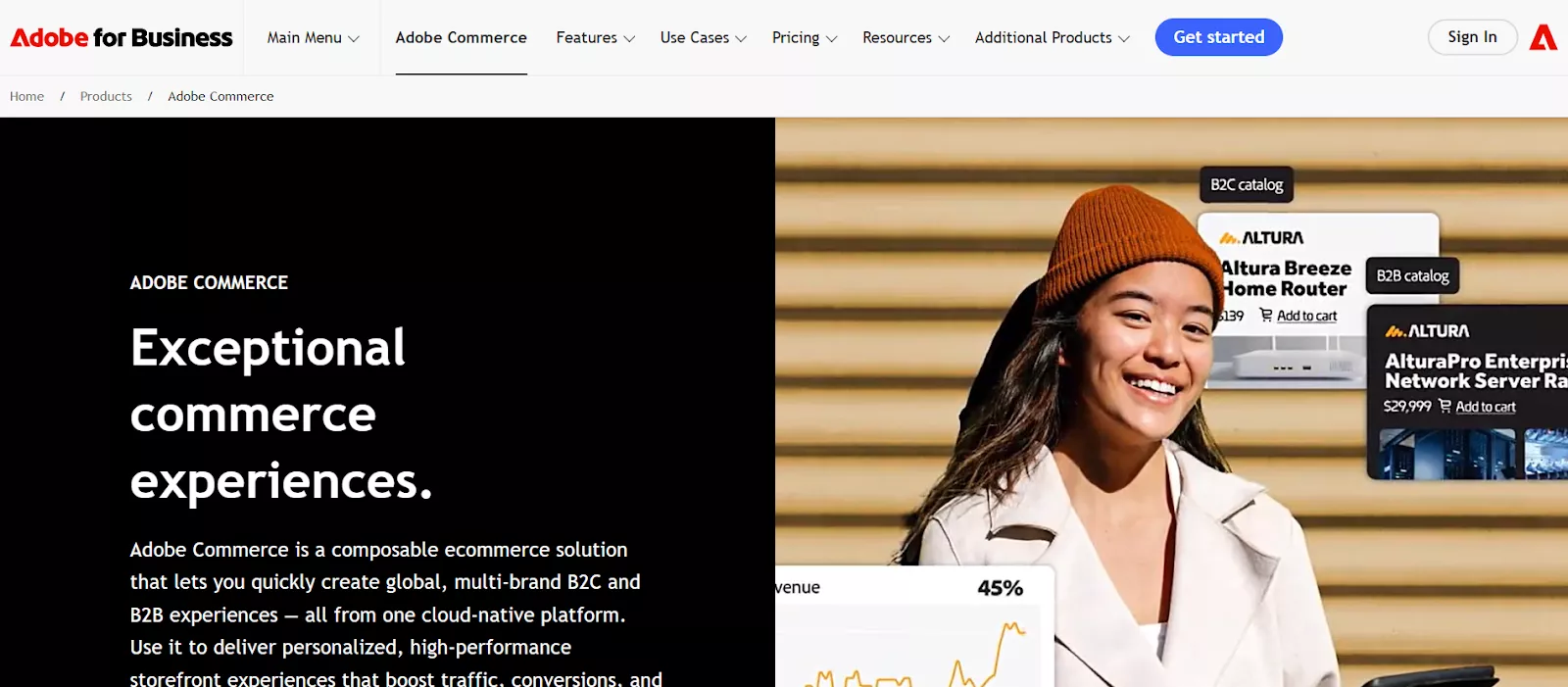
Adobe Commerce (formerly Magento) is an enterprise-grade eCommerce platform known for its flexibility and scalability, powering over 280,000 online stores globally in 2025. Ideal for businesses with complex needs and technical teams, the platform supports transactions in over 200 countries and handles up to $1.5 billion in annual online sales for large enterprises.
Why Choose Adobe Commerce (Magento)?
- Full Customization: Offers the most flexibility in design and features.
- Enterprise-Grade Features: Perfect for large-scale operations with complex catalogs.
- Strong Developer Community: Access to a wealth of extensions and developer resources.
- AI and ML Integration: Adobe Sensei for intelligent product recommendations and predictive analytics.
Pricing: Open-source version is free, but Adobe Commerce’s premium edition pricing is custom, typically ranging from $25,000 to over $150,000 annually based on business needs.
Reviews:
- G2: 4.0/5 stars; users like its customization options but find it challenging to use without technical skills.
- Trustpilot: 4.0/5 stars; praised for its robust features but noted as costly and complex.
Pros:
- Full customization options
- Advanced features for large businesses
- Strong developer ecosystem
- Excellent for B2B and B2C
- Powerful multi-store capabilities
Cons:
- Requires technical expertise
- Expensive for smaller businesses
- Can be resource-intensive

7. Wix
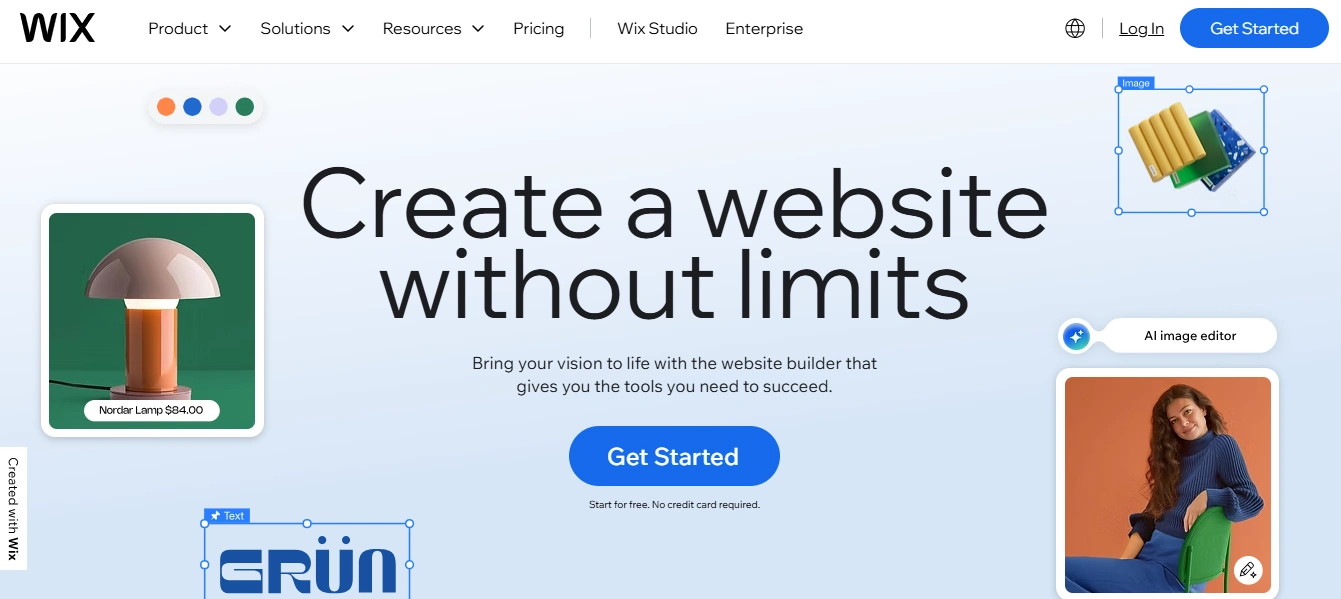
Wix is an easy-to-use platform that powers over 230 million websites globally in 2025, perfect for small businesses and beginners. With more than 900 professionally designed templates and support for 60+ payment gateways, it offers a simple, attractive online store without a steep learning curve.
Why Choose Wix?
- User-Friendly Interface: A simple, drag-and-drop builder with no coding skills required.
- Affordable Pricing: Plans start at a low cost, ideal for startups and small businesses.
- Quick Setup: Launch your store quickly with pre-designed templates.
- Wix AI Features: AI-powered website builder and automated design suggestions.
Pricing: Plans start at $27/month (Business Basic), with higher-tier options at $32/month (Business Unlimited) and $59/month (Business VIP).
Reviews:
- G2: 4.4/5 stars; users love the ease of use and affordable pricing.
- Trustpilot: 4.2/5 stars, noting its simplicity but limited scalability for larger businesses.
Pros:
- Very user-friendly
- Affordable pricing plans
- Good for smaller businesses
- AI-powered design tools
- Integrated booking and appointment features
Cons:
- Limited scalability for large businesses
- Fewer advanced eCommerce features
- Cannot switch templates once published
8. Square Online

Square Online is designed for small businesses, supporting over 2.3 million merchants in 2025. It’s an easy-to-use, cost-effective solution with support for 60+ payment methods that integrates seamlessly with in-person sales, processing more than $45 billion in annual transactions.
Why Choose Square Online?
- Seamless Integration: Ideal for businesses using Square POS.
- Affordable: Basic plan is free, making it an excellent choice for budget-conscious businesses.
- Simple Setup: Easy to use for beginners.
- Omnichannel Commerce: Unified inventory and sales across online and offline channels.
Pricing: Free for the basic plan, with paid plans starting at $29/month (Professional) and up to $79/month (Performance).
Reviews:
- G2: 4.4/5 stars; users appreciate its integration with Square POS and affordability.
- Trustpilot: 4.3/5 stars, with many praising its simplicity but some wishing for more customization.
Pros:
- Easy integration with Square POS
- No monthly fees for basic plans
- User-friendly setup
- Perfect for omnichannel retail
- No transaction fees with Square Payments
Cons:
- Limited customization options
- Basic features may not meet advanced needs
- Primarily suited for small businesses
9. OpenCart
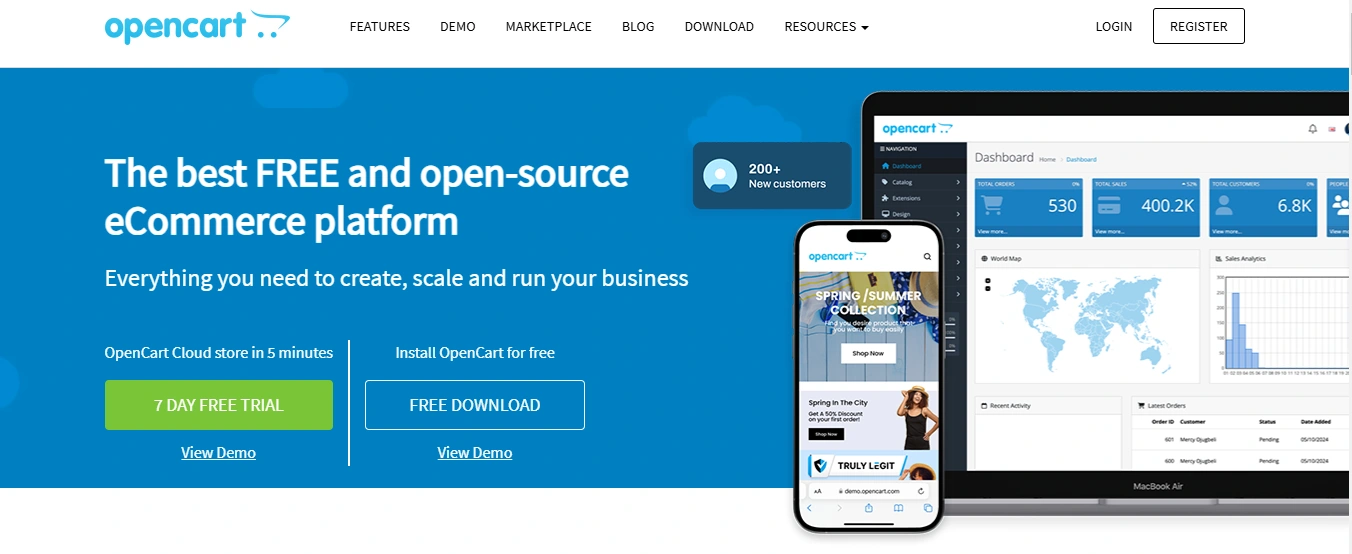
OpenCart is an open-source platform supporting over 400,000 online stores globally in 2025. It provides cost-effective, customizable eCommerce solutions, offering more than 15,000 extensions and themes. It’s best for businesses with technical knowledge and the desire for a tailored online store.
Why Choose OpenCart?
- Customizability: Modify the platform to meet your specific business needs.
- Free to Use: Base platform is free, although hosting and extensions come at an additional cost.
- Large Extension Library: Enhance your store with a variety of third-party plugins.
- Multi-Store Management: Manage multiple stores from one admin panel.
Pricing: Free for the base platform; hosting and extensions can cost $10–$75/month.
Reviews:
- G2: 4.1/5 stars; users enjoy its flexibility but note that it can be difficult for those without technical skills.
- Trustpilot: 3.8/5 stars; praised for its customization but criticized for its learning curve.
Pros:
- Cost-effective for small to medium businesses
- Extensive extension marketplace
- Open-source and customizable
- No monthly platform fees
- Multi-currency and multi-language support
Cons:
- Technical knowledge required for setup and customization
- Limited built-in features compared to larger platforms
- Extensions can vary in quality
10. Shift4Shop
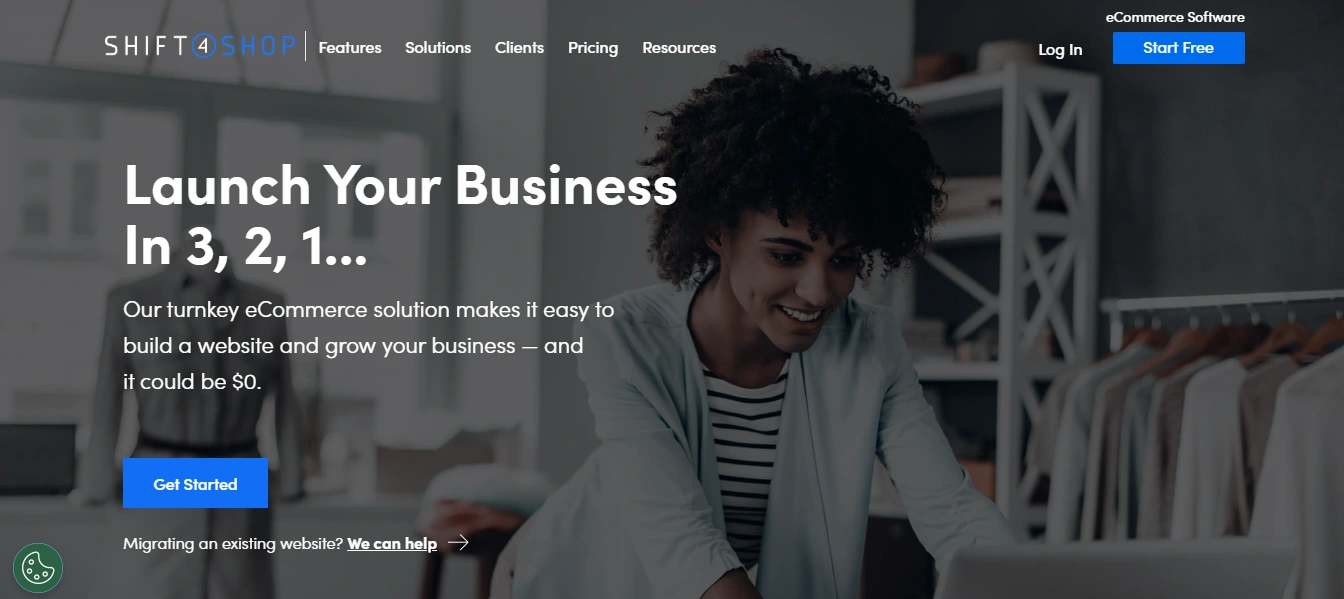
Shift4Shop, supporting over 40,000 online stores in 2025, is a comprehensive eCommerce platform with built-in SEO features, multi-channel support, and advanced reporting. It offers more than 200 design templates and supports 60+ payment gateways. It’s great for businesses that want a robust, feature-rich platform without the additional cost of transaction fees.
Why Choose Shift4Shop?
- No Transaction Fees: Keep more of your revenue.
- Built-in SEO Tools: Optimize your store for search engines without the need for additional plugins.
- Multi-Channel Selling: Manage sales across different platforms with ease.
- Free Plan Available: With Shift4 payment processing, the platform is completely free.
Pricing: Plans start at $29/month for the basic plan, with higher tiers and custom enterprise solutions available. Free with Shift4 Payments.
Reviews:
- G2: 4.3/5 stars; users like the built-in tools but find it requires a learning curve.
- Trustpilot: 3.9/5 stars; customers appreciate the no-transaction-fee policy but mention that the design flexibility is limited.
Pros:
- No transaction fees
- Built-in SEO tools
- Comprehensive feature set
- Free plan with Shift4 Payments
- Good for content-rich stores
Cons:
- Steeper learning curve
- Limited design options
- Free plan requires Shift4 processing

11. Salesforce Commerce B2C
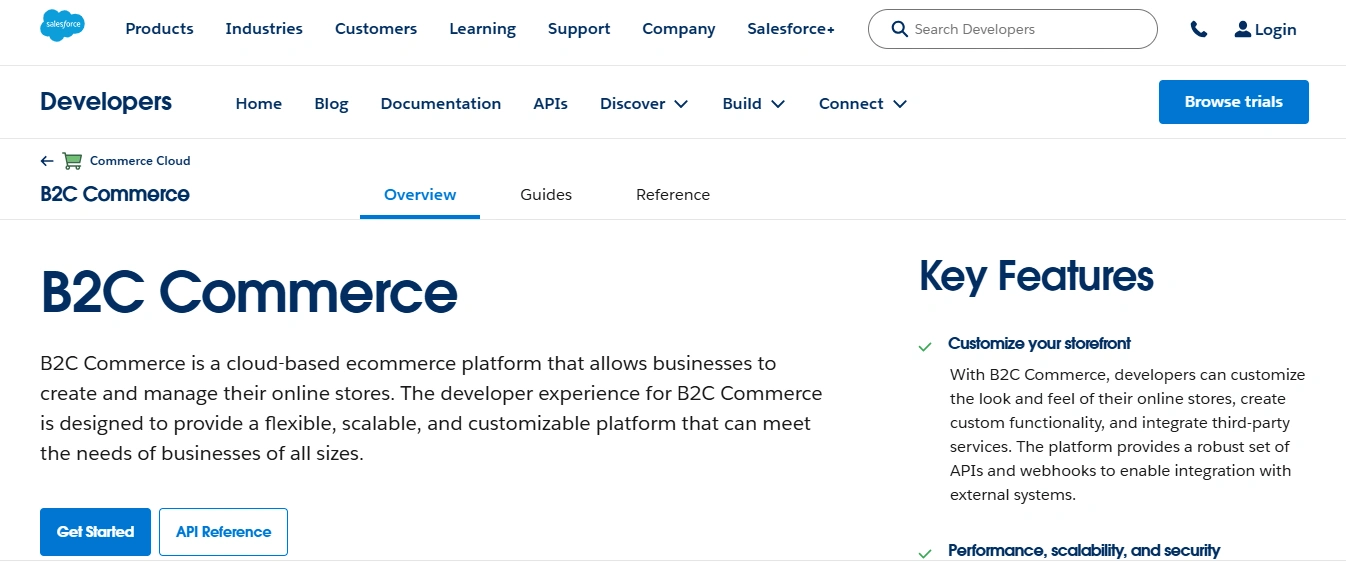
Salesforce Commerce B2C, serving over 55,000 enterprise customers in 2025, is designed for large businesses looking to deliver a personalized, omnichannel shopping experience. It supports more than 100 global markets and offers advanced analytics tools powered by Einstein AI, integrating seamlessly with other Salesforce products.
Why Choose Salesforce Commerce B2C?
- Omnichannel Support: Manage sales and customer interactions across different channels.
- Advanced Personalization: Use Einstein AI to create a tailored shopping experience with predictive intelligence.
- Integration with Salesforce Suite: Access powerful CRM and data tools.
- Enterprise-Grade Scalability: Handles high traffic and transaction volumes.
Pricing: Custom pricing based on business size and needs. Typically ranges from $150,000 annually for enterprise-level solutions.
Reviews:
- G2: 4.1/5 stars; praised for its personalization and data integration.
- Trustpilot: 4.1/5 stars, with users noting its robustness but high costs.
Pros:
- Advanced personalization and CRM tools
- Strong integration with Salesforce ecosystem
- Omnichannel capabilities
- Einstein AI for predictive analytics
- Excellent for large enterprises
Cons:
- High price point
- Requires dedicated technical resources
- Complex implementation process
12. Bonus Platform: VTEX
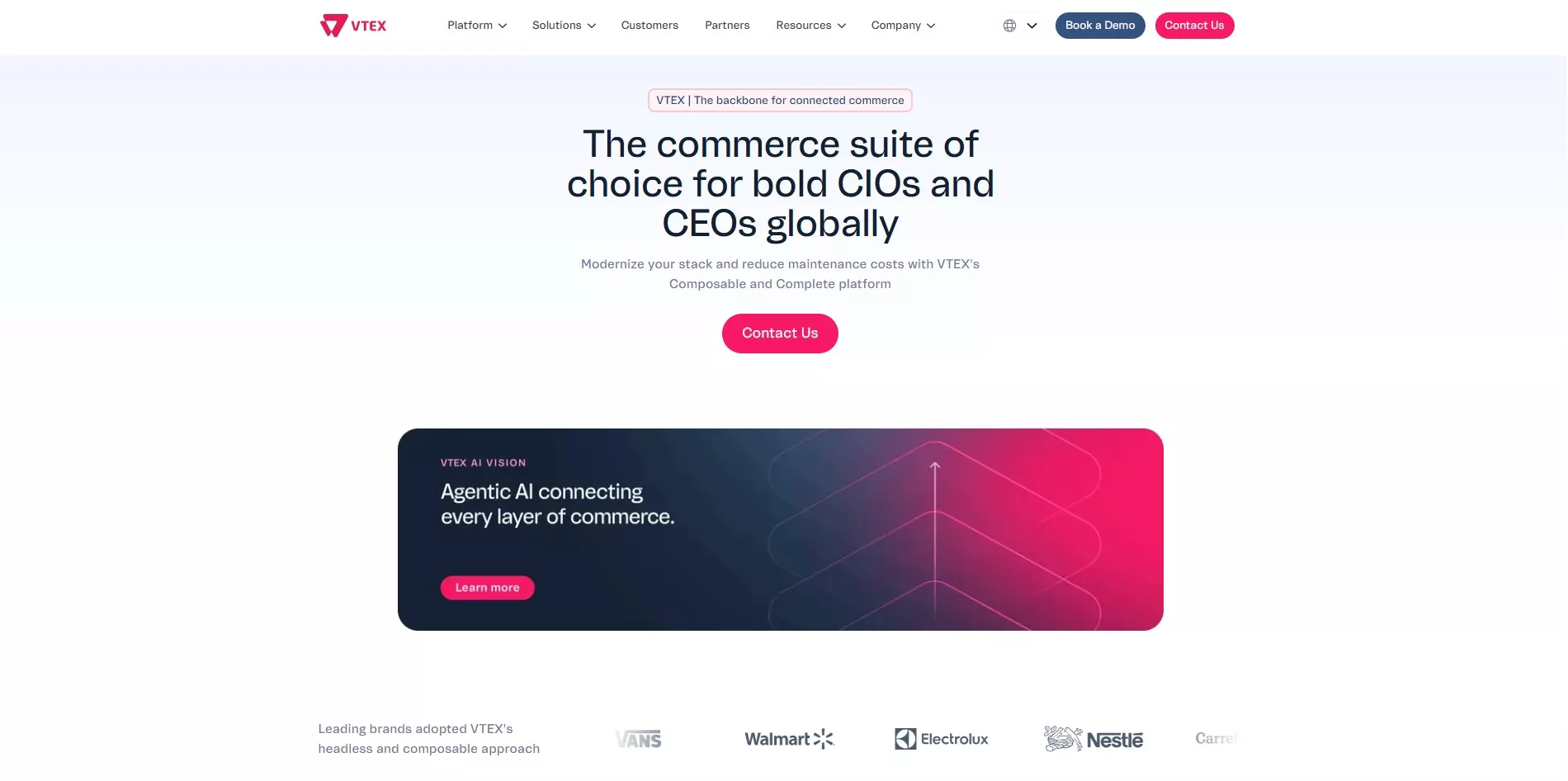
VTEX, serving over 3,800 enterprise customers in 2025, is a flexible platform suitable for global businesses with complex needs. It supports transactions in more than 45 countries and offers advanced headless commerce capabilities, making it ideal for companies wanting full control over the front and back ends of their eCommerce sites.
Why Choose VTEX?
- Global Capabilities: Multi-language and multi-currency support for international sales.
- Headless Commerce: Allows for maximum customization of both front-end and back-end.
- Integrated Ecosystem: Seamless connections to marketplaces and payment providers.
- Unified Commerce: Single platform for B2B, B2C, and marketplace operations.
Pricing: Custom pricing based on business requirements and scale.
Reviews:
- G2: 4.2/5 stars; users appreciate its adaptability for international sales.
- Trustpilot: 4.1/5 stars, with praise for its flexibility but mention of the learning curve.
Pros:
- Ideal for multi-channel and international sales
- Advanced customization options
- Strong integration capabilities
- Marketplace-ready features
- Composable commerce architecture
Cons:
- Higher learning curve for new users
- Can be expensive for smaller businesses
- May require developer resources

Choosing the Best eCommerce Platform for Your Business Model: B2B or B2C
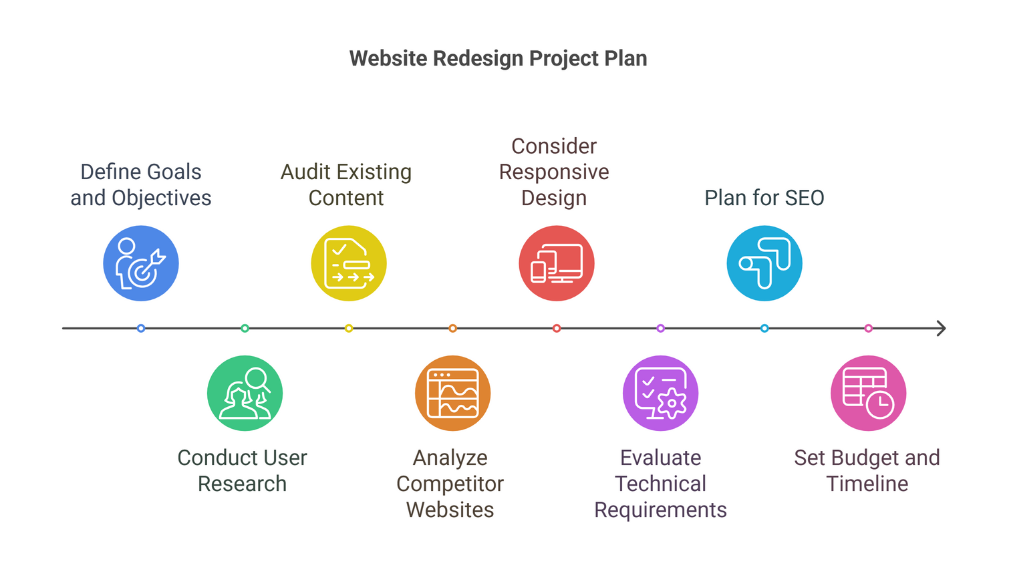
To grow your business, it’s important to select the eCommerce platform that aligns with your sales model, whether B2B or B2C. This decision impacts everything from sales efficiency to customer satisfaction. Each model has unique needs and challenges. Here’s how to select the best eCommerce platform for B2B and B2C:
B2C (Business-to-Consumer) eCommerce Platforms
B2C eCommerce focuses on selling products directly to individual consumers. These platforms need to be user-friendly, visually appealing, and equipped with tools for marketing, customer service, and secure payments.
Key Features to Look For:
- User-Friendly Design: Easy-to-navigate interface that enhances the shopping experience and reduces shopping cart abandonment.
- Marketing Integration: Built-in SEO tools, email marketing, and social media integration.
- Mobile Optimization: Responsive design to cater to mobile shoppers (now over 60% of eCommerce traffic).
- Payment Gateways: Support for various payment methods, including credit cards, PayPal, digital wallets, and BNPL options.
- Scalability: Ability to handle high volumes of traffic, especially during peak seasons.
- AI Features: Personalized recommendations, chatbots, and predictive analytics for better conversion rates.
Top B2C eCommerce Platforms:
- Shopify: Known for its ease of use and customizable themes, is perfect for small to medium-sized businesses needing quick setup and an extensive app marketplace. It now offers B2B capabilities, including custom pricing and multiple shipping options.
- BigCommerce: Offers strong SEO and multi-channel selling capabilities, making it great for mid-sized to large businesses.
- Squarespace: Best for small businesses that prioritize design and simplicity.
- Wix: User-friendly and affordable, ideal for startups and smaller brands.
- Adobe Commerce (Magento): A powerful platform for businesses looking for advanced customization and scalability.
B2B (Business-to-Business) eCommerce Platforms
B2B eCommerce involves transactions between businesses, often requiring more complex features than B2C, such as bulk ordering, customizable pricing, and integration with ERP systems.
Key Features to Look For:
- Bulk Order Management: Tools for handling large orders and custom order forms.
- Advanced Pricing and Discounts: Ability to set up tiered pricing, volume discounts, contract pricing, and special promotions for different customers.
- Customer Segmentation: Custom experiences based on business type, purchase history, or loyalty.
- Integration Capabilities: Seamless integration with ERP, CRM, accounting systems, and procurement platforms.
- Robust Security: Strong security protocols for handling sensitive business data and compliance requirements.
- Quote Management: Request for quote (RFQ) functionality for custom pricing.
- Account Management: Multiple users per account with different permission levels.
Top B2B eCommerce Platforms:
- Magento Commerce (Adobe Commerce): Offers extensive customization, allowing businesses to create tailored solutions for their specific B2B needs. Ideal for large-scale enterprises.
- Salesforce Commerce B2C: While mainly a B2C solution, it can be tailored to support B2B features like account management and bulk pricing.
- BigCommerce for B2B: Provides features like custom pricing, quote management, and flexible payment options.
- Shopify Plus: A robust enterprise solution that supports B2B features like custom pricing and wholesale channels.
- VTEX: Offers a hybrid solution with capabilities for both B2B and B2C, making it ideal for businesses that need to support multiple business models.
- Experro: Users appreciate its AI-driven features, headless flexibility, and speed, making it a competitive choice for modern B2B brands.
Choosing the Right Platform for Your Business Model:
B2C Considerations:
- User Experience: Focus on platforms with attractive, easy-to-use interfaces and fast loading times (under 3 seconds).
- Marketing and SEO: Look for platforms that have built-in tools to help you reach and engage consumers.
- Scalability: Ensure the platform can handle growth in both product listings and customer base.
- Social Commerce: Integration with Instagram Shopping, Facebook Marketplace, and TikTok Shop.
- Mobile-First Design: Essential as mobile commerce now represents 60%+ of online sales.
B2B Considerations:
- Customization and Flexibility: Choose a platform that can be tailored to meet complex business needs.
- Integration: The ability to connect with other systems (e.g., ERP, CRM, procurement) is critical for seamless operations.
- Security and Compliance: B2B transactions often involve sensitive business data, so strong security measures are essential.
- Self-Service Portals: Allow customers to manage their own accounts, reorder, and track shipments.
- Complex Pricing Logic: Support for contract pricing, volume discounts, and customer-specific catalogs.
B2C and B2B models require different features, B2C focuses on user experience and conversion optimization, while B2B needs powerful tools for large orders, custom pricing, and enterprise integrations. Identifying your business type ensures you pick the right eCommerce platform for growth.
What Are the Different Types of eCommerce Platforms?
eCommerce platforms come in different types, each catering to various business needs and models. Here’s an overview of the main types:
1. Hosted eCommerce Platforms
These are cloud-based platforms that are managed by the service provider. Users do not need to worry about hosting, security, or maintenance since the provider takes care of these aspects. Hosted platforms are typically user-friendly, with drag-and-drop interfaces and ready-to-use features.
| Examples | Pros | Cons |
|---|---|---|
| Shopify, BigCommerce, Wix, Squarespace |
|
|
2. Self-Hosted eCommerce Platforms
These platforms allow businesses to have complete control over their online store by hosting the software on their own servers. This type of platform is more flexible and can be customized to fit specific business needs but requires more technical expertise.
| Examples | Pros | Cons |
|---|---|---|
| WooCommerce, Magento Open Source, PrestaShop, OpenCart |
|
|
3. Enterprise eCommerce Platforms
These are robust and scalable solutions built for large businesses with complex needs. They often offer advanced features, high customization, and the ability to handle high traffic volumes.
| Examples | Pros | Cons |
|---|---|---|
| Adobe Commerce (Magento), Salesforce Commerce Cloud, SAP Commerce, VTEX |
|
|
4. Open-Source eCommerce Platforms
These are platforms where the source code is publicly available, enabling businesses to modify, customize, and control their online store. Open-source platforms are cost-effective and offer a high degree of flexibility.
| Examples | Pros | Cons |
|---|---|---|
| WooCommerce, Magento Open Source, PrestaShop, OpenCart |
|
|
5. Software as a Service (SaaS) eCommerce Platforms
These are similar to hosted platforms but emphasize the recurring subscription model. The SaaS model means users pay a monthly or annual fee to use the platform, which includes software updates, hosting, and security management.
| Examples | Pros | Cons |
|---|---|---|
| Shopify, BigCommerce, Squarespace, Wix |
|
|
6. Headless eCommerce Platforms
These platforms offer a decoupled approach, separating the front end (presentation layer) from the back end (functionality). This allows developers to create unique and tailored customer experiences by using different technologies for the front end and back end. Learn more about headless commerce platforms and how they’re shaping the future of online retail.
| Examples | Pros | Cons |
|---|---|---|
| Shopify Plus, BigCommerce, CommerceTools, Magento (headless capabilities), VTEX, Experro |
|
|
Planning to build a multi-vendor marketplace? If your business model involves multiple sellers operating on a single platform (like Amazon, Etsy, or eBay), explore our comprehensive guide to multi-vendor eCommerce platforms for 2026. This resource covers everything from vendor management to commission structures and the best platforms for marketplace businesses.
How Bitcot Helps You Choose the Best eCommerce Platform
Deciding on the right eCommerce platform is a big step for your business’s online success. With so many choices available, it can be tricky to find the one that best fits your needs, budget, and long-term plans. That’s where Bitcot comes in. As experts in eCommerce website development services, we offer the support you need to find the ideal platform tailored to your specific requirements.
Our Proven 4-Step Process: We follow a systematic approach, Discovery (understanding your business), Strategy (platform selection and planning), Implementation (development and integration), and Optimization (performance tuning and growth support). This methodology ensures you get the right platform implemented correctly from day one.
Here’s how we can help:
1. Expert Consultation
At Bitcot, we understand that every business has different needs. Whether you’re a startup looking for a scalable solution or an established brand needing advanced features, our expert team conducts a thorough consultation to assess your business model, customer base, growth potential, and specific goals. We use this information to narrow down platform options that will best serve your business in 2026 and beyond.
Success Story: We’ve helped over 300+ businesses choose and implement the right eCommerce platforms, from small startups scaling to $1M+ in revenue to enterprise brands processing millions in daily transactions.
2. In-Depth Analysis
We don’t just recommend platforms; we provide an in-depth analysis of the available choices. Our team evaluates the key features, customization capabilities, security measures, user experience, pricing structures, AI integration, and available integrations of each platform. By comparing these factors, we can highlight the strengths and limitations of each option, ensuring you make an informed decision.
3. Customization and Scalability Assessment
One of the most important aspects of choosing an eCommerce platform is ensuring it can scale as your business grows. Bitcot helps you understand the scalability potential of different platforms and whether they allow for future customization as your business evolves. This proactive approach ensures that you invest in a platform that can adapt to your changing needs, including emerging technologies like AI, AR/VR, and voice commerce.
4. Technical Support and Guidance
Navigating technical aspects can be overwhelming, especially if you’re not familiar with the eCommerce landscape. Bitcot’s team is here to simplify that process for you. We help you understand the technical requirements and assist with any integration needs with your current systems. From setting up your chosen platform to training your team, we’re with you every step of the way.
5. Best Practices for Implementation
Choosing the right platform is only part of the equation. Bitcot guides you on how to best implement your chosen eCommerce solution, ensuring it aligns with your business workflows and goals. We also provide insights into best practices for launching and maintaining a successful online store, helping you optimize performance, enhance customer experience, and maximize ROI.
6. Continuous Support and Upgrades
Our support doesn’t end once you’ve chosen your eCommerce platform. Bitcot offers ongoing assistance, helping you with updates, troubleshooting, platform upgrades, and emerging technology integration. We’re committed to ensuring that your online store continues to function seamlessly as technology evolves and your business grows.
Ready to Get Started? Choose Your Next Step:
→ Free 30-Minute Platform Assessment – Not sure which platform is right? Get expert guidance tailored to your business.
→ Platform Migration Audit – Already have a store but need to switch? We’ll create a risk-free migration plan.
→ Custom eCommerce Development Quote – Need something unique? Let’s build a solution that perfectly fits your vision.
Explore Our Portfolio of Successful eCommerce Stores
Final Thoughts
Jumping into eCommerce is exciting, but choosing the right platform can feel like a big challenge. With platforms like Shopify, WooCommerce, and BigCommerce leading the charge in 2026, it’s important to choose one that fits your goals and business model.
Avoid These Critical Mistakes: Too many businesses choose platforms based on initial cost alone, ignore mobile performance, or fail to consider future growth. These decisions lead to expensive re-platforming, lost customers, and months of downtime. The businesses that succeed are those who invest time upfront to understand their true needs and choose platforms that can scale with them.
Every business has different needs, whether it’s ease of use, customization, scalability, pricing, or AI integration. The right platform will help you grow, reach more customers, and stay ahead of trends like headless commerce, social shopping, and AI-powered personalization. For more insights, check out our guide on top eCommerce trends in 2026. But how do you know which one is best for you?
The ideal platform should provide the right tools to support your business both now and as you scale. Whether you’re looking to build a simple online store or develop a complex eCommerce ecosystem with advanced online store optimization, choosing a platform that offers flexibility, modern features, and long-term value is crucial. It’s not just about making a choice for today, but for the future as well.
In 2026, successful eCommerce businesses will leverage:
- AI and automation for personalized experiences
- Headless and composable commerce for flexibility and future-ready architecture
- Omnichannel selling across social, mobile, and web
- Voice and visual search capabilities
- Sustainable and ethical commerce features
- Web3 and blockchain for enhanced security and decentralized commerce
For enterprise businesses, understanding composable commerce and MACH architecture is essential for staying competitive.
That’s where Bitcot comes in. We’re here to help you make the right choice, implement your platform seamlessly, ensure your store is optimized for emerging technologies, and set up for success.
Your Next Steps:
- Book a Free Platform Assessment – We’ll analyze your needs and recommend the best options
- Get a Custom Implementation Plan – Receive a detailed roadmap and timeline
- Launch with Confidence – Our team handles everything from setup to optimization
Reach out to Bitcot today and let’s create a solution that grows with your business. Ready to start your eCommerce journey? We’ll be there every step of the way, from initial analysis to full implementation and ongoing support.
eCommerce Platforms FAQ
What is the most affordable eCommerce platform in 2026?
WooCommerce remains the most affordable option, especially for WordPress users. Shopify and BigCommerce offer tiered pricing starting at $39/month, with plans suitable for small to medium-sized businesses. Square Online offers a free basic plan for businesses already using Square POS.
Can I integrate my eCommerce platform with other tools and services?
Yes, platforms like Shopify, WooCommerce, and BigCommerce offer extensive integration with various third-party tools, including payment gateways, CRMs, marketing automation tools, inventory systems, and AI-powered features. Ensure the platform you choose supports your existing systems and future technology needs.
How do I choose the right eCommerce platform for my business?
To choose the right platform, evaluate your business goals, technical expertise, product volume, budget, and growth projections. Consider factors like scalability, ease of use, customization, pricing, AI capabilities, headless commerce options, and integrations with tools like payment processors, CRM systems, and marketing platforms.
How long does it take to launch your eCommerce store?
- Simple Store: 2-4 weeks (Shopify, WooCommerce, Square Online).
- Customized Solution with AI: 6-10 weeks for features like personalized recommendations, chatbots, or predictive analytics.
- Enterprise Store with Advanced Features: 3-6 months for large-scale setups like Adobe Commerce, Salesforce Commerce, or headless implementations.
Partnering with Bitcot can help speed up the process with expert guidance and implementation support.
Do these platforms support international sales?
Yes, Shopify, WooCommerce, BigCommerce, and VTEX all support international sales. Shopify and BigCommerce offer built-in solutions for multiple currencies, automatic tax calculations, and multi-language support, while WooCommerce enables international sales through plugins and customizations. Enterprise platforms like VTEX and Salesforce Commerce excel at global operations.
Can I migrate from one eCommerce platform to another?
Yes, migration is possible, but it can be complex depending on your store’s size and customization. Most platforms offer migration tools or services. Working with an experienced partner like Bitcot ensures a smooth transition with minimal downtime, preserved SEO rankings, and proper data transfer.
What Is the Estimated Cost of an E-commerce Platform?
- Shopify: Starts at $39/month; with apps and AI tools can reach $150-$800/month.
- WooCommerce: Free base plugin, but with quality hosting, theme, plugins, and AI tools typically costs $2,000-$8,000/year.
- BigCommerce: Starts at $39/month; with enterprise features can reach $300-$2,000/month.
- Enterprise Platforms (Adobe Commerce, Salesforce): $25,000-$150,000+ annually.
Costs depend on your business size, required features, AI integrations, and customization needs.
Which eCommerce platforms support AI tools?
Many top eCommerce platforms offer seamless integration with AI tools to enhance the user experience and optimize payment processing. Notable platforms with strong AI support include:
- Shopify: Shopify Magic AI for product descriptions, image editing, and email campaigns. Extensive AI apps for personalized recommendations and dynamic pricing.
- WooCommerce: Integrates well with third-party AI tools like WooCommerce AI Product Recommendations, LiveChat AI, Jetpack AI Assistant, and more.
- BigCommerce: Advanced AI integrations including Einstein AI (through Salesforce), personalized recommendations, and predictive analytics.
- Adobe Commerce: Adobe Sensei for intelligent product recommendations, visual search, and predictive analytics.
- Salesforce Commerce: Einstein AI for personalized shopping experiences, predictive intelligence, and automated customer service.
- Experro: Built-in AI-powered search, personalization, and merchandising capabilities.
For advanced customer engagement, explore how to build AI-powered chatbots for eCommerce to automate support and boost conversions.
What are the key eCommerce trends for 2026?
Key trends include:
- AI-powered personalization and chatbots
- Headless and composable commerce architectures
- Social commerce integration (Instagram, TikTok, Pinterest)
- Voice commerce and visual search
- Augmented Reality (AR) for product visualization
- Sustainability and ethical commerce features
- Buy Now, Pay Later (BNPL) options
- Subscription and membership models
- Mobile-first and progressive web apps
- Automated customer service and marketing
Is mobile optimization important for my eCommerce store?
Absolutely critical. In 2026, mobile devices account for over 60% of eCommerce traffic and 55% of online purchases. All major platforms offer mobile-responsive themes, but ensure your chosen platform provides:
- Fast mobile loading times (under 3 seconds)
- Mobile-optimized checkout process
- Progressive Web App (PWA) capabilities
- Touch-friendly navigation
- Mobile payment options (Apple Pay, Google Pay)