If you have ever wondered how big brands turn their online stores into bustling digital marketplaces, you are already halfway to understanding the appeal of a multi-vendor eCommerce platform.
Think of it as the online version of a thriving mall, where different sellers set up shop under one roof while the owner of the platform manages traffic, trust, and transactions. It is a powerful model that lets you scale faster, diversify your offerings, and generate new revenue streams without holding inventory yourself.
As we look toward 2026, these platforms are evolving quickly. Buyers expect smoother experiences, sellers want more control, and business owners need tools that can support real growth. Choosing the right solution is no longer just about features on a checklist. It is about finding a platform that fits your business goals, supports future expansion, and keeps both customers and vendors happy.
In this guide, you will get a clear picture of what a multi-vendor platform really is, how to evaluate the options, and which solutions stand out this year.
Whether you are launching a new marketplace or upgrading an existing one, you will walk away with the confidence to move forward with the right choice.
What is a Multi-Vendor eCommerce Platform and Why Does It Matter?
A multi-vendor eCommerce platform is a digital marketplace where multiple independent sellers list and sell their products while you, the marketplace owner, manage the overall ecosystem.
It works by giving each vendor their own dashboard to manage inventory, orders, and listings, while customers enjoy a unified shopping and checkout flow regardless of how many sellers they buy from.
Instead of building a store that sells only your own inventory, you create a space where dozens or even thousands of vendors can reach customers in one convenient hub. You handle things like onboarding, payments, commissions, and user experience, while sellers focus on offering great products.
Depending on your goals, this model can take different forms, such as product-focused marketplaces, service-based platforms, rental marketplaces, subscription-driven hubs, or hyper-niche communities built around a specific category.
Why does this matter? Because consumer behavior keeps changing. Shoppers want variety, competitive pricing, and fast delivery. Businesses want flexibility and low overhead.
A multi-vendor setup brings these needs together, making it easier to attract customers and scale without expanding your own product line. It is a model that drives growth with far less risk and far more long-term potential.
Why You Need a Multi-Vendor eCommerce Platform
You need this model when your goal is to transition from a traditional retailer to a scalable, two-sided market facilitator.
- Rapidly Scale Your Catalog: Drastically expand the range of products or services offered without having to purchase or manage inventory yourself.
- Build a Niche Community: Create a curated destination for specialized products, connecting specific buyers and sellers in a targeted market.
- Generate Diverse Revenue: Open new income streams through commissions, subscription fees, vendor listing fees, and premium seller features.
- Minimize Inventory Risk: Shift the inventory carrying costs and logistics burden to the individual vendors.
- Achieve Exponential Growth: Leverage the network effect, where more vendors attract more buyers, and more buyers attract more vendors, fueling faster expansion than a single-vendor eCommerce store.
When You Need a Multi-Vendor eCommerce Platform
The answer is simple: when your business strategy shifts from selling products to facilitating transactions. If you find yourself wanting to drastically expand your product catalog without managing inventory, or if you aim to build a curated community around a specific niche (like handmade goods, niche electronics, or local services), a multi-vendor platform is the answer.
It’s the essential infrastructure you need to onboard other sellers, manage complex commission structures, and let independent businesses thrive under your brand umbrella.
Benefits of a Multi-Vendor eCommerce Platform
Beyond just scaling your inventory, implementing a multi-vendor platform delivers powerful advantages that fundamentally reshape your business model and financial profile.
It’s important to note that while some businesses start with website builders and simple eCommerce templates, a multi-vendor platform is a leap into a sophisticated, scalable ecosystem.
- Higher Profit Margins (Lower Operating Costs): You dramatically reduce capital expenditure by eliminating the need to buy, store, and manage physical inventory. Your revenue is primarily passive (commissions), while operational costs related to warehousing and fulfillment are transferred to the sellers.
- Reduced Risk and Liability: Since the sellers own the inventory, you bear no financial risk for unsold stock and fewer liabilities related to product defects or storage issues.
- Built-in Competition and Quality Control: By hosting multiple vendors selling similar items, you introduce competition, which incentivizes sellers to offer competitive pricing and maintain high service quality to win orders on your platform.
- Market Validation and Flexibility: You can quickly test new product categories or niches by onboarding vendors, validating market demand without making a huge financial commitment to inventory that might not sell.
- Enhanced SEO and Traffic: A multi-vendor marketplace naturally generates thousands of product and vendor pages, leading to a massive boost in organic search engine optimization (SEO) and attracting a wider variety of targeted traffic.
- Customer Loyalty and Choice: Providing customers with a vast selection of products from numerous trusted sources establishes your platform as a one-stop shop, increasing user retention and lifetime value.
As shopper expectations continue to shift toward variety, competitive pricing, and fast delivery, this setup offers a flexible, low-overhead way to scale without expanding your own inventory, making it a sustainable and high-potential business model.
Key Features of a Modern Multi-Vendor eCommerce Platform
A modern multi-vendor platform should feel effortless for everyone who uses it. It supports vendors with the tools they need, gives customers a smooth buying journey, and provides you with full control of the marketplace.
To help you understand what truly matters, here are the core features that define a strong and future-ready solution.
Vendor Dashboards
Vendors get their own space to manage products, orders, and customer messages without relying on your team. A clean layout helps them work faster and avoid mistakes. With clear analytics, they can also track performance and plan smarter.
Flexible Commission and Payout Management
You can customize commission rules based on vendor type, product category, or overall sales goals. This flexibility helps you balance profitability with fairness. Automated payouts also keep revenue flowing smoothly for your sellers.
Advanced Product and Catalog Controls
Vendors can upload products in bulk, manage variations, and organize listings with ease. You maintain overall visibility to ensure consistent quality. These controls help keep the marketplace clean, accurate, and easy to browse.
Smooth Checkout and Unified Cart
Customers can buy from multiple vendors in a single checkout instead of completing separate transactions. This reduces friction and boosts conversions. Clear shipping details and simple payment options make the process even easier.
Vendor and Customer Review Systems
A built-in review system helps shoppers make informed decisions and increases trust in your marketplace. Vendors benefit from honest feedback that highlights strengths and areas to improve. This loop encourages higher standards across the platform.
Scalable Architecture
Your platform should handle growth without slowing down, even as vendor numbers and traffic increase. Strong scalability supports seasonal surges, product expansions, and long-term growth. It also helps keep user experiences smooth during peak times.
Built-in Marketing Tools
Discounts, SEO features, and promotional tools help you and your vendors attract more buyers. These tools make it easier to run campaigns that increase visibility. With better marketing support, vendors can grow faster and stay motivated.
Mobile-Friendly Experience
A fully responsive design ensures shoppers have a smooth journey from any device. Mobile-friendly pages improve browsing, checkout, and overall engagement. Since so many purchases start on phones, this is essential for success.
Strong Security and Fraud Protection
Secure checkout, protected data, and fraud detection tools help your marketplace stay safe. Vendors and customers feel more confident when they know their information is protected. A secure platform also strengthens your brand reputation over time.
Integrated Chatbot Support
A built-in AI-powered chatbot for your eCommerce store can assist customers with product questions, order updates, and vendor inquiries in real time. This reduces support workload for vendors, speeds up responses, and improves overall user satisfaction.
How We Selected the Best Multi-Vendor eCommerce Platforms
Choosing the right platforms for this list meant looking beyond surface-level features and digging into what actually helps marketplace owners succeed.
We focused on real-world usability, long-term scalability, and the overall value each solution delivers.
Our goal was to highlight platforms that can support both new marketplace founders and established businesses aiming to grow.
Focus on Core Marketplace Capabilities
We began by evaluating the essential features every strong marketplace needs, such as vendor management, product controls, commission setup, and smooth checkout performance. These are the building blocks that determine whether a platform can support a thriving multi-vendor environment. Only platforms that handled these fundamentals well moved forward in our review.
Real World Usability for Vendors and Customers
A great marketplace must feel intuitive for everyone who uses it, so we looked closely at the experience from both sides. Vendors need clear dashboards, easy listing tools, and reliable payout systems. Customers expect a fast, consistent shopping journey. Platforms that delivered a simple, frustration-free workflow earned higher consideration.
Scalability, Flexibility, and Customization
Since marketplaces grow quickly, we examined how well each platform handles increased traffic, large catalogs, and expanding vendor networks. We also looked at customization options that let business owners shape the marketplace around their goals. Systems with strong scalability and flexible development paths ranked the highest.
Pricing, Support, and Long-Term Value
Transparent pricing and dependable support are key for sustainable growth, so we compared costs, support quality, and overall value. We also reviewed update frequency and industry reputation to understand how committed each provider is to staying current. Platforms that balanced cost with performance and long-term potential made the final list.
Top 7 Multi-Vendor eCommerce Platforms in 2026
Thinking about launching your own online marketplace, your very own version of an Amazon or an Etsy? Smart move! The multi-vendor model, where multiple sellers offer products on a single platform, is booming.
But picking the right platform is crucial, as it will be the foundation for your business growth.
The world of eCommerce platforms is always evolving, with AI-driven personalization and headless commerce becoming standard.
So, which platforms are leading the charge into 2026?
We’ve broken down the seven best multi-vendor eCommerce platforms for you to consider, covering everything from startup simplicity to enterprise-level power.
1. Yo!Kart
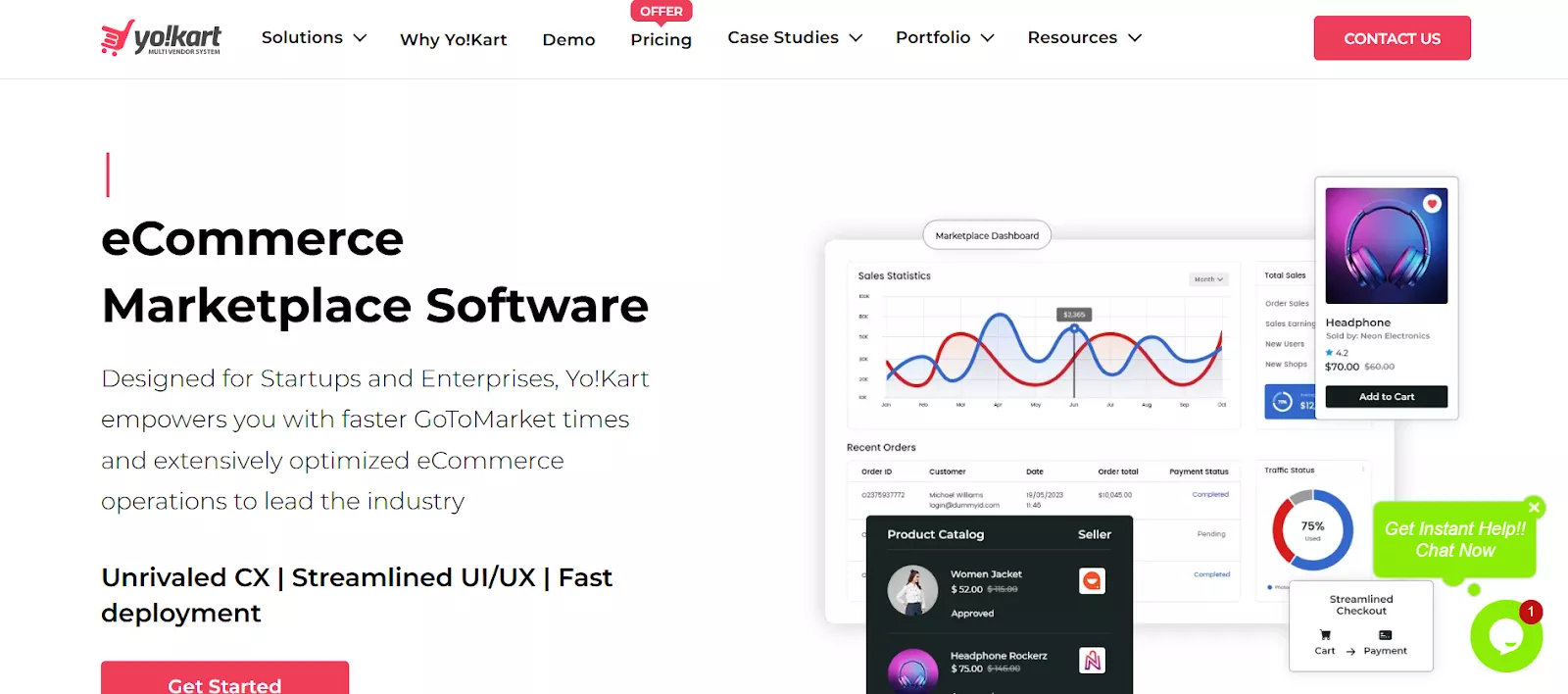
Yo!Kart is a dedicated multi-vendor solution, which means it’s built for this model from the ground up, not just an add-on.
- Best For: Startups and small to medium-sized businesses (SMBs) looking for a cost-effective, one-time purchase (lifetime license) model with native multi-vendor functionality.
- Key Advantage: It offers built-in features for revenue generation (commissions, subscriptions, ads) and comes with ready-made mobile apps for vendors and buyers. It’s also known for its solid security and scalability.
2. Shopify (with Multi-Vendor Apps)

Shopify is famously easy to use, but to run a multi-vendor marketplace, you’ll need to rely on one of its robust third-party apps like Multi-Vendor Marketplace by Webkul or ShipTurtle.
- Best For: Users who already love the Shopify ecosystem and want the fastest, most user-friendly setup for a smaller-scale marketplace.
- Key Advantage: Unbeatable ease of use and a massive app store for almost any integration you can imagine. The trade-off is that costs can add up as you rely on multiple paid apps for core marketplace functionality.
3. Adobe Commerce
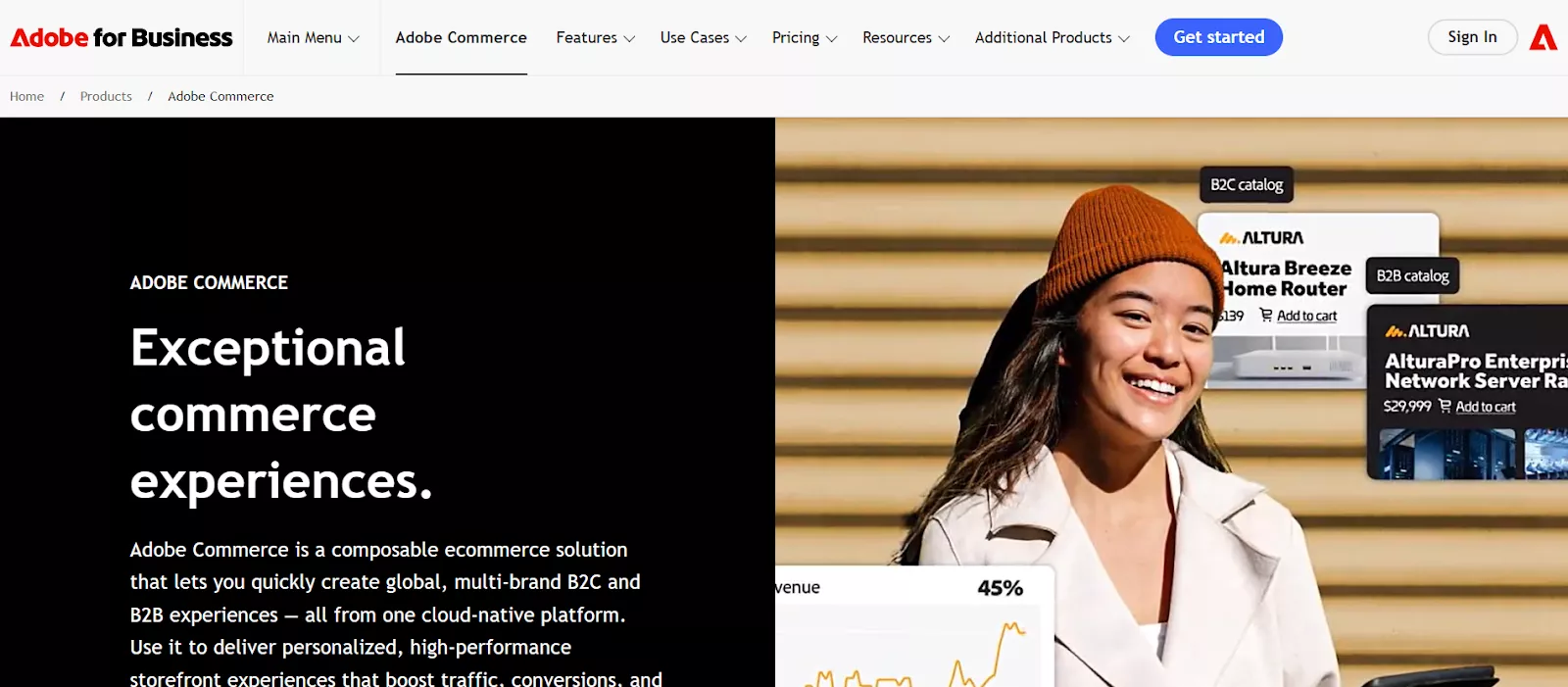
If you’re building a massive, complex marketplace with deep, custom integrations, Adobe Commerce (Magento) is likely on your radar. Like Shopify, it requires extensions to enable multi-vendor features.
- Best For: Large enterprises with high traffic, huge product catalogs, and the budget for dedicated developer teams.
- Key Advantage: Unmatched flexibility and customization thanks to its open-source foundation and robust architecture. The flip side is the very high development, maintenance, and hosting costs.
4. CS-Cart Multi-Vendor
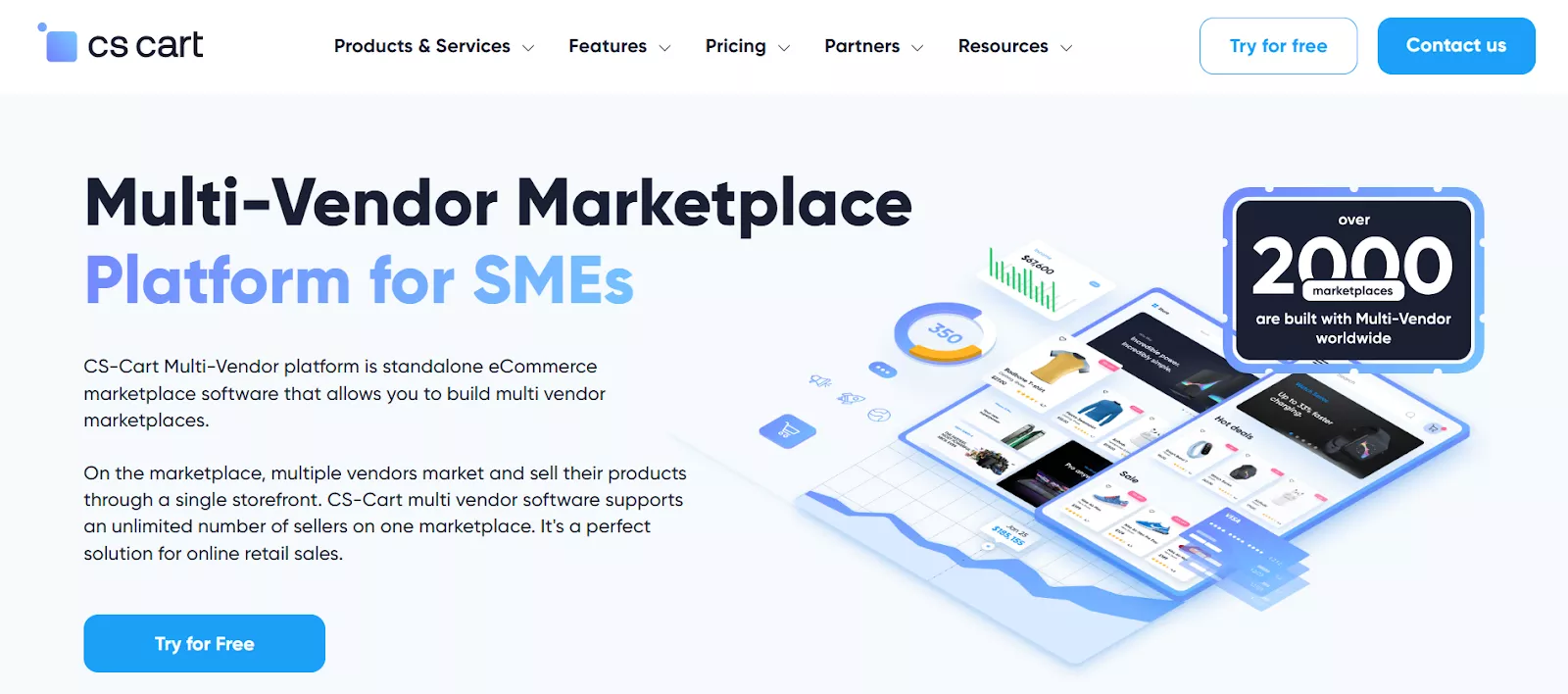
CS-Cart Multi-Vendor is another platform built specifically for marketplace operations. It strikes a good balance between features and complexity, offering a self-hosted solution.
- Best For: Medium to large businesses that need extensive, out-of-the-box vendor management tools and a reliable, self-hosted platform without going fully enterprise-grade.
- Key Advantage: It provides a comprehensive suite of marketplace features, including advanced commissions and vendor payouts, without forcing you to piece together plugins.
5. WooCommerce + Dokan/WC Vendors
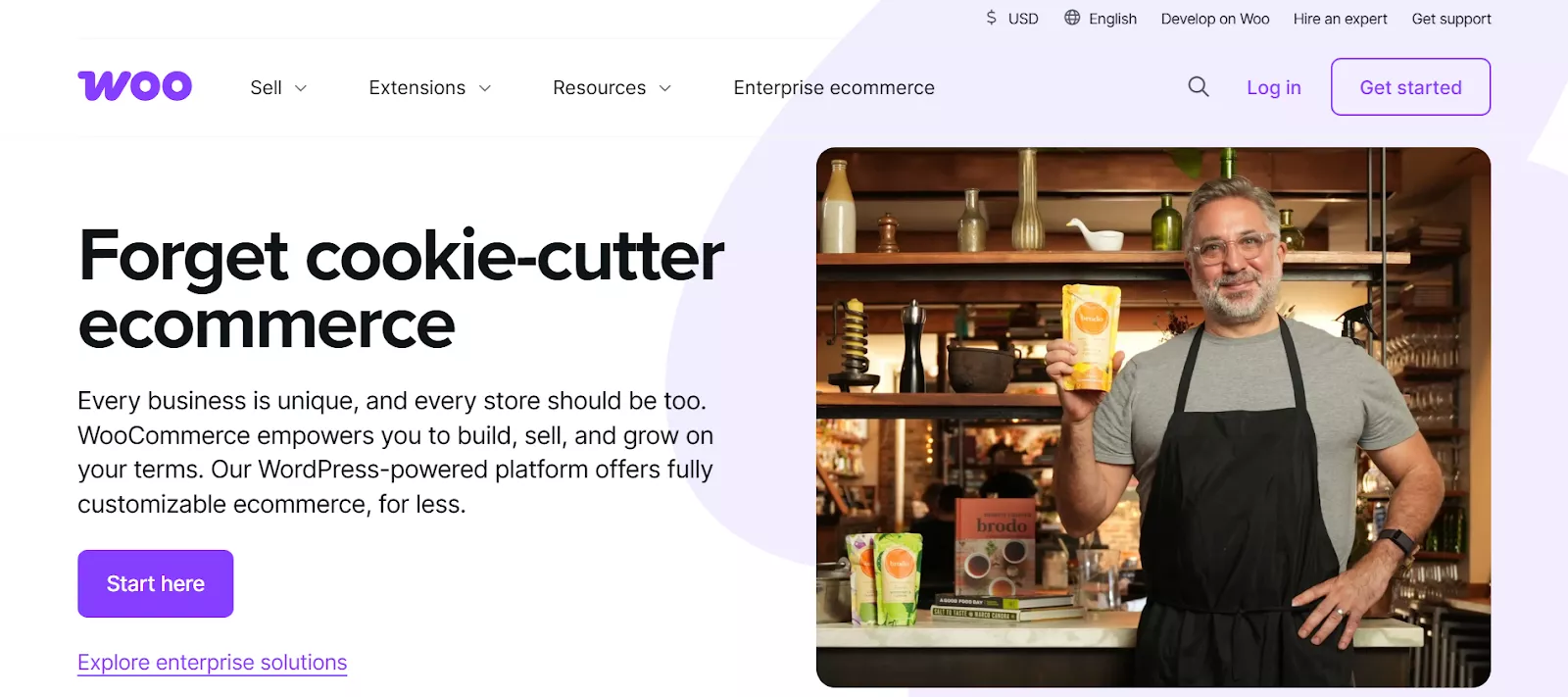
If you already use WooCommerce, transforming your site into a marketplace with a plugin like Dokan or WC Vendors is a very popular, flexible, and affordable choice.
- Best For: Startups and small businesses operating on WordPress who want an open-source, highly flexible solution with low initial costs.
- Key Advantage: You benefit from the massive WooCommerce/WordPress ecosystem, making it a cost-effective choice. Just be prepared for potential performance and scaling issues as your vendor count explodes.
6. StoreHippo
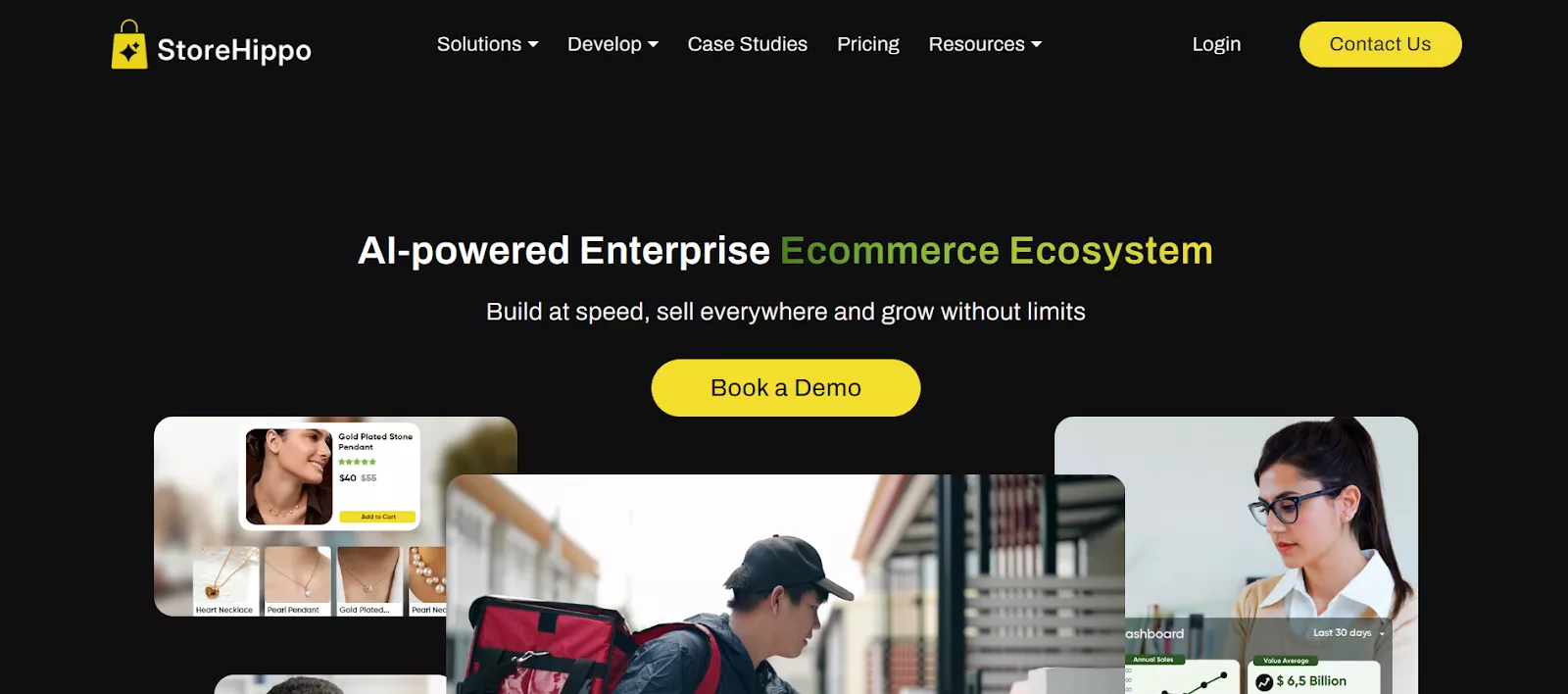
StoreHippo is a platform designed with a modern headless and API-first architecture, focusing heavily on mobile commerce and global scaling.
- Best For: Enterprises focused on building global, mobile-first marketplaces (B2B, B2C, or B2B2C) that require advanced features like multi-store, multi-currency, and multi-lingual support.
- Key Advantage: Its modern technology stack (MACH architecture) ensures high performance, excellent scalability, and seamless deployment of native mobile apps.
7. Mirakl

Mirakl is a SaaS platform exclusively focused on enterprise-level marketplace operations. It’s used by some of the world’s largest retailers to power their vendor ecosystems.
- Best For: Established global retailers and large companies looking to quickly launch and scale a marketplace using a fully managed, AI-powered enterprise solution.
- Key Advantage: Deep integrations, advanced automation, fraud detection, and the highest level of stability and scalability. It is the most expensive and complex platform on this list, truly designed for the biggest players.
Choosing a platform in 2026 isn’t just about features; it’s about architecture and future-proofing.
How to Choose the Right Multi-Vendor eCommerce Platform
Okay, you’ve seen the heavy hitters, but how do you decide which one deserves to be the foundation of your dream marketplace?
Choosing a multi-vendor platform is like choosing a business partner: you need compatibility, reliability, and room to grow.
Here are the five non-negotiable factors to evaluate before you sign on the dotted line.
1. Vendor Management Tools
The relationship you have with your vendors is everything. Your platform needs to make their life easy, or they’ll simply go elsewhere.
- Self-Service Dashboards: Can vendors easily manage their own product listings, inventory, and order fulfillment from a simple, dedicated portal? This is crucial for your sanity.
- Flexible Commission Structures: Look for platforms that allow you to set different commission rates based on product category, vendor performance, or subscription tiers. Flexibility in revenue models means better control over your margins.
- Easy Onboarding: The process for new sellers to register, upload documents, and list their first product must be seamless and guided. High friction here kills growth before it even starts.
2. Scalability and Performance
What works with 10 vendors might crash and burn with 1,000. Your platform needs to handle an increase in traffic, transactions, and product listings without a hiccup.
- Traffic Load: Is the platform hosted (SaaS) or self-hosted? SaaS solutions like Shopify or Mirakl handle infrastructure for you, while self-hosted options (like the WooCommerce plugin or Adobe Commerce) give you control but require more technical expertise and budget for high-end hosting.
- Product Volume: How many products can it efficiently manage? If you’re building a niche marketplace with a few hundred items, any platform will work. If you plan to rival Amazon’s catalog, you need an enterprise-grade architecture.
- API-First / Headless: Modern platforms like StoreHippo, built on a headless architecture, offer superior scalability and flexibility because they separate the front-end design from the back-end commerce logic. This is the future-proofing factor for 2026.
3. Payment and Payout Complexity
Handling money between buyers, you (the admin), and multiple vendors is the most technically complex part of a marketplace.
- Split Payments: Does the platform natively handle splitting the payment at the time of purchase? This is vital! The payment gateway should automatically pay the vendor their share and deposit your commission into your account. Look for integrations with systems like Stripe Connect or PayPal Marketplace.
- Multi-Currency Support: If you plan to go global, your platform must handle transactions and payouts in multiple currencies without forcing vendors or buyers into manual calculations.
- Tax and Compliance: Ensure the platform integrates with tax calculation services (like Avalara) to help you and your vendors stay compliant with local sales taxes (VAT, GST, etc.) across different regions.
4. Customization and Branding
Your marketplace shouldn’t look like a template; it needs to reflect your unique brand and niche.
- Design Control: How much freedom do you have over the look and feel? Open-source options (WooCommerce, Adobe Commerce) offer maximum control but require more development work. Dedicated platforms (Yo!Kart, CS-Cart) offer pre-built themes and modules that simplify setup.
- Vendor Storefronts: Can your vendors customize their own sub-stores with their brand logo, banner, and unique URL? This gives them ownership and attracts higher-quality sellers.
- Mobile Experience (M-Commerce): With most shopping happening on phones, your platform must be natively mobile-responsive. Bonus points for platforms that offer ready-to-use buyer and seller mobile apps.
5. Total Cost of Ownership (TCO)
Don’t just look at the monthly fee. Look at the total cost over three to five years.
| Cost Factor | Description | Example Platform Type |
| Setup Cost | License fees, one-time purchase price, or initial development fees. | Yo!Kart (Lifetime License), Adobe Commerce (High Dev Fee) |
| Recurring Cost | Monthly/annual subscription, hosting, maintenance, and mandatory app fees. | Shopify (Monthly Fee + Paid Apps), Mirakl (SaaS Subscription) |
| Transaction Fees | Percentage cut taken by the platform in addition to payment gateway fees. | Many SaaS models charge a small fee unless you use their in-house payment system. |
| Custom Development | The cost of developers to add features or integrate with your existing systems (ERP, CRM). | High for Adobe Commerce; low for feature-rich, purpose-built SaaS. |
Partner with Bitcot to Build Your Multi-Vendor Marketplace
You’ve got the idea, you understand the platform landscape, and now you know the critical factors for choosing one. The next logical step is moving from concept to code, and that’s where an experienced development partner comes in.
If your marketplace vision involves custom functionality, unique branding, or enterprise-level scale, simply installing an off-the-shelf plugin might not be enough.
This is where Bitcot comes in.
Our strength lies in the modern architecture and strategic thinking we bring to every project:
- Custom Marketplace Solutions: We deliver comprehensive, end-to-end development for B2B, B2C, and C2C models. We specialize in applications engineered to handle the highest transaction volumes and support massive vendor and customer growth.
- The Power of Headless Commerce: We are pioneers in utilizing API-first and headless commerce principles. By decoupling the presentation layer from the core commerce logic (often using modern frameworks like React), we ensure:
▸ Unmatched Scalability: Our architecture easily manages explosive growth without performance bottlenecks.
▸ Total Design Freedom: We achieve complete control over the UI/UX for both buyer and vendor experiences, optimizing every click for conversion.
▸ Omnichannel Readiness: We enable seamless deployment across web, native mobile apps, and emerging digital channels. - Integrating Intelligence and Automation: We strategically integrate AI and advanced automation into your marketplace operations. This translates to smarter features like personalized recommendations, automated fulfillment workflows, and sophisticated vendor vetting processes.
- Full-Stack Expertise: Our capabilities cover the entire lifecycle:
▸ Strategic Roadmapping: Defining the optimal MVP and long-term product vision.
▸ Conversion-Optimized UI/UX: Designing highly intuitive user interfaces.
▸ High-Performance Web & Mobile Apps: Building fast, reliable platforms and native mobile solutions.
▸ Secure Cloud & DevOps: Utilizing cloud platforms like AWS for continuous, secure, and scalable hosting.
A custom-built marketplace is an investment in your company’s future. By partnering with a development specialist, you ensure that the complex technical backbone of your multi-vendor dream is solid, secure, and ready to compete in the 2026 digital landscape.
Final Thoughts
So, we’ve walked through the top platforms, analyzed the decision-making factors, and shown you how partnering with us at Bitcot offers the ultimate path to a custom, scalable solution.
Launching a multi-vendor marketplace isn’t just about launching a website; it’s about starting a community and building an economic engine. It’s a big undertaking, and it’s natural to feel overwhelmed by the technical choices: SaaS versus open-source, monolithic versus headless.
But here’s the truth: Your unique business model deserves unique technology.
If your vision can be perfectly served by an off-the-shelf product with a few plugins, great! But if your idea is truly disruptive, if it involves novel payment flows, complex B2B logic, or highly personalized user experiences, then trying to force that vision into a rigid template is a recipe for frustration and expensive rework down the line.
The most successful marketplaces of tomorrow are being built today with scalability and adaptability at their core. By choosing a custom-built solution, you’re not just buying software; you’re investing in a system that can evolve as fast as your market does. You get the peace of mind knowing that when you hit that viral growth moment, your infrastructure will hold strong.
Ready to stop compromising on your vision?
Let’s turn your revolutionary idea into a robust, high-performing reality. Contact us today to schedule a discovery session and learn how our custom marketplace software development services can build the future of commerce for you.
Frequently Asked Questions (FAQs)
What is a multi-vendor eCommerce marketplace?
A multi-vendor marketplace is an online platform where independent sellers manage their own products while you handle the overall ecosystem. This model works well whether your vendors are in New York, Los Angeles, Chicago, Houston, Phoenix, or Philadelphia, because everyone can easily manage listings and reach more customers in one centralized space.
Can a multi-vendor marketplace support sellers across different regions?
Yes. Modern platforms make it simple for vendors in San Antonio, San Diego, Dallas, Jacksonville, Fort Worth, and San Jose to manage orders, track analytics, and handle payouts. Everything runs through one dashboard, so distance never gets in the way of smooth operations.
Will customers get a seamless shopping experience from multiple vendor locations?
Absolutely. Whether shoppers are browsing from Austin, Charlotte, Columbus, Indianapolis, San Francisco, or Denver, they can check out from multiple sellers in a single transaction. The platform does the behind-the-scenes work to keep the experience fast, clear, and consistent.
Is a multi-vendor marketplace good for niche or local communities?
Yes. You can build a community-focused marketplace that supports vendors in Boston, Seattle, Washington, D.C., Nashville, and Portland. Even specialized markets benefit from tools that streamline onboarding, communication, and product management across these diverse locations.
How hard is it to manage vendors spread across many cities?
With the right tools, it is surprisingly manageable. Platforms today support vendors in Las Vegas, Miami, Anchorage in Alaska, Kansas City, and Ashburn with features like automated commissions, vendor dashboards, and built-in communication tools. This lets you scale your marketplace without getting stuck in operational complexity.