Key Takeaways
- Care App replaces fragmented, manual care workflows with a centralised, real-time platform that connects patients, caregivers, nurses, and administrators from a single source of truth.
- Role-based alerts and automated task routing eliminate manual handoffs — ensuring critical information reaches the right team member at the right time, every time.
- Real-time synchronisation powered by Supabase and React Native enables instant updates across all devices, reducing response times from hours to minutes.
- Structured task management with timestamps and role-based accountability removes the visibility gaps that cause missed medications, delayed visits, and preventable care failures.
- Built with HIPAA-compliant, horizontally scalable architecture, Care App is designed to grow with healthcare organisations without compromising performance or compliance.
Strategic Introduction: Why Healthcare Coordination Still Fails in 2026
Healthcare systems have made significant technological progress, yet coordination between patients, caregivers, and medical professionals remains fragmented. Even with digital tools, most care workflows are still manual, scattered across multiple platforms, and heavily dependent on human follow-ups.
This disconnect creates a critical gap between care planning and actual execution. Issues like missed medications, delayed visits, and lack of real-time visibility persist not because of missing technology, but because of poor coordination.
Care App was designed to solve this exact challenge by introducing a real-time, structured, and role-based system that ensures seamless communication and efficient care delivery.
The Healthcare Coordination Problem
Healthcare coordination software has become an essential infrastructure for modern care delivery, yet most organizations still operate with disconnected tools that create delays and errors. The gap between care planning and execution isn’t a technology problem in 2026 it’s a coordination problem.
When patient information lives in separate systems, when alerts don’t reach the right person at the right time, and when caregivers must manually track dozens of tasks across multiple platforms, the result is predictable: missed medications, delayed visits, and preventable care failures.
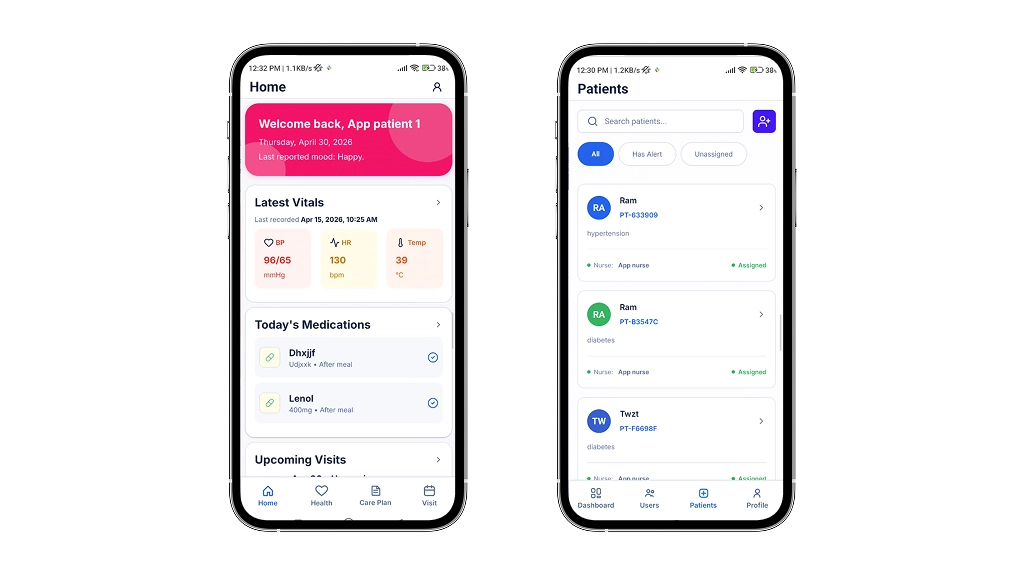
Care App addresses this by consolidating patient information, visit tracking, alerts, and task management into a single structured platform where every team member from nurses to administrators to family caregivers operates from the same real-time data source.
What Makes Care App a Game-Changer in Healthcare Coordination
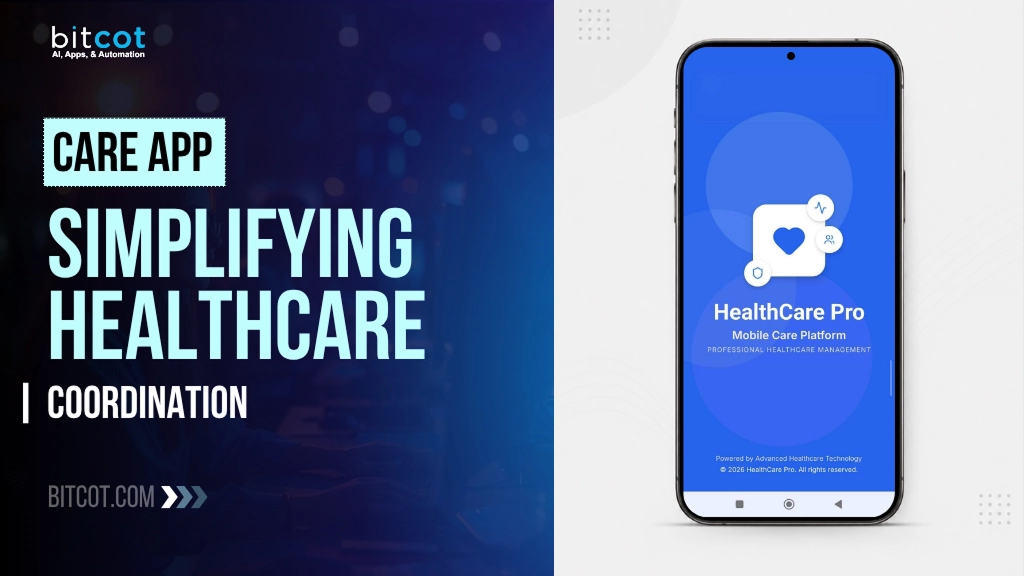
Care App is a digital platform designed to make healthcare coordination easier and more organized for everyone involved: patients, caregivers, nurses, and administrators.
Instead of juggling multiple tools, phone calls, and manual records, Care App brings everything into one place:
- Patient information and medical history
- Visit tracking and scheduling
- Real-time alerts and notifications
- Task management for caregivers and staff
Think of it as a central hub for care management, where everything important is accessible, structured, and easy to use.
Eliminating Manual Handoffs in Care Coordination
The core value of healthcare coordination software lies in its ability to eliminate the manual handoffs that currently define care workflows. Traditional systems force staff to remember which patient needs follow-up, when the next visit is scheduled, or whether medication instructions were communicated to the caregiver.
This dependency on human memory creates compounding risk: one missed notification cascades into a delayed visit, which then impacts medication adherence, which then requires reactive intervention instead of preventive care.
Care App removes this friction by automating alerts and routing tasks to the appropriate team member based on role and responsibility. A nurse no longer needs to call a caregiver to confirm a visit the system sends a structured notification with all relevant patient context. An administrator doesn’t need to chase down status updates real-time dashboards show exactly which tasks are pending, in progress, or completed.
Real-Time Visibility Transforms Care Coordination
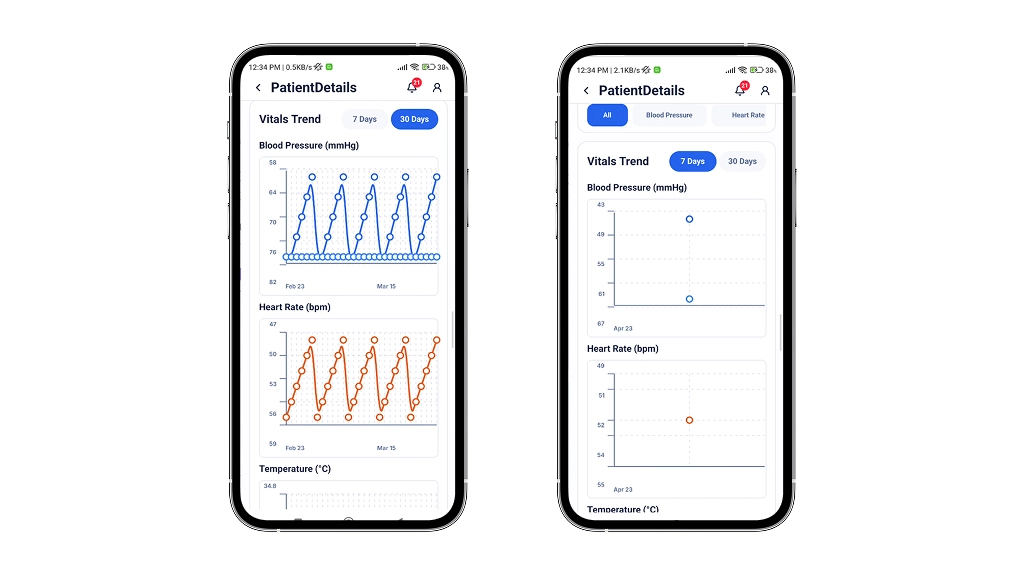
Real-time visibility transforms how healthcare teams respond to patient needs. Without live updates, care coordinators operate with stale information, making decisions based on what they remember rather than what’s actually happening.
This delay is particularly critical in scenarios where patient status changes rapidly or where multiple caregivers are involved in a single care plan. Care App’s real-time architecture ensures that when a patient’s condition changes, when a medication needs adjustment, or when a visit requires rescheduling, all stakeholders see the update simultaneously.
This synchronization eliminates the communication gaps that currently plague fragmented systems and enables teams to respond to changes within minutes rather than hours or days.
From Information Storage to Workflow Orchestration
The structural difference between Care App and traditional healthcare tools is the shift from information storage to workflow orchestration. Most existing systems function as digital filing cabinets they store patient records, but they don’t actively manage the coordination between people and tasks.
Care App inverts this model by treating coordination as the primary function. Every alert is role-specific, every task is assigned with context, and every update flows through the system in a structured way.
This approach directly addresses the key challenges that plague current healthcare coordination: manual processes are replaced with automated workflows, fragmented data is consolidated into a single source of truth, and the dependency on human follow-ups is replaced with systematic task management. The result is measurable improvement in care execution fewer missed steps, faster response times, and clearer accountability across the entire care team.
Why Healthcare Coordination Is Still Broken
Despite rapid advancements in healthcare technology, coordination across patients, caregivers, and medical professionals continues to fall short. Many systems still rely on outdated processes that are manual, fragmented, and dependent on human memory rather than structured workflows.
Information is often spread across multiple platforms, making it difficult to track patient care in real time. This lack of synchronization creates a disconnect between planning and execution, increasing the risk of errors.
Both patients and healthcare providers face daily challenges that impact the quality and efficiency of care delivery. The industry is experiencing a fundamental shift in how care is delivered where once coordination happened through phone trees and paper charts, the expectation now is real-time visibility across distributed teams.

The Accountability Gap in Care Coordination
We believe the real problem in healthcare isn’t the absence of technology it’s the absence of accountability in coordination. Most platforms digitize existing broken processes rather than redesigning them, which means they inherit the same delays and blind spots.
Care App takes a different stance: coordination failures are fundamentally a visibility and role-clarity problem, not a tool problem. By enforcing structured workflows where every action, alert, and task is timestamped and assigned to a specific role, the system creates automatic accountability that manual systems simply cannot achieve.
This isn’t about adding another app to the stack; it’s about replacing fragmentation with a single source of truth that makes it impossible for critical care steps to slip through the cracks.
Technical Architecture for Healthcare Coordination at Scale
Care App’s technical foundation is built on modern, scalable architecture designed to handle the demands of real-time healthcare coordination. The platform uses React Native for cross-platform mobile development, enabling rapid deployment across iOS and Android while maintaining code consistency and reducing time-to-market.
The backend leverages Supabase for real-time database synchronization, ensuring that updates to patient information, tasks, and alerts propagate instantly across all connected devices. This architecture eliminates the latency that plagues traditional healthcare systems and enables the real-time coordination that modern care delivery demands.
Security and compliance are built into the infrastructure from the ground up. All patient data is encrypted in transit and at rest, with role-based access controls ensuring that team members only see information relevant to their responsibilities. This approach satisfies HIPAA requirements while maintaining the performance characteristics necessary for real-time coordination.
The system is designed for horizontal scalability, allowing healthcare organizations to add users, patients, and care teams without degradation in performance. Infrastructure decisions prioritize uptime and reliability critical requirements for systems that directly impact patient care.

The Roadmap to GenAI Success for SMEs: From Strategy to ROI
Why These Technical Choices Matter for Business Outcomes
For CTOs and technical leaders evaluating Care App, the technical architecture directly translates to business value. Real-time synchronization reduces the time required to respond to patient needs, improving care outcomes while reducing operational costs.
Cross-platform mobile development accelerates time-to-market and reduces development costs compared to building separate native applications. Built-in security and compliance reduce the risk and cost of regulatory violations.
Scalable infrastructure means that as your organization grows, the system grows with you without requiring expensive re-architecture. These technical decisions aren’t just about engineering excellence they’re about delivering measurable business outcomes: faster care delivery, lower operational costs, and reduced compliance risk.
Key Features of Care App for Healthcare Coordination
Care App consolidates the essential functions of healthcare coordination into a single, intuitive platform:
- Patient Information Hub: Complete medical history, current medications, and care plans accessible to authorized team members in real-time
- Visit Tracking: Scheduled visits, completed visits, and upcoming appointments with automatic reminders and status updates
- Role-Based Alerts: Notifications tailored to each team member’s responsibilities, ensuring critical information reaches the right person at the right time
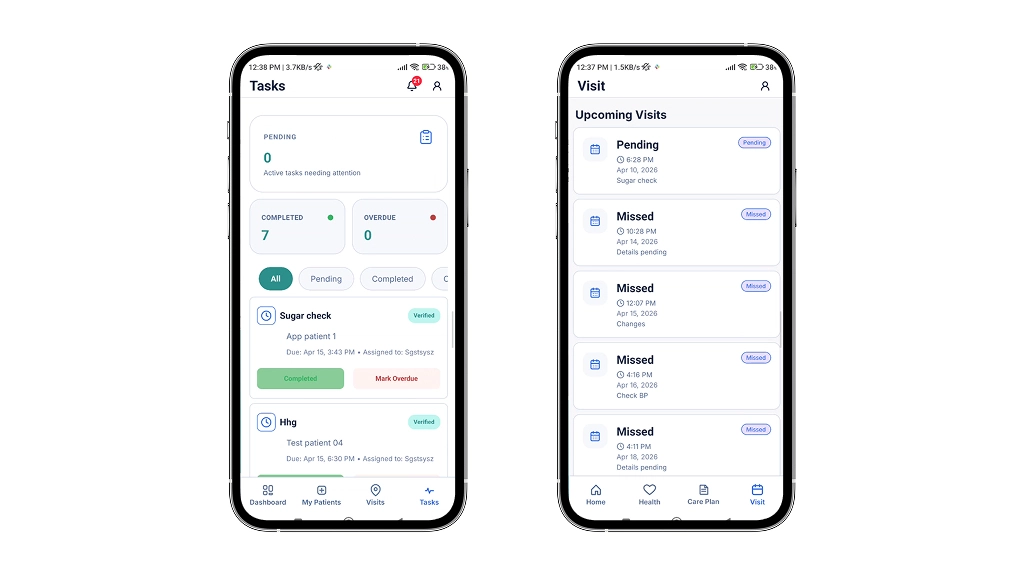
- Task Management: Structured task assignment with deadlines, priorities, and completion tracking for caregivers and staff
- Real-Time Dashboards: Visual overview of all active patients, pending tasks, and care team status
How Care App Improves Care Coordination Outcomes
Organizations implementing Care App report significant improvements in the efficiency of care coordination. Missed medications decrease when caregivers receive structured reminders with patient context. Visit adherence improves when patients and caregivers receive coordinated notifications from a single source.
Care teams report reduced time spent on administrative tasks like status updates and follow-up calls. Instead, they focus on actual patient care. Administrators gain visibility into care execution, enabling data-driven decisions about resource allocation and process improvement.
The structured, timestamped nature of all coordination activities creates an audit trail that satisfies compliance requirements while providing valuable data for quality improvement initiatives.
Implementation and Integration with Existing Systems
Care App is designed to integrate with existing healthcare infrastructure. Rather than requiring a complete system replacement, Care App can operate alongside current EHRs and patient management systems, pulling relevant data and synchronizing updates bidirectionally.
Implementation typically begins with a pilot program focused on a specific care team or patient population. This approach allows organizations to validate the value of improved coordination before full-scale deployment.
For technical teams, Care App provides comprehensive APIs and webhooks enabling custom integrations with organization-specific systems. Documentation and support resources help ensure smooth implementation and rapid time-to-value.
Why Bitcot for Healthcare Coordination Solutions
Bitcot specializes in building healthcare technology solutions that address real coordination challenges. Our experience spans healthcare software development, real-time systems, and mobile-first platforms designed for distributed care teams.
We understand that healthcare coordination isn’t just a technical problem it’s a workflow and accountability problem. Our approach combines deep healthcare domain expertise with modern technical architecture to deliver solutions that actually improve care delivery.
If your organization is struggling with fragmented care coordination, manual handoffs, or visibility gaps across distributed teams, contact Bitcot to discuss how Care App can transform your care delivery model.
Final Verdict: Care App as Your Healthcare Coordination Solution
Healthcare coordination failures aren’t inevitable they’re the result of fragmented systems and unclear accountability. Care App replaces this fragmentation with structured, real-time coordination, making it impossible for critical care steps to slip through the cracks.
For CTOs evaluating healthcare coordination platforms, Care App offers modern technical architecture, scalable infrastructure, and built-in compliance. For Founders and Product Managers, it delivers measurable improvements in care outcomes, operational efficiency, and team accountability.
The question isn’t whether your organization needs better care coordination it’s whether you’re ready to replace manual, fragmented processes with systematic, real-time coordination. Contact Bitcot today to schedule a demo and see how Care App can transform your care delivery model.
Ready to simplify healthcare coordination? Explore Bitcot’s healthcare solutions or request a consultation with our healthcare technology experts.
Frequently Asked Questions (FAQs)
How does Care App integrate with our existing EHR system?
Care App is designed to work alongside existing EHRs through APIs and data synchronization. We can pull relevant patient information from your current system and ensure updates flow bidirectionally, eliminating duplicate data entry.
Is Care App HIPAA compliant?
Yes. Care App is built with HIPAA compliance as a core requirement. All patient data is encrypted in transit and at rest, with role-based access controls and comprehensive audit logging.
How long does implementation typically take?
Implementation timelines vary based on organizational complexity and integration requirements. Most organizations see initial value within 4-6 weeks through a pilot program, with full deployment following within 3-4 months.
Can Care App scale as our organization grows?
Yes. Care App’s architecture is designed for horizontal scalability. You can add users, patients, and care teams without performance degradation.
What training and support does Bitcot provide?
Bitcot provides comprehensive onboarding, training for all user roles, and ongoing technical support. We also offer case studies and implementation guides based on successful deployments in similar organizations.