Ever feel like the term Digital Commerce is just another buzzword being thrown around at board meetings?
It’s easy to shrug it off and think, Oh, they just mean selling stuff online, but there’s actually a whole lot more going on under the hood.
Think about the last time you bought something. Maybe you saw an ad on Instagram, checked the reviews on your phone while waiting for coffee, and finally hit buy on your laptop later that night, only to have the item show up at your door four hours later. That seamless, invisible dance between platforms? That is digital commerce in action. Modern businesses leverage omnichannel retail experience to create these frictionless customer journeys across every touchpoint.
It’s not just about having a Buy Now button anymore; it’s about the entire ecosystem that supports a customer’s journey, from the first click to the final delivery and every automated touchpoint in between.
In this guide, we’re going to strip away the jargon and get down to brass tacks. We’ll explore:
- The DNA of Digital Commerce: What actually separates it from traditional eCommerce.
- The Roadmap to Adoption: How to move your business from static to dynamic without breaking everything.
- The Reality Check: A look at the hurdles (like data silos and security) that usually trip people up, and how you can hop right over them.
Whether you’re a brick-and-mortar veteran looking to pivot or a tech-savvy entrepreneur scaling up, consider this your blueprint for winning in a world where the storefront is everywhere.
What is Digital Commerce and Why It Matters in 2026
Digital commerce refers to the buying and selling of goods and services through digital channels, including websites, mobile apps, social platforms, online marketplaces, and emerging interfaces such as voice assistants and connected devices.
It goes beyond traditional eCommerce by encompassing the entire digital customer journey, from discovery and personalization to payment, fulfillment, and post-purchase engagement.
In 2026, it represents a fully integrated ecosystem where the boundaries between physical and virtual shopping have almost entirely vanished. It encompasses every touchpoint in a customer’s journey, from discovering a product via an AI-driven social feed to the final automated delivery at their doorstep.
While eCommerce traditionally refers to the transaction itself, digital commerce focuses on the entire automated process. This includes the marketing, buying, selling, servicing, and retention of customers through digital channels.
Traditional eCommerce vs Digital Commerce Comparison:
| Feature | Traditional eCommerce | Digital Commerce |
| Scope | Transactional (buying/selling online) | End-to-end digital experience |
| Channels | Primarily websites | Omnichannel (web, mobile, social, IoT, AR/VR) |
| Customer Journey | Linear path to purchase | Non-linear, integrated across touchpoints |
| Technology | Monolithic platforms | Composable commerce, API-first, modular |
| Personalization | Basic (email campaigns, product recommendations) | Hyper-personalized (AI-driven, real-time) |
| Data Utilization | Siloed, retrospective analytics | Unified, predictive, and prescriptive insights |
| Engagement | Pre- and post-purchase touchpoints | Continuous, lifecycle engagement |
| Focus | Product-centric | Customer-centric |
| Innovation Speed | Slower (vendor-dependent upgrades) | Rapid (modular, flexible architecture) |
The shift from online shopping to a digital-first lifestyle is now complete.
Here is why digital commerce is the lifeblood of the modern economy:
- Hyper-Personalization at Scale: With the maturity of predictive AI and customer data platforms (CDP), businesses no longer wait for customers to search for items. Instead, they anticipate needs based on real-time data. In 2026, a brand’s ability to offer a segment of one experience is the primary driver of loyalty.
- The Rise of Immersive Commerce: The adoption of spatial computing and high-fidelity AR has turned the world into a storefront. Whether it is virtually trying on clothes in a digital twin of your home or previewing furniture in your actual living room, digital commerce provides a level of certainty that has drastically reduced return rates.
- Unified Fluidity: Modern consumers do not distinguish between online and offline. They might start a purchase via a voice assistant, modify it on a mobile app, and pick it up from a smart locker. Digital commerce provides the infrastructure to make this transition invisible and frictionless.
- Sustainability and Transparency: In 2026, consumers demand to know the carbon footprint and ethical origin of their purchases. Digital commerce platforms now utilize blockchain-backed supply chains to provide instant, verifiable data, making conscious consumerism a standard feature rather than a niche preference.
For businesses, digital commerce is no longer a department; it is the business model. In an era where attention is the most valuable currency, digital commerce provides the tools to capture that attention and convert it into a seamless, high-value relationship.
Benefits of Digital Commerce for Your Business
Implementing a digital commerce strategy is no longer a luxury for growth-oriented brands; it is the foundation of operational resilience.
In 2026, the benefits extend far beyond simply making sales and move into the realm of intelligent, autonomous business growth.
Exponential Market Expansion
Digital commerce removes the physical limitations of a storefront, allowing your business to scale across borders without the overhead of international real estate. In 2026, localized digital storefronts can be launched in new regions within days, utilizing AI-driven translation and automated tax compliance to reach a global audience instantly.
Dramatic Cost Efficiency
By automating the path to purchase through progressive web apps (PWA) and intelligent workflows, you significantly reduce the manual labor required to manage a business. Modern digital commerce architectures, such as headless commerce or composable commerce, allow you to update your customer-facing interface without overhauling your entire backend. This reduces technical debt and allows your team to focus on strategy rather than maintenance.
Data-Driven Decision Making
One of the most powerful benefits is the feedback loop created by every digital interaction. Unlike traditional retail, where a customer might walk out without leaving a trace, digital commerce tracks every micro-moment:
- Heatmapping: Understand exactly where customers lose interest.
- Predictive Inventory: Use predictive analytics and sales velocity data to automate stock replenishment, ensuring you never over-purchase or run out of high-demand items.
- Dynamic Pricing: Automatically adjust prices based on real-time market demand and competitor shifts.
Higher Customer Lifetime Value (CLV)
In 2026, the goal is emotional loyalty, not just transactional convenience.
Digital commerce enables this through hyper-personalization. When your system remembers a customer’s preferences, sizes, and even their preferred delivery windows, you create a sticky experience. Subscription models and personalized reorder alerts further ensure that your business remains the first choice for repeat needs.
Rapid Innovation and Agility
Digital-first businesses can pivot faster. If a new social media platform becomes a shopping hub or a new payment method like biometric pay-by-look becomes popular, a robust digital commerce framework allows you to integrate these features via API integration services. This agility ensures your business remains relevant as consumer tech continues to accelerate.
Types of Digital Commerce Models
To build a successful digital commerce strategy in 2026, you must first identify which model aligns with your operational strengths and customer expectations.
While the traditional buy-and-ship method still exists, several specialized models have emerged as the primary drivers of global trade.
1. Direct-to-Consumer (D2C)
In 2026, D2C is the gold standard for brand building. By cutting out the middleman (traditional retailers), brands sell directly to the end user through their own digital storefronts. This model offers total control over the brand narrative and, more importantly, direct access to first-party data, which is essential for AI-driven personalization.
2. Business-to-Business (B2B)
Digital commerce is no longer just for retail. The B2B model has undergone a massive transformation, moving away from manual spreadsheets and sales calls toward specialized B2B eCommerce platforms and automated procurement portals. In 2026, nearly 80% of B2B transactions are expected to happen online, featuring bulk-pricing algorithms and automated reordering systems that mirror the ease of a consumer shopping experience.
3. Quick Commerce (Q-Commerce)
This is the evolution of eCommerce for the on-demand generation. Q-commerce focuses on ultra-fast delivery, often within 10 to 30 minutes. This model relies on a decentralized network of dark stores (micro-warehouses) located in high-density urban areas. It is the dominant model for groceries, medicine, and high-frequency household essentials.
4. Social Commerce 2.0
Social media platforms like TikTok, Instagram, and YouTube have transitioned from discovery tools into full-featured marketplaces. In 2026, Social Commerce 2.0 leverages conversational commerce, meaning the entire transaction, from product demo via livestream to one-click checkout, happens without the user ever leaving the social app. This model leverages influencer trust and agentic AI shoppers to drive impulse purchases.
5. Subscription & Membership Models
Predictable revenue is the hallmark of the subscription model. Beyond digital streaming, this now includes product-as-a-service for everything from coffee beans to high-end fashion. In 2026, smart subscriptions use IoT (Internet of Things) sensors to detect when a product is running low and automatically trigger a replenishment order.
6. Marketplace & C2C Models
Marketplaces (like Amazon or Etsy) connect multiple third-party sellers with a massive audience using multi-vendor marketplace platforms. A subset of this is Consumer-to-Consumer (C2C), which has seen a resurgence in 2026 due to the circular economy. Peer-to-peer platforms for reselling and recycling goods are now integrated with digital escrow services to ensure trust between strangers.
Digital Commerce Models Comparison:
| Model | Primary Goal | Best For |
| D2C | Brand control, data ownership | Brands seeking direct customer relationships |
| B2B | Bulk sales, automated procurement | Wholesalers, manufacturers, distributors |
| Q-Commerce | Ultra-fast delivery (10-30 min) | Urban essentials (groceries, medicine) |
| Social Commerce 2.0 | Impulse purchases via social media | Fashion, beauty, lifestyle brands |
| Subscription | Predictable recurring revenue | Services, consumables, memberships |
| Marketplace/C2C | Aggregated demand, network effects | Multi-brand retailers, resale platforms |
The 4 Pillars of a Modern Digital Commerce Strategy
To succeed in the 2026 digital landscape, a business cannot rely on a single software or a slick website alone.
A modern digital commerce strategy is built on four core pillars that transform a static online store into an intelligent, adaptive ecosystem.
1. Composable & Headless Architecture
The era of the all-in-one rigid platform is over. In 2026, leading brands use composable commerce with API-first architecture, an approach where you assemble your tech stack using best-of-breed components for payments, search, and content.
By utilizing a headless CMS setup (decoupling the customer-facing head from the backend logic), you can push updates to your mobile app or smart kiosks without risking your entire checkout system. This modularity ensures your business is future-proof and ready to pivot as new devices emerge.
2. The AI-First Experience Layer with AI-Powered Personalization
AI has moved from a backend tool to the primary way customers interact with your brand. A modern strategy treats AI as a digital concierge rather than just a search bar.
The move toward an AI-native shopping interface means moving away from traditional keyword-based search. Instead, customers interact with a ‘digital concierge’ that handles the entire collapsed funnel, from discovery to automated checkout, within a single conversational flow.
- Agentic Commerce: This involves AI agents that can proactively negotiate prices, find the best shipping routes, or even handle complex B2B procurement autonomously.
- Hyper-Personalization: Utilizing real-time data to adapt your storefront’s layout and product selection for every individual visitor.
- Conversational Interfaces: Beyond basic chatbots, this pillar includes voice and visual search, allowing customers to shop using natural language or by uploading a photo of an item they saw in the real world.
3. Unified Data Governance & Trust
In 2026, data is both your greatest asset and your biggest liability. A solid commerce strategy must prioritize First-Party Data (data you collect directly with consent) over third-party cookies, which have become obsolete.
- Trust as a Product: Transparent data policies and secure, blockchain-verified transactions are now essential for customer retention.
- Circular Transparency: Modern consumers expect to see the digital passport of a product, real-time data on its manufacturing origin, carbon footprint, and repairability.
4. Omnichannel Fluidity
The fourth pillar is the removal of friction between every possible sales channel. A modern strategy ensures a buy anywhere, fulfill anywhere experience. This means your inventory must be synced in real-time across your website, social media shops, physical locations, and third-party marketplaces.
Whether a customer buys via a TikTok livestream and picks it up from a local dark store, or orders through a VR headset for home delivery, the backend process remains unified and invisible to them.
How to Adopt Digital Commerce Successfully in 6 Steps
Adopting digital commerce in 2026 is less about going live and more about becoming agile.
Because the technology and consumer expectations shift so rapidly, your implementation strategy must prioritize flexibility and trust over rigid, long-term deployments.
Step 1: Conduct a Digital Maturity Audit
Before buying new software, assess your current capabilities. In 2026, this means looking beyond your website traffic.
- Systems Integration: Do your inventory, marketing, and sales tools talk to each other in real-time?
- Skill Gaps: Does your team understand how to prompt AI agents or manage decentralized dark store logistics?
- Data Health: Is your customer data clean, structured, and compliant with the latest 2026 privacy regulations?
Step 2: Transition to Composable Architecture
Avoid monolithic platforms that lock you into a single vendor’s roadmap. Successful adoption in 2026 relies on a modular tech stack. By using APIs to connect different specialized tools (one for checkout, one for search, one for AR previews), you can swap out a single piece of your engine without taking the whole car off the road.
Step 3: Pilot Agentic and AI Workflows
Don’t try to automate everything at once. Start with high-impact, low-risk AI pilots:
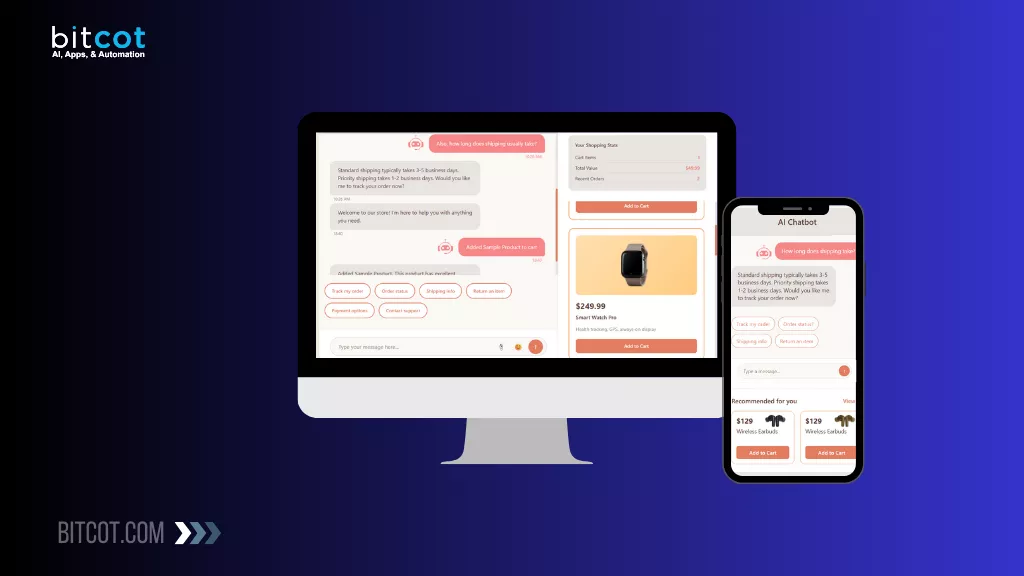
- Customer Concierge: Implement a generative AI assistant that can handle complex queries, like Find me a waterproof jacket that fits my 2025 purchase history but in this year’s style.
- Predictive Stocking: Use AI to forecast regional demand so you can move inventory closer to the customer before they even hit buy.
Step 4: Build for Zero-Click Discovery
In 2026, many customers find products through AI summaries or voice assistants without ever visiting a traditional search results page. To adopt digital commerce successfully, your product data must be optimized for these zero-click environments. This means providing clear, structured metadata that AI models can easily crawl and recommend to users.
Step 5: Prioritize the Trust Currency
With privacy laws tightening globally, your adoption plan must include a robust First-Party Data strategy. Instead of tracking users across the web, offer value in exchange for information. Loyalty programs, personalized style profiles, or exclusive access to virtual events are the 2026 methods for earning the data you need to personalize the experience.
Step 6: Implement a Unified Commerce Pilot
Choose one product line or region to test a fully unified experience. Ensure that if a customer buys an item via a social media livestream, they can easily return it to a physical partner location or a smart locker. Use this pilot to iron out the friction points in your buy anywhere, fulfill anywhere promise.
By combining clear strategy, customer insight, the right technology, and a culture of continuous improvement, organizations can adopt digital transformation in eCommerce successfully and position themselves for long-term success in 2026 and beyond.
Core Technology Stack for Digital Commerce
In 2026, a digital commerce tech stack is no longer just a collection of software; it is a modular, AI-first ecosystem designed for extreme speed and adaptability.
To stay competitive, businesses are moving away from rigid, all-in-one platforms in favor of a composable architecture where every component is connected via APIs.
The Frontend (The Experience Layer)
This is what your customers interact with. In 2026, the focus is on headless frontends that deliver sub-second load times and support various devices.
- Frameworks: React and Next.js remain the dominant choices for building fast, SEO-friendly web apps. Vue.js is a popular alternative for its flexibility.
- Mobile & Spatial: Modern mobile app development frameworks like Flutter or React Native for mobile apps, with increasing integration for AR/VR libraries (like Unity or Three.js) to support virtual try-ons.
- AI Interfaces: Tools like Algolia or Klevu for AI-driven search that understand natural language and user intent.
The Backend (The Commerce Logic)
The backend manages the complex unseen work, from inventory to order processing.
- Languages & Environments: Node.js is favored for its ability to handle high volumes of concurrent requests. Python (via Django) is the standard for businesses integrating heavy machine learning or data analytics.
- Commerce Engines: API-first platforms like BigCommerce or Shopify (Headless) provide the core transactional logic without dictating the design.
- Database Management: A hybrid approach is common. PostgreSQL is used for secure, transactional data, while NoSQL databases like MongoDB handle flexible product catalogs and unstructured data.
The Intelligence Layer (AI & Personalization)
In 2026, AI is embedded directly into the stack rather than being a third-party add-on.
- Generative AI Engines: Integration with LLMs (like Gemini or OpenAI) via APIs to generate dynamic product descriptions, marketing copy, and personalized shopping assistants.
- Customer Data Platforms (CDP): Tools like Segment or Klaviyo that unify data from every touchpoint to create a single, real-time view of the customer.
- Predictive Analytics: Dedicated engines that forecast inventory needs and automate dynamic pricing based on market shifts.
The Infrastructure & Security Layer
Reliability and trust are the silent pillars of your tech stack.
- Cloud Hosting: AWS and Google Cloud lead the market, offering serverless architectures and cloud migration strategies that scale automatically during flash sales or viral social moments.
- Payment Gateways: Modern integrations like Stripe or Adyen that support everything from biometric one-tap payments to cryptocurrency and Buy Now, Pay Later (BNPL).
- Security & Compliance: Automated tools for PCI-DSS compliance, bot protection, and decentralized identity verification to ensure data privacy.
Together, these components form a modern digital commerce technology stack that is flexible, resilient, and built for continuous evolution. Choosing the right combination of tools and integrating them effectively is essential for delivering exceptional digital commerce experiences and sustaining growth over time.
Key Challenges in Digital Commerce (And How to Solve Them)
While digital commerce in 2026 offers unparalleled growth opportunities, it also introduces sophisticated hurdles.
The brands that thrive are those that view these challenges not as roadblocks, but as opportunities to build a more resilient and antifragile business.
The Cookieless Personalization Paradox
The Challenge: In 2026, third-party cookies are obsolete, and global privacy regulations (like the EU AI Act and India’s DPDP Act) have tightened. Customers demand hyper-personalization, yet they are increasingly protective of their data.
The Solution: Shift to a First-Party and Zero-Party Data strategy. Instead of tracking users, invite them to share.
- Zero-Party Data: Use interactive quizzes or style profiles where users voluntarily tell you their preferences.
- Privacy-Enhancing Tech (PETs): Implement server-side tracking and data clean rooms to analyze behavior without compromising individual identities.
Fragmentation of the Customer Journey
The Challenge: In 2026, a single purchase might start on a VR headset, continue via a voice assistant, and end in a physical smart locker. Fragmented data leads to broken experiences, such as showing an ad for a product the customer already bought.
The Solution: Establish a unified data truth.
- Unified Commerce Platforms: Move away from separate online and retail databases. Use a single backend that syncs inventory and customer profiles in real-time across every touchpoint.
- Omnichannel Fulfillment: Ensure your Order Management System (OMS) can route a single order from whichever node (warehouse, dark store, or retail shelf) is closest to the customer.
The AI Trust Gap
The Challenge: As AI agents begin to handle more transactions, hallucinations or biased algorithms can lead to incorrect pricing, wrong product recommendations, or poor customer service interactions that damage brand reputation.
The Solution: Implement Human-in-the-Loop (HITL) and AI Governance.
- Strict Guardrails: Use Retrieval-Augmented Generation (RAG), so your AI assistants only pull information from your verified product manuals and FAQs.
- Transparency: Clearly label AI-generated content and provide an immediate escape hatch to a human agent for complex or high-emotion issues.
Supply Chain Volatility and Quick Commerce Pressure
The Challenge: With the rise of 10-minute quick commerce, the pressure on logistics is immense. Traditional supply chains are too slow and prone to disruption from geopolitical or climate events.
The Solution: Build an antifragile supply chain.
- Digital Twins: Create a virtual model of your supply chain to run what-if simulations, allowing you to predict bottlenecks before they happen.
- IoT & Real-Time Visibility: Use IoT sensors to track shipments at the item level, providing customers with exact transparency on their order’s carbon footprint and location.
Talent and Skill Shortages
The Challenge: Most businesses have traditional marketers and IT staff, but few have agent orchestrators or specialists who understand how to manage a composable tech stack.
The Solution: Invest in workforce upskilling and modular partners.
- Internal Training: Instead of just hiring new people, train your current team on AI prompting and data literacy.
- Strategic Outsourcing: Partner with niche agencies that specialize in specific modules of your stack (e.g., a specialist for your AR visualization layer).
By addressing these challenges with the right mix of strategy, technology, and organizational alignment, businesses can reduce risk, improve performance, and unlock the full potential of digital commerce in 2026 and beyond.
Top Digital Commerce Trends in 2026
In 2026, the trends in digital commerce have shifted from experimentation to essential operations. Technologies that seemed futuristic a few years ago are now the primary drivers of revenue and customer loyalty.
Here are the top trends defining the landscape this year:
1. The Rise of Agentic Commerce
We have officially moved past basic chatbots. In 2026, AI Agents act as independent shoppers and personal assistants. These agents don’t just recommend products; they can compare prices across dozens of platforms, negotiate bulk discounts in B2B environments, and execute purchases autonomously based on a user’s predefined budget and style preferences.
For businesses, this means optimizing your data so it is readable by these AI agents, not just human eyes.
2. Spatial Commerce & AR-First Discovery
With the widespread adoption of advanced AR glasses and spatial computing headsets, the world is a storefront.
- Virtual Showrooms: Customers can now walk through a 3D digital twin of a store from their living room, experiencing the scale and texture of products with high fidelity.
- Contextual Overlays: While walking down a street, AR can overlay digital buy buttons on products seen in the real world, linking them directly to a brand’s D2C store.
3. Circular Economy & Digital Product Passports (DPP)
Driven by new regulations (like the EU’s Ecodesign for Sustainable Products Regulation), 2026 is the year of the digital product passport. Every item, starting with electronics, textiles, and batteries, comes with a unique digital identity (often a QR code or NFC tag).
- Full Traceability: Consumers can scan a product to see its entire lifecycle, from raw material sourcing to its carbon footprint.
- Resale Integration: These passports make ReCommerce seamless, as the digital ID verifies the authenticity and condition of a product for the second-hand market.
4. Zero-Click Search & Answer Engine Optimization (AEO)
The way people find your products has changed fundamentally. Instead of scrolling through a list of links (the vanilla search experience), users are getting direct answers from AI Answer Engines.
- Impact: Organic traffic to traditional websites has dropped as AI provides the price, reviews, and buy links directly in the chat interface.
- Strategy: Businesses are now focusing on AEO, ensuring their product data is structured perfectly for AI models to pick them as the best answer.
5. Social Commerce 2.0: The Livestream Standard
Livestream shopping is no longer a niche trend; it is a huge global market in 2026.
- Interactive Tiers: Modern livestreams include gamified elements where viewers can influence product designs or unlock community-wide discounts in real-time.
- AI Hosts: Many brands now use 24/7 virtual influencers; AI-driven avatars that can host shopping events in multiple languages simultaneously, providing a personalized experience to every viewer.
Together, these trends highlight a shift toward more intelligent, flexible, and customer-centric digital commerce ecosystems. Organizations that embrace these changes in 2026 will be better equipped to meet evolving demands and drive sustainable growth.
Partner with Bitcot to Build Your Custom Digital Commerce Solution
Building a successful digital commerce solution in 2026 requires more than off-the-shelf software.
It demands a strategic partner who understands technology, business goals, and customer experience. Bitcot helps organizations design, build, and scale custom eCommerce development services tailored to their unique needs.
Why Leading Brands Choose Bitcot
- Pioneers in Headless & Composable Commerce: We don’t believe in one-size-fits-all platforms. We help you decouple your frontend from the backend, using an API-first approach that ensures your store is ready for web, mobile, AR, and beyond.
- AI & Agentic Workflows: From custom AI shopping assistants to automated B2B procurement agents, we integrate the latest generative AI and RAG (Retrieval-Augmented Generation) technologies to streamline your operations and delight your customers.
- Unified Omnichannel Integration: We bridge the gap between your digital storefront, physical retail locations, and global marketplaces. Our solutions ensure your inventory, customer data, and order fulfillment are synced in real-time, everywhere.
- Proven Performance & Scalability: With over 3,000 successful projects, our team of 200+ skilled engineers builds high-performance architectures that scale effortlessly during peak traffic and flash sales.
- Security & Trust by Design: In an era of strict data privacy, we implement zero-trust architectures and blockchain-backed supply chain transparency to protect your business and your customers’ data.
We don’t just write code; we build roadmaps. Our process starts with an in-depth digital maturity audit to identify your bottlenecks and growth opportunities. Whether you are a startup looking for a rapid MVP or an enterprise modernizing a legacy stack, we align our technology with your specific business goals.
Final Thoughts
If there is one thing that’s clear about digital commerce in 2026, it’s that the human touch matters more than ever, even as our tools become more autonomous.
We’ve moved past the era of simply listing products online; we’re now building living, breathing ecosystems that anticipate needs and respect the customer’s time.
It’s easy to feel overwhelmed by the talk of AI agents, spatial commerce, and headless architectures. But at its heart, this evolution is just about making it easier for people to get what they need, when they need it, with as little friction as possible. Whether you’re a small boutique or a global enterprise, the goal remains the same: building trust through every digital interaction.
The technology will keep moving fast, but you don’t have to navigate it alone. If you’re ready to stop playing catch-up and start leading the way, we’re here to help you bridge the gap between where you are and where the market is headed.
Ready to transform your vision into a high-performing reality?
Whether you need to migrate to a headless setup or integrate the latest AI shopping assistants, our team at Bitcot is ready to help. Our team specializes in custom eCommerce development services designed around your business goals, not templates or one-size-fits-all platforms.
Let’s build a digital commerce experience that works for your customers today and grows with you into the future. Get in touch with us.
Frequently Asked Questions (FAQs)
What is the main difference between eCommerce and digital commerce in 2026?
Digital commerce is an end-to-end automated ecosystem. From a tech hub in New York to the creative districts of Los Angeles, businesses are moving toward this holistic model. It integrates every touchpoint: marketing, service, and retention, ensuring that a customer in Chicago or Houston receives a seamless, AI-driven experience that doesn’t just end when they hit buy.
How is AI currently being used to personalize the shopping experience?
Whether you are a retailer in Phoenix or Philadelphia, AI can predict customer intent in real-time. In cities like San Antonio and San Diego, brands use generative AI to create segment of one experiences, where the storefront layout and product selection adapt instantly for a shopper in Dallas or Jacksonville, making the journey feel tailor-made for their specific lifestyle.
Why is headless commerce becoming the standard for modern brands?
Headless commerce decouples the frontend from the backend. This agility is vital for competitive markets in Fort Worth and San Jose. By using this modular approach, a company based in Austin or Charlotte can launch new features on a mobile app or AR interface without disrupting the core engine, a strategy increasingly adopted by tech-forward firms in Columbus and Indianapolis.
What role does Quick Commerce play in urban business strategies?
To meet the 10-minute delivery demands in San Francisco and Denver, businesses are utilizing dark stores. This localized fulfillment model is thriving from Boston to Seattle, where proximity to the consumer is key. Even in political and cultural centers like Washington, D.C., and Nashville, the ability to deliver essentials almost instantly is what separates market leaders from the rest.
How can my business start adopting these digital commerce trends effectively?
Whether your operations are rooted in Portland or the neon-lit corridors of Las Vegas, you need a scalable tech stack. Brands in Miami are prioritizing first-party data, while those in Anchorage (Alaska) and Kansas City are piloting agentic workflows. Finally, for those near the data centers of Ashburn, ensuring low-latency, secure infrastructure is the final step in a successful 2026 digital transformation.