More than 1 in 3 adults have already turned to an AI chatbot for mental health support. Not someday. Right now.
In 2026, these tools are delivering immediate, judgment-free emotional care to tens of millions of users worldwide, making accessible mental wellness more of a mainstream reality than a distant promise.
The demand is real. The market is moving fast. And the organizations that choose the right tools now will be the ones that actually reach the people who need help most.
Key Takeaways:
- The AI in mental health market is on track to grow from $1.71B in 2025 to $9.12B by 2033.
- 1 in 3 adults has already used an AI chatbot for mental health support.
- Over 92% of young users found AI mental health advice helpful, according to a RAND/JAMA study.
- Fear of judgment now ranks as a bigger barrier to care than cost or access.
- LLM-based chatbots now account for 45% of new clinical mental health studies.
- The right tool, vendor, and architecture decision is the most consequential choice in any mental health AI project.
As mental health awareness continues to rise globally, the demand for accessible, stigma-free, and scalable support solutions has never been greater.
Healthcare companies, digital wellness platforms, and nonprofits are all racing to meet this need, and AI is increasingly at the center of their strategies.
AI chatbots are playing a critical role in bridging the mental health care gap, offering emotional support, therapy guidance, and coping tools to millions of people worldwide.
The global AI in mental health market, valued at $1.71 billion in 2025, is projected to reach $9.12 billion by 2033, growing at a compound annual rate of 23.29%.
The rise of digital therapeutics as a recognized clinical category is a big part of that story, and why so many solution providers, consulting firms, and technology developers are investing in it now rather than later.
These chatbots aren’t designed to replace professional therapists.
But they are powerful companions in between sessions, or for those who might not otherwise seek help at all.
With advances in natural language processing, empathetic conversation design, and 24/7 availability, today’s AI mental health tools are more thoughtful, responsive, and context-aware than ever before.
In this article, the top 7 mental health AI chatbot solutions are covered, spanning dedicated vendors, enterprise platforms, and independent builders, helping individuals, organizations, and care providers support mental wellness at scale.

Whether you’re a development agency building a wellness app, an HR consulting partner launching a university mental health program, or a services firm scaling employee assistance initiatives, these tools can make a meaningful impact.
But first, it helps to understand why this technology has become so essential in the first place.
Why AI Chatbots Are Becoming Essential in Mental Health Support
Here’s the uncomfortable reality: the mental health system was already overwhelmed before AI entered the picture.
Mental health services face a global shortage of licensed professionals, long waitlists, and rising demand, especially among youth, remote populations, and underserved communities.
Fewer than five mental health professionals exist per 100,000 people globally.
In low- and middle-income countries, more than 75% of people with mental health conditions receive no treatment at all.
Keeping up with the latest healthcare technology trends makes clear that this is now one of the most urgent problems digital health is being asked to solve.
AI chatbots developed by specialized vendors, technology companies, and clinical developers are emerging as a powerful tool to fill these gaps.
Here’s how each capability addresses a specific piece of that problem:
24/7 Availability
Unlike traditional therapy, AI chatbots are always online.
Whether it’s 3 p.m. or 3 a.m., users can access immediate support, which is critical during moments of distress or crisis.
“What if someone needs help at 2 a.m. and can’t reach a therapist?” That’s exactly the gap these tools are built to fill, and 24/7 availability is the most direct answer the industry has found so far.
Safe, Judgment-Free Spaces
Availability alone isn’t enough if people won’t use the tool. That’s where the design of the experience matters just as much as the technology behind it.
Many users open up more easily to a non-human presence.
AI creates a sense of anonymity that reduces stigma and encourages people to express themselves without fear of judgment.
Fear of judgment, in fact, now ranks as a bigger barrier to care than cost or access, and that is a key driver behind AI adoption across platforms built by both large firms and smaller agencies.
“The biggest barrier to mental health care isn’t availability anymore. It’s trust. AI chatbots are removing the fear of judgment that stops millions from seeking help at all.”
Evidence-Based Support Tools
Removing the barrier to entry is one thing. Delivering actual value once someone shows up is another.
Modern mental health chatbots are built by clinical developers and research partners using established frameworks like Cognitive Behavioral Therapy (CBT), Acceptance and Commitment Therapy (ACT), and mindfulness.
Conversational AI therapy delivered through these frameworks is increasingly being evaluated in clinical trials, not just wellness pilots.
That shift is pushing the entire category toward greater rigor and accountability, something both regulators and enterprise buyers are watching closely.
These tools are delivered in simple, conversational formats that encourage self-reflection.
Scalability Across Populations
Individual value matters. But for organizations, the real question is whether these tools can deliver that value at scale without breaking the budget or the care quality.
Whether supporting college students, frontline workers, or employees in large organizations, platforms and tools built by the right solution providers can serve thousands simultaneously without resource strain.
Effective population mental health management at this scale used to require armies of clinicians.
Today, the right healthcare chatbot can handle routine check-ins and mood tracking across entire organizations, freeing clinical staff for higher-acuity work.
A 2025 nationally representative RAND study published in JAMA Network Open found that 13.1% of U.S. adolescents and young adults, approximately 5.4 million individuals, have used generative AI for mental health advice, with over 92.7% finding it helpful.
“The rates at which young people are turning to AI for emotional support are remarkably high. This is already extremely common – not a future trend.”
– Dr. Ateev Mehrotra, Professor, Brown University School of Public Health (RAND/JAMA study co-author, 2025)
The gap between need and access is exactly what projects like SaludNow set out to solve, a telehealth platform built to connect underserved users with healthcare providers remotely, removing geographic and logistical barriers entirely.
Early Intervention and Emotional Check-ins
Scalability addresses reach. But the deeper opportunity is catching problems before they become crises.
AI chatbots enable proactive mental health care by helping users track mood, identify patterns, and intervene early before issues escalate.
They can nudge users toward positive behavior changes or professional help when needed.
Notably, a nationwide survey found that nearly two-thirds of users who turned to AI for mental health support reported moderate to major improvement in their wellbeing.
That’s not a trivial outcome. It’s the kind of result that’s moving this technology from “nice to have” to mission-critical for organizations serious about care delivery.
With that foundation in place, the next question is obvious: which tools are actually delivering on this promise right now?
What are the Best AI Chatbots for Mental Health Projects in 2026?
Not all mental health chatbots are built the same.
Some are clinically rigorous. Some are emotionally immersive. Some are built for individual use, others for enterprise deployment at scale.
The right one depends entirely on your project, which is exactly why this list exists.
These AI chatbots, developed by leading companies, vendors, and specialized agencies, are leading the way in providing scalable, accessible, and user-friendly mental health support.
Each one brings a unique focus, whether it’s cognitive behavioral tools, emotional AI, or enterprise-ready scalability. Here’s what each one actually does, who it’s best for, and where it falls short.
1. Wysa
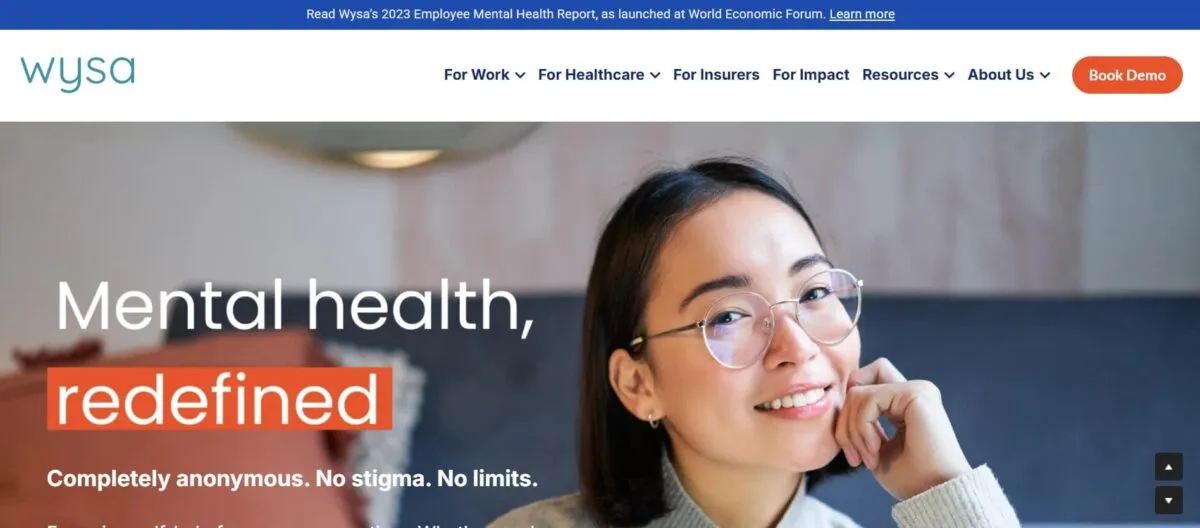
Wysa is a clinically validated mental health chatbot developed by one of the more trusted solution providers in the digital wellness space.
It blends AI with self-help tools grounded in CBT, mindfulness, and meditation.
Used by individuals, employers, and even national health services, Wysa helps users manage stress, anxiety, and depression with privacy and empathy.
- Best for: Individuals, schools, employers, and digital wellness platforms
- Key features: mood tracking and journaling, AI-guided CBT exercises, option to connect with human coaches
- Strength: Scalable yet deeply personal; HIPAA and GDPR compliant
- Limitation: Not a replacement for therapy; human coaching is optional but limited
2. Woebot
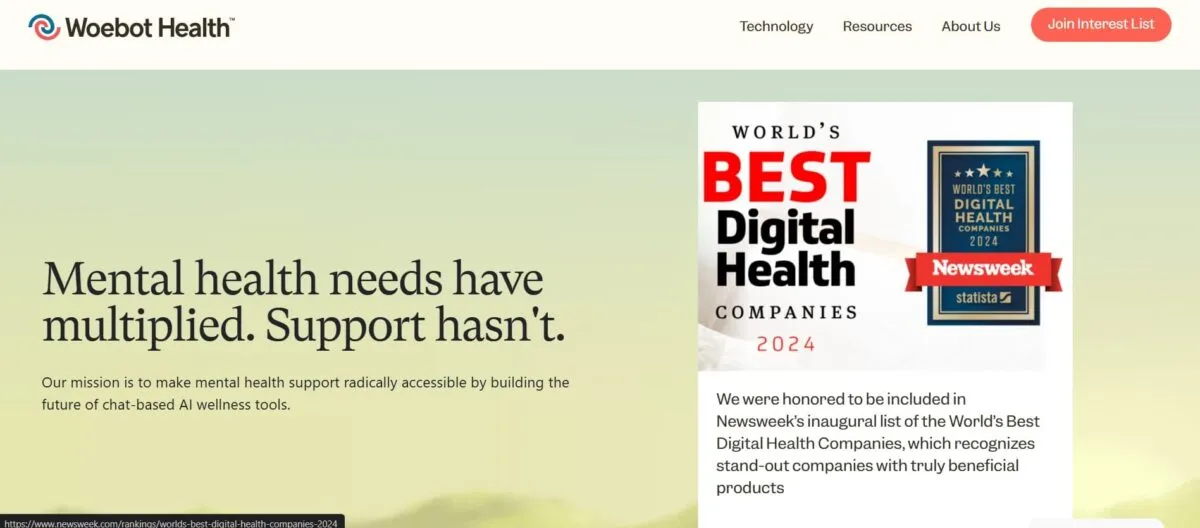
Where Wysa leans on structured self-help tools, Woebot takes a more conversational, day-to-day approach to building emotional resilience.
Woebot is one of the most widely recognized mental health chatbots, built by clinical developers and psychologists and supported by published research.
It uses daily conversations to deliver emotional support, challenge negative thinking, and promote resilience through micro-interventions.
What makes Woebot particularly relevant in 2026 is how its core architecture is evolving in response to the rise of LLM-powered therapy.
As LLM-based chatbots have surged to represent 45% of new clinical studies in the space, Woebot continues to advance its approach to keep pace with newer platforms and chatbot builders entering the market.
Teams exploring how to layer generative AI integration into existing mental health workflows will find Woebot’s evolution instructive.
- Best for: Young adults, first-time help seekers, wellness apps
- Key features: friendly, engaging tone; CBT, DBT, and IPT frameworks; built-in mood insights and daily check-ins
- Strength: Research-backed and easy to use
- Limitation: Focused on chat, not voice/video; not designed for crisis response
3. Youper
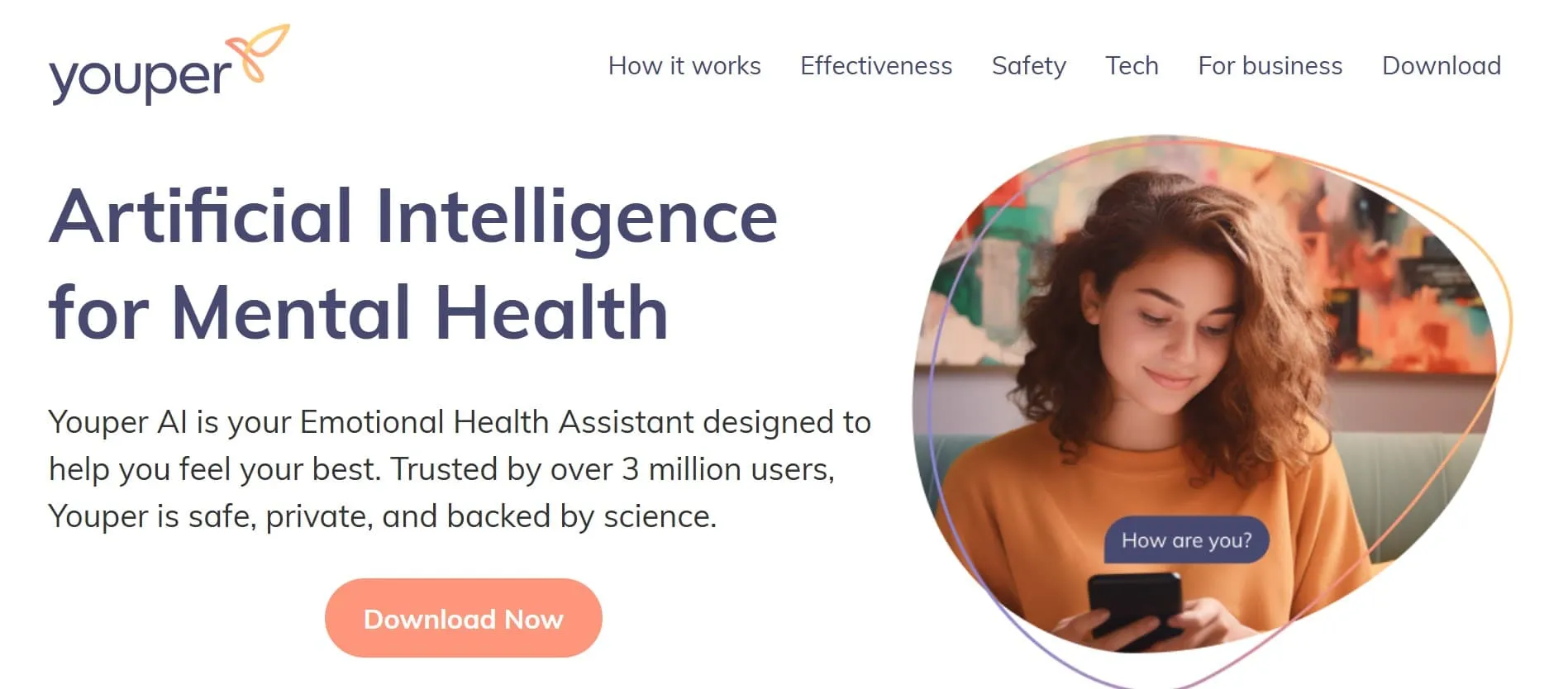
If Woebot’s strength is the therapeutic conversation, Youper’s strength is the data layer that lives underneath it.
Youper positions itself as a digital mental health assistant and one of the more approachable tools among consumer-facing solution providers in this space.
It uses AI to guide conversations, offer AI-powered mood tracking, and deliver brief, therapeutic insights.
It also integrates with Apple Health and wearables, making it one of the few mental wellness apps that connects emotional data with physical health signals in a single, lightweight experience.
- Best for: Self-reflection, personal growth, ongoing emotional tracking
- Key features: adaptive mood journal, personalized insights and exercises, medication and symptom tracking
- Strength: Lightweight, non-intrusive, and emotionally intelligent
- Limitation: Less conversational than Wysa or Woebot

4. Tess (by X2AI)
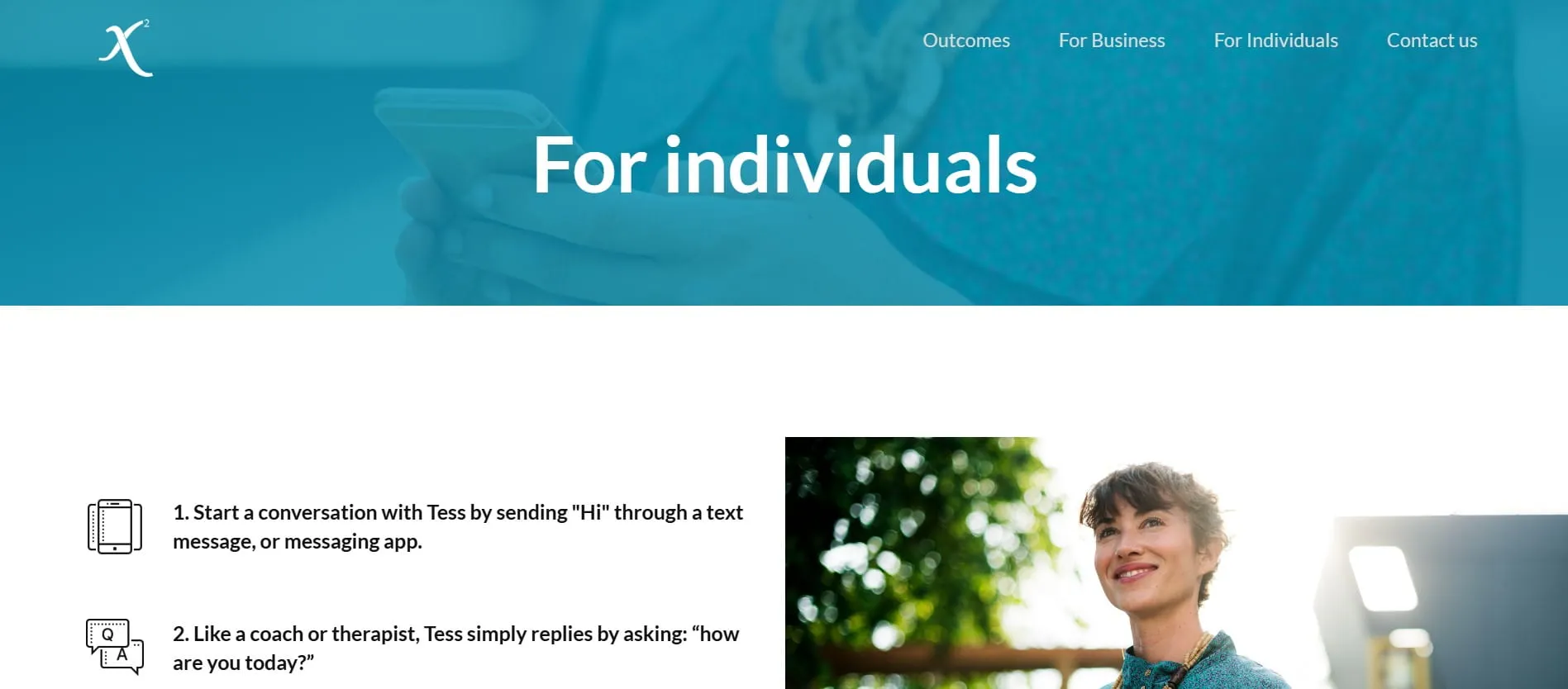
Moving from consumer tools to enterprise-grade platforms, Tess represents a different class of solution entirely.
Tess is a multilingual emotional support chatbot built by X2AI, one of the more established firms specializing in AI-driven behavioral health technology.
It delivers psychological support tailored to different demographics, using behavioral science and machine learning to personalize each user’s journey.
“We need something we can deploy across our entire university system, not a one-size-fits-all bot.” Tess was built for exactly that kind of challenge, and the answer is a platform that adapts its content and tone based on who it’s talking to.
Organizations seeking a trusted consulting partner for enterprise rollout often look to Tess as a proven starting point.
- Best for: Universities, hospitals, employee wellness programs
- Key features: customizable content per population (e.g., teens vs. veterans), multilingual support, SMS, WhatsApp, and app-based delivery
- Strength: Strong for B2B use and population-specific care
- Limitation: Not direct-to-consumer; requires organizational rollout
5. Replika
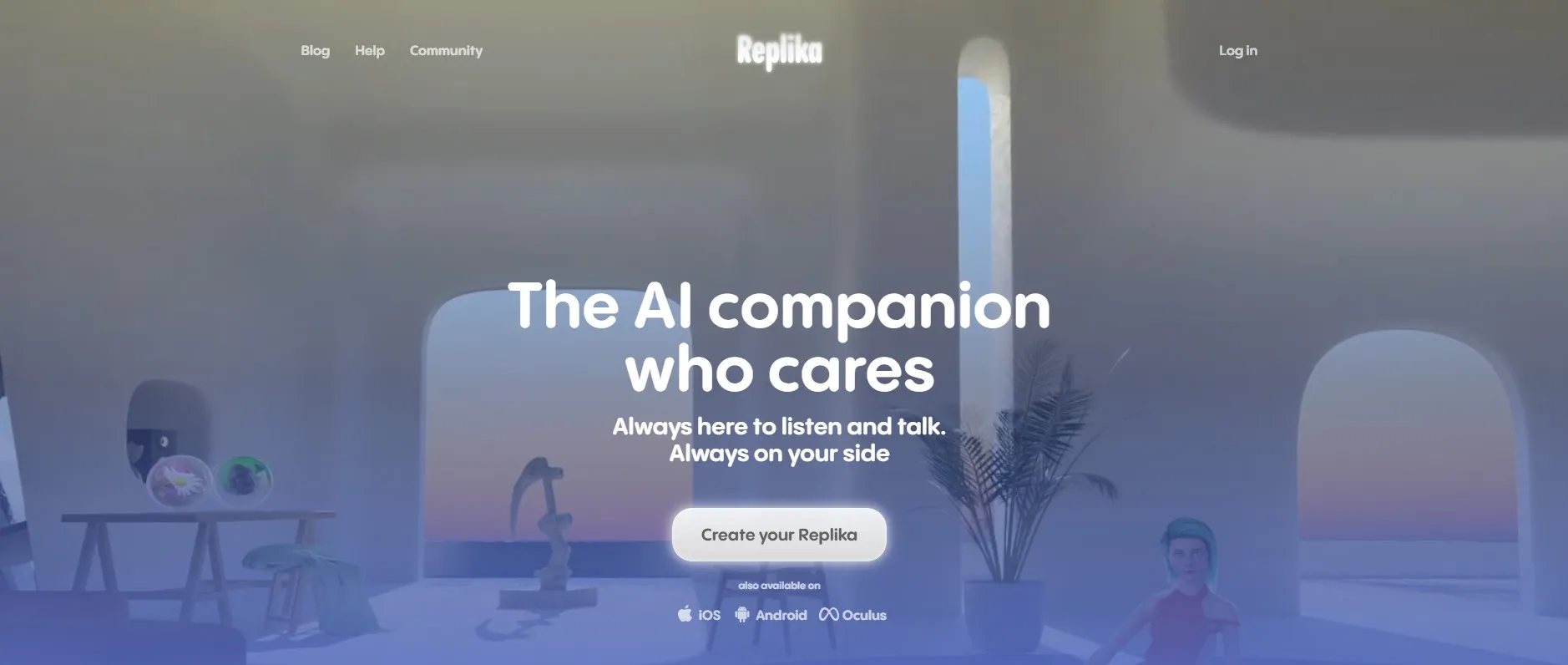
While Tess focuses on clinical and organizational outcomes, Replika takes a fundamentally different approach, one built around human connection rather than therapeutic frameworks.
Replika is an AI companion platform built for users seeking an emotional connection.
Unlike others on this list, its primary focus is on open-ended, empathetic conversation, not clinical frameworks.
It leans into emotional AI in its truest form: a system that mirrors, reflects, and adapts to the user’s emotional state over time.
Its multimodal mental health support, spanning text, voice, and AR avatar interactions, gives users multiple ways to engage depending on how they’re feeling in any given moment.
It can help users process feelings, explore identity, or simply talk when no one else is around.
Loneliness now ranks as the second most cited driver of mental health struggles among AI chatbot users, making Replika’s model more relevant and more studied by vendors and developers than ever.
- Best for: Loneliness, journaling, emotional exploration
- Key features: custom personality and voice, mood mirroring and reflection, optional voice and AR avatar chat
- Strength: Highly engaging and user-personalized
- Limitation: Not clinically validated; more focused on companionship than therapy
6. Elomia
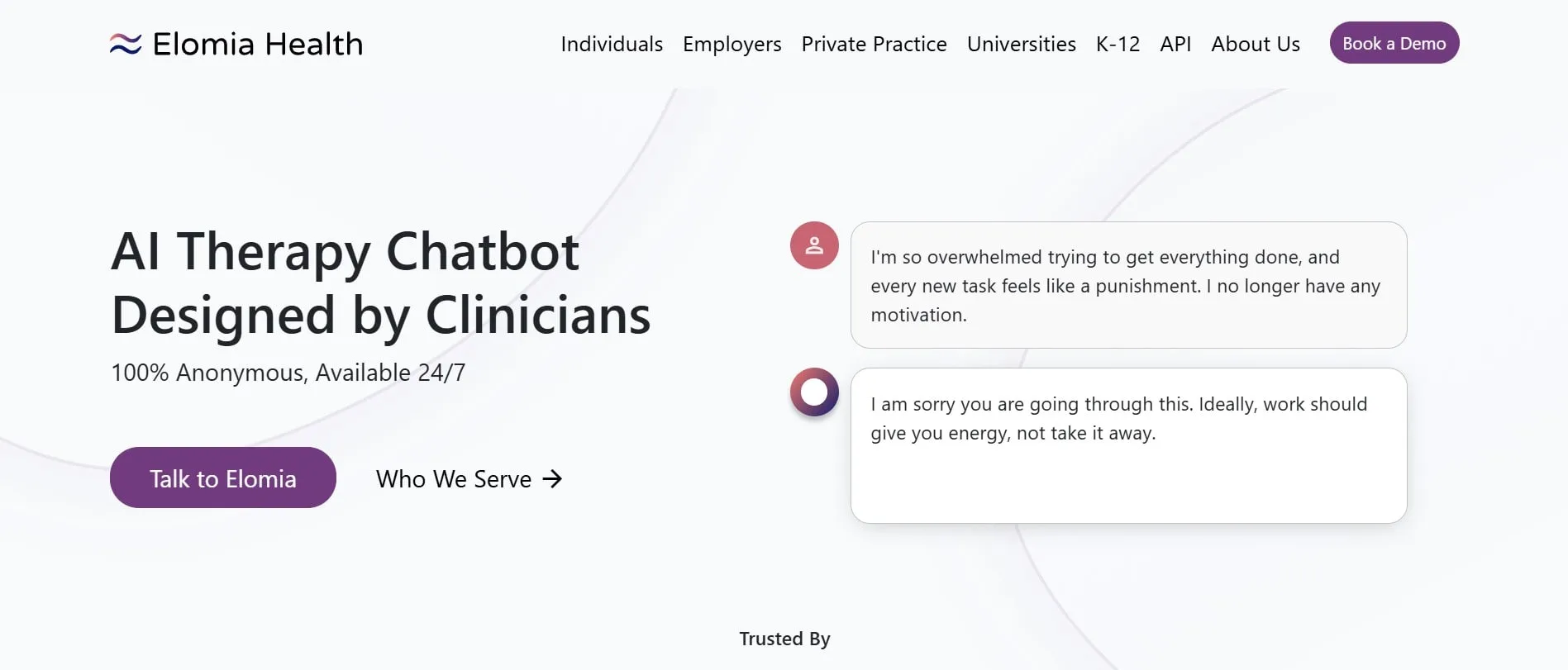
Companionship without clinical overhead is Replika’s specialty. Elomia finds the middle ground between the two, offering therapist-like depth without the full clinical infrastructure.
Elomia is an AI mental health companion designed to simulate conversations with a therapist-like presence.
Built using psychological frameworks and NLP-powered conversation design by a team of specialized developers, Elomia has been used in university studies and digital wellness initiatives to support emotional well-being, reduce loneliness, and encourage self-reflection.
It’s a strong option for agencies and nonprofit partners running pilot programs, particularly those who need something that feels human without the overhead of clinical infrastructure.
- Best for: Mental health pilot programs, student wellness platforms, nonprofit projects
- Key features: empathetic and natural dialogue flow, CBT-inspired conversational design, supports emotional journaling and daily reflections
- Strength: Offers high emotional resonance without feeling robotic
- Limitation: Not intended to replace therapy; best used as a supportive supplement

7. Ginger Chat (Part of Headspace Health)
Where most tools in this list operate at one end of the care spectrum, Ginger sits at the intersection of all of them, combining the immediacy of AI with the depth of human clinical oversight.
Ginger, now under Headspace Health, offers AI-powered chat services combined with real human mental health coaches.
Its strength lies in bridging real-time chat with clinically supervised guidance, including teletherapy integration that allows seamless escalation from AI conversation to licensed therapist sessions.
For organizations thinking seriously about telehealth platform development as part of a broader employee wellness strategy, Ginger represents the most mature model of how AI and human care can be layered together at scale.
To see what that kind of hybrid architecture looks like in practice, the Temocare TeleHealth case study shows how a mobile telehealth platform can be built to connect patients with providers while remaining fully compliant and scalable.
As workplace mental health programs have expanded significantly heading into 2026, companies and consulting firms advising on employee benefits increasingly recommend tools like Ginger for exactly this reason.
For organizations already exploring how AI automation fits into their broader healthcare strategy, Ginger is worth studying closely.
- Best for: Workplace mental health programs, hybrid care delivery
- Key features: 24/7 text-based coaching, escalation to therapists and psychiatrists, analytics for organizations
- Strength: Strong blend of AI and human support
- Limitation: Access is typically through employers or insurers
Now that the top platforms are clear, the harder question is how to choose between them.
How to Choose the Right AI Chatbot for Mental Health Support Projects
With a growing number of AI mental health tools, platforms, and vendors available, the decision isn’t just about features.
The wrong choice doesn’t just waste budget. It can underserve the very people you’re trying to help.
This is the most common place projects go wrong, picking a tool based on a demo rather than a real fit analysis.
Here’s a practical framework to evaluate which chatbot best fits your project goals. Work through each of these in order before committing to any vendor.
Purpose of Use
Start with the most fundamental question: what role will the chatbot play?
Emotional support tools like Elomia or Replika serve different needs than therapeutic frameworks like those in Wysa or Woebot, which are grounded in CBT and DBT.
For organizational-scale analytics, enterprise-ready platforms and solution providers like Tess and Ginger offer stronger infrastructure.
Align the tool’s strength with your project’s primary goal, whether that’s accessibility, scale, or clinical alignment. Once that’s clear, the next filter is who you’re actually building this for.
Target Population
Who are you serving?
Students and youth, particularly given that over 22% of young adults aged 18 to 21 now use generative AI for mental health advice, may respond best to approachable, relatable tools built by consumer-focused developers like Woebot or Wysa.
Workforce wellness programs may benefit from Ginger’s consulting-friendly setup and integration with HR systems.
Healthcare companies and research partners may need customizable, HIPAA-compliant solutions like Tess or Wysa for Teams.
If you’re building something from scratch for a specific population, Bitcot’s guide to building an AI-powered mental health app in 2026 is worth reading before picking a vendor. Knowing your population also directly shapes your compliance requirements, which brings us to the next decision.
Data Privacy and Compliance
Mental health data is highly sensitive.
Whether you’re working with established vendors or boutique agencies, ensure the platform complies with HIPAA for healthcare environments, GDPR and CCPA for consumer-facing applications, and offers clear data ownership policies with secure encryption.
This is especially important as regulatory scrutiny of AI mental health firms has intensified heading into 2026.
If you’re not sure where your project stands on compliance, working with an AI consulting partner early in the scoping process can prevent costly rework later. With compliance mapped out, the next question is how far you can customize the experience itself.
Customization and Integration
“Can we brand this chatbot as our own and connect it to our existing systems?”
That’s one of the first questions enterprise buyers ask, and the answer varies widely across vendors.
Does the platform let you add your own content or workflows, localize language for diverse users, and integrate with existing systems like EHR, LMS, Slack, or Teams?
If your project requires specific flows or branding, a customizable solution provider like Tess or a development partner like Bitcot may be a better fit than off-the-shelf builders. After that, the last filter is a practical one: what can the budget actually support?
Budget and Scalability
Free or low-cost tools like Youper or Replika are great for pilot programs.
Enterprise-grade mental health SaaS platforms from companies like Ginger or Tess require contracts and offer team dashboards with organizational analytics.
If you’re working with an agency or consulting firm to scope your initiative, get clarity upfront on user volume, staffing needs, and program lifespan before committing to a vendor.
Rushing this decision is one of the fastest ways to burn budget without results. And for organizations that need a fully custom path, there’s one more option worth considering.
Choose Bitcot to Build Your AI-Based Chatbot for Mental Health Support
Off-the-shelf chatbots have their place.
But mental health support often demands more than prebuilt flows and general-purpose AI, and that gap is where projects either succeed or fall short.
That’s where Bitcot stands apart from typical vendors and agencies.
Bitcot is a renowned AI chatbot development company and trusted technology partner that specializes in building fully custom AI solutions designed to meet the unique emotional, ethical, and functional requirements of mental health initiatives.
As a full-service development firm, Bitcot works with healthcare companies, nonprofits, consulting organizations, and digital wellness platforms to bring responsible, scalable AI products to life.
Whether you want to understand what’s involved before committing or you’re ready to build, the detailed breakdown of AI mental health chatbot development for self-care platforms is a practical place to start.
Whether launching a campus wellness program, scaling a nonprofit support service, or integrating digital care into a healthcare mobile app, Bitcot can help build a solution that’s safe, empathetic, and aligned with your mission.
The evrmore digital wellness case study shows exactly what that looks like in practice, an award-winning iOS wellness app built across 50+ sprints, with comprehensive API integrations, rigorous UX testing, and recognition in the Responsible Technology category.
“Mental health technology only works when it’s built with empathy first and AI second. We never start with the features. We start with the person who needs help.”
– Raj Sanghvi, Founder & CEO, Bitcot
Here’s what that development process looks like in practice:
Custom Conversation Design
Clinical developers, researchers, and UX experts work together to design chatbots that respond with empathy, care, and psychological awareness, not just AI smarts.
Ethical AI in Healthcare, Built for Trust
That empathy needs to be backed by responsible architecture. As a development partner and solution provider, safety, user dignity, and responsible AI design are built into every project, ensuring your chatbot supports mental health in a way that earns user trust and stands up to clinical scrutiny.
Scalable, Human-Centered Architecture
Trust earns retention. Retention requires scale. Tools and platforms are built to grow with your organization, whether serving 50 people or 500,000.
The focus stays on clarity, continuity, and mental health outcomes.
For organizations looking to go beyond chat into fully autonomous care workflows, the AI agents for healthcare team can build the deeper infrastructure those use cases require.
Built-In Crisis Detection AI and Safety Protocols
Scale without safety is a liability. Responsible mental health chatbots don’t just respond. They recognize distress signals and escalate appropriately.
Crisis detection flows and emergency referral pathways are designed into every build, so users are never left without a path to real help.
Integrated Tools and Workflows
And every one of those capabilities connects to the broader system you’re already running. Need journaling features? Mood tracking? Human escalation? Bitcot’s developers can build it, tailor it, and tie it into existing systems.

Final Thoughts
As mental health needs continue to grow across communities, workplaces, and digital platforms, AI chatbots are proving to be powerful tools for early intervention, emotional support, and daily well-being.
The data is striking: more than 1 in 3 adults have already turned to an AI chatbot for mental health support, and the market is on track to more than quadruple by 2033.
But technology alone isn’t enough.
What matters is how that technology is designed, thoughtfully, ethically, and with real human outcomes in mind.
“Not all AI mental health tools are built the same. Clinical grounding, ethical design, and clear crisis protocols aren’t optional. They’re the difference between help and harm.”
Responsible design is especially critical in 2026, as researchers, regulators, and mental health organizations are increasingly calling for standardized safety benchmarks, better crisis detection AI protocols, and clearer integration between AI tools and professional care services.
The stakes are real. Choose the wrong vendor and you waste budget. Choose the wrong architecture and you lose user trust. Choose the wrong compliance approach and you face regulatory exposure.
Whether launching a mental health pilot or scaling a full digital care platform, choosing the right tools and the right development partner makes all the difference.
The chatbots in this list demonstrate what’s possible across the range of vendors, firms, and builders active in this space.
But if what’s needed is something tailored to a specific audience, aligned with a specific mission, and built to scale with confidence, the path forward starts with one conversation. Schedule a free consultation with the Bitcot team today.
Frequently Asked Questions (FAQs)
Are AI chatbots effective for mental health support?
Yes, when designed responsibly.
Chatbots and platforms like Wysa and Woebot are grounded in cognitive behavioral techniques and have shown effectiveness in reducing stress and anxiety symptoms in peer-reviewed studies.
A 2025 RAND study published in JAMA Network Open found that 92.7% of young users found AI mental health advice helpful. A separate nationwide survey found nearly two-thirds of adult users reported moderate to major improvement in their wellbeing.
While they’re not a replacement for therapy, they offer meaningful support between sessions or for those without access to professional services.
Can these chatbots be used in schools, clinics, or employee programs?
Absolutely.
The tools and platforms on this list are designed for deployment across educational institutions, healthcare companies, and workplace settings.
They can be customized by vendors or consulting partners to serve specific populations, integrated into broader wellness initiatives, and scaled securely.
Are these chatbots suitable for people in crisis?
Not as a primary intervention, and that distinction matters.
Most AI mental health chatbots, regardless of the developers or firms behind them, are built for ongoing support and early intervention, not acute crisis response.
While some include basic crisis detection AI to flag high-risk conversations and route users to emergency referrals, this capability is a safety layer, not a substitute for dedicated crisis care.
Regulators and advocacy groups in 2026 are actively pushing for clearer safety standards across all AI mental health platforms, and this is the area under the most scrutiny.
It’s essential to make limitations clear to users and provide alternative support paths alongside any AI deployment.
Can the chatbot be customized for a specific audience or language?
It depends entirely on which platform or development path you choose, and the difference is significant.
Some platforms and solution providers, like Tess and Bitcot-built solutions, offer multilingual support and customizable conversational flows designed around specific populations.
Others, like Woebot or Replika, offer more fixed designs that work well for general audiences but limit deeper customization.
If audience-specific messaging or branding is important, partner with a customizable vendor or development agency that can tailor the experience end to end.
What does it cost to implement a chatbot for mental health support?
The honest answer is that cost varies widely based on what you’re actually building or licensing.
Consumer tools like Youper or Wysa may be free or low-cost and are suitable for individuals or small pilots.
Enterprise mental health SaaS platforms from companies like Ginger and Tess operate on a licensing model for organizations, with pricing tied to user volume and feature access.
Custom-built solutions developed by firms like Bitcot vary based on features, integrations, and scale, but offer unmatched flexibility and full ownership of the product.
How long does it take to build a custom mental health chatbot?
Timeline depends on the scope and compliance requirements of your specific project, not a fixed number.
A focused MVP with core chat flows, mood tracking, and basic EHR integration typically takes 8 to 12 weeks.
Full-featured platforms with crisis detection, multilingual support, and enterprise integrations can take 4 to 6 months, because each of those layers adds architecture, testing, and compliance review time.
Working with an experienced development firm that understands both clinical requirements and technical architecture significantly reduces that timeline and risk.
What makes a mental health chatbot HIPAA-compliant?
The short answer is that HIPAA compliance has to be built in from day one, not added as an afterthought.
In practice, that means end-to-end encryption (AES-256 at rest, TLS 1.2+ in transit), role-based access controls, detailed audit logs, and signed Business Associate Agreements (BAAs) with every third-party vendor that touches protected health information.
The architecture, hosting environment, and data handling practices all need to meet HIPAA standards from the start, because retrofitting compliance after launch is significantly more costly and exposes the product to legal risk in the interim.
A qualified development partner should address compliance requirements during the discovery phase, not after the product ships.