- AI booking systems eliminate double-bookings via real-time availability checks.
- Demand forecasting reduces over-ordering and stockouts during peak seasons.
- Chatbots handle 24/7 inquiries without adding headcount to your team.
- San Diego event companies using dynamic pricing report fewer revenue gaps.
- Integration success depends on API architecture, not just tool selection.
Introduction
According to Statista, small business AI adoption in the United States grew by 43% between 2022 and 2025, with eCommerce and service-rental companies among the fastest-moving segments. For party rental operators businesses that manage inventory, route logistics, real-time availability, and seasonal demand simultaneously that growth represents an architectural shift, not just a software upgrade. The businesses pulling ahead are not simply adding chatbots to their homepage. They are rebuilding how their website’s backend communicates with their operations stack.
This article examines the software integration decisions that separate working AI deployments from expensive pilots that stall. Whether you run a boutique tent-and-chair rental out of Los Angeles or a full event production company serving corporate clients, the patterns that determine success are rooted in how your AI layer connects to the rest of your platform.
Why Most Party Rental Websites Are Not Built for AI Integration
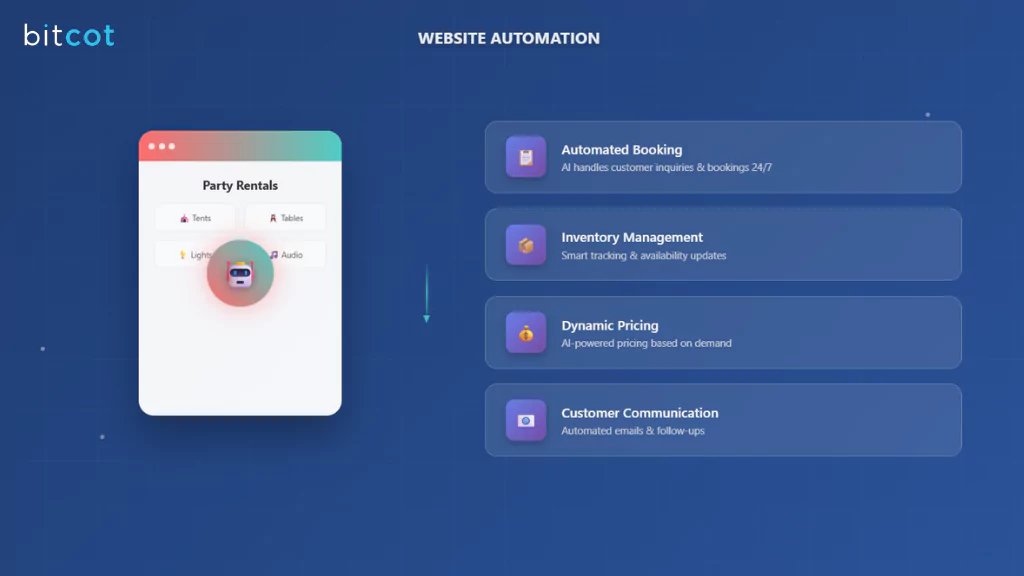
The challenge with integrating AI into a party rental website is rarely the AI itself. Most AI tools booking engines, chatbots, recommendation systems are designed to connect via APIs. The real barrier is that the majority of party rental websites are built on general-purpose eCommerce platforms that were never designed to surface the real-time operational data that AI systems require.
AI-driven booking systems need live inventory signals. Dynamic pricing engines need demand history and current availability counts. Recommendation engines need event-type metadata attached to each SKU. Without those data feeds structured and accessible, an AI layer cannot function accurately. What gets deployed instead is a shallow chatbot that redirects customers to a phone number which defeats the purpose entirely.
The fix is not to swap platforms. It is to build a data layer between your existing systems and the AI tools you want to deploy, using AI workflow automation principles that treat operational data as a first-class citizen of your website architecture.
How AI-Driven Booking Systems Actually Work
An AI-powered booking system does more than display a calendar. It checks inventory in real time, applies business rules (minimum rental periods, delivery zone limits, setup crew availability), and confirms or declines a reservation without human review. For this to work, the booking system must have a bidirectional data connection to your inventory database not a nightly sync, but a live read-write integration.
Booking party rentals without this connection creates the classic double-booking problem: two customers reserve the same tent for the same Saturday, and your team discovers the conflict on Friday afternoon. AI eliminates this failure mode, but only when inventory state is updated in milliseconds, not batch cycles.
The practical implementation involves either a custom-built inventory API or the use of an existing platform’s webhooks. For WooCommerce development environments, this typically means custom REST API endpoints that expose stock levels and reservation windows to an external AI scheduling layer. The AI then writes confirmed bookings back to the same endpoint, locking inventory atomically.
Automating Inventory Management with AI Forecasting
Inventory forecasting is one of the highest-ROI applications of AI for party rental companies. The core function is straightforward: analyze historical booking data by date, item category, event type, and geographic zone, then predict demand windows with enough lead time to allow procurement or reallocation decisions.
According to Gartner, organizations that adopt AI-driven demand forecasting reduce inventory carrying costs by 20 to 30 percent on average. For rental businesses where the asset itself is the inventory, this translates directly to fewer idle items during slow periods and fewer stockout events during peak weekends.
The model requires three data inputs: historical booking records (minimum 12 months), item-level availability timestamps, and external signals such as local event calendars or weather data. Without clean historical data, even a well-configured forecasting model produces unreliable outputs. This is why the data preparation stage often dismissed as a cleanup task is actually the critical engineering step in any AI readiness assessment.
Customer Service Chatbots: What They Should and Should Not Handle
A well-scoped AI chatbot for a party rental website handles four categories of interactions: availability checks, pricing lookups, booking status updates, and FAQ responses. These represent roughly 70 to 80 percent of inbound customer inquiries based on patterns observed across eCommerce service builds.
What chatbots should not handle without escalation logic: deposit disputes, damaged item claims, last-minute substitution requests, and multi-vendor coordination for large events. Deploying a chatbot that attempts to resolve these cases autonomously creates more customer friction than a phone call would. The correct architecture includes a confidence-threshold handoff: when the AI’s certainty score on a response drops below a defined level, the conversation routes immediately to a human agent with full context preserved.
Tools like Botpress and Rasa both support this escalation pattern. The difference is deployment model. Botpress operates as a managed cloud service with pre-built connectors. Rasa is open-source and self-hosted, giving teams full control over the NLU pipeline preferable when the chatbot needs to handle industry-specific terminology or integrate with a proprietary booking database. Teams evaluating these options can explore enterprise AI chatbot development frameworks to understand the tradeoffs before committing to a platform.

Personalized Recommendations and Dynamic Pricing: The Revenue Engine
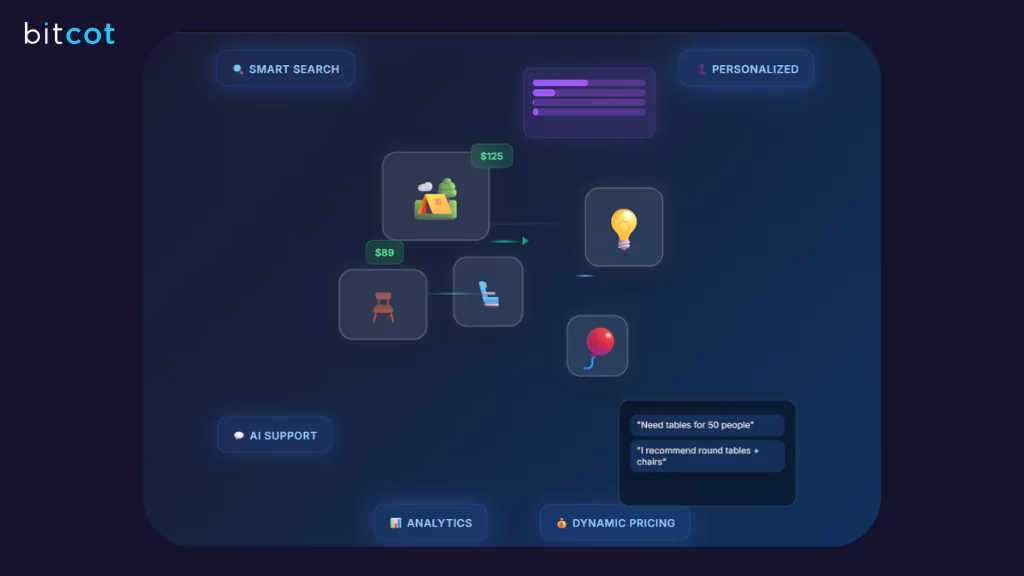
Personalized product recommendations on a party rental website are not about suggesting items at random. They are about using event-type signals birthday, corporate, wedding, graduation to surface the rental combinations most likely to complete a booking. When a customer selects a 60-person round table package, the AI should immediately surface compatible linen options, matching chair styles, and tent configurations that fit the same guest count. This is contextual upselling, and it increases average order value without adding friction to the checkout flow.
Dynamic pricing layers onto this by adjusting rental rates based on real-time availability, booking lead time, and seasonal demand. Items with fewer than three units available in a given weekend window can be priced at a premium. Items with ten or more available can be discounted to fill capacity. The pricing engine does not need to be complex to be effective. A rules-based model with demand multipliers outperforms a static price sheet in almost every scenario.
For teams building this on top of existing platforms, generative AI integration approaches can add recommendation logic to existing product pages without requiring a full platform rebuild. The key is ensuring the recommendation engine reads from the same live inventory API as the booking system so it never suggests an item that is already reserved.
Streamlining Delivery and Logistics with Route Optimization
Delivery logistics is one of the most tangible areas where AI produces immediate operational savings for party rental companies. Route optimization algorithms analyze delivery addresses, time windows, vehicle capacity, and traffic patterns to generate the most efficient delivery sequence. What a dispatcher might spend 45 minutes building manually each morning, an AI routing engine produces in under 30 seconds.
The integration requirement here is connection between the booking system and the dispatch platform. Each confirmed order should automatically populate the routing queue with the delivery address, item list, and requested time window. When cancellations or additions occur, the routing engine should recalculate in real time rather than requiring a manual dispatcher update.
This is an area where business process automation tooling such as n8n or Microsoft Power Automate provides significant value. Both platforms support trigger-based workflows: a confirmed booking triggers a dispatch record creation, which triggers a routing recalculation, which triggers a driver notification. The entire sequence runs without human intervention.
How to Integrate AI into Your Party Rental Website: A Practical Roadmap
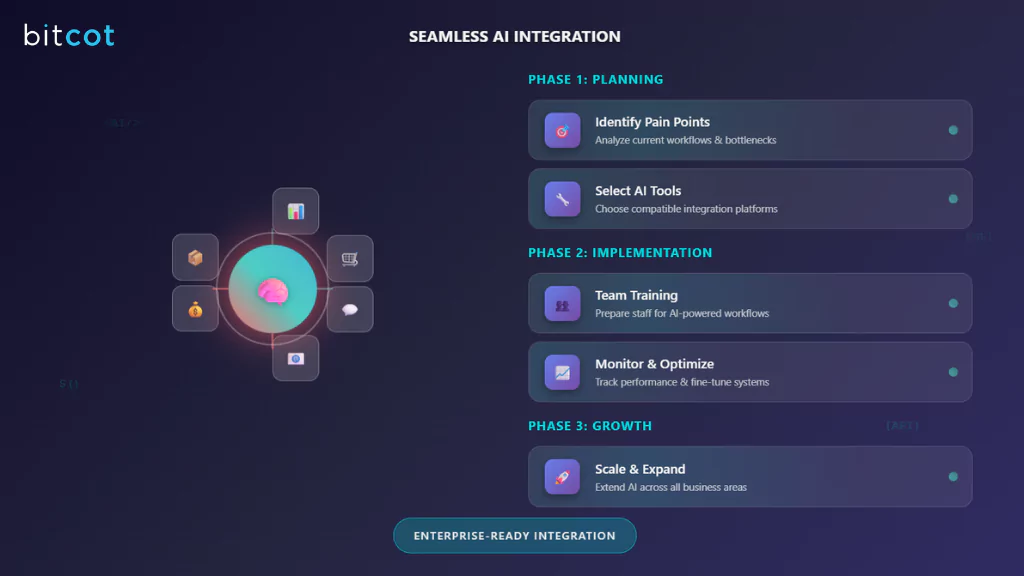
AI integration for a party rental website follows a predictable sequence. The sequence matters because each layer depends on the one before it. Teams that skip steps typically end up with AI tools that produce inaccurate outputs because they are operating on incomplete or stale data.
Step 1: Audit your data infrastructure. Before selecting any AI tool, inventory the data your website currently generates and where it lives. Booking records, inventory counts, customer history, and delivery logs should all be accessible via API or database query. If they are not, this is the first engineering task.
Step 2: Build or expose a live inventory API. This is the foundation for every downstream AI application. Real-time availability, forecasting, dynamic pricing, and recommendation engines all require current inventory state. A daily export to a spreadsheet is not sufficient.
Step 3: Deploy the highest-impact automation first. For most party rental operators, this is either the booking confirmation flow or the chatbot. Both produce measurable time savings within weeks and validate the integration architecture before more complex systems are added. Teams that have invested in AI-native app development patterns find this step significantly faster than those retrofitting AI onto legacy architectures.
Step 4: Add forecasting and pricing layers once booking data accumulates. Forecasting models improve with data volume. A model trained on three months of bookings is less reliable than one trained on 18 months. Plan to run forecasting in parallel with manual procurement for the first two to three cycles before relying on it exclusively.
Step 5: Instrument everything. AI systems degrade silently when input data quality drops. Monitoring chatbot confidence scores, forecast accuracy rates, and booking confirmation latency gives your team early warning when a component needs recalibration.
What AI Tools Are Best for Party Rental Websites?
The right tool depends on your integration requirements, not on feature marketing. Here is how the five most commonly evaluated platforms map to specific use cases for party rental operations.
Botpress
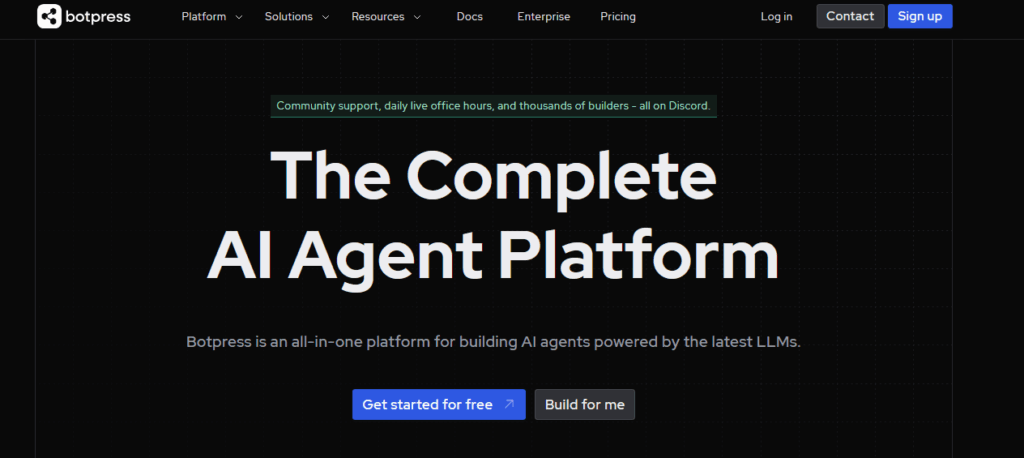
Botpress is the best starting point for teams that want a managed chatbot without deep NLU customization. Its cloud deployment model reduces infrastructure overhead, and its connector library covers the most common eCommerce and CRM platforms. It is well-suited for FAQ automation and guided booking flows.
Rasa
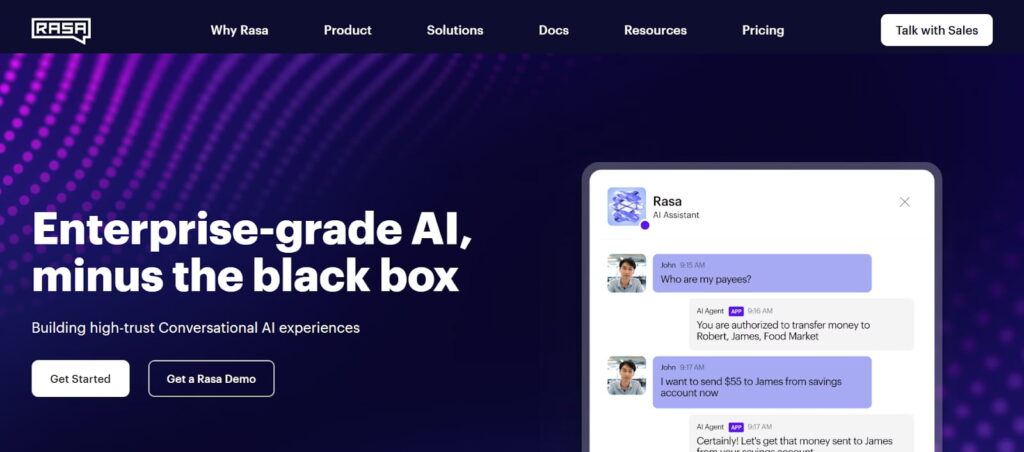
Rasa is the better choice when the chatbot needs to integrate with a proprietary booking system or handle complex multi-turn conversations such as event planning consultations. Its open-source model means the NLU pipeline can be retrained on your own domain vocabulary, which matters when customers use informal language to describe rental categories.
n8n
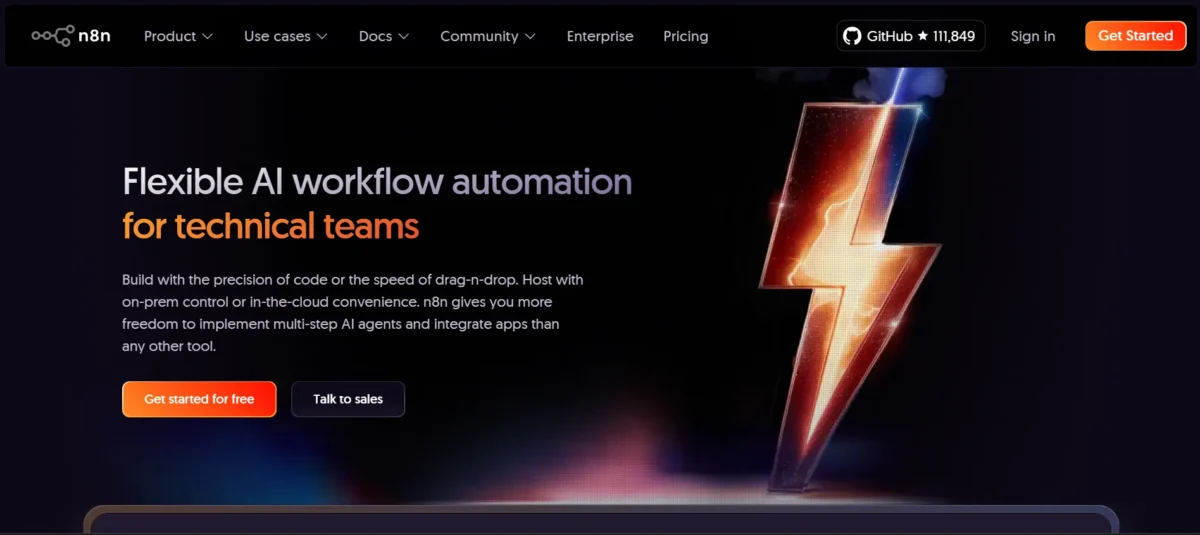
n8n is the strongest option for workflow orchestration across disconnected systems. If your booking software, inventory database, email platform, and accounting system do not natively communicate, n8n provides the integration layer that connects them. Its visual workflow builder makes it accessible to operations teams without engineering backgrounds, while its self-hosting option keeps sensitive customer data within your own infrastructure. For teams familiar with Microsoft Power Automate, the mental model is similar.
AWS Bedrock
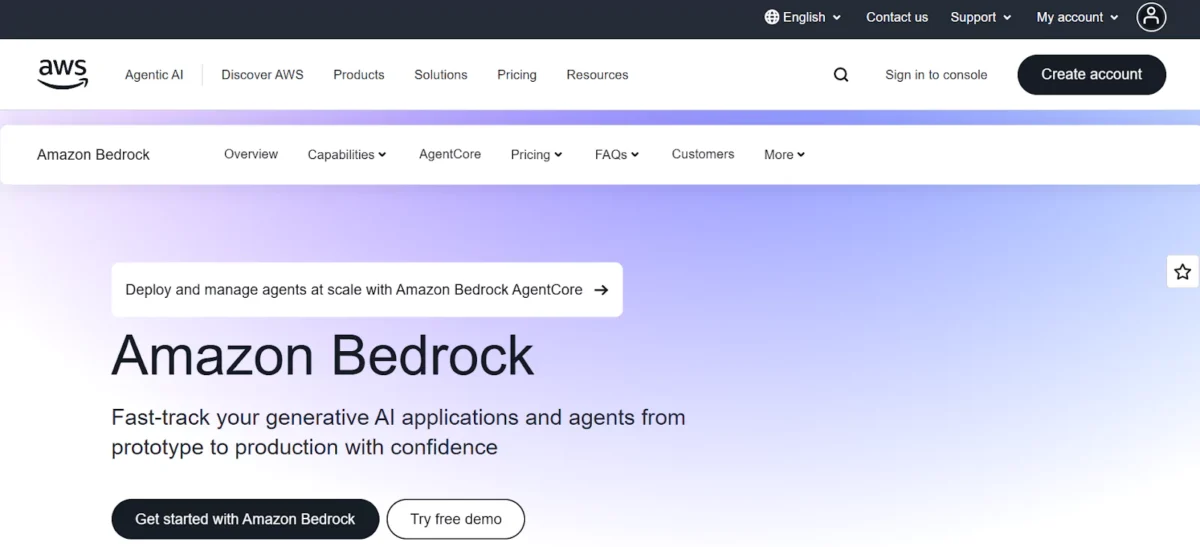
AWS Bedrock is appropriate for teams that need scalable AI inference for recommendation engines or content generation and are already operating on AWS infrastructure. Its multi-model flexibility allows testing different foundation models against your use case without changing the integration layer. According to Amazon Web Services, Bedrock supports models from Anthropic, Meta, and Mistral under a single API, which simplifies vendor management for teams evaluating multiple AI providers.
Microsoft Power Platform
Microsoft Power Platform suits organizations that already use Microsoft 365 and need AI capabilities connected to existing Office and Dynamics data. For party rental companies with CRM-driven sales processes or contract management workflows, Power Automate’s pre-built Microsoft connectors reduce integration time substantially.
Is AI Worth It for a Small Party Rental Company?
Yes, with a scoped implementation. A small party rental company does not need to deploy every AI capability at once. A single chatbot that handles availability inquiries and booking confirmations can recover eight to twelve hours of staff time per week. A basic forecasting model built on 12 months of booking history can reduce over-ordering by identifying the three to five items that consistently sit idle during high-demand weekends.
The investment threshold for a scoped AI deployment is lower than most operators expect. The constraint is almost never budget. It is data readiness. Companies that have been operating on paper records, disconnected spreadsheets, or a booking platform with no API access cannot immediately deploy AI. The first investment is always infrastructure, specifically a platform that exposes booking and inventory data programmatically. Once that foundation exists, the AI applications described in this article become straightforward to implement. Evaluating build vs buy software decisions early in this process prevents costly platform migrations later.
What We Notice Across eCommerce Rental Builds in California
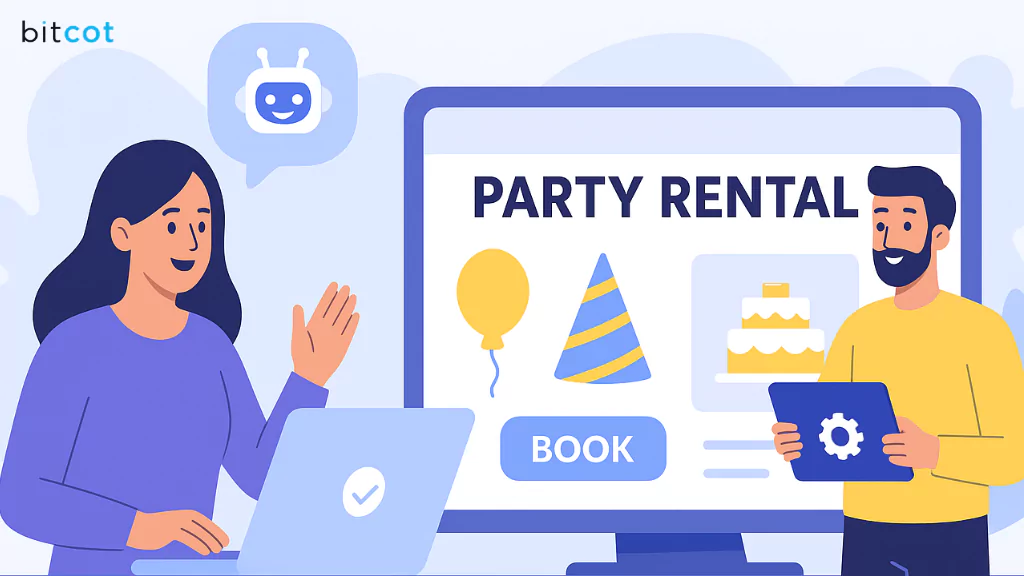
Working on eCommerce builds for service-based and rental businesses across San Diego and the broader California market, our engineering team consistently observes the same pattern: operators underestimate the data layer and overestimate the AI layer. The AI tools themselves are mature and accessible. The gap that kills projects is almost always an inventory system that was never designed to be queried in real time.
The companies that move fastest are those that made a platform decision early to keep their booking and inventory data in a system with a real API. When we evaluate a rental website for AI consulting engagements, the first technical question is always: can we read current inventory state via an API call? If the answer is yes, the integration roadmap compresses significantly. If the answer is no, the roadmap starts with infrastructure, not AI.
We have also noticed that the most reliable chatbot deployments for this industry are the ones with the tightest scope. A chatbot that does three things exceptionally well check availability, answer pricing questions, and confirm booking status outperforms a general-purpose assistant that attempts to handle everything. Scope discipline at the product level produces better customer outcomes than feature breadth.

Conclusion
AI on a party rental website is most effective when it is treated as an integration problem, not a tool-selection problem. Booking automation, inventory forecasting, dynamic pricing, and logistics optimization all work but each requires a data connection that many rental websites do not currently have. The businesses gaining the most from these capabilities in 2026 are those that invested first in making their operational data accessible, then layered AI applications on top of a stable foundation.
If your rental website is running on a platform with a real API and clean historical booking data, you are closer to a working AI deployment than you might realize. If it is not, the first step is that infrastructure work and it is worth doing before evaluating any AI vendor. Our team works with service businesses across California and beyond to assess that foundation and build the integrations that make AI deployments actually hold up under real operational load.
Frequently Asked Questions
What is an AI party rental website?
An AI party rental website is an eCommerce or booking platform that uses artificial intelligence to automate core operational tasks including real-time inventory checks, dynamic pricing, personalized product recommendations, and customer service chatbots. The distinguishing feature is that AI layers connect directly to live operational data rather than operating on static or manually updated content. The result is a website that can confirm bookings, surface relevant rentals, and answer customer questions without staff intervention.
What is the difference between a rule-based chatbot and an AI chatbot for a rental website?
A rule-based chatbot follows a fixed decision tree it can only respond to inputs that match a pre-defined pattern, and it fails when customers phrase questions in unexpected ways. An AI chatbot uses natural language understanding to interpret the intent behind a message and respond accurately even when phrasing varies. For party rental businesses where customers describe their needs in informal, event-specific language, NLU-based chatbots like those built on Rasa or Botpress produce meaningfully better outcomes than rigid scripted flows.
How does AI inventory forecasting work for party rental companies?
AI inventory forecasting analyzes historical booking records by date, item category, event type, and delivery zone to predict which items will be in high demand during future time windows. The model identifies seasonal patterns, recurring high-volume weekends, and item combinations that frequently co-occur in bookings. This allows procurement teams to make reordering and reallocation decisions in advance rather than reacting to stockouts. According to Gartner, organizations using AI-driven demand forecasting reduce inventory carrying costs by 20 to 30 percent on average.
How are San Diego party rental companies using AI on their websites?
Party rental companies in San Diego and across Southern California are using AI primarily in three areas: automated booking confirmation systems that eliminate manual availability checks, AI chatbots that handle peak-season inquiry volume without increasing headcount, and route optimization tools that reduce delivery labor costs during high-demand event weekends. The companies furthest along in adoption are those that built or migrated to booking platforms with real-time API access early, giving them the data foundation that AI integrations require.
Is AI integration worth it for a small party rental business?
Yes, for businesses that start with a scoped implementation focused on the highest-friction workflows. A chatbot that handles availability inquiries and booking status can recover eight to twelve hours of staff time per week. A basic forecasting model built on 12 months of historical bookings can reduce over-ordering on consistently underbooked item categories. The main prerequisite is not budget it is data infrastructure. A rental business operating on a platform with no API access cannot benefit from AI until that foundation is addressed first.