Key Takeaways
- RAG-based AI assistants ground every patient response in verified institutional data, eliminating hallucinations that are common in generic chatbots.
- Healthcare organizations deploying RAG assistants report 30–40% reductions in clinician administrative time and 12–18% drops in readmission rates.
- Successful deployment depends on deep EHR integration, not just AI capabilities. Systems that cannot connect to clinical workflows fail regardless of AI accuracy.
- Data privacy architecture must be designed from the start. Role-based access, encryption, and audit logging are non-negotiable in a healthcare AI build.
- A phased implementation of 5–7 months from discovery to production scale is realistic for most health systems with the right partner.
Introduction
Patient communication is under pressure across modern healthcare systems. According to a widely cited study published in the Annals of Family Medicine, physicians spend roughly 49% of their workday on administrative and desk work, leaving less time for direct patient care. Meanwhile, patients struggle to access timely, personalized information about their conditions, treatments, and follow-up plans. Retrieval-Augmented Generation (RAG)-based AI assistants address this gap directly: by combining secure access to institutional knowledge with intelligent conversation, they help healthcare providers deliver consistent, evidence-based patient engagement at scale. Our team at Bitcot has spent 10+ years building healthcare software that integrates with existing EHR systems, and AI assistants represent the most significant shift we have seen in improving patient outcomes while reducing provider burden.
What Are RAG-Based AI Assistants?
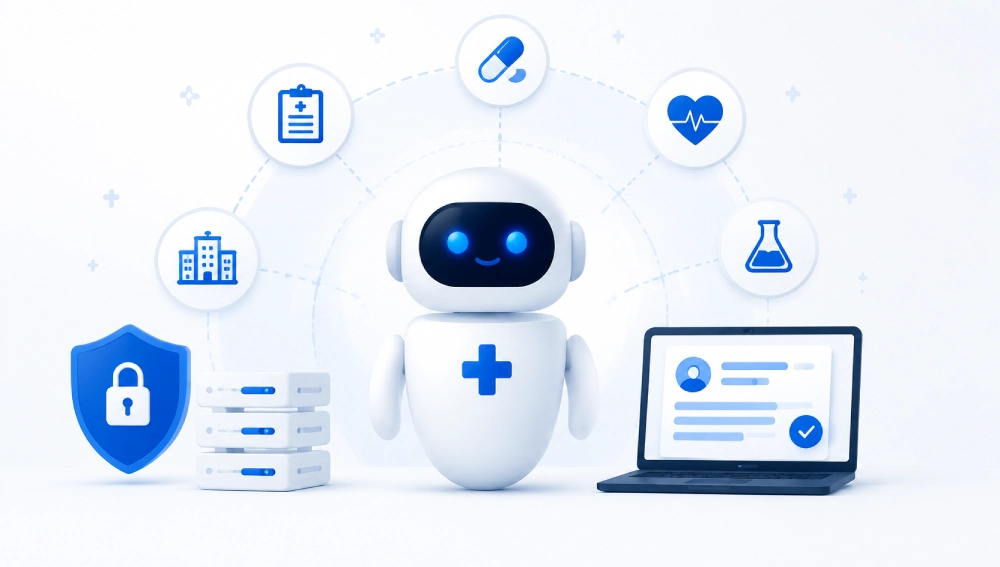
A Retrieval-Augmented Generation (RAG) AI assistant is an intelligent system that combines large language models (LLMs) with real-time access to your organization’s knowledge base, medical records, treatment guidelines, clinical protocols, patient history, and institutional best practices. Unlike generic AI chatbots, RAG-based assistants ground their responses in your actual data, reducing inaccurate outputs and ensuring every patient interaction reflects verified clinical evidence and your organization’s standards.
Here is how RAG works in a healthcare context:
- Data ingestion: Patient records, clinical guidelines, medication databases, and institutional protocols are indexed into a secure, searchable knowledge base.
- Query understanding: When a patient or clinician submits a question, the system identifies intent and context.
- Retrieval: The system searches your knowledge base for relevant, verified information without exposing sensitive Protected Health Information (PHI).
- Response generation: The AI produces a personalized, context-aware response grounded in your data rather than generic internet content.
- Verification loop: Responses are checked against compliance rules and organizational standards before delivery.
Unlike public chatbots trained on internet data, RAG-based healthcare assistants operate as proprietary systems that keep patient data within your secure infrastructure. This architectural approach supports your organization’s privacy obligations and institutional trust requirements. Organizations should always consult their legal and regulatory teams to confirm alignment with applicable standards.
How RAG Improves Patient Communication
RAG-based AI assistants transform patient communication by making it personalized, immediate, and consistent across all touchpoints.
Personalized Patient Education
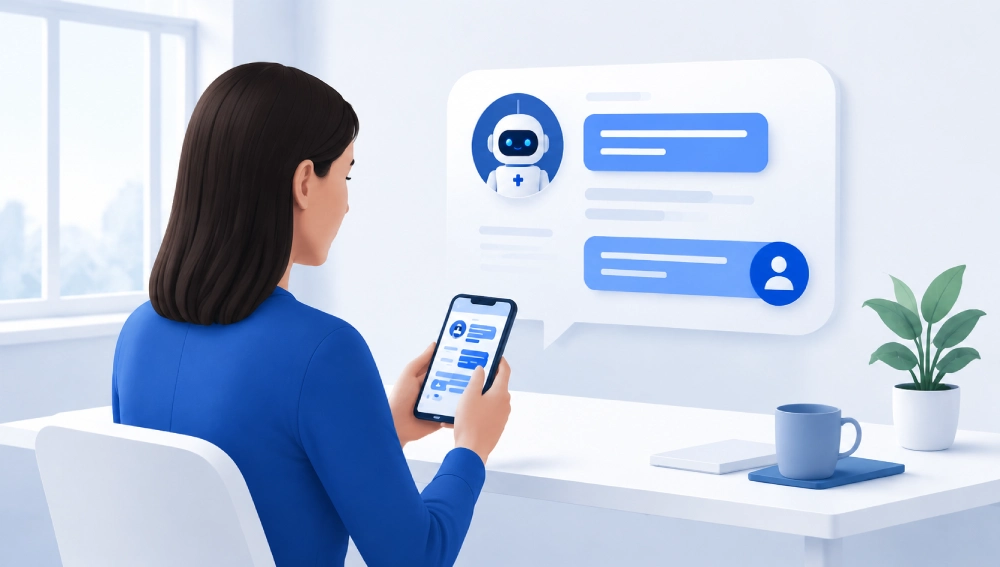
Patients receive tailored explanations of their diagnoses, medications, and care plans based on their specific medical history. Instead of generic resources, the AI references their actual treatment protocols, lab results, and physician notes, making education directly relevant to their situation. This increases comprehension and long-term engagement.
24/7 Availability Without Additional Clinician Burden
Patients can ask questions about their care, medication side effects, follow-up instructions, and wellness tips outside clinic hours. The RAG assistant handles routine inquiries, escalating complex cases to clinicians, freeing providers to focus on high-value work. Research from McKinsey highlights that administrative burden reduction of this kind can recover 30–40% of clinician time in high-volume practices.
Consistency Across Providers
When multiple clinicians care for a patient, communication can fragment. RAG ensures every provider references the same institutional guidelines, medication protocols, and treatment evidence. Patients hear consistent messages regardless of which staff member they interact with.
Reduced Patient Anxiety Through Informed Engagement
Patients feel more confident when they understand their care. RAG-based assistants enable patients to ask follow-up questions, verify information, and feel heard without waiting days for a callback. This improves satisfaction scores and treatment adherence.
Multilingual Support at Scale
AI assistants can communicate in patients’ preferred languages, expanding access for non-English-speaking populations. Combined with healthcare software development expertise, this enables genuinely inclusive patient engagement across diverse communities.

Real-World Use Cases in Healthcare
RAG-based AI assistants are already improving patient outcomes across multiple healthcare settings:
Post-Discharge Patient Support
Scenario: A patient is discharged after joint replacement surgery. Normally, they would wait for a nurse callback to ask about pain management, physical therapy compliance, or wound care. With a RAG assistant integrated into the patient portal, they can ask questions immediately. The system references their discharge summary, surgeon-specific instructions, and physical therapy protocol, providing personalized guidance instantly. Complications are identified earlier, and readmission rates typically drop by 12–18%.
Chronic Disease Management
Patients with diabetes, hypertension, or COPD need ongoing support between visits. A RAG-based assistant reminds patients about medication refills, diet guidelines, and monitoring schedules based on their specific treatment plan. The system can identify behavioral patterns, for example, a patient who consistently misses evening doses, and proactively suggest practical time-management solutions. The result: improved medication adherence and fewer preventable hospitalizations.
Prior Authorization and Insurance Inquiry Support
Patients often contact billing teams with questions such as “Is my imaging covered?” or “Do I need prior authorization for this medication?” A RAG assistant trained on institutional insurance policies and patient eligibility data can answer many of these immediately, reducing call center volume by 25–35%.
Clinical Trial Recruitment
Health systems often struggle to identify eligible patients for clinical trials. An RAG assistant can match patient records against trial criteria and proactively notify eligible candidates, improving enrollment rates while eliminating significant manual clinician effort.
Telehealth Pre-Visit Preparation
Before a telehealth appointment, patients respond to structured questions via an AI assistant: current symptoms, medication compliance, and recent changes in health. The system prepares a pre-visit summary for the clinician, enabling more efficient consultations and reducing no-show rates through better patient engagement.
Clinical Benefits and Measurable Outcomes
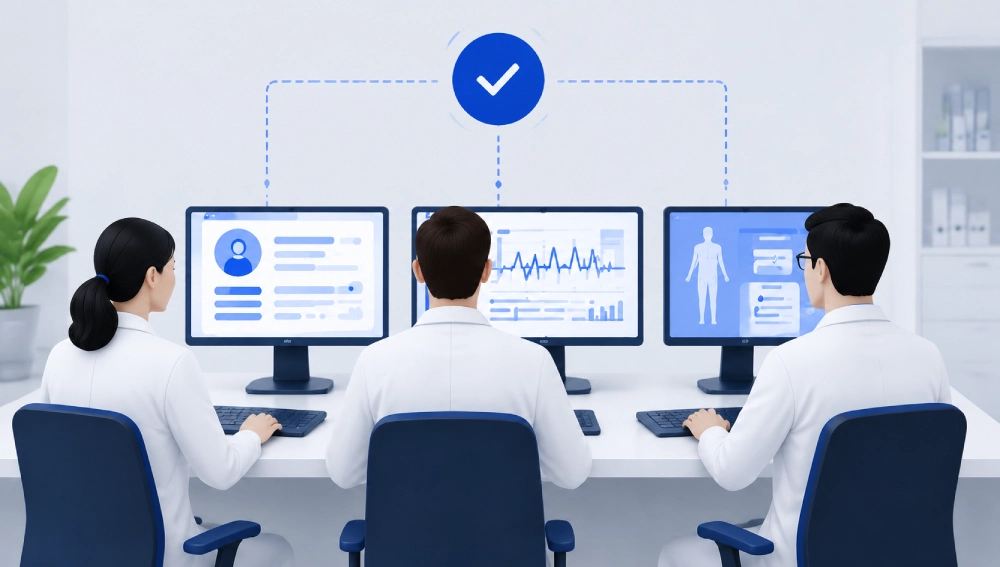
Healthcare organizations implementing RAG-based patient communication report documented improvements across key performance metrics:
| Metric | Typical Improvement | Clinical Significance |
|---|---|---|
| Clinician admin time reduction | 30–40% | More time for direct patient care and complex cases |
| Patient portal engagement | +45–60% | More informed patients, improved health literacy |
| Medication adherence | +15–25% | Better disease control, fewer emergency visits |
| Readmission reduction | 12–18% | Lower costs, improved outcomes |
| Patient satisfaction (HCAHPS) | +8–12 points | Patients feel heard and informed |
| Call center volume reduction | 25–35% | Operational cost savings; staff focus on complex issues |
These figures are based on aggregate outcomes reported in healthcare AI deployment case studies and industry research. Individual results will vary by implementation scope, data quality, and organizational context. See resources from HealthIT.gov and NEJM Catalyst for supporting research.
These improvements compound over time. When clinicians spend less time on routine tasks, they see more patients and provide higher-quality care. When patients feel informed and supported, they follow treatment protocols more closely and experience fewer complications. The result is better health outcomes at lower overall cost.
Integration with EHR Systems
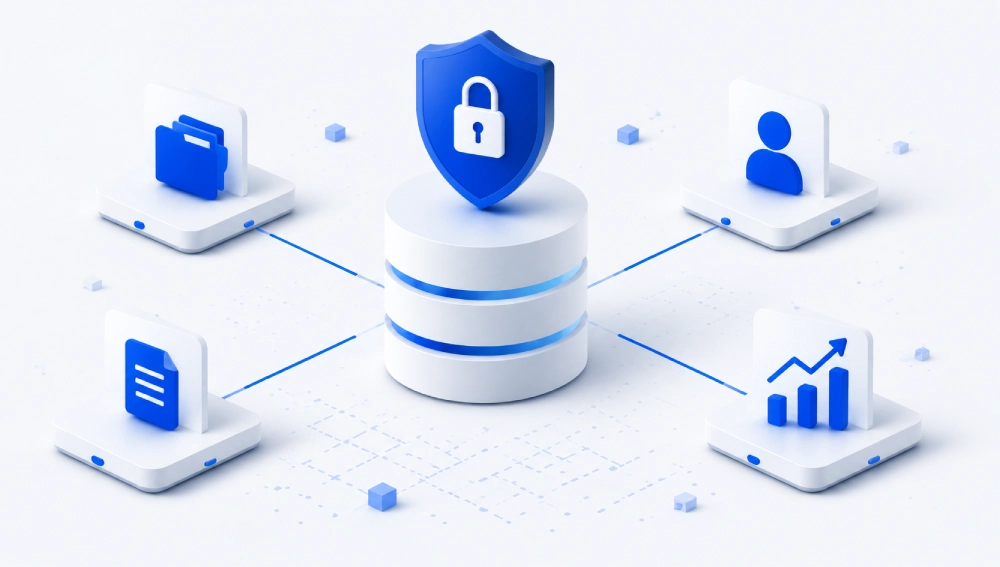
RAG-based assistants only work when integrated seamlessly with existing clinical infrastructure. This is where most healthcare AI projects break down: disconnected systems, poor data quality, and integration complexity derail implementations before they reach patients. Our team has built custom API integration solutions for 200+ healthcare clients, and EHR integration is one of our core areas of expertise.
EHR Connectivity Layers
Real-time data access: The RAG system connects to your EHR via secure APIs using FHIR standards, HL7 v2 interfaces, or proprietary integrations, depending on your platform. Patient records, lab results, medication lists, and visit summaries become available immediately without exposing raw PHI.
Clinical decision support: The system references institutional order sets, protocols, and guidelines stored in your EHR, ensuring recommendations align with your care standards.
Workflow integration: Clinician alerts and escalations flow back into the EHR worklist, so urgent issues are not missed. Patient interactions are logged in the medical record for continuity of care.
Data privacy layer: Sensitive identifiers are masked before entering the AI system. The assistant only accesses the clinically relevant information needed to respond to a given query.
Common EHR Integrations
- Epic/Cerner: FHIR APIs with real-time patient data sync; custom HL7 event handlers for alerts
- Athenahealth: Cloud-native API integration with workflow orchestration
- Allscripts/NextGen: Legacy API with custom data transformation layers
- Specialty systems: Ortho, oncology, and cardiology-specific integrations via proprietary connectors
Integration complexity is the primary reason healthcare AI pilots fail to reach production. Choosing a partner with genuine EHR integration depth, not just AI expertise, is one of the most important decisions in any healthcare AI project. For a broader view of how interoperability fits into the current landscape, see our overview of current healthcare technology trends.
Data Security and Compliance Architecture
Healthcare data is sensitive, and any AI system handling patient information must be architected with security as a foundational requirement, not an afterthought. Organizations should work with their legal and compliance teams to verify that any deployed system meets their specific regulatory obligations.
Recommended Security Architecture for Healthcare AI
A well-designed RAG system in healthcare should incorporate the following technical safeguards:
- Role-based access controls: Only authorized users see relevant data. A billing staff member should not trigger the retrieval of clinical notes; a patient should only access their own records.
- Encryption in transit and at rest: All data flowing between the EHR, RAG system, and patient portal should use current transport layer security standards. Data in the knowledge base should be encrypted using industry-standard methods.
- Immutable audit logging: Every data access event should be logged, who retrieved what, when, and in what context. Logs support compliance audits and incident investigation.
- Automated incident detection: Systems should include monitoring for anomalous access patterns with defined escalation workflows.
Data Residency and Regional Compliance
Healthcare data often must remain within specific geographic boundaries based on applicable regulations in a given region or jurisdiction. RAG-based AI infrastructure can be deployed on-premise, in private cloud environments, or in region-locked cloud services, ensuring data does not leave your jurisdiction. Organizations operating across regions should verify requirements with their legal teams.
AI Model Governance
Transparency: Clinicians and administrators should understand how AI outputs are generated and what data informed a given response.
Bias monitoring: Healthcare AI systems require regular audits to identify whether the system provides inconsistent quality of guidance across different patient populations. Early detection prevents compounding harm.
Human oversight: Critical patient interactions should be reviewed by clinicians before or after delivery. The AI suggests a human approves or escalates.
Implementation Roadmap
Deploying RAG-based patient communication is a structured, phased process:
Phase 1: Discovery and Readiness (Weeks 1–4)
- Assess current patient communication pain points and clinician workflows
- Evaluate EHR data quality and API readiness
- Define priority use cases: post-discharge support, medication adherence, prior authorization, and others
- Identify integration and governance requirements
- Build internal stakeholder alignment across clinical, IT, compliance, and legal teams
Phase 2: Infrastructure and Data Preparation (Weeks 5–12)
- Build or configure the RAG platform, including vector databases, LLM inference, and knowledge indexing
- Establish secure EHR connectivity via FHIR APIs, HL7 handlers, and data transformation pipelines
- Prepare institutional knowledge base: clinical guidelines, protocols, and approved messaging
- Configure access controls, audit logging, and encryption
- Design escalation workflows and clinician review tools
Phase 3: Pilot and Validation (Weeks 13–20)
- Run a pilot with 50–200 patients in a controlled specialty or department
- Establish baseline metrics: clinician time saved, patient satisfaction, portal engagement
- Refine responses based on feedback to improve accuracy and relevance
- Complete security and governance testing
- Train clinicians and patient support teams
Phase 4: Scale and Optimize (Weeks 21+)
- Expand to additional departments or patient populations
- Integrate with patient portal, telehealth, and EHR workflows
- Monitor AI performance and patient outcomes continuously
- Iterate on use cases based on real-world learnings
- Establish governance and ongoing model maintenance processes
Realistic total timeline: 5–7 months from kickoff to production scale. With the right integration partner, your system can be live and generating measurable value within a single fiscal year.

Our Point of View on Healthcare AI
Having worked across 200+ healthcare software projects over the past decade, our team at Bitcot has observed a consistent pattern: the healthcare AI projects that fail are not failing because the AI is bad. They fail because the AI is disconnected from the actual clinical environment it was meant to serve.
The organizations that succeed treat EHR integration as an engineering priority from day one, not a milestone to be addressed after the AI model is built. They involve clinical users during the pilot, not just at acceptance testing. And they define post-launch monitoring processes before go-live, not after the first model drift incident.
RAG-based patient communication is genuinely mature technology. The gap between the health systems that benefit and those that do not is rarely the AI itself. It is implementation discipline, clinical stakeholder alignment, and the willingness to start with a realistic scope rather than a maximum one. A well-executed pilot with 50 patients will teach you more about what your full deployment needs than any amount of pre-build planning.
Conclusion
Patient communication is strained under the combined weight of volume, complexity, and rising expectations. Clinicians are managing more administrative work than their predecessors; patients expect faster, more personalized access to information about their care. RAG-based AI assistants are not a replacement for human clinical judgment. They are a force multiplier that enables care teams to do their best work by handling routine questions, maintaining consistency, and returning clinician time to the cases that genuinely require it.
The technology is ready. Health systems, including Cleveland Clinic, Mayo Clinic, and Kaiser Permanente, have already deployed AI-powered patient communication at scale. The organizations that move thoughtfully and decisively gain a measurable advantage in patient outcomes, operational cost, and retention. Those who wait will face a widening gap as standards and patient expectations continue to shift.
The path forward starts with an honest assessment of your current patient communication gaps, your EHR data quality, and your organizational readiness for a structured implementation. If you are ready to explore what a RAG-based assistant could look like inside your specific environment, our team is available to walk through your use case, answer technical questions, and outline a realistic roadmap based on your current state.
Frequently Asked Questions
What is the difference between RAG-based AI and general-purpose chatbots?
General-purpose chatbots are trained on internet data and can produce inaccurate or outdated information. RAG-based healthcare assistants retrieve verified information from your institutional knowledge base your EHR, clinical guidelines, protocols, and approved messaging. Every response is grounded in your actual data, supporting consistency with your organization’s standards.
Will RAG-based assistants replace clinicians?
No. RAG assistants handle routine questions and administrative tasks, freeing clinicians to focus on complex cases and patient relationships. Clinicians remain in control: they set policies, review critical interactions, and approve escalations. The AI augments human expertise; it does not replace it.
How much does a RAG-based patient communication system cost?
Costs vary based on scale, complexity, and EHR integration requirements. A typical implementation for a 200-bed hospital ranges from $250K to $750K for initial deployment, plus ongoing infrastructure and maintenance investment. Many organizations achieve measurable return on investment within 12–18 months through clinician time savings and reduced readmissions. Contact us to discuss your specific needs.
How long does it take to implement a RAG-based assistant?
5–7 months from discovery to production scale is a realistic target for most organizations. The timeline depends on EHR integration complexity, data quality, and organizational readiness. We outline your specific roadmap based on your current state during an initial assessment.
Can RAG assistants integrate with our existing EHR?
Yes. Our team has integration experience with Epic, Cerner, Athenahealth, Allscripts, NextGen, and specialty systems. Whether you use standard FHIR APIs or legacy proprietary connectors, we can build secure data pipelines that surface information from your EHR without exposing PHI to the AI system.
How do you ensure patient data remains secure?
Well-designed RAG systems incorporate role-based access controls, encryption of data in transit and at rest, comprehensive audit logging, and PHI masking before data reaches the AI model. The system keeps patient information within your secure infrastructure rather than routing it through external services. Organizations should verify that any deployed system meets their specific legal and regulatory obligations with the help of qualified advisors.
What happens when the RAG assistant encounters a question it cannot answer?
The system escalates to a clinician or patient support representative. Instead of guessing or refusing to respond, the AI flags the interaction and provides context so the human responder has everything they need. Over time, these escalations inform knowledge base improvements, making the system more capable with each iteration.
Can we customize the AI assistant for our organization's voice and protocols?
Absolutely. The RAG system is built on your institutional knowledge base your protocols, guidelines, messaging, and care standards. Responses reflect your organization’s clinical approach and communication style, not a generic template. This level of customization is one of the primary advantages of RAG over pre-built, one-size-fits-all solutions.
How do we measure success after launching a RAG-based assistant?
Key success metrics include: clinician time saved per week, patient portal engagement, patient satisfaction scores, medication adherence rates, readmission rates, and operational cost savings. Baselines are established during the pilot phase and tracked continuously through scale. Success is defined by patient outcomes and operational efficiency, not just AI response accuracy.