Key Takeaway
- Women’s mental health is the fastest-growing, most underserved vertical in digital healthcare, creating a clear product opportunity for founders and health system builders.
- 1 in 7 women experience postpartum depression, yet most perinatal workflows have no integrated mental health screening, a high-value, unaddressed feature gap.
- Cycle tracking, pregnancy status, and menopausal markers are the reproductive data integrations most platforms are missing and the clearest clinical differentiator.
- AI-powered screening plus FHIR/HL7-compliant EHR integration is the technical stack that separates clinical-grade platforms from consumer wellness apps.
- Trauma-informed UX, data security, and employer/EAP distribution must be built in from day one, not added later.
Introduction
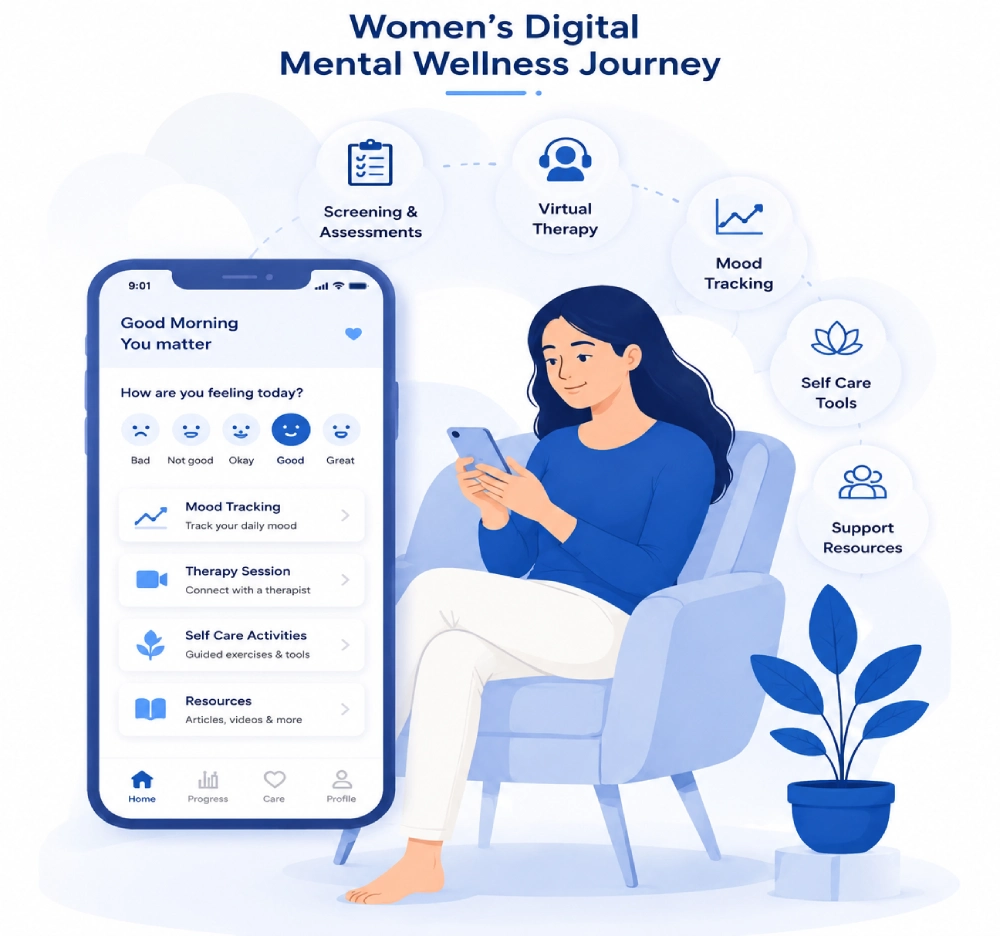
Women’s mental health represents one of the fastest-growing verticals in digital healthcare and one of the most underserved from a technology standpoint. Women experience unique mental health challenges driven by hormonal fluctuations, reproductive transitions, societal pressures, and gender-specific stressors. According to the National Institute of Mental Health, women are twice as likely to develop anxiety disorders and depression compared to men, yet the platforms built to serve them rarely reflect that clinical reality. For CTOs, digital health founders, and product leads, this gap is not just a healthcare problem it is a product opportunity. This guide explores how technology can close that gap, what the right platform architecture looks like, and how to build women’s mental health solutions that deliver real clinical outcomes.
Building a women’s mental health platform? Get our 30-day technology implementation roadmap. Download the free guide.
The Clinical Reality: Why Women’s Mental Health Demands Specialized Platforms
Women experience distinct mental health challenges that differ from men’s in both prevalence and clinical presentation, and most general-purpose mental health platforms are not designed to reflect these differences. Depression and anxiety affect approximately 1 in 5 women during their lifetime. Eating disorders, PTSD following trauma, and reproductive mood disorders add further clinical complexity. For product teams building in this space, understanding these patterns is the foundation of a platform that earns clinical trust and user retention.
Anxiety and Depression: The Most Prevalent and Most Buildable Use Cases
Anxiety disorders affect women at nearly twice the rate of men. Generalized anxiety disorder (GAD), social anxiety, and panic disorder are the most prevalent. Platforms that integrate mood tracking, CBT-based interactive tools, and provider escalation pathways are directly addressing the highest-volume clinical need in women’s mental health. Building these features correctly with the right clinical logic, not just the right UI, is what separates platforms that achieve outcomes from ones that achieve downloads.
Postpartum and Perinatal Mental Health: A High-Stakes, High-Demand Vertical
Postpartum depression (PPD) affects 1 in 7 women after childbirth, while prenatal depression affects 10–15% of pregnant women. These conditions have measurable impacts on maternal bonding, infant development, and long-term family health outcomes. Yet most perinatal care workflows lack integrated mental health screening. Product teams building for OB/GYN practices, maternal health apps, or hospital systems have a clear, high-value feature gap to address: automated screening integrated into prenatal visit workflows, with real-time provider alerts and care pathway routing.
Trauma-Informed Design: A Technical and Clinical Requirement
Women are disproportionately affected by sexual assault, domestic violence, and childhood trauma, all of which substantially increase risk for PTSD, depression, and co-occurring disorders. Platforms serving this population must go beyond symptom tracking. Trauma-informed platform design means thoughtful UX, safe escalation flows, and clinical integrations that support evidence-based therapies like TF-CBT and EMDR. Getting this architecture right at the build stage is significantly easier than retrofitting it later.
Reproductive Health Integration: The Feature Set Most Platforms Are Missing
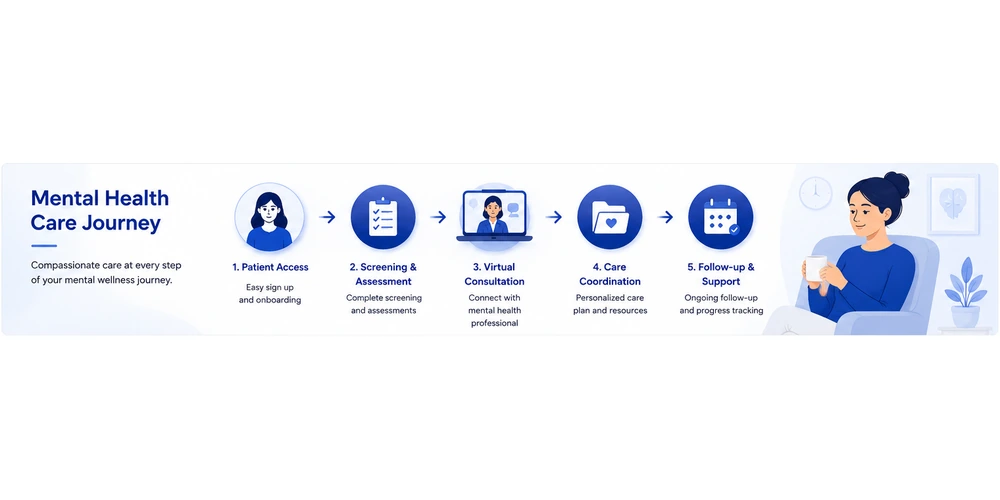
Reproductive transitions profoundly impact women’s mental health across the lifespan from adolescence through menopause, yet most mental health platforms treat reproductive health as a separate domain. For product leaders, this separation is a missed integration opportunity. Platforms that connect menstrual cycle data, pregnancy status, and menopausal markers to mental health scoring and provider workflows are delivering a level of clinical intelligence that generic platforms simply cannot match.
Perinatal Mental Health: Workflow Integration Is the Technical Challenge
Perinatal mental health encompasses the full period from pregnancy through the postpartum phase. The clinical challenge for platform builders is workflow integration, specifically embedding validated screening tools like the Edinburgh Postnatal Depression Scale (EPDS) into existing prenatal visit flows, triggering automated alerts, and routing care plans without adding friction for already-overwhelmed providers. AI-powered screening tools can automate much of this, reducing manual burden while improving early identification rates.
Cycle-Aware Mental Health Scoring: A Differentiated Feature
The menstrual cycle creates predictable hormonal fluctuations affecting serotonin and dopamine neurotransmitters directly tied to mood. Premenstrual dysphoric disorder (PMDD) affects 3–8% of menstruating women with severe, cyclically timed mood symptoms. Cycle-aware mood tracking, where the platform adjusts clinical scoring and provider alerts based on cycle phase, is a technically achievable, clinically validated differentiator that very few platforms have implemented well. This is precisely the kind of feature that earns clinical adoption over generic competitors.
Menopause and Perimenopausal Care: An Underserved Market with Real Product Demand
The perimenopausal transition brings hormonal shifts that trigger mood instability, anxiety, and cognitive changes in a significant proportion of women, yet it is frequently misattributed to “normal aging” and left unaddressed by existing platforms. Connecting women with menopause specialists via telemedicine, with integrated symptom tracking and longitudinal mood data, represents a growing product opportunity in women’s health that Bitcot’s telemedicine software development practice is actively building for.
Digital Mental Health Platform Architecture: What Builders Need to Get Right
Technology is fundamentally reshaping women’s mental health access, but only when the platform architecture is built for clinical workflows, not consumer UX alone. The most common failure mode in mental health platform development is building features that feel good in demos but create friction in clinical environments. From telehealth infrastructure to AI screening to EHR integration, the decisions made at the architecture stage determine whether a platform achieves adoption or abandonment.
Telehealth Infrastructure: Security, Scalability, and Clinical Integration
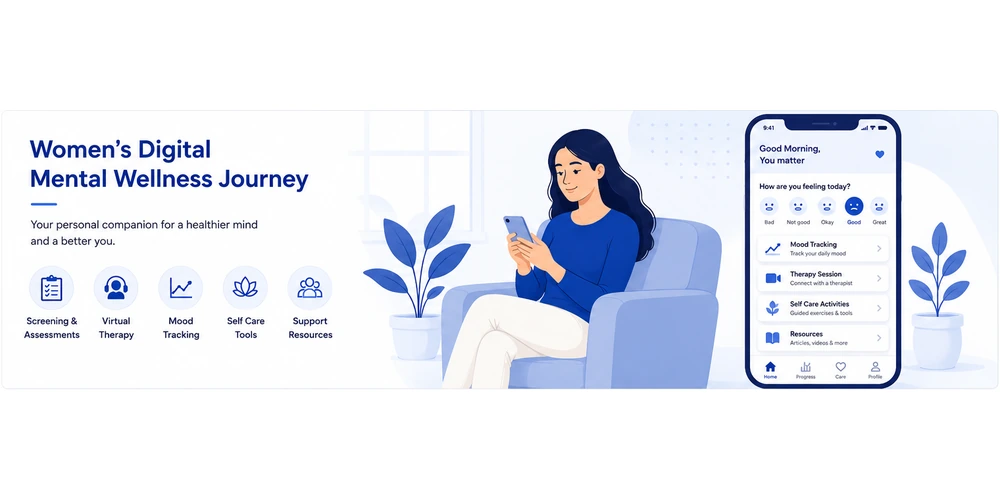
Virtual therapy and psychiatric consultation capabilities are now table stakes for any women’s mental health platform. The real product differentiation lies in how the telehealth layer integrates with clinical workflows, scheduling logic, provider availability, session documentation, and EHR write-back. Secure telehealth platforms require end-to-end encrypted video, role-based access controls, and audit logging built in from day one, not added as an afterthought. Bitcot’s telemedicine software development practice has built these systems for therapists, psychiatrists, and digital health startups serving underserved populations.
Mental Health App Features That Drive Clinical Outcomes, Not Just Engagement
The mental health app market is saturated. Over 10,000 mental health apps exist on app stores today, but most will fail. The ones that succeed are built around evidence-based interventions, CBT modules, DBT skill-building, and peer support with clinical moderation, not just mood logging and breathing exercises. For founders building in this space, the architecture question is not what features to include, but how to build the clinical logic underneath those features so outcomes are measurable and defensible to health system buyers.
AI-Powered Screening: The Highest-Leverage Technical Investment
AI screening tools represent the highest-leverage investment in a women’s mental health platform. Identifying at-risk users for depression, anxiety, and postpartum disorders within routine primary care workflows without adding provider burden is a technically complex problem that most teams underestimate. Machine learning models trained on women-specific clinical data, integrated with existing EHR systems, can stratify risk, predict treatment response, and route care plans automatically. Bitcot’s AI development practice has built these screening architectures for healthcare clients across the US.

Evidence-Based Clinical Features: What Your Platform Needs to Support
Product decisions in mental health platforms must be grounded in clinical evidence. The most defensible platforms, those that win health system contracts, earn clinical trust, and retain users, are built around treatment modalities with strong outcome data. Understanding what the evidence supports helps product teams make better feature prioritization decisions.
Psychotherapy Delivery: CBT, DBT, and ACT as Platform Features
Cognitive behavioral therapy (CBT) has the strongest evidence base for depression, anxiety, PTSD, and eating disorders. Platforms that digitize CBT workflows, thought records, behavioral activation schedules, and exposure hierarchies provide measurable clinical value that justifies enterprise pricing. Dialectical Behavior Therapy (DBT) is particularly relevant for women with emotion regulation difficulties. Acceptance and Commitment Therapy (ACT) maps well to app-based delivery. Each of these modalities has a different technical implementation profile, and getting the UX right requires clinical co-design, not just good design.
Medication Management Workflows: The EHR Integration Imperative
Medication management for women’s mental health, SSRIs, SNRIs, and mood stabilizers requires careful clinical oversight, particularly around pregnancy and breastfeeding considerations. Platforms that integrate prescribing workflows with EHR systems give psychiatric providers the clinical context they need to prescribe safely and monitor outcomes over time. Drug interaction checking, dosage tracking, and medication adherence monitoring are features that move a platform from consumer wellness to clinical-grade infrastructure.
Behavioral and Lifestyle Intervention Modules: Measurable, Scalable, Retentive
Exercise, sleep optimization, and nutritional support have clinical evidence comparable to medication for mild-to-moderate depression and anxiety. Platforms that integrate wearable data, heart rate variability, sleep staging, and activity tracking alongside clinical mood scores create a longitudinal data picture that is genuinely valuable to both providers and platform operators. This is where healthcare technology trends around remote patient monitoring and wearable integration converge with women’s mental health in a technically buildable, commercially valuable way.
Platform Distribution: How Women’s Mental Health Products Reach Users
Understanding how women access mental health support is directly relevant to product distribution strategy. The access pathways that work clinically are also the channels through which B2B mental health platforms earn adoption.
Provider-Facing Distribution: The Enterprise Sales Pathway
Primary care physicians, therapists, psychiatrists, and psychiatric nurse practitioners are the gatekeepers to clinical adoption. Platforms that integrate into existing provider workflows rather than requiring behavioral change from busy clinicians earn adoption faster. This means EHR integrations, clean API layers, and provider dashboards that surface clinically relevant information without cognitive overload. Insurance directory compatibility and billing workflow support further reduce the friction to clinical adoption.
Crisis Infrastructure: A Technical and Ethical Requirement
Any platform serving women with mental health challenges must have a robust crisis pathway. The 988 Suicide and Crisis Lifeline and SAMHSA’s National Helpline are the baseline integrations, but platforms should also implement in-app crisis detection logic, automated escalation flows, and handoff protocols to emergency services. This is not a feature that can be deprioritized for a later sprint. It must be architected from the start.
Employer and EAP Channel: The B2B Revenue Model
Employee Assistance Programs represent one of the most commercially scalable distribution channels for women’s mental health platforms. Employers are actively seeking digital mental health solutions that reduce absenteeism, support caregiving employees, and demonstrate measurable well-being outcomes. Platforms with employer-facing dashboards, anonymized population-level analytics, and EAP workflow integrations are positioned to capture this growing procurement channel.
Workplace Mental Health Features: What Enterprise Buyers Are Looking For
Workplace mental health is now a board-level priority for enterprise organizations, and the platforms that win enterprise contracts are the ones that speak the language of HR leaders, benefits administrators, and CHROs, not just clinicians.
The Product Features Workplace Buyers Prioritize
Women in workplaces face compounded stressors, caregiving responsibilities, gender-specific professional barriers, and the cognitive load of managing multiple roles simultaneously. Enterprise mental health platform buyers are looking for features that address these realities: flexible access that works around caregiving schedules, manager training modules, early intervention tools, and reporting dashboards that demonstrate program ROI without compromising individual privacy. Perfectionism, impostor syndrome, and burnout are high-prevalence presentations in high-achieving professional women, and platforms that address these specifically, rather than offering generic stress management content, win enterprise adoption.
Building for Organizational Buyers Without Compromising Individual User Trust
The core tension in workplace mental health platform design is between organizational visibility and individual privacy. Employers want population-level data; employees need assurance that their personal disclosures are protected. Solving this architecturally through aggregate-only reporting, role-based data access, and transparent privacy controls is a product design challenge that requires both technical expertise and clinical ethics input. Getting this right is a competitive differentiator in enterprise sales.
Technology Integration in Mental Healthcare
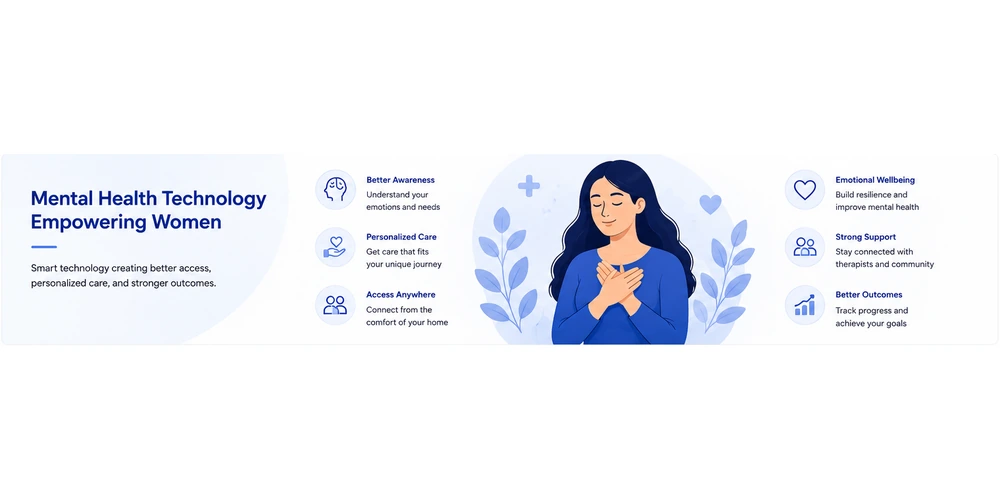
Seamless technology integration is what separates platforms that achieve clinical adoption from those that achieve only app store presence. The integration layer, EHR connectivity, data security architecture, and emerging technology readiness are where product decisions made early have the largest long-term impact.
EHR Integration: The Non-Negotiable for Clinical-Grade Platforms
Integrated mental health EHR systems are the connective tissue of any platform serving clinical environments. Psychiatric history, diagnoses, medications, therapy notes, and treatment plans must be accessible in real time across the care team, primary care physicians, psychiatrists, therapists, and care coordinators. Platforms that achieve true EHR interoperability through HL7 FHIR-compliant APIs unlock care coordination capabilities that standalone apps simply cannot replicate. Bitcot’s EHR software development practice builds these integrations for healthcare clients across the US, supporting both greenfield builds and legacy system modernization.
Data Security Architecture: Building Trust at the Infrastructure Level
Secure patient data is the foundation of any trusted mental health platform. Protected health information, particularly sensitive mental health data, requires encryption at rest and in transit, secure authentication, role-based access controls, and comprehensive audit logging. Regular penetration testing and vulnerability assessments are operational requirements, not one-time checkboxes. Business Associate Agreements must be in place with every third-party vendor in the data flow. Women disclosing sensitive mental health information deserve platforms built with security as a first principle, not a compliance afterthought. Platforms built for healthcare settings should be designed with awareness of HIPAA guidelines to ensure appropriate handling of protected health information.
Future Architecture: What to Build For Now
Emerging technologies are creating new clinical capabilities in women’s mental health that forward-thinking product teams should be architecting for today. Remote patient monitoring that tracks physiological signals, heart rate variability, sleep quality, and activity patterns can predict mood episodes before they manifest as crises. Virtual reality therapy is proving effective for anxiety and PTSD treatment in controlled settings. Precision psychiatry using biomarkers and genetic data to personalize medication selection is moving from research to clinical practice faster than most platform roadmaps anticipate. AI-powered digital therapeutics that deliver evidence-based interventions autonomously are expanding access beyond the capacity of human providers. Bitcot’s healthcare AI development practice is building these capabilities into clinical platforms today.
| Mental Health Technology | Key Benefits for Women | Implementation Considerations |
|---|---|---|
| Telehealth Platforms | Geographic access, appointment flexibility, and reduced travel burden | Requires reliable internet, a cross-state licensing strategy, and secure data architecture |
| Mental Health Apps | Continuous support, mood tracking, evidence-based coping tools, and scalability | Clinical oversight required, data privacy essential, engagement architecture critical |
| EHR Integration | Care coordination, medication safety, comprehensive records, and provider communication | FHIR/HL7 interoperability required, workflow integration complex, standardization needed |
| AI Screening Tools | Early detection, risk stratification, personalized care pathways, and scalability | Women-specific training data needed, clinical validation required, oversight essential |
| Wearable Monitoring | Real-time physiological data, pattern detection, and continuous longitudinal engagement | Data interpretation requires clinical logic, and privacy architecture must be designed upfront |
Conclusion
Women’s mental health is one of the most significant unmet needs in digital healthcare, and the technology gap between clinical reality and platform capability is closing fast. For CTOs, digital health founders, and hospital product leaders, this is not just a social imperative. It is a product category with accelerating market demand, clear clinical evidence to build against, and enterprise buyer urgency that is translating into real procurement budgets.
The platforms that will lead this space share a common architecture: EHR-integrated clinical workflows, AI-powered screening and personalization, trauma-informed UX, reproductive health data integration, and enterprise-grade data security built in from day one. They are designed for the clinicians who prescribe them, the employers who procure them, and the women who depend on them, with none of these audiences compromised in favor of another.
Bitcot has spent over a decade building exactly these kinds of platforms: AI-powered mental health apps, telehealth systems, EHR integrations, and AI mental health chatbots for digital health startups, hospital systems, and enterprise wellness platforms across the US. Our 200+ engineers bring both technical depth and healthcare domain expertise to every engagement, with 3,000+ projects delivered and a 5.0 Google rating.
If you are building a women’s mental health platform and want a technology partner who understands both the clinical requirements and the engineering complexity, the conversation starts here. Our discovery process is complementary, designed to give you strategic clarity before you commit to full-scale development.
Build Women’s Mental Health Technology That Delivers Clinical Outcomes
Bitcot combines deep healthcare domain expertise with secure, scalable software development to help digital health founders and hospital product teams build platforms that earn clinical trust. From AI-powered telehealth to EHR-integrated mental health workflows, we build what the market needs, not just what looks good in a demo. 200+ engineers. 10+ years of healthcare experience. 3,000+ projects delivered. 5.0/104 Google rating.
Frequently Asked Questions (FAQs)
What type of mental health apps does Bitcot build for women's healthcare?
Bitcot builds custom digital mental health platforms tailored to women’s healthcare needs including telehealth apps, postpartum depression screening tools, mood tracking apps, AI-powered risk assessment tools, and EHR-integrated care platforms. Every solution is designed around clinical workflows and real user needs.
How long does it take to develop a women's mental health app?
Development timelines vary by scope and complexity. A focused MVP such as a mood tracking app with telehealth integration typically takes 8–16 weeks. A full-scale platform with AI screening, EHR integration, and multi-provider support may take 6–12 months. Bitcot provides a detailed project roadmap before development begins.
What features should a women's mental health platform include?
Key features include mood and symptom tracking, virtual therapy and psychiatry access, AI-powered mental health screening, cycle-aware health logging, secure provider messaging, appointment scheduling, self-care and CBT/DBT exercise libraries, peer support communities, and patient portal access to health records.
How does Bitcot handle data privacy and security in mental health apps?
Bitcot builds mental health apps with privacy-by-design principles including end-to-end encryption, secure authentication, role-based access controls, and audit logging. Security assessments are conducted throughout the development lifecycle to identify and resolve vulnerabilities before launch.
Can Bitcot integrate AI into a women's mental health platform?
Yes. Bitcot’s AI development team builds machine learning models for mental health risk screening, symptom pattern detection, and personalized intervention recommendations. These tools are designed to support clinical decision-making, not replace it, and are validated against real-world clinical datasets before deployment.
Does Bitcot build EHR-integrated mental health platforms?
Yes. Bitcot develops EHR and EMR integrations that connect mental health apps with existing clinical systems, enabling coordinated care across providers. This includes HL7/FHIR-based integrations, patient portal development, and clinical decision support features built directly into provider workflows.
Can Bitcot build telehealth features into a mental health app?
Absolutely. Bitcot builds telehealth modules that support video, phone, and secure text-based consultations between women and licensed mental health providers. Features include scheduling, waiting rooms, session recording options, and multi-provider coordination all within a single platform.
What makes Bitcot's approach to women's mental health app development different?
Bitcot combines deep healthcare software development experience with gender-informed UX design. We understand that women’s mental health apps require sensitivity around reproductive health data, perinatal care workflows, and cycle-aware features and we build those considerations into architecture and design from day one.
Can Bitcot build a postpartum depression screening tool?
Yes. Bitcot has experience building AI-assisted perinatal mental health screening tools that integrate into prenatal care apps and clinical workflows. These tools use validated screening instruments and flag at-risk patients for early clinical follow-up, helping care teams intervene sooner and improve maternal outcomes.
How do I start a women's mental health app project with Bitcot?
Connect with the Bitcot team through our contact page. We begin every engagement with a free 30-day technology roadmap session covering feature scoping, technical architecture, timeline, and cost estimation so you have a clear development plan before any code is written.