Key Takeaways:
Healthcare digital transformation is no longer optional. Here’s what leaders should remember:
- Assess readiness and set priorities: Understand your current digital maturity and focus where value lands fastest.
- Embrace the three pillars: Healthcare software, mobile apps, and AI agents drive operational efficiency, patient engagement, and outcomes.
- Start small, scale smart: Pilot, measure, expand. Sustainable transformation beats big-bang projects.
- Keep patients at the center: Every investment should improve access and personalize care.
- Collaborate and partner: The right partners accelerate the journey and reduce execution risk.
If you’ve visited a doctor lately, chances are some part of that experience felt different than it did even a few years ago. Maybe you booked your appointment online, checked in with a QR code, spoke to a provider over video, or saw your lab results instantly on a mobile app.
That’s not just convenience. That’s healthcare digital transformation showing up in everyday care.
In 2026, this shift isn’t optional anymore. U.S. healthcare organizations are pouring billions into digital health, telehealth is now baseline rather than a pandemic-era workaround, and AI-powered tools have moved from pilots to everyday clinical use.
Patients, especially Millennials and Gen Z, push for seamless, tech-driven experiences that match what they already get from banking, shopping, or travel apps. Healthcare leaders, meanwhile, are under pressure to cut costs, combat clinician burnout, and keep up with regulatory demands.
The message is clear. Staying paper-based or relying on outdated systems isn’t just inconvenient. It’s a competitive disadvantage.
This guide gives you a full 360° view of how healthcare digital transformation is reshaping U.S. care delivery right now. We’ll cover core software like EHRs and hospital management systems, mobile apps that connect patients with providers, and AI solutions redefining diagnostics, billing, and care coordination.
We’ll also look at the U.S. market, success stories, and what the next decade could bring. Whether you’re a hospital CEO planning the next big investment, a startup founder building the next healthcare app, or a clinician wondering how AI might actually make your day easier, this guide will help you cut through the buzzwords.

Why Healthcare Digital Transformation Is Reshaping the U.S. in 2026
Let’s start with the numbers.
The global digital transformation market in healthcare was valued at roughly USD 87 billion in 2025 and is projected to reach USD 258 billion by 2033, growing at a 14.58% CAGR, per SNS Insider’s November 2025 forecast. The U.S. share alone is expected to climb from roughly USD 28 billion in 2025 to nearly USD 77 billion by 2033.
Layer on rapid clinical AI adoption. AJMC research published in January 2026 found that nearly two-thirds of U.S. hospitals on Epic EHR systems had adopted ambient AI documentation tools by 2025.
A randomized trial published in NEJM AI validated the burnout and documentation-time benefits clinicians had been reporting anecdotally for two years. The conclusion is simple. Digital health is no longer experimental. It’s operational infrastructure.
So why can’t healthcare leaders ignore this anymore? Because healthcare digital transformation in 2026 is no longer about “nice-to-have” tools. It’s about survival and growth.
CEOs, CTOs, and hospital administrators face intense pressure to meet rising patient expectations, reduce clinician burnout, streamline operations, and comply with new regulatory frameworks. Falling behind in digital maturity doesn’t just mean inefficiency. It can mean losing patients, losing staff, and losing ground to competitors moving faster.
Also Read: Top Healthcare Technology Trends in 2026: The Future of Medical Innovation
At the heart of this transformation are three core pillars:
- Healthcare software that powers hospitals, clinics, and research organizations
- Mobile apps that keep patients engaged, connected, and in control of their care
- AI solutions that help providers work smarter, diagnose faster, and personalize treatment
Together, these pillars are redefining the experience of care delivery, not just improving how healthcare operates.
COVID-19 was the great accelerator. What started as emergency telehealth, remote patient monitoring, and digital prescriptions has now solidified into everyday practice.
Patients who got used to convenience aren’t willing to go back. Providers who embraced digital workflows are seeing long-term benefits in efficiency and patient satisfaction.
The competitive landscape tells a clear story too. Digital-first health systems consistently outperform those clinging to legacy models, attracting more patients and delivering better outcomes.
Zooming out, the United States is racing to keep pace with other developed nations. Countries like Estonia and Denmark have already built fully digital health ecosystems with nationwide interoperability.
As the National Academy of Medicine noted in its 2026 perspective, U.S. healthcare continues to lag in developing the digital infrastructure needed to realize what newer technologies make possible. For organizations weighing where to begin, our digital transformation services start with a discovery sprint that maps current systems against measurable outcome goals.
Finally, there’s the demographic shift. Millennials and Gen Z now make up a large portion of the patient population, and they’ve grown up in a digital-first world.
They don’t want faxed prescriptions or phone-only scheduling. They expect mobile-first access, telehealth options, and AI-enabled personalization, just like they get from Amazon, Uber, or their banking apps.
In short, 2026 is the year health digital transformation stops being optional. It’s the year software, apps, and AI agents stop supporting healthcare and start leading it.
What Is Digital Transformation in Healthcare and Why It Matters
“Healthcare digital transformation” is one of those phrases that gets thrown around a lot. But what does it actually mean?
At its core, it’s not just about adding a new app or moving files to the cloud. It’s about rethinking how care is delivered, how patients interact with providers, and how technology is used to improve outcomes, lower costs, and make the system more sustainable.
Think of it like this:
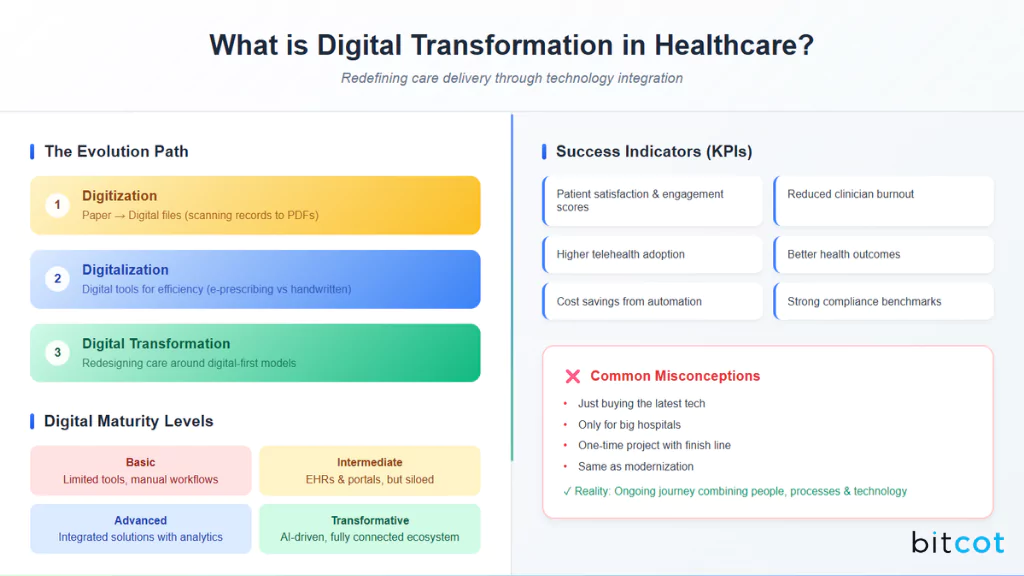
- Digitization is the first step. Turning paper into digital files, like scanning medical records into PDFs.
- Digitalization goes further. Using digital tools to make processes faster, like electronic prescribing instead of handwritten scripts.
- Digital transformation is the big leap. Redesigning healthcare around digital-first models, where software, mobile apps, AI agents, and connected devices work together in ways that weren’t possible before.
The evolution of healthcare technology tells this story well. We’ve gone from stacks of paper charts, to EMRs and EHRs, to cloud platforms enabling interoperability, and now to AI-driven healthcare that predicts, personalizes, and automates care.
Each stage didn’t just add convenience. It reshaped how patients and providers interact.
Here’s an important distinction. Health care digital transformation isn’t the same as modernization.
Upgrading an old hospital system or installing a new billing module is modernization. It keeps things current. Transformation is a mindset shift. It asks: how can we use technology to deliver care in entirely new ways?
How do you know if transformation is actually working? Common markers include improved patient satisfaction, reduced clinician burnout, higher telehealth adoption, fewer readmissions, cost savings from automation, and strong compliance benchmarks.
Healthcare organizations often measure progress using digital maturity levels. Here’s how most U.S. health systems break down across the four stages, and what each level looks like in practice.
| Maturity Stage | What It Looks Like in Practice | Common Bottleneck | Typical Next Step |
| Basic | Paper records, manual scheduling, fax-driven referrals | No EHR or siloed EHR | EHR consolidation and patient portal launch |
| Intermediate | EHR in place, basic portal, limited interoperability | Disconnected systems and duplicate data entry | FHIR API enablement and cloud migration |
| Advanced | Integrated cloud platform, BI dashboards, RPA in admin workflows | AI adoption stuck at pilot stage | Move pilots into production with governance |
| Transformative | AI agents in workflow, predictive analytics, ambient documentation, real-time data exchange | Talent and change management capacity | Continuous optimization and outcome measurement |
Plenty of misconceptions hold organizations back. Some leaders think transformation is just about buying the latest tech. Others believe it’s only for big hospitals, or that it’s a one-time project with a finish line.
The reality is that it’s an ongoing journey combining people, processes, and technology. It’s as much about culture change as it is about software.
What most teams get wrong: Buying a platform before defining workflows. A platform sale closes faster than a discovery sprint, but the workflow questions still come due. They just surface in production instead of design.
What Drives Healthcare Digital Transformation in the U.S.
If you ask five different healthcare leaders why they’re investing in healthcare digital transformation, you’ll hear five different answers. Together, those answers reveal the bigger picture.
The U.S. healthcare system is under pressure from all sides: patients, regulators, payers, providers, and technology itself. Three pressures matter more than the rest, and they’re driving most of the real spending.
- Regulatory pressure keeps raising the floor CMS interoperability and patient-access rules now require certified EHRs to expose FHIR APIs and give patients programmatic access to their data. Combined with HIPAA, FDA digital health guidance, and state-level telehealth laws, the bar for “minimum viable digital” has moved from optional to legally required.
- Clinician burnout is the biggest workforce risk in U.S. healthcare: The country faces a critical shortage of doctors and nurses, and the existing workforce is burning out under heavy admin loads. Ambient AI scribes, automated scheduling, and AI documentation tools aren’t efficiency upgrades anymore. They’re the difference between retaining clinicians and watching them leave.
- The AI and engineering talent shortage is reshaping how systems modernize: Demand for clinicians who understand AI and engineers who understand healthcare has outpaced supply. Most health systems we work with now buy or partner their way to AI capability, because internal hiring cannot close the gap fast enough.
Beyond those three, several other pressures push in the same direction:
- Rising patient expectations: Patients compare healthcare experiences to Amazon, Netflix, and Uber, not other hospitals.
- Cost reduction and efficiency: RPA, AI-driven analytics, and cloud platforms cut waste and streamline billing across payers and providers.
- Telehealth as baseline: Virtual visits are now a standard channel, not a pandemic-era exception.
Value-based care mandates: Outcome-based reimbursement requires strong digital infrastructure for analytics and risk stratification. - Population health and SDOH: Population platforms now track social determinants like housing, food security, and transportation alongside medical records.
- Healthcare consolidation: Mergers create massive health systems needing standardized platforms across multiple sites.
- Health insurance evolution: Alternative payment models pressure providers to offer seamless claims, real-time benefits tracking, and transparent billing.
- The pharmaceutical industry needs Pharma’s shift to real-world evidence and AI-driven drug discovery requires deep provider integration.
- Medical device connectivity: FDA’s push for connected devices is accelerating medical IoT adoption.
- Environmental sustainability: ESG commitments are driving digital solutions for energy management and paperless workflows.
The takeaway: healthcare isn’t transforming for one reason. Every pressure point is pushing in the same direction.
What Technologies Power Healthcare Digital Transformation
Strategy without the right stack stalls. Here are the technologies actually doing the work in 2026.
Cloud Computing in Healthcare
Hospitals are moving to the cloud for scalability, security, and interoperability. The use cases span EHR hosting, cross-hospital data exchange, and AI workloads that on-premise infrastructure can’t handle economically.
Most large systems mix cloud providers to balance cost, redundancy, and compliance. Migration challenges remain real: legacy systems, data silos, and HIPAA all complicate the move.
Phased migration and encryption-first design are still the best practices. Disaster recovery and business continuity planning are now baked into cloud strategies, not added later.
FHIR and HL7: The Plumbing That Makes Everything Else Possible
Every healthcare digital transformation conversation eventually hits the same wall. Two systems that need to talk to each other cannot, or only can after months of custom development.
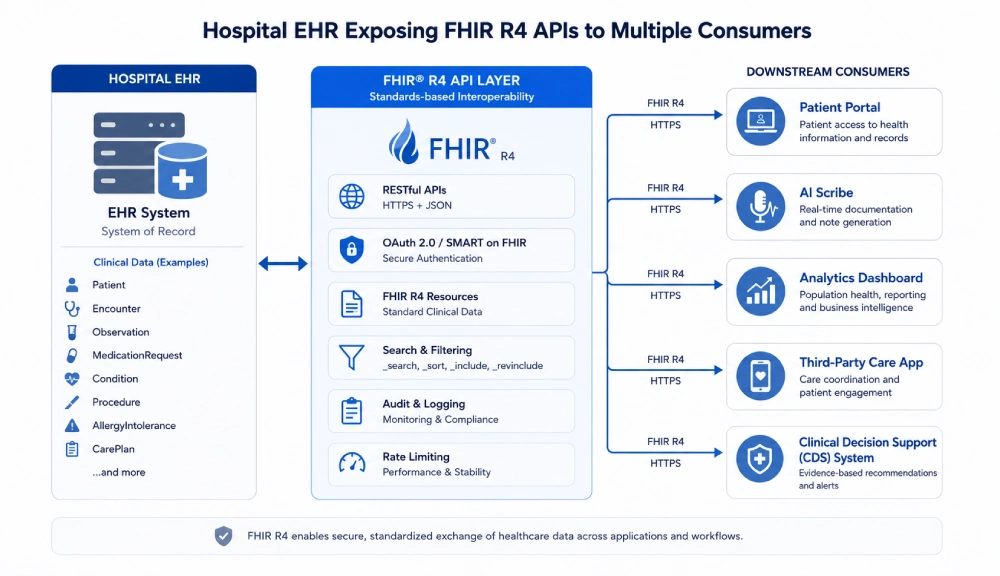
That’s the interoperability problem, and FHIR (Fast Healthcare Interoperability Resources), currently in R4, is the standard built to solve it. Here’s what matters in practice:
- HL7 v2 is still the workhorse for hospital-internal messaging. It’s not going away, but it wasn’t designed for modern APIs or mobile apps.
- FHIR R4 is the modern API standard. It’s how EHRs expose patient data to apps, dashboards, AI agents, and analytics platforms. The eCQI Resource Center maintains the U.S. implementation guides.
- SMART on FHIR layers OAuth2 authentication on top of FHIR. It’s the framework that lets a third-party app plug into Epic or Cerner securely.
CMS rules now require certified EHRs to expose FHIR APIs. That’s the regulatory tailwind.
The practical tailwind is that nearly every modern AI agent, mobile app, or analytics tool we build for healthcare clients now reads and writes through FHIR. The standard has moved from optional to default.
What most teams get wrong: Assuming FHIR alone solves interoperability. It standardizes the format, not the meaning.
Two hospitals can both expose a FHIR Observation resource for “blood pressure” and still encode the data slightly differently. Real interoperability needs both the standard and a clean data-governance layer on top of it.
Mobile Health Apps (mHealth)
The smartphone is now a pocket-sized healthcare hub. Progressive Web Apps are faster to deploy. Native apps allow deeper device integration.
Apps that cross into medical device territory must meet FDA and app store requirements. ADA and WCAG compliance also matters because patients with disabilities are part of every patient population.
AI and Machine Learning
Artificial intelligence is no longer futuristic. It’s at the center of modern care delivery.
Key applications include predictive analytics for identifying high-risk patients, generative AI and LLMs for documentation and care planning, computer vision for radiology, and federated learning for training models on decentralized data without compromising privacy. Modern AI agent stacks now combine LangGraph and CrewAI with foundation models on AWS Bedrock or Azure OpenAI.
Bias and ethics oversight has matured too. Hospitals expect AI tools to demonstrate fairness across populations and provide explainability for clinical decisions.
IoT and Remote Patient Monitoring
Connected devices extend healthcare beyond the hospital walls. Use cases include wearables for chronic care, FDA-approved digital therapeutics, smart-home ambient sensors for elderly care, and stronger device authentication as IoT footprints expand.
Robotic Process Automation (RPA)
RPA reduces administrative burden in billing, prior authorizations, and documentation. When paired with AI, it becomes Intelligent Process Automation, capable of handling workflows that require judgment.
5G and Edge Computing
Connectivity is the lifeblood of digital healthcare. Low-latency telehealth, edge AI for local image processing, and dedicated private 5G inside hospital campuses are all gaining traction.
Natural Language Processing (NLP)
NLP unlocks value from unstructured medical text. Applications include clinical documentation improvement, voice workflows directly into EHRs, and multilingual support for diverse patient populations.
Advanced Analytics and Business Intelligence
Real-time operational dashboards, predictive modeling for patient surges and staffing, and data lakes that consolidate clinical and financial data are now table stakes. The bar has moved from “do you have a dashboard” to “does your dashboard drive decisions.”
Digital Transformation Solutions for Healthcare: The Software Landscape
This is where digital transformation solutions for healthcare get specific. It’s not about new tech for its own sake. It’s about putting the right software in place to make hospitals, clinics, and providers more efficient, connected, and patient-centered.
Electronic Health Records (EHR/EMR)
EHRs are the foundation of digital healthcare. They’ve evolved from simple digital charts to intelligent systems that guide clinical decisions.
Epic, Oracle Health (formerly Cerner), athenahealth, NextGen, and Allscripts dominate the U.S. market. Each has its own integration strengths and limitations.
Key considerations include interoperability across providers, AI-enabled features like ambient scribes and predictive care suggestions, FHIR R4 readiness, physician usability, and specialty customizations for pediatrics or oncology. Clean data migration strategies matter most when replacing a legacy system.
Hospital Management Software (HMS)
HMS platforms act as the operating system for hospitals. They handle staff scheduling, patient flow and bed management, asset and equipment tracking, and facility-level modules like energy and security.
Telemedicine Platforms
Telemedicine is mainstream now. Hybrid care, mixing in-person and virtual visits, is the dominant pattern across most U.S. specialties.
Core features include secure video, e-prescriptions, payments, scheduling, EHR integration, and HIPAA-aligned engineering throughout. Dermatology, radiology, and psychiatry lead the adoption curve.
Clinical Decision Support Systems (CDSS)
CDSS provides clinicians with evidence-based guidance at the point of care. Capabilities include AI-driven diagnostic insights, drug interaction checks, guideline automation, real-time alerts, and standardized clinical pathways.
Revenue Cycle Management (RCM) Software
RCM keeps providers financially healthy. Modern RCM platforms automate claims and prior-auth, surface denial patterns proactively, deliver transparent patient billing, and verify eligibility in real time.
Pharmacy Management Systems
Modern pharmacy platforms go beyond refills. They handle inventory and tracking, telepharmacy, dispensing automation and robotics, and pharmacogenomics-driven prescribing.
Population Health Management Platforms
These tools power the shift to value-based care. Functions include risk stratification, care-gap detection, SDOH tracking, and quality reporting for payers and regulators.
Care Coordination Platforms
Care coordination tools bridge communication gaps across providers and settings. They enable multi-disciplinary care planning, unified care plans, and clean referral management.
Laboratory Information Management Systems (LIMS)
LIMS solutions keep labs running efficiently. They provide automated sample tracking, direct equipment integration, and rigorous quality control.
Imaging and PACS Systems
Medical imaging benefits enormously from healthcare digital transformation. Modern PACS supports optimized workflows for high-volume imaging data, AI-powered analysis assisting radiologists, and mobile and cloud access for remote review.
What Are the Most Effective Healthcare Mobile Apps for Patients and Providers
Mobile apps are at the heart of healthcare’s digital transformation. They bridge the gap between care delivery and modern patient expectations.
Patient-Facing Apps
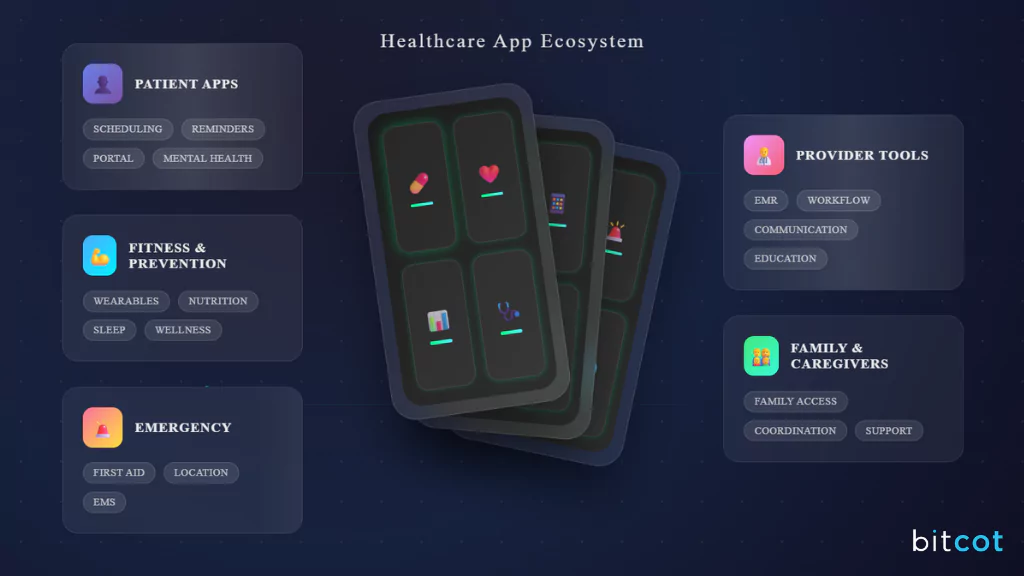
Patients today expect the same simplicity from healthcare apps that they get from their favorite social or banking apps. Effective apps combine scheduling and reminders, chronic disease tracking, mental health tools, and patient portal integration.
The best ones also layer in peer support, gamified adherence rewards, multilingual support, and offline functionality for rural and low-connectivity users.
Provider-Facing Apps
For clinicians, mobile apps reduce friction and improve accuracy. Common capabilities include mobile EMR access, streamlined charting, secure clinical messaging, and mobile decision-support tools.
Shift scheduling and CME tracking apps round out the daily clinician toolkit.
Fitness and Preventive Care Apps
Prevention is the new frontier. Apps integrate with wearables for activity, heart rate, and sleep, and connect to employer-sponsored wellness programs and HSA accounts.
AI-driven nutrition planning and sleep optimization tools are no longer novelties. They’re expected features for consumer health products.
Caregiver and Family Apps
Healthcare involves more than the patient. Family-access apps, caregiver-support tools, and pediatric and elderly care coordination apps keep the wider care ecosystem aligned.
Emergency and First Aid Apps
In urgent situations, mobile apps can save lives. Location-based hospital finders, first-aid step-by-steps, EMS integration, and stored emergency contacts all reduce time-to-help in critical moments.
How AI and Automation Transform U.S. Healthcare Operations
AI and automation are no longer “nice-to-have” experiments. They’re becoming the backbone of modern operations.
We group them into four categories where they produce the most measurable value.
Clinical AI
- Predictive analytics for disease prevention flag high-risk patients early using EMR data, lifestyle factors, and wearable signals.
- AI in radiology and imaging lets radiologists work side by side with tools that detect tumors, fractures, or anomalies faster and sometimes more accurately.
- Personalized treatment planning integrates genomic data, clinical history, and lifestyle factors into customized care pathways.
- AI-driven infection control predicts outbreaks, tracks antibiotic usage, and optimizes stewardship programs.
- AI-powered drug discovery accelerates molecular modeling, reducing R&D timelines and cost.
Operational AI
- RPA for admin tasks streamlines claims processing, billing, and documentation, replacing hours of manual work with minutes of higher-accuracy execution.
- AI-powered scheduling and resource allocation optimizes OR schedules, staff shifts, and resource use across large health systems.
- Automated coding and Clinical Documentation Improvement (CDI) reduces billing errors and ensures compliance.
- Clinical trial matching scans EHRs to identify eligible patients faster, with better cohort diversity.
Patient-Facing AI
- AI chatbots for queries and triage handle scheduling, symptom checks, FAQs, and triage 24/7.
- Virtual nursing assistants support patients at home with medication questions, symptom monitoring, and post-op care.
- AI-powered RPM with IoT devices tracks vitals in real time and alerts providers when patient risk spikes.
Governance and Safety
Hospitals are setting up AI ethics committees to monitor bias, transparency, and compliance. Governance frameworks ensure AI recommendations are explainable and clinically sound.
Explainable AI (XAI) lets providers see why an algorithm made a recommendation. That visibility is what turns AI from a black box into a trusted clinical collaborator.
What most teams get wrong: Picking the AI model before mapping the data flow. The hardest part of healthcare AI isn’t training the model. It’s getting clean, structured data out of the EHR and back in safely.
Start with the integration architecture, then choose the model. That single sequencing decision saves months of rework.
What AI Agents Are Doing in Healthcare Right Now
Through 2025, most healthcare AI was either a chatbot answering scripted questions or a predictive model embedded in a clinician’s dashboard. That changed in 2026.
Heathcare ai agents now take ownership of multi-step workflows end-to-end. They pull data from the EHR, apply clinical or operational rules, execute the task, and escalate only when a human is genuinely needed.
Here’s the simplest way to understand the difference. A chatbot answers. An agent acts.
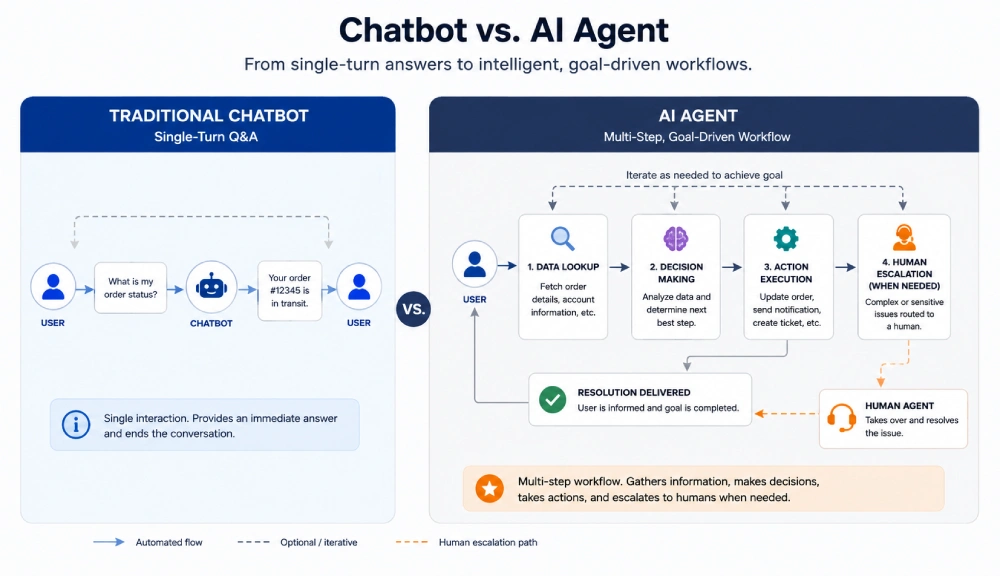
Where AI agents are producing real, measurable value in U.S. healthcare right now:
- Patient intake and scheduling: Voice and chat agents handle inbound calls, verify insurance, route appointments by provider and acuity, and write back to the EHR without a human touch.
- Prior authorization: Agents pull required documentation from the chart, draft the authorization request, submit it to the payer portal, and follow up on status. This single workflow saves health systems six- and seven-figure administrative costs annually.
- Clinical documentation (ambient AI scribes): Microsoft Dragon Copilot, Nuance DAX, Suki, and Nabla are now in production at scale. AJMC research found nearly two-thirds of U.S. hospitals on Epic adopted ambient AI scribes by 2025. Intermountain Health reported a 27% reduction in note time per appointment for clinicians who used the tool for 10 or more encounters.
- Revenue cycle. Agents close coding gaps, flag denied claims, draft appeals, and reconcile billing exceptions.
- Patient outreach and care-gap closure: Agents identify overdue screenings, contact patients across channels, and book follow-ups, with handoffs to human staff for clinical complexity.
The honest reality: most agent deployments still hit friction at integration. The agent works in demo. It struggles when it needs to read structured data from an aging EHR through a vendor API that wasn’t designed for write-back.
This is exactly why we lead every healthcare AI engagement with an integration audit before touching the model layer. The model is rarely the bottleneck. The data plumbing is.
If you’re weighing where AI agents and workflow automation could fit in your stack, the right first question isn’t “which LLM should we use.” It’s “which workflow is bleeding the most clinician hours, and can we get clean data in and out of the EHR for it?”

Why Digital Transformation Benefits Every Healthcare Stakeholder
Healthcare digital transformation rarely benefits just one group. When it lands well, it lifts every party connected to a patient’s care.
Here’s what we actually see across the U.S. clients we work with:
- Patients stop chasing paper. Unified records, wearable integration, and AI-driven personalization shift care from reactive to proactive. The patients who feel the difference fastest are those managing chronic conditions, where daily monitoring used to require three separate apps.
- Providers get their evenings back. The clinicians we’ve seen benefit most aren’t using more tools, they’re using fewer. An ambient AI scribe plus mobile EMR access plus one good decision-support tool consistently outperforms a dozen scattered apps.
- Hospitals and clinics see real margin improvement when they sequence modernization correctly. The biggest unlock is rarely a flashy AI feature. It’s usually fixing bed management, discharge planning, and prior auth, which collectively recover thousands of clinician hours per year.
- Insurers see the highest ROI not from AI fraud detection, but from real-time eligibility verification that catches denials at the front end. Smoother billing also reduces patient calls, cutting payer overhead at scale.
- Pharma uses real-world evidence from wearables and EHRs to compress trial timelines. Health systems that integrate cleanly with pharma data partners often unlock revenue streams most leaders overlook.
- Public health detect disease patterns earlier, predict outbreaks faster, and allocate resources more effectively. The biggest post-COVID shift is that digital surveillance is no longer temporary infrastructure.
- The wider healthcare ecosystem benefits from smoother data exchange across hospitals, labs, pharmacies, and insurers as FHIR standards, APIs, and cloud infrastructure mature.
- Societybenefits when care becomes easier to access regardless of geography. Telehealth, mobile care platforms, and multilingual tools are helping rural and underserved communities navigate healthcare with less friction.
- Regulators gain better visibility through real-time dashboards and automated reporting. Standardized digital reporting improves the accuracy of HIPAA, CMS, and FDA oversight while reducing administrative lag.
- Medical device manufacturers use connected-device and IoT data to monitor performance, identify issues earlier, and improve future products through stronger post-market surveillance.
The pattern across all of these: technology embedded thoughtfully makes the system smarter, safer, and more connected. When transformation skips the workflow design step, the same technology can do the opposite.
What Are the Main Challenges and Risks in Digital Healthcare Adoption
Healthcare digital transformation promises enormous benefits, but the journey has real roadblocks.
- Data privacy and HIPAA alignment. Every digital system, from mobile apps to EHRs, must align with HIPAA and other privacy frameworks. A single breach damages trust and triggers regulatory penalties.
- High upfront implementation costs. Modernization, AI integration, and cloud migration carry real upfront expenses. ROI often pays off long-term, but smaller practices may struggle with initial funding.
- Staff resistance and training gaps. Doctors, nurses, and administrators may resist change if new tech feels complex or time-consuming. User-friendly design and structured change management are essential.
- The digital divide. Not all patients have equal access to broadband, devices, or digital literacy. Rural communities are most at risk of being left behind.
- Algorithm bias and health equity. AI trained on incomplete datasets can reinforce inequities. Fairness and transparency must be designed in from the start.
- Vendor lock-in. Switching EHRs or integrating with legacy systems is painful. Lock-in limits flexibility and inflates costs over time.
- Regulatory complexity across jurisdictions. Organizations operating across state or national borders navigate HIPAA, GDPR, FDA, and state-level frameworks simultaneously.
- Digital literacy gaps. Even the best tools fail if patients or clinicians can’t use them confidently. Education and support are non-negotiable.
- Clinical liability. Who’s responsible if an AI tool makes a diagnostic error? Legal frameworks are still catching up.
- Change management and workflow disruption. Adopting new systems often disrupts established routines. Without careful sequencing, digital initiatives slow productivity instead of improving it.
- Data quality and standardization. Data without standards is more noise than insight. Interoperability is still a major hurdle.
- Technology obsolescence. Healthcare moves slowly, but technology evolves fast. Systems risk becoming outdated within a few years, requiring continuous upgrade planning.
- Cross-border data sharing. As global healthcare collaboration grows, so does the patchwork of international privacy laws to navigate.
- Ethical considerations. AI tools must follow ethical guidelines: transparent and explainable decision-making, fairness and non-discrimination, and respect for patient consent and data ownership.
The Ransomware Reality: What Healthcare CIOs Are Actually Facing in 2026
Healthcare is the most-targeted industry in U.S. ransomware. Comparitech’s Q1 2026 healthcare ransomware roundup recorded 120 ransomware attacks against U.S. healthcare providers in the first quarter alone, with another 81 hitting healthcare-adjacent businesses.
ScienceSoft projects that 60% of hospitals will experience care disruption from a ransomware attack in 2026, with the average breach cost crossing USD 12 million.
The 2024 Change Healthcare breach reset the playbook. As STAT reported, that single attack compromised personal health information of roughly 100 million Americans, and an AHA survey of nearly 1,000 hospitals found 74% reported direct impact on patient care.
Attackers no longer just encrypt and demand ransom. They exfiltrate first, then double-extort with the threat of public data leak.
What most teams get wrong: Treating HIPAA as a compliance checkbox. HIPAA is the floor, not the ceiling.
The teams who avoid costly breaches treat it as a continuous design constraint, not a final review gate.
What actually works:
- Zero-trust architecture instead of perimeter-based security. Every request authenticated, every connection verified, segmentation between clinical and administrative systems.
- Immutable backups with regular restore testing. A backup you’ve never restored from is not a backup.
- Vendor risk programs: Change Healthcare hit through a third-party vendor. Most healthcare breaches now travel through the supply chain.
- 24/7 monitoring with healthcare-specific SOC: Generic SOC services miss healthcare-specific signals.
- Tabletop exercises that include clinical leadership. Reverting to paper charts during downtime is a clinical decision, not just an IT one.
When we engage on a digital transformation project, security isn’t a phase at the end. It’s part of the architecture conversation on day one.
How Digital Tools Solve Real-World Healthcare Problems
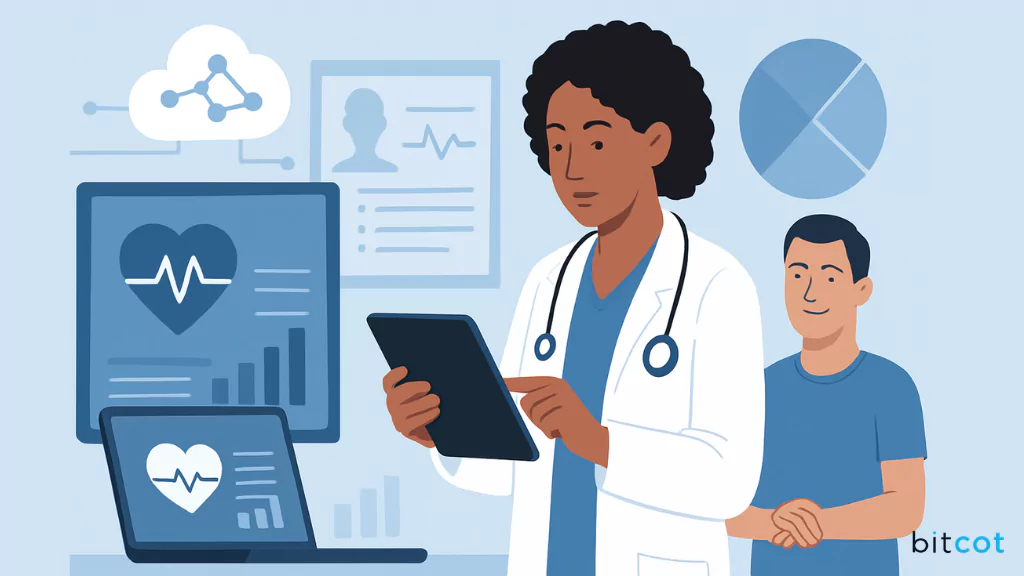
Healthcare digital transformation is a practical, lifesaving set of tools. It addresses real challenges, from chronic disease management at home to hospital workflow optimization.
- Telehealth for non-emergency care: Patients can consult doctors for common illnesses without leaving home, reducing clinic congestion.
- Digital tools for minor injuries: Apps and remote guidance help patients manage cuts, sprains, and minor injuries, often avoiding ER visits.
- Chronic disease management: Wearables, mobile apps, and connected devices monitor diabetes, hypertension, and COPD with real-time insights.
- Reducing clinician workload: AI-powered workflow automation frees clinicians to focus on patients instead of paperwork.
- Mental health crisis management: Teletherapy and crisis hotlines make support more accessible and timely.
- Rural healthcare access: Mobile health units, telemedicine, and connected devices bring care to underserved populations.
- Emergency response coordination: Real-time platforms let hospitals, EMS teams, and first responders coordinate efficiently.
- Medication adherence support: Smart packaging, reminders, and tracking reduce complications and readmissions.
- Addressing workforce shortages: AI tools assist with scheduling, triage, and delegation to maintain care quality despite shortages.
- Reducing health disparities: Targeted interventions and culturally tailored apps ensure equitable care.
- Preventive care enhancement: Predictive analytics flag at-risk patients before complications develop.
- Accelerating clinical research: Digital data collection and AI analysis streamline trials and surface insights faster.
What Hospital Digital Transformation Looks Like in Practice
Hospital digital transformation is its own category because hospitals carry constraints that smaller providers don’t. Larger workforce, legacy infrastructure, multi-site footprints, and 24/7 operations all add complexity.
A real digital transformation hospital program typically runs four tracks in parallel:
- Core systems modernization: EHR, HMS, RCM, and laboratory and imaging systems.
- Interoperability layer: FHIR and HL7 integration so data flows between systems instead of being re-entered.
- AI and workflow automation: Starting with high-volume, low-risk workflows like documentation and prior auth.
- Cybersecurity rebuild: Zero-trust architecture, vendor risk programs, and clinical-leadership tabletop exercises.
Most hospital programs run 18 to 36 months in phases. The biggest variable is interoperability complexity.
What separates hospital programs that succeed from those that stall? Clear executive sponsorship, a discovery-first approach before vendor selection, and change management that treats clinicians as partners rather than end-users.
Real U.S. Healthcare Digital Success Stories
Real examples cut through theory. Here are organizations getting it right and the patterns worth borrowing.
- Mayo Clinic integrates AI into imaging and pathology workflows, improving diagnostic accuracy and reducing turnaround times.
- Cleveland Clinic rapidly scaled telehealth during and after the pandemic, demonstrating how virtual care maintains continuity while expanding access.
- Kaiser Permanente emphasizes patient-centered digital tools, from mobile apps to portals, that let patients schedule, access records, and engage in preventive care.
- Startups tackle niche problems with agility. RPM devices, mental health apps, and chronic disease platforms show how small innovators can move faster than large systems.
- Geisinger Health uses AI to stratify populations, identify care gaps, and optimize interventions at scale.
- Intermountain Health has improved both operational efficiency and clinician experience through integrated data systems, analytics, and ambient AI scribes. Their 27% reduction in note time per encounter with Microsoft Dragon Copilot is one of the most-cited ambient AI outcomes in 2026.
- Epic vs. Oracle Health (formerly Cerner) rollouts highlight how careful planning, clinician engagement, and interoperability decide whether a system go-live succeeds or stalls.
- Rural health networks have implemented telemedicine, mobile units, and connectivity solutions, proving digital tools can overcome geography.
- Specialty practices in dermatology, cardiology, and oncology use digital tools for remote monitoring, AI-assisted diagnostics, and personalized care.
- Children’s hospitals use gamified apps, virtual care platforms, and portals to engage young patients and improve adherence.
- Academic medical centers like Johns Hopkins and Stanford integrate AI, big data, and cloud platforms into research, accelerating studies and pioneering new treatments.
- Community health centers bridge the digital divide with telehealth, portals, and culturally tailored apps that reach underserved populations.
Health digital transformation isn’t limited to big hospitals. From startups to rural networks, every organization can find ways to enhance care, improve efficiency, and engage patients. To see how we’ve approached similar challenges, read our case studies.
What Does the Future of Digital Healthcare Look Like (2026 and Beyond)
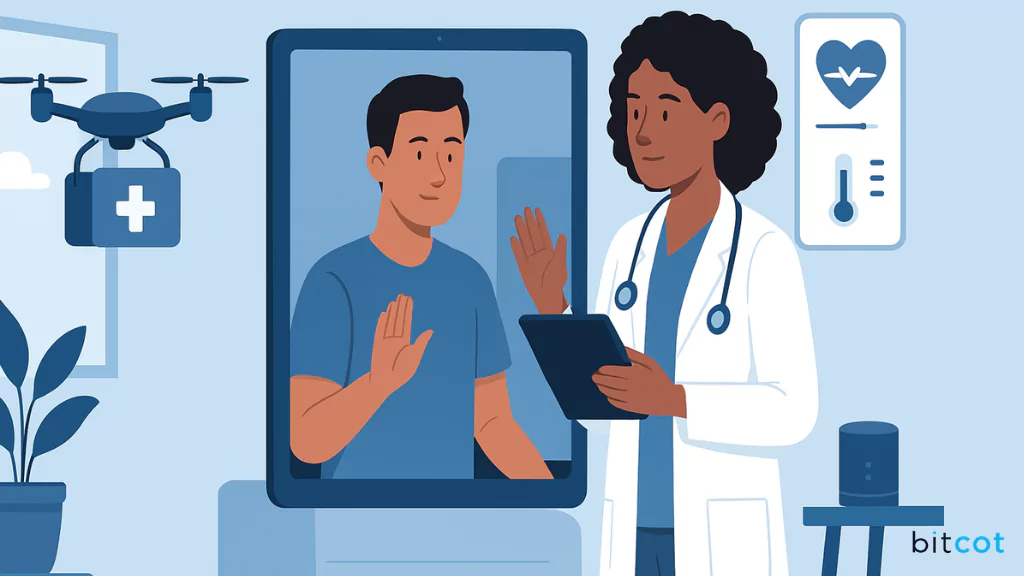
Healthcare is entering an era where technology and medicine are inseparable. Most of what we discuss with clients today as “future tech” will be production reality within 36 months.
Three shifts will define the next phase more than any others.
- AI agents will run more hospital workflows than humans by 2030 Not clinical decision-making, but the operational layer around it: scheduling, intake, prior auth, follow-up, care-gap closure, and revenue cycle. The hospitals investing in AI agent governance now will scale them cleanly. The ones still piloting in 2027 will be playing catch-up.
- Predictive hospitals and digital twins will move from research to operations Virtual replicas of patient populations and facilities are already simulating outcomes and optimizing resource allocation at leading academic medical centers. Within five years, mid-sized health systems will run digital twins to anticipate bed demand, model surgical scheduling, and stress-test cybersecurity scenarios before they happen.
- Personalized medicine at scale will redefine care plansl Multi-omics integration (genomics, proteomics, metabolomics) combined with AI will let clinicians build treatment pathways tailored to each patient’s biology. The hardest part won’t be the science. It will be building the data infrastructure that can hold and reason over patient-specific datasets at population scale.
Beyond these three, several other innovations are accelerating:
- Fully automated digital front doors that handle booking, virtual check-ins, and billing without friction.
- Generative AI and LLM-powered assistants supporting documentation, patient education, and real-time decision support.
- Value-based care powered by digital insights rewarding outcomes over service volume.
- Quantum computing in drug discovery and genomics accelerating molecular modeling.
- Brain-computer interfaces (BCIs) supporting neurological rehabilitation through direct neural interaction.
- Autonomous surgical robots and AI-assisted procedures enhancing precision and enabling remote procedures.
- Global health data networks: enabling worldwide patient information sharing and cross-border research.
- Climate-aware healthcare delivery tracking energy use, carbon footprints, and sustainability metrics.
- Biometric authentication and continuous monitoring securing data access while enabling real-time early detection.
- AR/VR in training and therapy revolutionizing medical education, surgical training, and patient rehabilitation.
Looking ahead to 2030 and beyond, the through-line is integration. The winners won’t be the systems with the most AI tools or the biggest data lakes. They’ll be the systems that connected workflows, data, and clinical practice cleanly enough that new technologies can plug in without rebuilding everything from scratch.
Emerging Technology Adoption Timeline
The pace varies by technology maturity, organizational readiness, and regulatory evolution.
2026-2028: Mainstream AI Agents and Production Automation
AI moves from pilots to production-grade agents across hospitals, clinics, and health-tech companies. Ambient documentation, prior-auth automation, intake agents, and care-gap closure become standard.
Telehealth and RPM reach near-universal use. Organizations focus on integrating these solutions, ensuring FHIR interoperability, and building governance frameworks.
2028-2030: Advanced Robotics and Quantum Computing Early Adoption
Autonomous surgical robots and quantum computing enter early adoption. Surgical robots enhance precision and enable remote procedures.
Quantum accelerates molecular modeling, drug discovery, and genomics research. Pilot programs define best practices and regulatory frameworks.
2030+: Fully Integrated Digital Health Ecosystems
Healthcare evolves into fully connected, data-driven ecosystems. Digital twins for patients and hospitals, AI-powered predictive hospitals, global health data networks, and continuous monitoring enable proactive, personalized, sustainable care.
Interoperability across platforms, devices, and institutions becomes the default rather than the exception.
Regulatory Evolution and the Future of Digital Healthcare Compliance
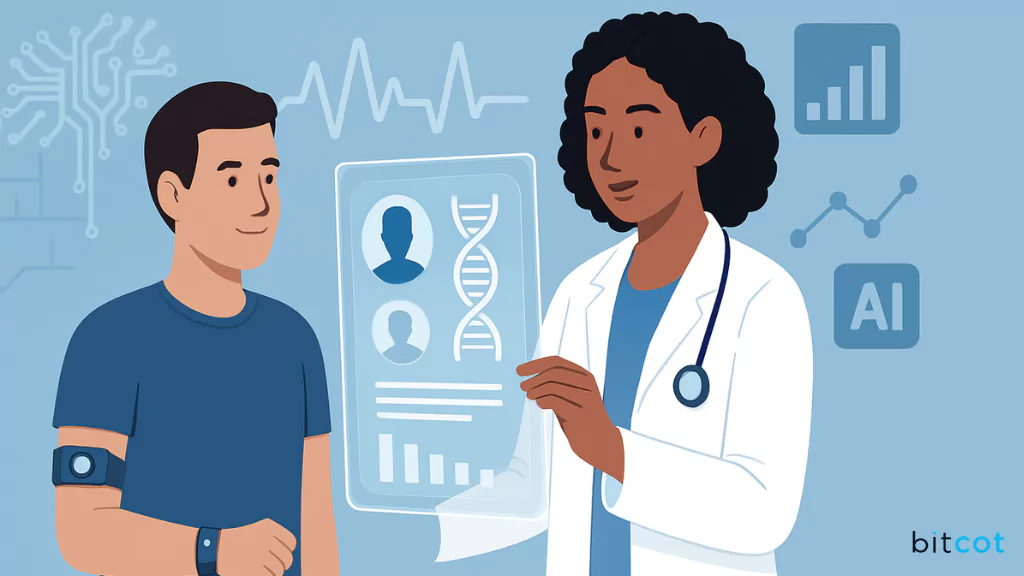
Regulatory frameworks are evolving to keep pace with new technologies. Understanding these shifts is critical for healthcare leaders planning transformation initiatives.
FDA Digital Health Guidance and Adaptive Pathways
The FDA’s Digital Health Center of Excellence continues updating guidance for software as a medical device (SaMD), AI-driven diagnostics, and mobile health applications. Adaptive regulatory pathways allow faster approvals while maintaining safety standards.
This matters especially for AI-based diagnostics and predictive monitoring devices. Hospitals and developers can use these frameworks to bring solutions to market faster without compromising quality.
International Regulatory Harmonization
Healthcare is increasingly global, with cross-border data sharing and multinational trials becoming routine. International bodies are working to harmonize regulations and unify cybersecurity and data privacy standards.
Harmonization reduces complexity for global providers and supports international research collaboration.
Ethics Committees and AI Governance Frameworks
With AI taking on clinical responsibilities, healthcare organizations are implementing AI ethics committees and governance structures. These bodies oversee algorithm transparency, fairness and bias prevention, patient consent and data protection, and accountability for AI-driven clinical decisions.
Effective governance keeps AI tools ethical, equitable, and aligned with healthcare standards over time.
How to Begin Your Digital Transformation Journey: A Step-by-Step Guide
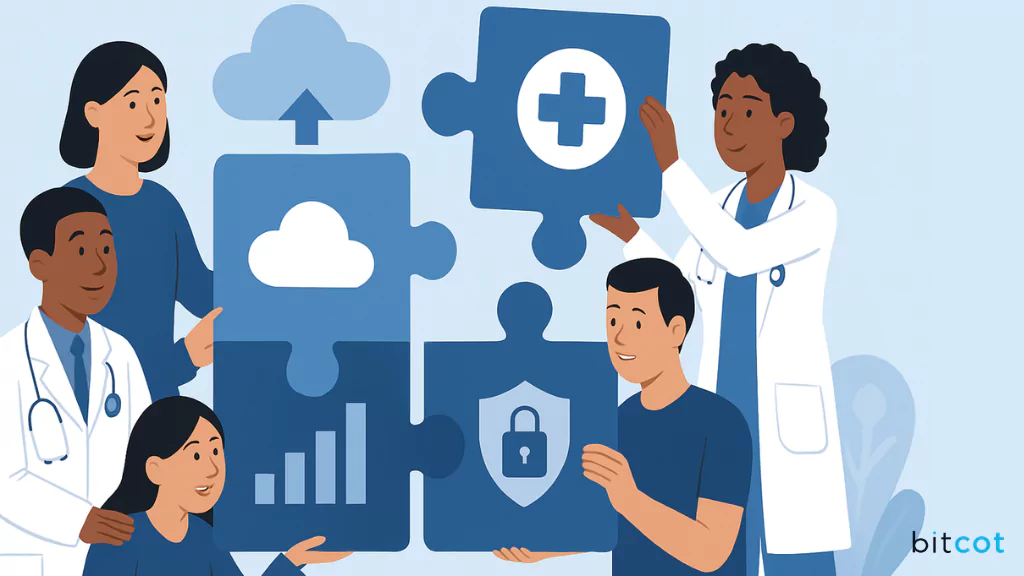
Breaking transformation into clear steps makes it manageable. Here’s a practical roadmap.
Step 0: Leadership Alignment and Vision Development
Before any technology decisions, your leadership team aligns on what success looks like. That might be better patient outcomes, lower operational costs, or improved clinician experience.
Clear alignment ensures every department collaborates effectively.
Step 1: Assess Needs (Clinical vs. Administrative)
Identify the specific areas that need digital solutions. Clinical needs might include AI-driven diagnostics, telehealth expansion, or patient monitoring.
Administrative needs could involve billing automation, scheduling, or supply chain optimization. A thorough assessment ensures investments address real pain points.
Step 1.5: Stakeholder Mapping and Engagement Planning
Map clinicians, administrators, IT staff, patients, and vendors. Understand their priorities, concerns, and workflow dependencies.
Early engagement reduces resistance, improves adoption, and surfaces hidden constraints before they become blockers.
Step 2: Define ROI Goals
Set clear metrics: financial savings, operational efficiency, patient satisfaction, staff productivity, or population health outcomes. Quantifiable goals make progress trackable and justify continued investment.
Step 3: Select the Right Tech Stack
Choose solutions that fit your needs, scalability requirements, and interoperability standards. Consider cloud platforms, AI tools, mobile apps, and EHR systems that integrate cleanly with existing workflows.
Most teams default to a vendor product when a partial custom build would have served them better, or attempt a custom build when a vendor product would have shipped six months earlier. Use this framework before you commit.
| Scenario | Best Approach | Why | Typical Timeline |
| Standard EHR, billing, or scheduling | Buy (Epic, athenahealth, NextGen) | Proven platforms, vendor handles regulatory updates | 6 to 18 months to go live |
| Patient-facing mobile app or branded portal | Custom build | Differentiation, UX control, owned roadmap | 4 to 9 months to MVP |
| AI agent for triage, intake, or prior auth | Hybrid (vendor LLM + custom integration) | Vendor handles model, you control workflow and EHR integration | 8 to 14 weeks for first pilot |
| Specialty-specific workflow (oncology, cardiology) | Custom or vendor extension | Specialty workflows rarely fit out-of-box tools | 3 to 6 months |
| Legacy modernization (HMS, LIMS) | Phased buy or staged refactor | Big-bang replacements fail; risk must be sequenced | 12 to 36 months across phases |
Step 3.5: Vendor Evaluation: What to Actually Ask Before You Sign
Most vendor reference calls go badly because the buyer asks the wrong questions. The ones that actually predict success or pain:
- Can we see a production deployment in our specialty or organization size? Demo environments lie. Production environments do not.
- Who owns our data, and how do we get it out? Vendor lock-in is real. Get the exit clause in writing before you sign.
- What’s your average implementation timeline for an organization our size? If they say six weeks for an enterprise rollout, they have either done this hundreds of times or never done it at all.
- What’s your security audit cadence, and have you ever been breached? Honest vendors answer this directly.
- Who handles the integration to our EHR, and is that scope priced separately? This is where surprise costs live.
- What happens to our pricing in year three and year five? SaaS escalation clauses can double the cost over a five-year contract.
Step 4: Partner with an Experienced Healthcare Technology Team
Collaborate with a partner who has deep healthcare experience and a track record of delivering digital transformation projects. A strong partner provides strategic guidance, technical expertise, and hands-on support throughout the journey.
Step 4.5: Legal and Compliance Review
Conduct legal and compliance reviews to ensure chosen solutions meet HIPAA, FDA, and other relevant standards. Address contracts, data ownership, and liability concerns early.
Step 5: Pilot → Scale Rollout
Start with a pilot in a controlled environment to test workflows, integration, and adoption. Gather feedback, adjust, then scale gradually across departments or facilities.
Phased rollouts minimize disruption.
Step 5.5: Continuous Monitoring, Optimization, and Iterative Improvement
Digital transformation isn’t a one-time project. Monitor KPIs, user feedback, and system performance continuously.
Optimize workflows, update software, and apply iterative improvements over time.
Assessing Readiness and Planning for Digital Transformation

Digital Maturity Assessment Framework
Before implementing new digital solutions, evaluate where you stand across technology, processes, and people:
- Current state evaluation: Audit existing systems, workflows, and staff competencies.
- Gap analysis and prioritization matrix: Identify gaps and prioritize by impact, cost, and feasibility.
- Roadmap development: Build a step-by-step plan with clear milestones and metrics.
Change Management Best Practices
The most advanced technology can fail if staff aren’t prepared. Key practices include stakeholder engagement and clear communication, hands-on training and continuous learning, and measuring resistance to address concerns proactively.
Vendor Selection Criteria
Beyond capability, evaluate scalability and integration with existing systems, security and compliance validation, and the vendor’s approach to onboarding, training, and ongoing support.
What Does Healthcare Digital Transformation Cost and What’s the ROI
Investing in healthcare digital transformation is a significant decision. Understanding costs and ROI is essential for planning.
Average Costs of EHR, Telemedicine, and AI Systems
- EHR/EMR: Software licenses, hardware, integration, training, and ongoing support. Implementation can range from hundreds of thousands to tens of millions for large hospital systems.
- Telemedicine platforms: Smaller clinics may spend USD 50K to USD 200K. Enterprise deployments scale higher with EHR integration depth.
- AI systems and agents: AI agent pilots in production typically run USD 75K to USD 250K. Enterprise rollouts go higher depending on integration scope.
ROI Benchmarks: Savings, Efficiency, Patient Satisfaction
Measure ROI in both financial and operational terms: cost savings from reduced admin workload, efficiency gains from automation and faster clinical decisions, and improved patient satisfaction from better access and personalization.
Payback Timelines
- Smaller clinics may see ROI in 12-24 months.
- Large hospital networks often require 2-5 years.
- Faster ROI is possible when solutions target high-cost areas like readmissions, staff overtime, or inefficient billing.
Total Cost of Ownership (TCO) Analysis
Beyond upfront costs, factor in maintenance, upgrades, and licensing fees, staff training and change management, integration with legacy systems and ongoing IT support, and hidden costs like workflow disruption during implementation.
Financing Options
- Capital purchase: One-time investment for software and hardware.
- SaaS: Subscription-based with predictable monthly costs and vendor-managed updates.
- Hybrid: On-premises plus cloud, balancing cost, flexibility, and control.
Risk-Adjusted ROI and Scenario Planning
Account for adoption rates, staff resistance, regulatory changes, and cybersecurity incidents. Scenario planning estimates risk-adjusted ROI so leadership can decide under varying conditions.
Value-Based Care Contract Impact on ROI
Value-based contracts reward quality outcomes over service volume. Digital tools that improve care coordination, population health, and prevention can increase reimbursement and produce tangible financial benefits.
ROI Measurement Methodologies
Track a combination of metrics: reduction in administrative and operational costs, time savings for clinicians, patient satisfaction scores, readmission rates and clinical outcomes, and staff retention and burnout reduction.
Economic Impact Studies and Benchmarking
Benchmarking against peer organizations and industry economic impact studies helps validate ROI expectations and guide investment prioritization.
Financial Planning and Budgeting
- Multi-year budget planning for multi-phase transformation projects.
- Cost-benefit analysis frameworks for each initiative.
- Grant funding and incentives that offset costs and accelerate adoption.
Insurance and Risk Management
- Technology insurance and liability coverage against system failures and legal exposure.
- Business interruption and cyber insurance for continuity during ransomware events.
- Risk mitigation strategies including contingency plans, staff training, and proactive monitoring.
How Bitcot Supports Healthcare Digital Transformation
At Bitcot, we believe healthcare digital transformation isn’t about technology for its own sake. It’s about people, processes, and delivering measurable outcomes.
Our approach is architecture-first and discovery-led. We combine deep technical expertise with healthcare domain knowledge so every solution drives real value for patients, providers, and organizations.
What we deliver:
- Custom healthcare software and mobile apps that get clinical workflows out of the way of patient care. We build patient engagement portals, chronic care platforms, and provider-facing mobile tools that integrate with your existing EHR.
- HIPAA-aligned telemedicine platforms with video, e-prescriptions, and remote monitoring, integrated into your clinical and billing systems so virtual care doesn’t become a parallel workflow.
- AI agents and workflow automation that take ownership of multi-step administrative work. We build on LangGraph, CrewAI, AWS Bedrock, and Azure OpenAI, with healthcare-specific guardrails and EHR write-back tested before deployment.
- EMR and EHR integration with HL7 and FHIR so your data flows where it needs to, securely. We start at integration because that’s where most AI and analytics projects stall.
- End-to-end digital transformation consulting beginning with a discovery sprint that maps your current state and returns a roadmap tied to clinical, operational, and financial goals.
- Cloud migration and modernization services for highly regulated healthcare environments, with phased migration plans, encryption-first design, and business continuity built in.
- Ongoing support, maintenance, and optimization so digital solutions evolve with your organization.
- Compliance and security assessment including risk audits, regulatory checks, and HIPAA-aligned architecture reviews.
- Partnership and integration capability across third-party systems and emerging technologies including agentic AI, IoT, and blockchain.
- Training and change management support with stakeholder engagement plans, clinical user training, and adoption tracking so the technology you fund actually gets used.
For deeper context on our healthcare software development services and how we structure engagements, the services page goes into detail.
Why the Future Belongs to Digital-First Healthcare
The future of healthcare belongs to organizations that embrace digital-first strategies. The benefits are clear: faster care, improved patient engagement, streamlined operations, and cost efficiencies.
The risks of ignoring digital adoption are growing in parallel. Outdated workflows, frustrated staff, slower decisions, and the inability to meet patient expectations all compound over time.
For healthcare leaders, 2026 marks a turning point. Technology, patient demographics, regulatory requirements, and competitive pressures are converging.
Our approach is simple. Start small, think big, and move fast.
Launch targeted initiatives, measure outcomes, and scale strategically while keeping the patient experience at the center of every decision. Sustainable transformation requires a vision for a fully integrated, patient-centric healthcare ecosystem.
When technology, data, and care delivery are seamlessly connected, organizations achieve predictive, personalized, and efficient healthcare at scale. No single provider, system, or technology achieves this alone.
Working with experienced healthcare engineering teams, leveraging proven frameworks, and embracing innovation lets healthcare leaders drive change that benefits patients, providers, and the entire ecosystem.
Most healthcare leaders we talk to know exactly what’s wrong. Clinicians drowning in documentation. Prior auth eating six figures a year. An EHR that won’t play nice with the AI tool they just bought.
The problem isn’t knowing what’s broken. It’s knowing what to fix first.
That’s what we figure out together in a 30-minute strategy call. Your current stack, your maturity stage, the one workflow that will pay back the fastest. By the end, you have a roadmap with the next 90 days mapped out and a real number attached to the ROI.
Book your strategy call with Bitcot.
Frequently Asked Questions (FAQs)
What is digital transformation in healthcare?
Digital transformation in healthcare is the strategic integration of technology, data, and connected workflows to fundamentally change how care is delivered, experienced, and managed. It goes beyond digitizing paper records.
It’s about redesigning patient care and operations around digital-first models that include cloud platforms, AI, mobile apps, and interoperable data exchange.
How is healthcare digital transformation different in 2026 compared to 2025?
The biggest shift in 2026 is the move from AI experimentation to AI in production. Ambient AI scribes, agentic workflow automation, and FHIR-based interoperability are no longer pilots at most large U.S. health systems.
Ransomware risk has grown too, making cybersecurity a transformation requirement rather than an afterthought.
What does hospital digital transformation actually involve?
Hospital digital transformation typically involves four parallel tracks: modernizing core systems (EHR, HMS, RCM), enabling interoperability through FHIR and HL7 APIs, embedding AI into clinical and administrative workflows, and rebuilding cybersecurity around a zero-trust architecture.
Most hospital programs run 18 to 36 months in phases.
What is the size of the digital transformation market in healthcare?
The global digital transformation market in healthcare was valued at approximately USD 87 billion in 2025 and is projected to reach USD 258 billion by 2033, growing at a 14.58% CAGR, per SNS Insider’s November 2025 forecast.
The U.S. segment is expected to grow from USD 28 billion to USD 77 billion over the same period.
How long does a healthcare digital transformation project take?
A focused initiative like a custom patient app or AI agent pilot can move from discovery to live deployment in 8 to 16 weeks. Hospital-wide modernization programs typically run 18 to 36 months in phases.
The biggest variable is interoperability complexity. The deeper the EHR and legacy integration, the longer the runway.
How much does healthcare digital transformation cost?
Costs vary by scope. A custom mobile app or AI agent pilot typically falls in the USD 75K to USD 250K range. Full EHR migrations or hospital-wide platform deployments run into the millions.
The more useful metric is total cost of ownership over five years, including licensing, integration, training, change management, and ongoing optimization.
What are the biggest risks in healthcare digital transformation?
Three risks derail most projects: interoperability complexity, staff adoption resistance, and cybersecurity exposure. Less obvious but equally important: vendor lock-in clauses, hidden integration costs, and AI governance gaps that surface only after a clinical incident.
What is a health systems transformation platform?
A health systems transformation platform is an integrated software environment that combines EHR data, analytics, AI agents, and workflow orchestration in one layer. Rather than buying point solutions, health systems use these platforms to standardize patient data, automate cross-department workflows, and run AI agents at scale.
The category emerged in 2025 and is now a serious option for systems that have outgrown the “best-of-breed” approach.
What are the best digital transformation solutions for healthcare today?
The strongest digital transformation solutions for healthcare in 2026 fall into three buckets: modernized core systems (cloud EHR, modern RCM, integrated HMS), interoperability platforms built on FHIR and HL7, and AI-native tools like ambient scribes, prior-auth agents, and predictive analytics.
The right mix depends on your maturity stage and which workflows are bleeding the most clinician hours.
What solutions support healthcare organizations undergoing digital, workforce, or operational transformation?
Healthcare organizations rarely transform in just one dimension. Digital, workforce, and operational changes tend to happen together, and the strongest solutions overlap across all three.
For digital transformation, the foundation is modernized core systems (cloud EHR, RCM, HMS) connected through FHIR and HL7 APIs, with AI agents embedded into clinical and administrative workflows. For workforce transformation, ambient AI scribes, clinical communication platforms, automated scheduling, and mobile decision-support apps directly reduce administrative burden and clinician burnout.
For operational transformation, RPA, predictive resource allocation, population health platforms, and AI-driven supply chain tools cut waste and unlock efficiency. The teams who get the most value pick solutions that cross categories, since an ambient AI scribe is a digital tool, a workforce intervention, and an operational efficiency play all at once.
How do we choose the right digital transformation partner for healthcare?
Look for healthcare domain expertise, real EHR integration experience (not just claims), HIPAA-aligned engineering practices, a clear discovery process before coding, and a long-term partnership model. Body-shop vendors and generic dev shops without healthcare specificity are where most failed projects originate.